George G. Szpiro – författare
Visar alla böcker från författaren George G. Szpiro. Handla med fri frakt och snabb leverans.
11 produkter
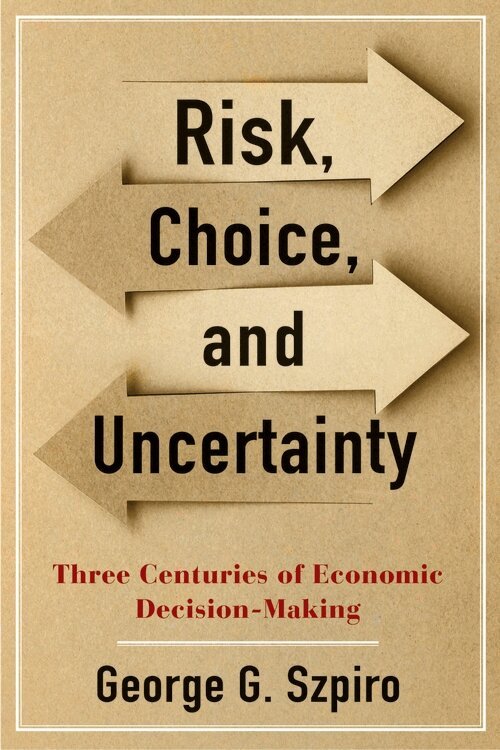
Risk, Choice, and Uncertainty
Three Centuries of Economic Decision-Making
Inbunden, 2020
287 kr
Lägg i varukorg
At its core, economics is about making decisions. In the history of economic thought, great intellectual prowess has been exerted toward devising exquisite theories of optimal decision making in situations of constraint, risk, and scarcity. Yet not all of our choices are purely logical, and so …
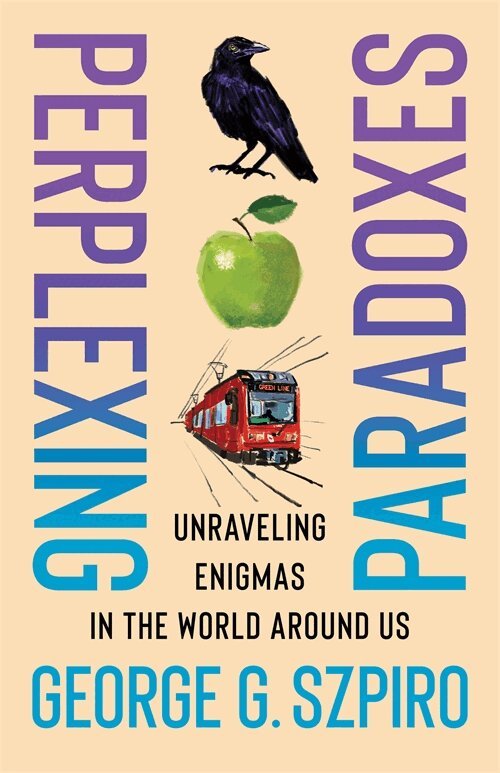
Perplexing Paradoxes
Unraveling Enigmas in the World Around Us
Inbunden, 2024
304 kr
Lägg i varukorg
Why does it always seem like the elevator is going down when you need to go up? Is it really true that 0.99999 . . . with an infinite number of 9s after the decimal point, is equal to 1? What do tea leaves and river erosion have in common, per Albert Einstein? Does seeing a bed of red flowers help …
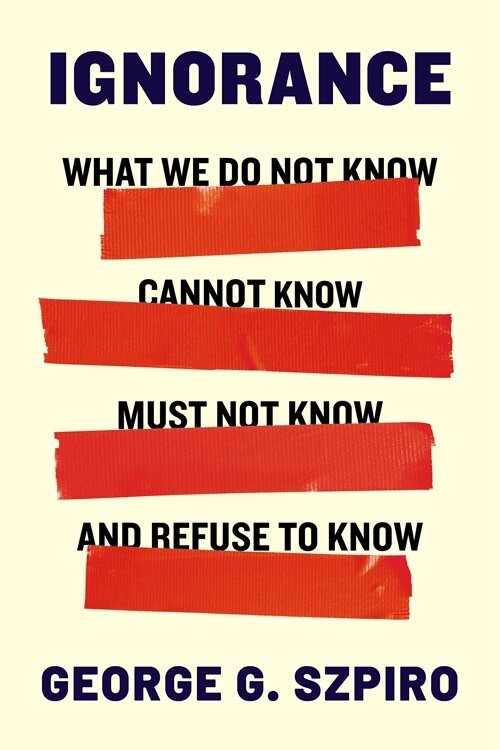
Ignorance
What We Do Not Know, Cannot Know, Must Not Know, and Refuse to Know
Inbunden, 2026
245 kr
Lägg i varukorg
Does the lack of evidence mean that aliens don’t exist? Why does an unproven mathematical hypothesis have profound consequences? Are humans capable of grasping the nature of divinity? Is it ethical to give a patient a placebo? Why do people persist in demonstrably false beliefs like flat earth …
Meno’s Dilemma
Knowledge and Wisdom in the Misinformation Age
Inbunden, 2027
245 kr
Kommande
How can we truly learn something new? More than two thousand years ago, Plato examined this problem in a dialogue between Socrates and an interlocutor named Meno. The philosopher encounters a paradox: For any question, either we already know the answer at some level, in which case we are not truly …
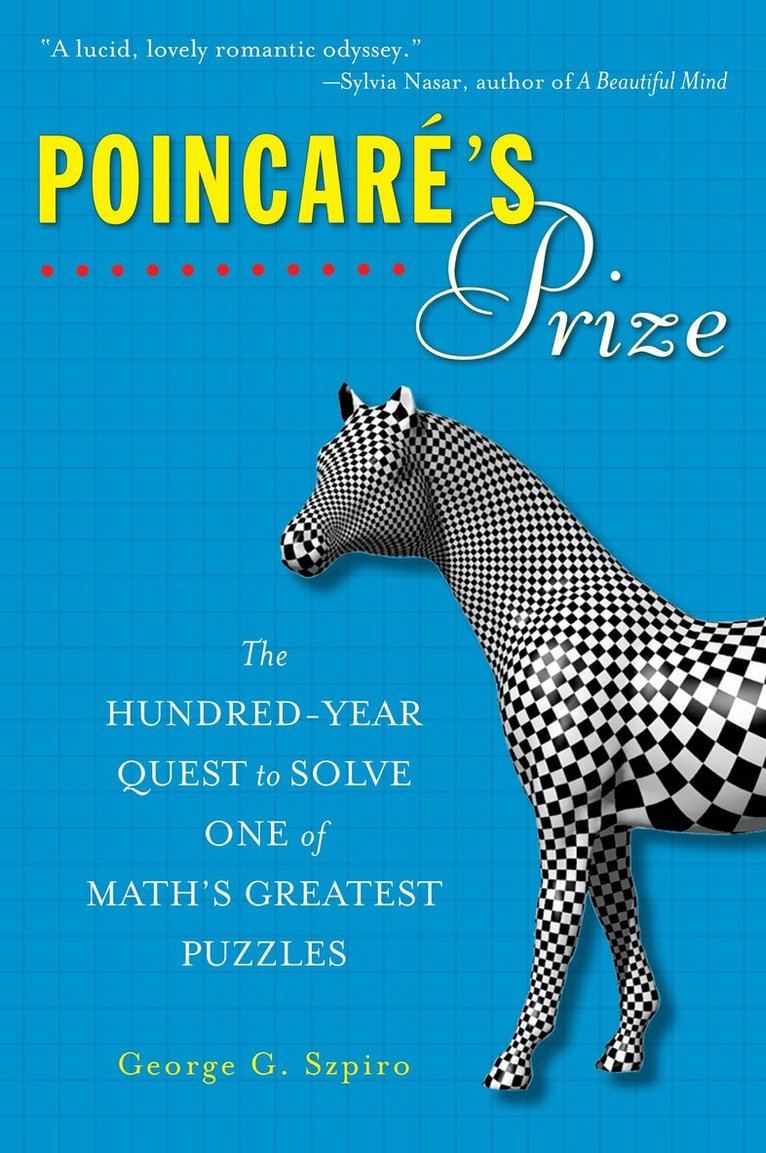
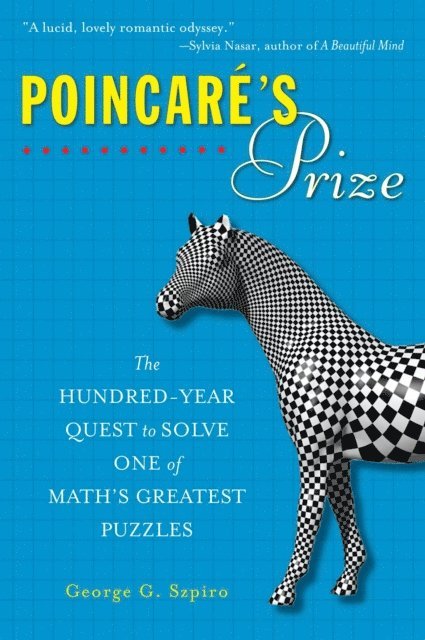
Poincare's Prize
The Hundred-Year Quest to Solve One of Math's Greatest Puzzles
Häftad, 2008
326 kr
Lägg i varukorg
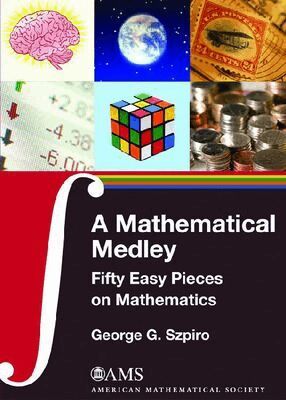
Mathematical Medley
Fifty Easy Pieces on Mathematics
Häftad, 2010
594 kr
Lägg i varukorg
Mathematics is thriving. Not only have long-standing problems, such as the Poincaré conjecture, been solved, but mathematics is an important element of many modern conveniences, such as cell phones, CDs, and secure transactions over the Internet. For good or for bad, it is also the engine that …
Poincare's Prize
The Hundred-Year Quest to Solve One of Math''s Greatest Puzzles
E-bok, 2008
83 kr
Lägg i varukorg
The amazing story of one of the greatest math problems of all time and the reclusive genius who solved it In the tradition of Fermat’s Enigma and Prime Obsession , George Szpiro brings to life the giants of mathematics who struggled to prove a theorem for a century and the mysterious man from St. …
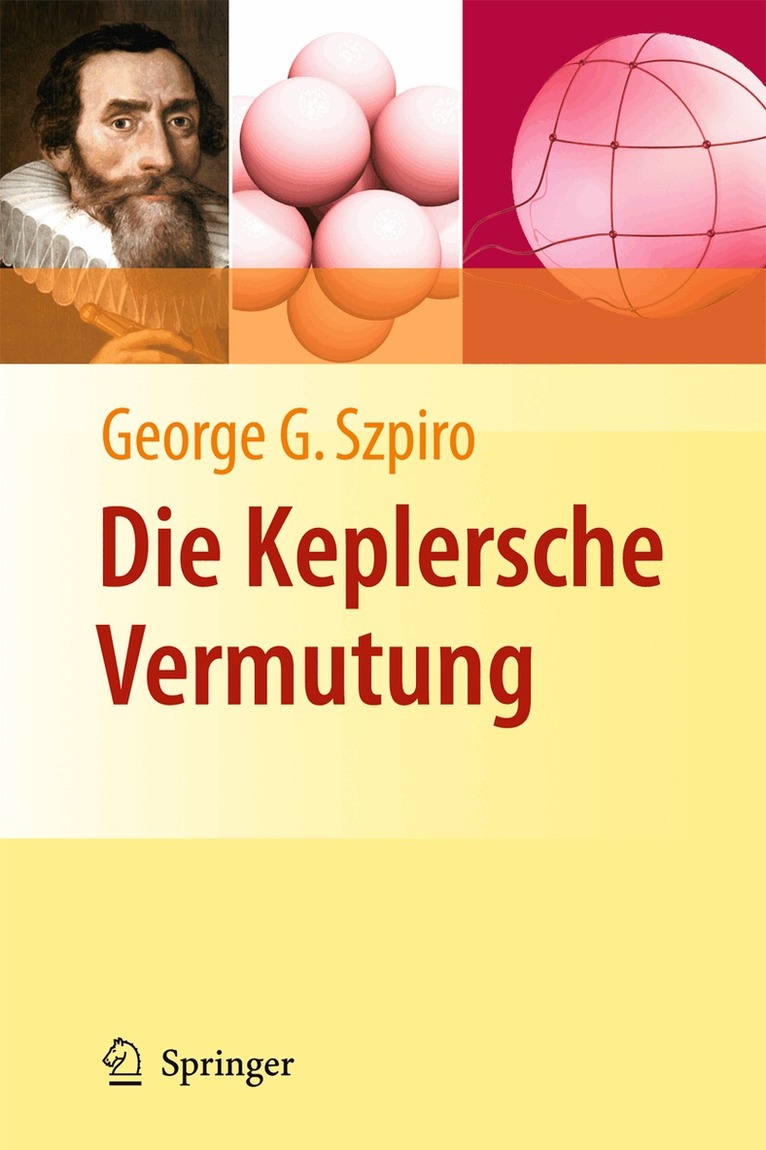
Die Keplersche Vermutung
Wie Mathematiker ein 400 Jahre altes Rätsel lösten
Inbunden, 2011
190 kr
Lägg i varukorg
Sir Walter Raleigh wollte wissen, wie Kanonenkugeln in einem Schiff am dichtesten aufgestapelt werden können. Im Jahre 1611 gab der Astronom Johannes Kepler die einleuchtende Antwort: genau so, wie Gemüsehändler Orangen und Tomaten auf den Marktständen aufstapeln. Doch dies war lediglich eine …
Die Keplersche Vermutung
Wie Mathematiker ein 400 Jahre altes Rätsel lösten
E-bok, 2011
93 kr
Lägg i varukorg
Sir Walter Raleigh wollte wissen, wie Kanonenkugeln in einem Schiff am dichtesten aufgestapelt werden können. Im Jahre 1611 gab der Astronom Johannes Kepler die einleuchtende Antwort: genau so, wie Gemüsehändler Orangen und Tomaten auf den Marktständen aufstapeln. Doch dies war lediglich eine …
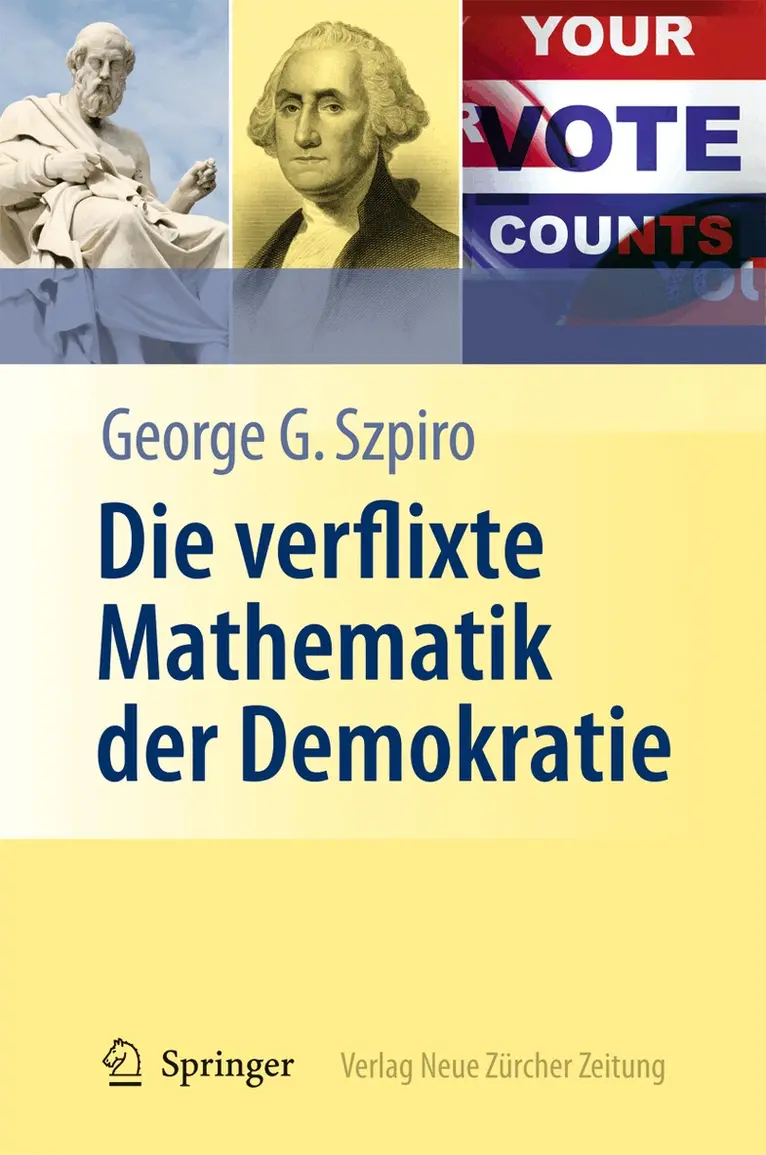
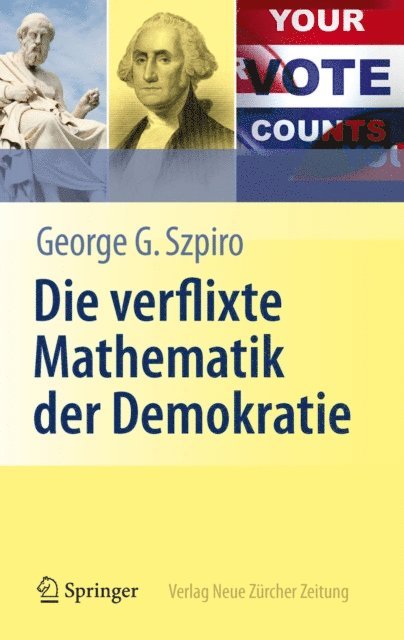
Die verflixte Mathematik der Demokratie
Inbunden, 2011
361 kr
Lägg i varukorg
Die verflixte Mathematik der Demokratie ist eine Erläuterung und historische Einführung in die Probleme, die in einer Demokratie entstehen können. Die Mehrheitswahl und die Zuteilung von Sitzen in einem Parlament werfen mathematische Fragen auf, zu deren Beschreibung zwar nicht mehr als Arithmetik …
Die verflixte Mathematik der Demokratie
E-bok, 2011
375 kr
Lägg i varukorg
Die verflixte Mathematik der Demokratie ist eine Erläuterung und historische Einführung in die Probleme, die in einer Demokratie entstehen können. Die Mehrheitswahl und die Zuteilung von Sitzen in einem Parlament werfen mathematische Fragen auf, zu deren Beschreibung zwar nicht mehr als Arithmetik …