Gerardo Otero - Böcker
Visar alla böcker från författaren Gerardo Otero. Handla med fri frakt och snabb leverans.
10 produkter
10 produkter
341 kr
Skickas inom 10-15 vardagar
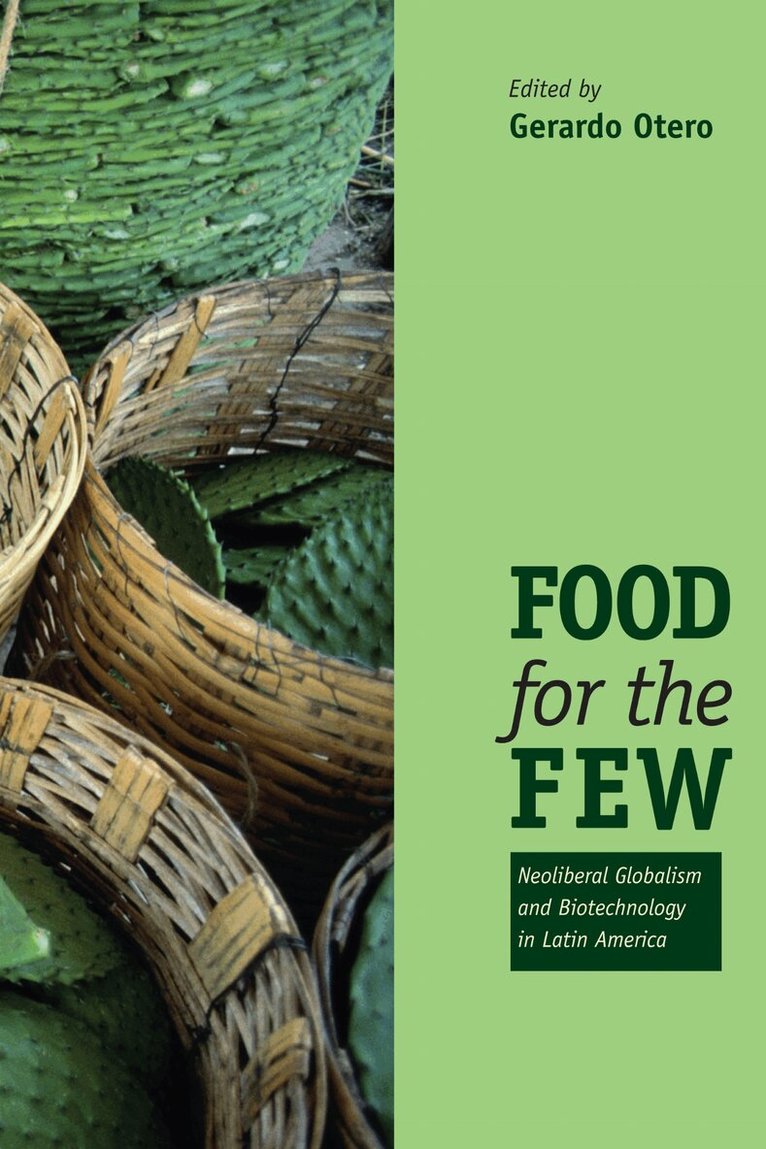
Recent decades have seen tremendous changes in Latin America's agricultural sector, resulting from a broad program of liberalization instigated under pressure from the United States, the IMF, and the World Bank. Tariffs have been lifted, agricultural markets have been opened and privatized, land reform policies have been restricted or eliminated, and the perspective has shifted radically toward exportation rather than toward the goal of feeding local citizens. Examining the impact of these transformations, the contributors to Food for the Few: Neoliberal Globalism and Biotechnology in Latin America paint a somber portrait, describing local peasant farmers who have been made responsible for protecting impossibly vast areas of biodiversity, or are forced to specialize in one genetically modified crop, or who become low-wage workers within a capitalized farm complex. Using dozens of examples such as these, the deleterious consequences are surveyed from the perspectives of experts in diverse fields, including anthropology, economics, geography, political science, and sociology. From Kathy McAfee's "Exporting Crop Biotechnology: The Myth of Molecular Miracles," to Liz Fitting's "Importing Corn, Exporting Labor: The Neoliberal Corn Regime, GMOs, and the Erosion of Mexican Biodiversity," Food for the Few balances disturbing findings with hopeful assessments of emerging grassroots alternatives. Surveying not only the Latin American conditions that led to bankruptcy for countless farmers but also the North's practices, such as the heavy subsidies implemented to protect North American farmers, these essays represent a comprehensive, keenly informed response to a pivotal global crisis.
2 091 kr
Skickas inom 10-15 vardagar
Farewell to the Peasantry? questions class-reductionist assumptions in certain Marxist and populist approaches to political movements in twentieth-century rural Mexico. Focusing on agrarian social structures, political movements, and state intervention, it studies the political class trajectories of direct producers in three agricultural regions from the 1930s to the present. This study offers an analysis of varying intersections of class relations, political mobilization, and distinctive regional cultural traditions. Following a broader trend, this analysis seeks to transcend unidirectional and single-factor approaches to peasant mobilization and social transformation. The book offers an explanation of diverse political class destinations of agricultural workers in three regions from the 1930s to the present in terms of regional cultures, state intervention, and leadership types. Political class formation is seen as the process by which civil society is constructed and as a vital part in the transition toward a societal democracy. This book also addresses Mexico's legendary agrarian reform in historical perspective. The author argues that land redistribution in Mexico was the way chosen to develop and entrench capitalism in Mexico while building a basis of support for the modern Mexican state. He provides an account of the global agrarian transitions and the social differentiation process in the Mexican countryside as well as the changes brought about in agrarian policies by the neoliberal reform that has swept Mexico since the mid-1980s. Neoliberal-ism has increased the insecurity of wage employment in most sectors of the economy, thus bringing about an ironic result in the agrarian social structure: On the one hand, it has created the conditions for an entrepreneurial peasantry to emerge, but on the other, while the middle peasantry shrinks, large masses of the rural population are becoming unemployed or resorting to subsistence production as a survival st
618 kr
Skickas inom 10-15 vardagar
Farewell to the Peasantry? questions class-reductionist assumptions in certain Marxist and populist approaches to political movements in twentieth-century rural Mexico, highlighting the interpretation of the process of political class formation.
2 091 kr
Skickas inom 10-15 vardagar
Having unilaterally opened its borders to international competition and foreign investment in the mid-1980s, Mexico has become one of the world's leading proponents of economic liberalization. Nevertheless, as the recent uprising of native peoples in Chiapas has made clear, economic reforms are not universally welcomed.This book addresses the chall
618 kr
Skickas inom 10-15 vardagar
Having unilaterally opened its borders to international competition and foreign investment in the mid-1980s, Mexico has become one of the world's leading proponents of economic liberalization. Nevertheless, as the recent uprising of native peoples in Chiapas has made clear, economic reforms are not universally welcomed. This book addresses the challenges brought about by the restructuring of the Mexican economy at a time when-multiple organizations of civil society are demanding a democratic political transition in a system that has been dominated by one party for nearly seventy years. The contributors identify the key social and political actors—both domestic and international—involved in promoting or resisting the new economic model and examine the role of the state in the restructuring process. They explore such questions as: In what ways is the state itself being reconstituted to accommodate the demand for change? How have Canada and the United States responded to the increased internationalization of their economies? What are the challenges and prospects for transnational grassroots networks and labor solidarity? Answers are provided by scholars from anthropology, economics, history, political science, and sociology, all of whom promote interdisciplinary approaches to the issues. Each chapter traces the structural transformations within the central social relationships in Mexican society during the last decade or so and anticipates future consequences of today's changes.
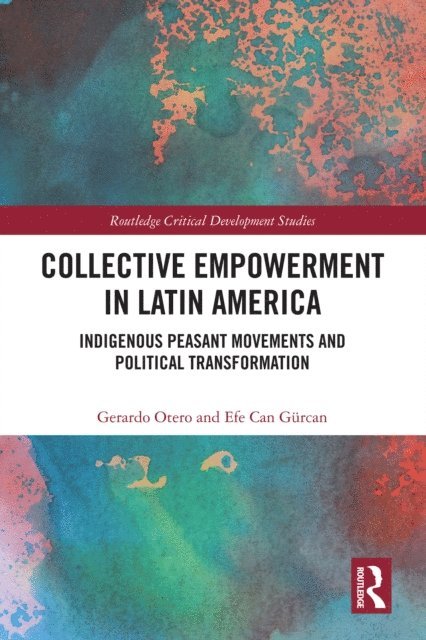
Collective Empowerment in Latin America
Indigenous Peasant Movements and Political Transformation
Inbunden, Engelska, 2024
2 103 kr
Skickas inom 10-15 vardagar
This book develops a theory of collective empowerment that looks for change both from the bottom up, in civil society, and from the top down, from state interventions responding to such pressure.Reflecting on the advancement of Indigenous and peasant movements in Latin America since the neoliberal reformation of capitalism in the 1980s, the book outlines a path for progressive social action in which bottom-up pressure by social movements can help progressive parties to gain state power. The book considers how Indigenous and peasant movements in Argentina, Bolivia, Brazil, Ecuador, and Mexico have tried to reshape crucial structures of society from the bottom up. While this mobilization from below is critical and necessary, the book argues that these movements must be supplemented by top-down change from progressive state interventions, as happened mostly in Bolivia and Brazil. The authors conclude that progressive societal action can have massive impact in transforming some of the main socioeconomic structures that determine humans’ relation to the extraction of natural resources, income and wealth inequality, and even the location of a nation’s insertion in world capitalism.This book will be an important resource for social-movement activists and for researchers working in political sociology, sociological theory, political studies, development studies, social movements, and Latin American Studies.
Collective Empowerment in Latin America
Indigenous Peasant Movements and Political Transformation
Häftad, Engelska, 2025
635 kr
Skickas inom 10-15 vardagar
This book develops a theory of collective empowerment that looks for change both from the bottom up, in civil society, and from the top down, from state interventions responding to such pressure.Reflecting on the advancement of Indigenous and peasant movements in Latin America since the neoliberal reformation of capitalism in the 1980s, the book outlines a path for progressive social action in which bottom-up pressure by social movements can help progressive parties to gain state power. The book considers how Indigenous and peasant movements in Argentina, Bolivia, Brazil, Ecuador, and Mexico have tried to reshape crucial structures of society from the bottom up. While this mobilization from below is critical and necessary, the book argues that these movements must be supplemented by top-down change from progressive state interventions, as happened mostly in Bolivia and Brazil. The authors conclude that progressive societal action can have massive impact in transforming some of the main socioeconomic structures that determine humans’ relation to the extraction of natural resources, income and wealth inequality, and even the location of a nation’s insertion in world capitalism.This book will be an important resource for social-movement activists and for researchers working in political sociology, sociological theory, political studies, development studies, social movements, and Latin American Studies.
1 028 kr
Skickas inom 10-15 vardagar
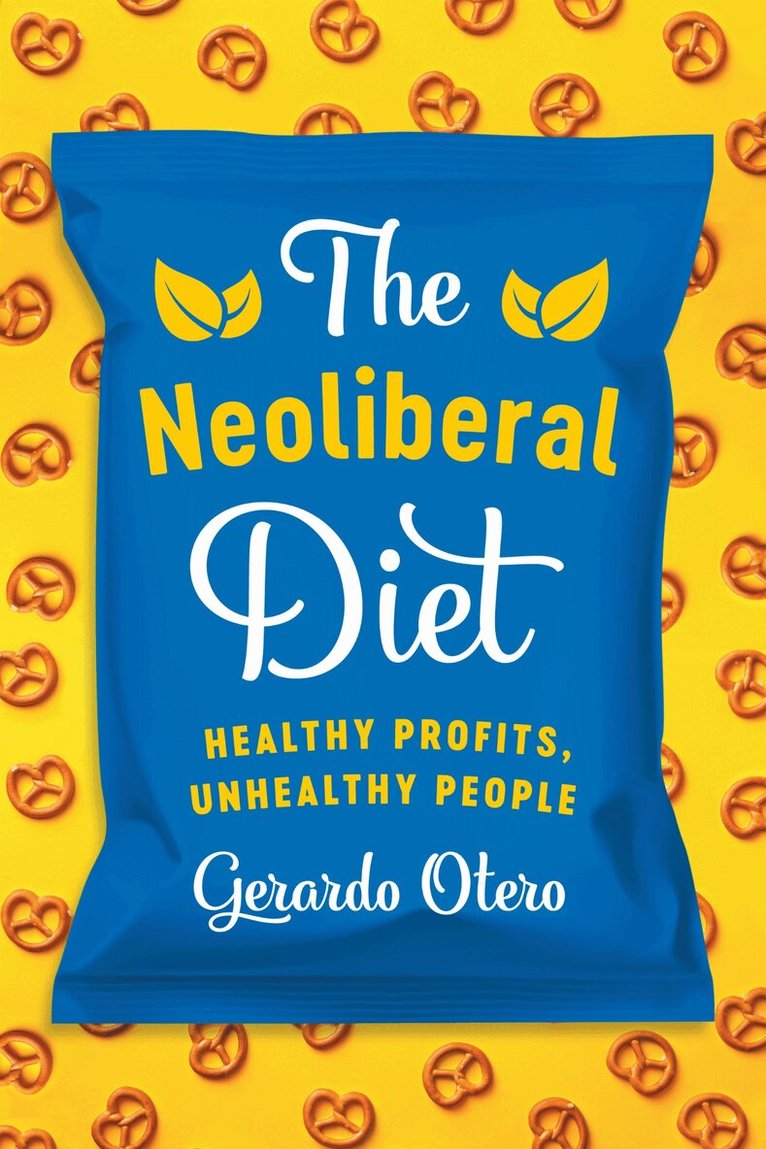
Why are people getting fatter in the United States and beyond? Mainstream explanations argue that people simply eat too much “energy-dense” food while exercising too little. By swapping the chips and sodas for fruits and vegetables and exercising more, the problem would be solved. By contrast, The Neoliberal Diet argues that increased obesity does not result merely from individual food and lifestyle choices. Since the 1980s, the neoliberal turn in policy and practice has promoted trade liberalization and retrenchment of the welfare regime, along with continued agricultural subsidies in rich countries. Neoliberal regulation has enabled agribusiness multinationals to thrive by selling highly processed foods loaded with refined flour and sugars-a diet that originated in the United States-as well as meat. Drawing on extensive empirical data, Gerardo Otero identifies the socioeconomic and political forces that created this diet, which has been exported around the globe, often at the expense of people’s health.Otero shows how state-level actions, particularly subsidies for big farms and agribusiness, have ensured the dominance of processed foods and made healthful fresh foods inaccessible to many. Comparing agrifood performance across several nations, including the NAFTA region, and correlating food access to class inequality, he convincingly demonstrates the structural character of food production and the effect of inequality on individual food choices. Resolving the global obesity crisis, Otero concludes, lies not in blaming individuals but in creating state-level programs to reduce inequality and make healthier food accessible to all.
363 kr
Skickas inom 7-10 vardagar
Why are people getting fatter in the United States and beyond? Mainstream explanations argue that people simply eat too much “energy-dense” food while exercising too little. By swapping the chips and sodas for fruits and vegetables and exercising more, the problem would be solved. By contrast, The Neoliberal Diet argues that increased obesity does not result merely from individual food and lifestyle choices. Since the 1980s, the neoliberal turn in policy and practice has promoted trade liberalization and retrenchment of the welfare regime, along with continued agricultural subsidies in rich countries. Neoliberal regulation has enabled agribusiness multinationals to thrive by selling highly processed foods loaded with refined flour and sugars-a diet that originated in the United States-as well as meat. Drawing on extensive empirical data, Gerardo Otero identifies the socioeconomic and political forces that created this diet, which has been exported around the globe, often at the expense of people’s health.Otero shows how state-level actions, particularly subsidies for big farms and agribusiness, have ensured the dominance of processed foods and made healthful fresh foods inaccessible to many. Comparing agrifood performance across several nations, including the NAFTA region, and correlating food access to class inequality, he convincingly demonstrates the structural character of food production and the effect of inequality on individual food choices. Resolving the global obesity crisis, Otero concludes, lies not in blaming individuals but in creating state-level programs to reduce inequality and make healthier food accessible to all.
515 kr
Skickas inom 10-15 vardagar
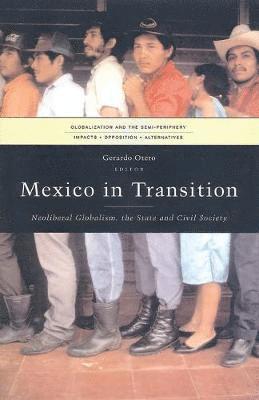
Mexico in Transition provides a wide-ranging, empirical and up-to-date survey of the multiple impacts neoliberal policies have had in practice in Mexico over twenty years, and the specific impacts of the NAFTA Agreement. The volume covers a wide terrain, including the effects of globalization on peasants; the impact of neoliberalism on wages, trade unions, and specifically women workers; the emergence of new social movements El Barzón and the Zapatistas (EZLN); how the environment, especially biodiversity, has become a target for colonization by transnational corporations; the political issue of migration to the United States; and the complicated intersections of economic and political liberalization.Mexico in Transition provides rich concrete evidence of what happens to the different sectors of an economy, its people, and natural resources, as the profound change of direction that neoliberal policy represents takes hold. It also describes and explains the diverse forms of resistance and challenge that different civil-society groups of those affected are now offering to a model the downsides of which are becoming increasingly manifest.