• Fri frakt över 249 kr
  • •
  • Snabba leveranser
  • •
  • Billiga böcker
Kundservice

Du är på sajten för privatpersoner.

Företag, bibliotek eller offentlig verksamhet?

Du handlar på classic.bokus.com, där alla dina funktioner finns intakta.
Till classic.bokus.com
Bokus logotyp. Gå till startsidan.
  • Erbjudanden
  • Nyheter
  • Student
  • Topplistor
  • Barn & ungdom
  • Bokus Play
  • E-böcker
  • Pocketböcker
  • Spel & pussel

10% rabatt på allt med kod NYSTART10 →

Sidfot

Mina sidor

    Hjälp

    • Kundservice
    • Vanliga frågor och svar
    • Frakt och leverans
    • Retur vid ångerrätt
    • Reklamera vara
    • Betalning
    • Köpvillkor
    • Allmänna villkor
    • Information om webbplatsens tillgänglighet

    Om Bokus

    • Om oss
    • Pressrum
    • För studenter
    • För företag
    • För bibliotek och offentlig verksamhet
    • För leverantörer
    • Hållbarhet

    Populärt

    • Aktuella erbjudanden
    • Presentkort
    • Studentlitteratur
    • Nya böcker
    • Topplistor
    • Signerade böcker
    • Engelska böcker

    Inspiration

    • Boktips
    • BookTok
    • Populära bokserier
    • Barnbokskaraktärer
    • Populära författare
    Logotyp för Bokus
    Följ oss på Facebook (extern länk)Följ oss på Instagram (extern länk)Följ oss på YouTube (extern länk)Följ oss på TikTok (extern länk)
    bokus @ CookiesAnpassa cookiesIntegritetspolicyKöpvillkor
    Till Citymail hemsida (extern länk)Till Budbee hemsida (extern länk)Till Postnord hemsida (extern länk)Till Schenker hemsida (extern länk)Till Early Bird hemsida (extern länk)Till Walleys hemsida (extern länk)
    1. Naturvetenskap och teknik
    2. Teknik och industri
    3. Agronomi och lantbruk

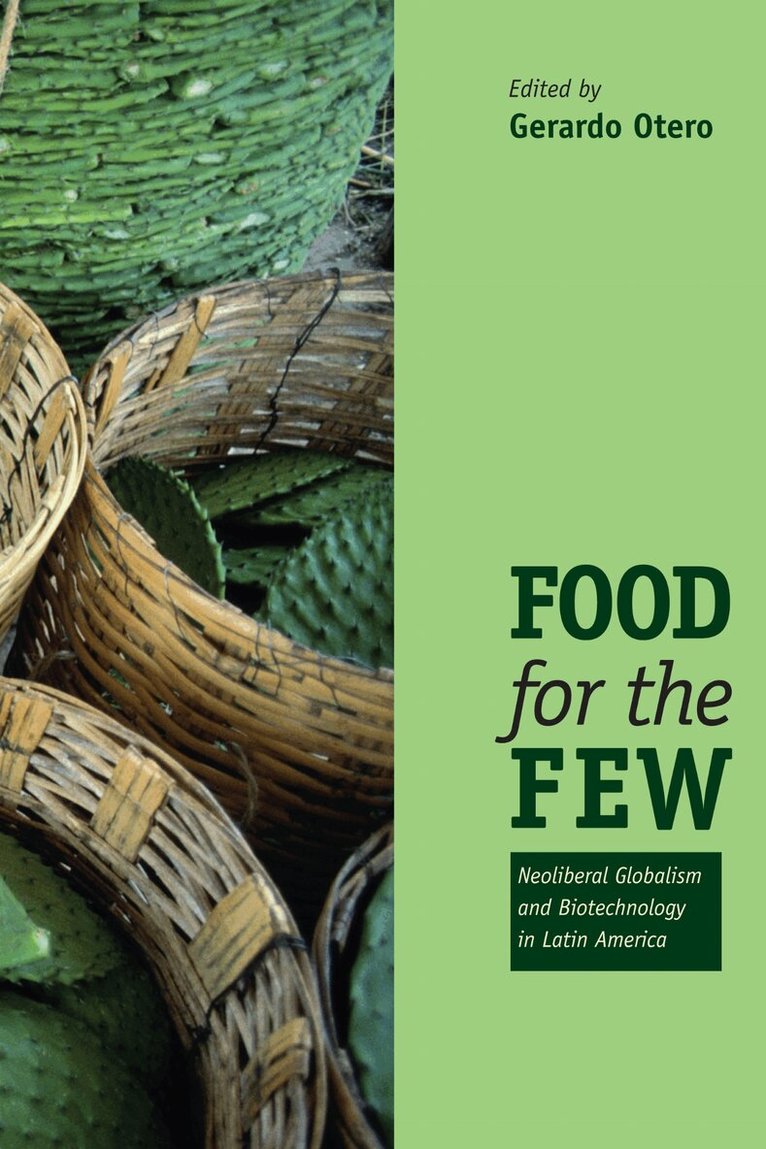
    Food for the Few

    Neoliberal Globalism and Biotechnology in Latin America

    AvGerardo Otero

    Häftad, Engelska, 2008

    354 kr

    Beställningsvara. Skickas inom 10-15 vardagar. Fri frakt över 249 kr.

    Beskrivning

    Recent decades have seen tremendous changes in Latin America's agricultural sector, resulting from a broad program of liberalization instigated under pressure from the United States, the IMF, and the World Bank. Tariffs have been lifted, agricultural markets have been opened and privatized, land reform policies have been restricted or eliminated, and the perspective has shifted radically toward exportation rather than toward the goal of feeding local citizens. Examining the impact of these transformations, the contributors to Food for the Few: Neoliberal Globalism and Biotechnology in Latin America paint a somber portrait, describing local peasant farmers who have been made responsible for protecting impossibly vast areas of biodiversity, or are forced to specialize in one genetically modified crop, or who become low-wage workers within a capitalized farm complex. Using dozens of examples such as these, the deleterious consequences are surveyed from the perspectives of experts in diverse fields, including anthropology, economics, geography, political science, and sociology. From Kathy McAfee's "Exporting Crop Biotechnology: The Myth of Molecular Miracles," to Liz Fitting's "Importing Corn, Exporting Labor: The Neoliberal Corn Regime, GMOs, and the Erosion of Mexican Biodiversity," Food for the Few balances disturbing findings with hopeful assessments of emerging grassroots alternatives. Surveying not only the Latin American conditions that led to bankruptcy for countless farmers but also the North's practices, such as the heavy subsidies implemented to protect North American farmers, these essays represent a comprehensive, keenly informed response to a pivotal global crisis.

    Produktinformation

    • Utgivningsdatum:2008-07-01
    • Mått:152 x 229 x 20 mm
    • Vikt:454 g
    • Format:Häftad
    • Språk:Engelska
    • Antal sidor:335
    • Förlag:University of Texas Press
    • ISBN:9780292726130

    Utforska kategorier

    • Agronomi och lantbruk inom Naturvetenskap och teknik
    • Biokemisk teknik inom Naturvetenskap och teknik

    Mer om författaren

    Gerardo Otero is Professor of Sociology and Latin American Studies at Simon Fraser University in Vancouver, Canada.

    Recensioner i media

    "A unique and important contribution to our understanding of agrarian development, the linked roles of state and the private sector in the diffusion of technology, neoliberal globalization, hopes for alternative futures, and the sociology of knowledge... Fred Buttel would have been pleased with the innovative and careful scholarship of the book." Scott Whiteford, Director, Center for Latin American Studies, University of Arizona

    Innehållsförteckning

    • Acknowledgments Introduction Chapter 1. Neoliberal Globalism and the Biotechnology Revolution: Economic and Historical Context (Gerardo Otero) Chapter 2. Latin American Agriculture, Food, and Biotechnology: Temperate Dietary Pattern Adoption and Unsustainability (Gerardo Otero and Gabriela Pechlaner) Chapter 3. Exporting Crop Biotechnology: The Myth of Molecular Miracles (Kathy McAfee) Chapter 4. Biosafety Regulation and Global Governance: The Problem of Absentee Expertise in Latin America (Kees Jansen and Esther Roquas) Chapter 5. Unnatural Growth: The Political Economy of Biotechnology in Mexico (Manuel Poitras) Chapter 6. Importing Corn, Exporting Labor: The Neoliberal Corn Regime, GMOs, and the Erosion of Mexican Biodiversity (Elizabeth Fitting) Chapter 7. Political Economy of Agricultural Biotechnology in North America: The Case of rBST in La Laguna, Mexico (Gerardo Otero, Manuel Poitras, and Gabriela Pechlaner) Chapter 8. Genetically Modified Soybeans and the Crisis of Argentina's Agriculture Model (Miguel Teubal) Chapter 9. Brazilian Biotechnology Governance: Consensus and Conflict over Genetically Modified Crops (Wendy E. Jepson, Christian Brannstrom, and Renato Stancato de Souza) Chapter 10. Brazilian Farmers at a Crossroads: Biotech Industrialization of Agriculture or New Alternatives for Family Farmers? (Shuji Hisano and Simone AltoÉ) Chapter 11. Social Movements and Techno-Democracy: Reclaiming the Genetic Commons (Manuel Poitras) Chapter 12. Conclusion: Food for the Few? (Gerardo Otero and Gabriela Pechlaner) About the Contributors Index