• Fri frakt över 249 kr
  • •
  • Snabba leveranser
  • •
  • Billiga böcker
Kundservice

Du är på sajten för privatpersoner.

Företag, bibliotek eller offentlig verksamhet?

Du handlar på classic.bokus.com, där alla dina funktioner finns intakta.
Till classic.bokus.com
Bokus logotyp. Gå till startsidan.
  • Erbjudanden
  • Nyheter
  • Student
  • Topplistor
  • Barn & ungdom
  • Bokus Play
  • E-böcker
  • Pocketböcker
  • Spel & pussel

10% rabatt på allt med kod: NYSTART10 →

Sidfot

Mina sidor

    Hjälp

    • Kundservice
    • Vanliga frågor och svar
    • Frakt och leverans
    • Retur vid ångerrätt
    • Reklamera vara
    • Betalning
    • Köpvillkor
    • Allmänna villkor
    • Information om webbplatsens tillgänglighet

    Om Bokus

    • Om oss
    • Pressrum
    • För studenter
    • För företag
    • För bibliotek och offentlig verksamhet
    • För leverantörer
    • Hållbarhet

    Populärt

    • Aktuella erbjudanden
    • Presentkort
    • Studentlitteratur
    • Nya böcker
    • Topplistor
    • Signerade böcker
    • Engelska böcker

    Inspiration

    • Boktips
    • BookTok
    • Populära bokserier
    • Barnbokskaraktärer
    • Populära författare
    Logotyp för Bokus
    Följ oss på Facebook (extern länk)Följ oss på Instagram (extern länk)Följ oss på YouTube (extern länk)Följ oss på TikTok (extern länk)
    bokus @ CookiesAnpassa cookiesIntegritetspolicyKöpvillkor
    Till Citymail hemsida (extern länk)Till Budbee hemsida (extern länk)Till Postnord hemsida (extern länk)Till Schenker hemsida (extern länk)Till Early Bird hemsida (extern länk)Till Walleys hemsida (extern länk)
    1. Samhälle och politik
    2. Politik och statsskick
    3. Statsskick och politiska processer
    4. Statsskick: demokrati

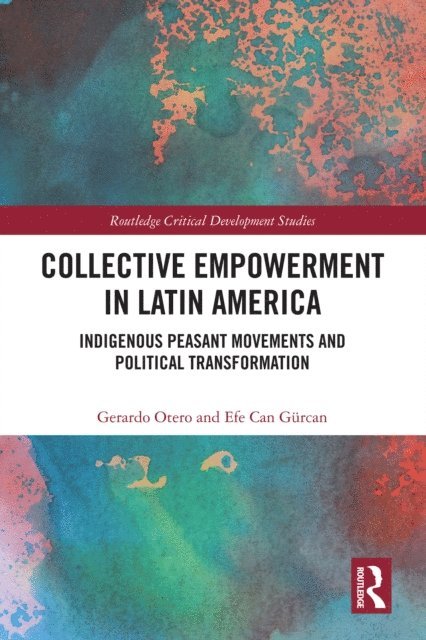
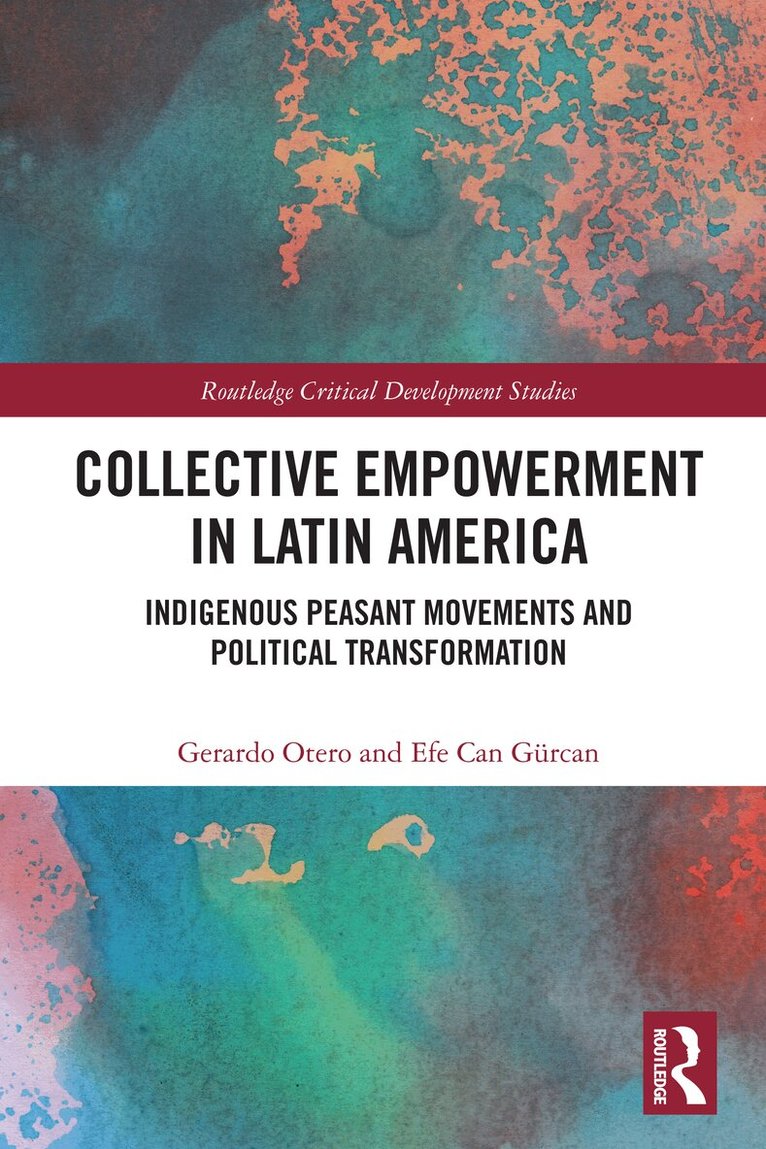
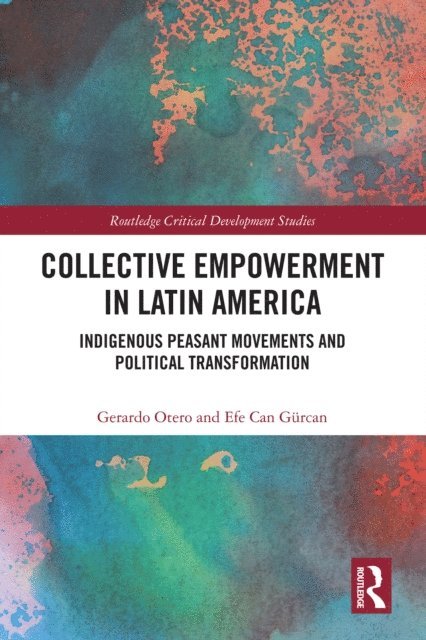
    Collective Empowerment in Latin America

    Indigenous Peasant Movements and Political Transformation

    AvGerardo Otero,Efe Can Gürcan

    Inbunden, Engelska, 2024

    Del i serien Routledge Critical Development Studies

    2 421 kr

    Beställningsvara. Skickas inom 10-15 vardagar. Fri frakt över 249 kr.

    Fler format och utgåvor

    Häftad

    681 kr

    Beskrivning

    This book develops a theory of collective empowerment that looks for change both from the bottom up, in civil society, and from the top down, from state interventions responding to such pressure.Reflecting on the advancement of Indigenous and peasant movements in Latin America since the neoliberal reformation of capitalism in the 1980s, the book outlines a path for progressive social action in which bottom-up pressure by social movements can help progressive parties to gain state power. The book considers how Indigenous and peasant movements in Argentina, Bolivia, Brazil, Ecuador, and Mexico have tried to reshape crucial structures of society from the bottom up. While this mobilization from below is critical and necessary, the book argues that these movements must be supplemented by top-down change from progressive state interventions, as happened mostly in Bolivia and Brazil. The authors conclude that progressive societal action can have massive impact in transforming some of the main socioeconomic structures that determine humans’ relation to the extraction of natural resources, income and wealth inequality, and even the location of a nation’s insertion in world capitalism.This book will be an important resource for social-movement activists and for researchers working in political sociology, sociological theory, political studies, development studies, social movements, and Latin American Studies.

    Produktinformation

    • Utgivningsdatum:2024-06-20
    • Mått:156 x 234 x 20 mm
    • Vikt:453 g
    • Format:Inbunden
    • Språk:Engelska
    • Serie:Routledge Critical Development Studies
    • Antal sidor:265
    • Förlag:Taylor & Francis Ltd
    • ISBN:9781032738413

    Utforska kategorier

    • Statsskick: demokrati inom Samhälle och politik
    • Geografi inom Naturvetenskap och teknik
    • Filosofiska discipliner inom Filosofi och religion

    Mer om författaren

    Gerardo Otero is Professor of International Studies at the School for International Studies, Simon Fraser University, Canada.Efe Can Gürcan is Visiting Senior Scholar at the London School of Economics, UK.

    Recensioner i media

    “An ambitious book offering hope that a better world is possible, building on the collective empowerment of dominated groups, with the support of the state. Chapters focus on indigenous and other agrarian groups across Latin America. The book is both theoretically and empirically rich.”Susan Eckstein, Boston University, USA. Author, most recently, of Cuban Privilege, and recipient of the Latin American Studies Association 2023 Kalman Silvert Life-time Achievement Award“By transcending class reductionism and addressing the mediations between class structural processes and political cultural formation, this book is a major achievement and is unmatched as a contemporary classic.”Adam David Morton, Professor, Discipline of Political Economy, University of Sydney, Australia“This creative neo-Gramscian approach outlines a strategy of collective empowerment in which subordinate groups in Latin America overcome socially-constructed divisions via ‘political-cultural formation’, rejecting false dichotomies of class vs. identity. It offers hopeful analysis of Indigenous-peasant mobilizations challenging neoliberalism, with valuable insights for sociologists, Latin Americanists, and social movement scholar/activists.”Richard Stahler-Sholk, Professor Emeritus, Eastern Michigan University, USA“An excellent reflection on the spoliation and disarticulating rigors that neoliberalism has imposed on the dominated. It is also a suggestive argument about a way out that would imply a class-identity rearticulation and a synergy between bottom-up collective empowerment and progressive state intervention from above.”Carlos Figueroa Ibarra, Research Professor, Benemérita Universidad Autónoma de Puebla, Mexico

    Innehållsförteckning

    • Introduction: From Individual Agency to Collective Empowerment Theory Part 1: Theoretical Foundations of Collective Empowerment 1. Dependent Development and Beyond: Transnational Globalism or Internationalist Nationalism? 2. Sociological Imagination: From Methodological Individualism to Collective Empowerment 3. Democracy, Civil Society, and the State 4. Class or Identity Politics? A False Dichotomy 5. Collective Empowerment Theory Part 2: From Theory to Historical Practice 6. Forging Democracies: Indigenous Struggles for Autonomy 7. Food Sovereignty Collective Empowerment: The Indigenous Peasantry in Argentina 8. Articulating Indigeneity and Class: Rise of the Movimiento al Socialismo in Bolivia 9. The Landless Workers’ Movement of Brazil: Independence and Autonomy 10. Was There a Left Turn in Latin America? Building a Social Democracy Index Conclusion: Toward a Popular-Democratic, Socialist Alternative