• Fri frakt över 249 kr
  • •
  • Snabba leveranser
  • •
  • Billiga böcker
Kundservice

Du är på sajten för privatpersoner.

Företag, bibliotek eller offentlig verksamhet?

Du handlar på classic.bokus.com, där alla dina funktioner finns intakta.
Till classic.bokus.com
Bokus logotyp. Gå till startsidan.
  • Erbjudanden
  • Nyheter
  • Student
  • Topplistor
  • Barn & ungdom
  • Bokus Play
  • E-böcker
  • Pocketböcker
  • Spel & pussel

10% rabatt på allt med kod NYSTART10 →

Sidfot

Mina sidor

    Hjälp

    • Kundservice
    • Vanliga frågor och svar
    • Frakt och leverans
    • Retur vid ångerrätt
    • Reklamera vara
    • Betalning
    • Köpvillkor
    • Allmänna villkor
    • Information om webbplatsens tillgänglighet

    Om Bokus

    • Om oss
    • Pressrum
    • För studenter
    • För företag
    • För bibliotek och offentlig verksamhet
    • För leverantörer
    • Hållbarhet

    Populärt

    • Aktuella erbjudanden
    • Presentkort
    • Studentlitteratur
    • Nya böcker
    • Topplistor
    • Signerade böcker
    • Engelska böcker

    Inspiration

    • Boktips
    • BookTok
    • Populära bokserier
    • Barnbokskaraktärer
    • Populära författare
    Logotyp för Bokus
    Följ oss på Facebook (extern länk)Följ oss på Instagram (extern länk)Följ oss på YouTube (extern länk)Följ oss på TikTok (extern länk)
    bokus @ CookiesAnpassa cookiesIntegritetspolicyKöpvillkor
    Till Citymail hemsida (extern länk)Till Budbee hemsida (extern länk)Till Postnord hemsida (extern länk)Till Schenker hemsida (extern länk)Till Early Bird hemsida (extern länk)Till Walleys hemsida (extern länk)
    1. Samhälle och politik
    2. Samhälle och kultur
    3. Kultur och medier
    4. Kulturvetenskap

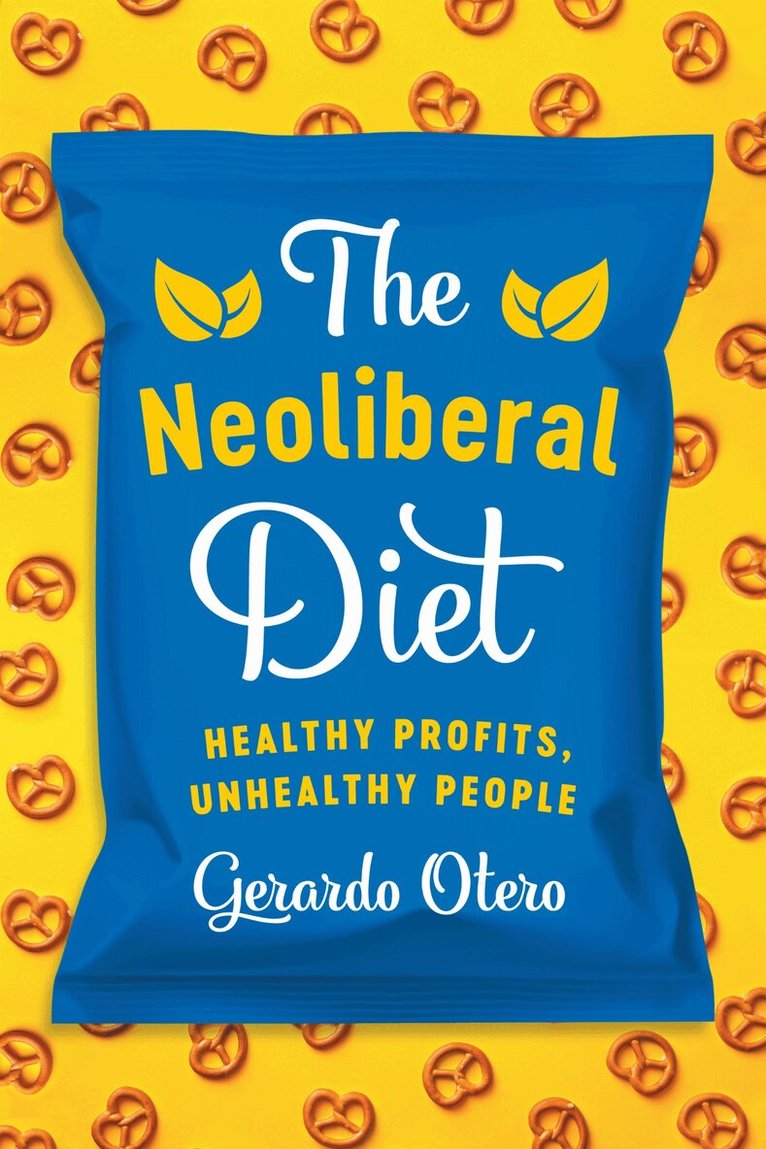
    Neoliberal Diet

    Healthy Profits, Unhealthy People

    AvGerardo Otero

    Inbunden, Engelska, 2018

    1 062 kr

    Beställningsvara. Skickas inom 10-15 vardagar. Fri frakt över 249 kr.

    Fler format och utgåvor

    Häftad

    377 kr

    Beskrivning

    Why are people getting fatter in the United States and beyond? Mainstream explanations argue that people simply eat too much “energy-dense” food while exercising too little. By swapping the chips and sodas for fruits and vegetables and exercising more, the problem would be solved. By contrast, The Neoliberal Diet argues that increased obesity does not result merely from individual food and lifestyle choices. Since the 1980s, the neoliberal turn in policy and practice has promoted trade liberalization and retrenchment of the welfare regime, along with continued agricultural subsidies in rich countries. Neoliberal regulation has enabled agribusiness multinationals to thrive by selling highly processed foods loaded with refined flour and sugars-a diet that originated in the United States-as well as meat. Drawing on extensive empirical data, Gerardo Otero identifies the socioeconomic and political forces that created this diet, which has been exported around the globe, often at the expense of people’s health.Otero shows how state-level actions, particularly subsidies for big farms and agribusiness, have ensured the dominance of processed foods and made healthful fresh foods inaccessible to many. Comparing agrifood performance across several nations, including the NAFTA region, and correlating food access to class inequality, he convincingly demonstrates the structural character of food production and the effect of inequality on individual food choices. Resolving the global obesity crisis, Otero concludes, lies not in blaming individuals but in creating state-level programs to reduce inequality and make healthier food accessible to all.

    Produktinformation

    • Utgivningsdatum:2018-10-03
    • Mått:152 x 229 x 20 mm
    • Vikt:454 g
    • Format:Inbunden
    • Språk:Engelska
    • Antal sidor:256
    • Förlag:University of Texas Press
    • ISBN:9781477316979

    Utforska kategorier

    • Kulturvetenskap inom Samhälle och politik
    • Sociologi inom Samhälle och politik

    Mer om författaren

    Gerardo Otero is a professor of international studies and sociology at Simon Fraser University. He is the author or editor of seven previous books, including Food for the Few: Neoliberal Globalism and Biotechnology in Latin America.

    Recensioner i media

    A closely argued sociological treatise...Otero draws on realms of data to demonstrate that neoliberal ideology-the belief that human welfare is best achieved through state-supported private enterprise-results in market-based agricultural systems that destroy subsistence farming, traditional diets, and health, while blaming the displaced victims for their own fate. - Marion Nestle (The Lancet) In the neoliberal era, cuisines and daily eating are always in conversation with state powers that both facilitate and limit access to particular ingredients. Otero offers a historical framework for thinking about how “food regimes” in Latin America have shifted over time...Although the neoliberal diet caused a crisis of obesity, Otero wisely focuses on this as a social problem that requires structural solutions, even though it causes health issues in individual bodies. (Latin American Research Review) A remarkable, comprehensive book that gives the reader the sense of attending an advanced lecture series on global food politics led by a seasoned food expert…The Neoliberal Diet is critical reading for food studies scholars, but it is also useful for anyone interested in understanding transformations in the global political economy over the last several decades and their effects on food production, diets, migration, labor rights, and social movements...[The Neoliberal Diet] takes us very far in understanding the origin and scope of the problems we face and where we need to go. (Contemporary Sociology) This volume is a 'must read' for agriculture, food, and nutrition science and policy professionals…[a] path-breaking analysis. - Ellen Messer (Human Ecology) Otero makes several points that warrant the attention of food policy analysts and advocates. - Nicholas Freudenberg (Journal of Agriculture, Food Systems, and Community Development) The cogency, clarity, and significance of Gerardo Otero's [The Neoliberal Diet] has become more apparent since the Covid-19 pandemic upended livelihoods across the globe...The Neoliberal Diet interrogates how the combined effects of neoliberal economic policy have engendered vast health inequalities around the world... Otero’s study is an ambitious critique of neoliberalism’s tendency to situate the consumer as almost solely responsible for their health and well-being...Even as the Covid-19 pandemic rages on, Otero reminds us that the neoliberal food regime has, in many ways, laid the groundwork for our present unhealth. (Food, Culture & Society)

    Innehållsförteckning

    • List of Tables and FiguresAcknowledgmentsIntroduction: Obesity and the Neoliberal DietChapter 1. The Neoliberal Food Regime and Its Crisis: The Dynamic FactorsChapter 2. Neoregulation of Agricultural Biotechnology at the National and Suprastate ScalesChapter 3. Food and Inequality in the United StatesChapter 4. Class Diets in the NAFTA Region: Divergence or Convergence?Chapter 5. NAFTA, Agriculture, and Work: Mexico’s Loss of Food and Labor SovereigntyChapter 6. Globalizing the Neoliberal Diet: Food Security and TradeChapter 7. Food Security, Obesity, and Inequality: Measuring the Risk of Exposure to the Neoliberal DietConclusion: What Is to Be Done?ReferencesIndex