Gilles Postel-Vinay – författare
Visar alla böcker från författaren Gilles Postel-Vinay. Handla med fri frakt och snabb leverans.
5 produkter
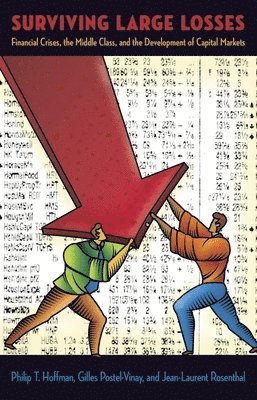
Surviving Large Losses
Financial Crises, the Middle Class, and the Development of Capital Markets
Av Philip T. Hoffman, Gilles Postel-Vinay m. fl.
Häftad, 2009
324 kr
Lägg i varukorg
Listen to a short interview with Philip T. HoffmanHost: Chris Gondek | Producer: Heron & CraneFinancial disasters often have long-range institutional consequences. When financial institutions--banks, insurance companies, brokerage firms, stock exchanges--collapse, new ones take their place, and …
Dark Matter Credit
The Development of Peer-to-Peer Lending and Banking in France
Av Philip T. Hoffman, Gilles Postel-Vinay m. fl.
Inbunden, 2019
449 kr
Lägg i varukorg
How a vast network of shadow credit financed European growth long before the advent of bankingPrevailing wisdom dictates that, without banks, countries would be mired in poverty. Yet somehow much of Europe managed to grow rich long before the diffusion of banks. Dark Matter Credit draws on …
Dark Matter Credit
The Development of Peer-to-Peer Lending and Banking in France
Av Jean-Laurent Rosenthal, Gilles Postel-Vinay m. fl.
E-bok, 2019
617 kr
Lägg i varukorg
How a vast network of shadow credit financed European growth long before the advent of banking Prevailing wisdom dictates that, without banks, countries would be mired in poverty. Yet somehow much of Europe managed to grow rich long before the diffusion of banks. Dark Matter Credit draws on …
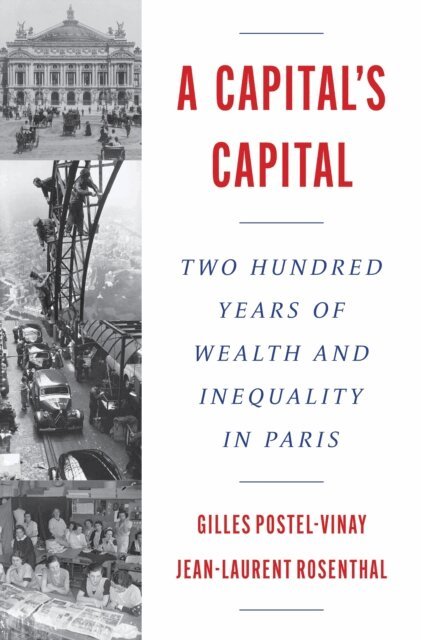
Capital’s Capital
Two Hundred Years of Wealth and Inequality in Paris
Av Gilles Postel-Vinay, Jean-Laurent Rosenthal
Inbunden, 2026
449 kr
Lägg i varukorg
A study of the changes in wealth and its distribution in nineteenth- and twentieth-century Paris that maps the interplay among wealth, inequality, and welfareSuccessful economies sustain capital accumulation across generations, and capital accumulation leads to large increases in private wealth. In …
Capital's Capital
Two Hundred Years of Wealth and Inequality in Paris
Av Jean-Laurent Rosenthal, Gilles Postel-Vinay
E-bok, 2026
617 kr
Lägg i varukorg
A study of the changes in wealth and its distribution in nineteenth and twentieth-century Paris that maps the interplay between wealth, inequality, and welfare Successful economies sustain capital accumulation across generations, and capital accumulation leads to large increases in private wealth. …