• Fri frakt över 249 kr
  • •
  • Snabba leveranser
  • •
  • Billiga böcker
Kundservice

Du är på sajten för privatpersoner.

Företag, bibliotek eller offentlig verksamhet?

Du handlar på classic.bokus.com, där alla dina funktioner finns intakta.
Till classic.bokus.com
Bokus logotyp. Gå till startsidan.
  • Erbjudanden
  • Nyheter
  • Student
  • Topplistor
  • Barn & ungdom
  • Bokus Play
  • E-böcker
  • Pocketböcker
  • Spel & pussel

10% rabatt på allt med kod NYSTART10 →

Sidfot

Mina sidor

    Hjälp

    • Kundservice
    • Vanliga frågor och svar
    • Frakt och leverans
    • Retur vid ångerrätt
    • Reklamera vara
    • Betalning
    • Köpvillkor
    • Allmänna villkor
    • Information om webbplatsens tillgänglighet

    Om Bokus

    • Om oss
    • Pressrum
    • För studenter
    • För företag
    • För bibliotek och offentlig verksamhet
    • För leverantörer
    • Hållbarhet

    Populärt

    • Aktuella erbjudanden
    • Presentkort
    • Studentlitteratur
    • Nya böcker
    • Topplistor
    • Signerade böcker
    • Engelska böcker

    Inspiration

    • Boktips
    • BookTok
    • Populära bokserier
    • Barnbokskaraktärer
    • Populära författare
    Logotyp för Bokus
    Följ oss på Facebook (extern länk)Följ oss på Instagram (extern länk)Följ oss på YouTube (extern länk)Följ oss på TikTok (extern länk)
    bokus @ CookiesAnpassa cookiesIntegritetspolicyKöpvillkor
    Till Citymail hemsida (extern länk)Till Budbee hemsida (extern länk)Till Postnord hemsida (extern länk)Till Schenker hemsida (extern länk)Till Early Bird hemsida (extern länk)Till Walleys hemsida (extern länk)
    1. Ekonomi och Ledarskap
    2. Nationalekonomi
    3. Mikroekonomi

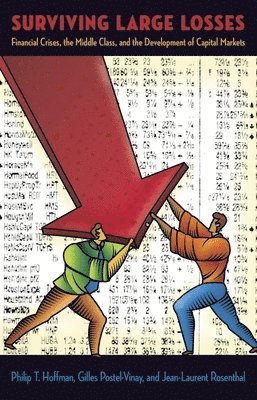
    Surviving Large Losses

    Financial Crises, the Middle Class, and the Development of Capital Markets

    AvPhilip T. Hoffman,Gilles Postel-Vinay

    Häftad, Engelska, 2009

    319 kr

    Beställningsvara. Skickas inom 10-15 vardagar. Fri frakt över 249 kr.

    Beskrivning

    Listen to a short interview with Philip T. HoffmanHost: Chris Gondek | Producer: Heron & CraneFinancial disasters often have long-range institutional consequences. When financial institutions--banks, insurance companies, brokerage firms, stock exchanges--collapse, new ones take their place, and these changes shape markets for decades or even generations. Surviving Large Losses explains why such financial crises occur, why their effects last so long, and what political and economic conditions can help countries both rich and poor survive--and even prosper--in the aftermath.Looking at past and more recent financial disasters through the lens of political economy, the authors identify three factors critical to the development of financial institutions: the level of government debt, the size of the middle class, and the quality of information that is available to participants in financial transactions. They seek to find out when these factors promote financial development and mitigate the effects of financial crises and when they exacerbate them.Although there is no panacea for crises--no one set of institutions that will resolve them--it is possible, the authors argue, to strengthen existing financial institutions, to encourage economic growth, and to limit the harm that future catastrophes can do.

    Produktinformation

    • Utgivningsdatum:2009-09-01
    • Mått:129 x 200 x 19 mm
    • Vikt:282 g
    • Format:Häftad
    • Språk:Engelska
    • Antal sidor:272
    • Förlag:Harvard University Press
    • ISBN:9780674036369
    • Utmärkelser:Nominated for Allan Sharlin Memorial Award 2008

    Utforska kategorier

    • Mikroekonomi inom Ekonomi och Ledarskap
    • Ekonomisk historia inom Ekonomi och Ledarskap
    • Finansiering inom Ekonomi och Ledarskap

    Mer om författaren

    Philip T. Hoffman is Rea A. and Lela G. Axline Professor of Business Economics and Professor of History, California Institute of Technology. Gilles Postel-Vinay is Director of Studies at the École des Hautes Études en Sciences Sociales, Paris. Jean-Laurent Rosenthal is the Rea A. and Lela G. Axline Professor of Business Economics at the California Institute of Technology.

    Recensioner i media

    The authors are highly respected economic historians whose deep command of the specialist literature shines through. Their ideas are clearly presented, and effectively harness historical example to address one of the great questions of this age: why are some economies successful, and others not? Their answer will command attention among policy makers and scholars alike.

    Innehållsförteckning

    • Introduction 1. The Political Economy of Financial Crises 2. Information and Crises 3. Crises and the Middle Class 4. What Happens after Crises 5. Financial Intermediaries and the Demand for Change 6. Governments and the Demand for Reform Conclusion: The Lessons of History Notes References Index