Philip T. Hoffman – författare
Visar alla böcker från författaren Philip T. Hoffman. Handla med fri frakt och snabb leverans.
13 produkter
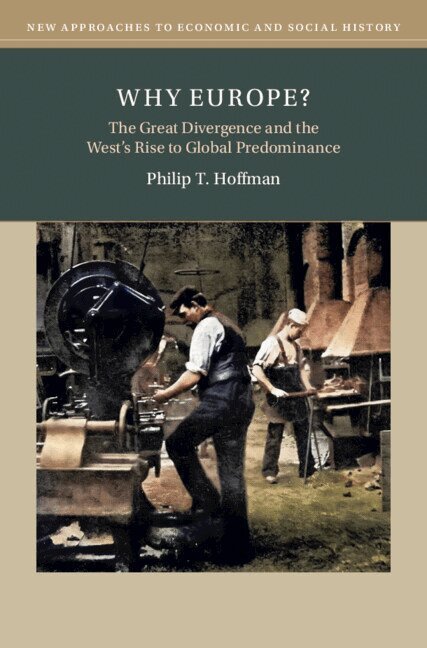
Why Europe?
The Great Divergence and the West's Rise to Global Predominance
Häftad, 2026
435 kr
Lägg i varukorg
Economic growth transformed the world. It freed us from a world where nearly everyone was mired in poverty and half of all children died before reaching adulthood. However, these benefits have not been felt everywhere, nor by everyone. In this groundbreaking new account of the divergence between …
Finance, Intermediaries, and Economic Development
Av Stanley L. Engerman, Philip T. Hoffman m. fl.
Häftad, 2010
687 kr
Lägg i varukorg
This volume includes ten essays dealing with financial and other forms of economic intermediation in Europe, Canada, and the United States since the seventeenth century. Each relates the development of institutions to economic change and describes their evolution over time, as well as discussing …
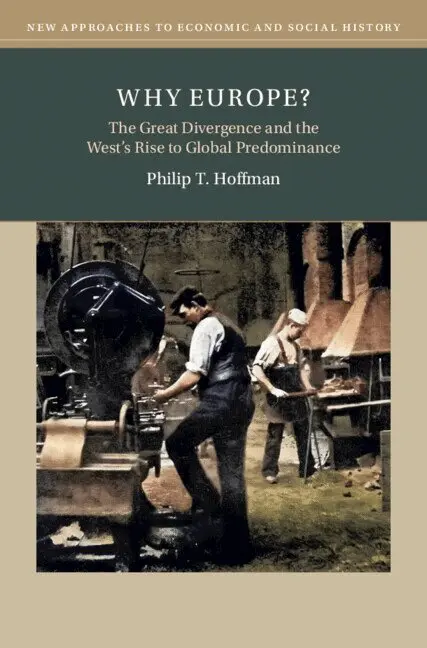
Why Europe?
The Great Divergence and the West's Rise to Global Predominance
Inbunden, 2026
1358 kr
Lägg i varukorg
Economic growth transformed the world. It freed us from a world where nearly everyone was mired in poverty and half of all children died before reaching adulthood. However, these benefits have not been felt everywhere, nor by everyone. In this groundbreaking new account of the divergence between …
Finance, Intermediaries, and Economic Development
Av Stanley L. Engerman, Philip T. Hoffman m. fl.
Inbunden, 2003
1358 kr
Lägg i varukorg
This volume includes ten essays dealing with financial and other forms of economic intermediation in Europe, Canada, and the United States since the seventeenth century. Each relates the development of institutions to economic change and describes their evolution over time, as well as discussing …
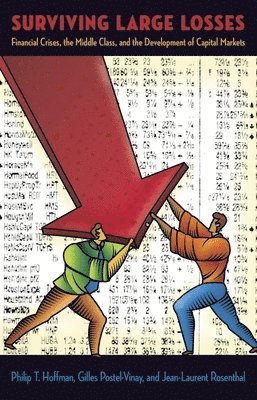
Surviving Large Losses
Financial Crises, the Middle Class, and the Development of Capital Markets
Av Philip T. Hoffman, Gilles Postel-Vinay m. fl.
Häftad, 2009
323 kr
Lägg i varukorg
Listen to a short interview with Philip T. HoffmanHost: Chris Gondek | Producer: Heron & CraneFinancial disasters often have long-range institutional consequences. When financial institutions--banks, insurance companies, brokerage firms, stock exchanges--collapse, new ones take their place, and …
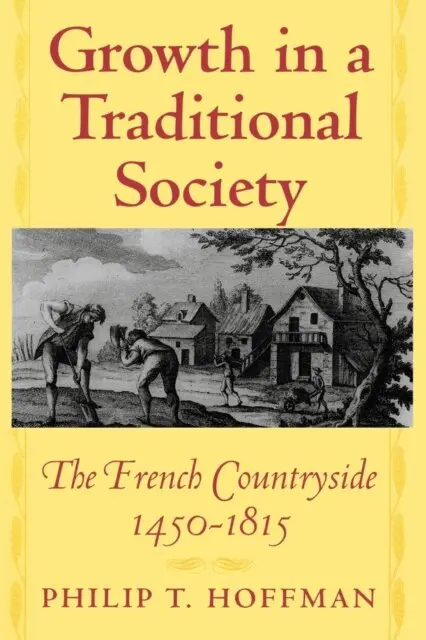
Growth in a Traditional Society
The French Countryside, 1450-1815
Häftad, 2000
680 kr
Lägg i varukorg
Philip Hoffman shatters the widespread myth that traditional agricultural societies in early modern Europe were socially and economically stagnant and ultimately dependent on wide-scale political revolution for their growth. Through a richly detailed historical investigation of the peasant …
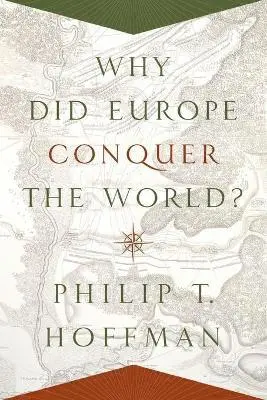
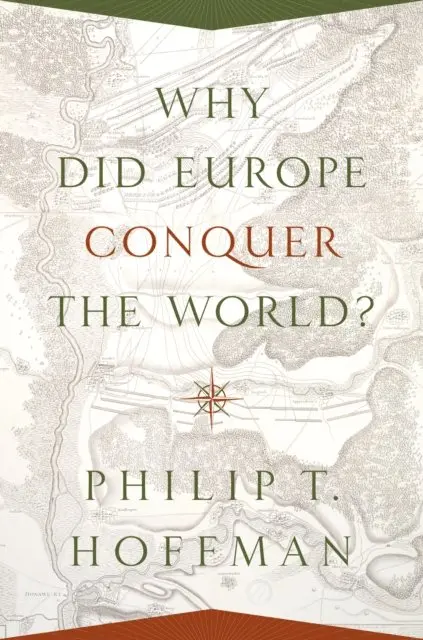
Why Did Europe Conquer the World?
Häftad, 2017
217 kr
Lägg i varukorg
Between 1492 and 1914, Europeans conquered 84 percent of the globe. But why did Europe establish global dominance, when for centuries the Chinese, Japanese, Ottomans, and South Asians were far more advanced? In Why Did Europe Conquer the World?, Philip Hoffman demonstrates that conventional …
Dark Matter Credit
The Development of Peer-to-Peer Lending and Banking in France
Av Philip T. Hoffman, Gilles Postel-Vinay m. fl.
Inbunden, 2019
444 kr
Lägg i varukorg
How a vast network of shadow credit financed European growth long before the advent of bankingPrevailing wisdom dictates that, without banks, countries would be mired in poverty. Yet somehow much of Europe managed to grow rich long before the diffusion of banks. Dark Matter Credit draws on …
Dark Matter Credit
The Development of Peer-to-Peer Lending and Banking in France
Av Jean-Laurent Rosenthal, Gilles Postel-Vinay m. fl.
E-bok, 2019
617 kr
Lägg i varukorg
How a vast network of shadow credit financed European growth long before the advent of banking Prevailing wisdom dictates that, without banks, countries would be mired in poverty. Yet somehow much of Europe managed to grow rich long before the diffusion of banks. Dark Matter Credit draws on …
Growth in a Traditional Society
The French Countryside, 1450-1815
E-bok, 2018
934 kr
Lägg i varukorg
Philip Hoffman shatters the widespread myth that traditional agricultural societies in early modern Europe were socially and economically stagnant and ultimately dependent on wide-scale political revolution for their growth. Through a richly detailed historical investigation of the peasant …
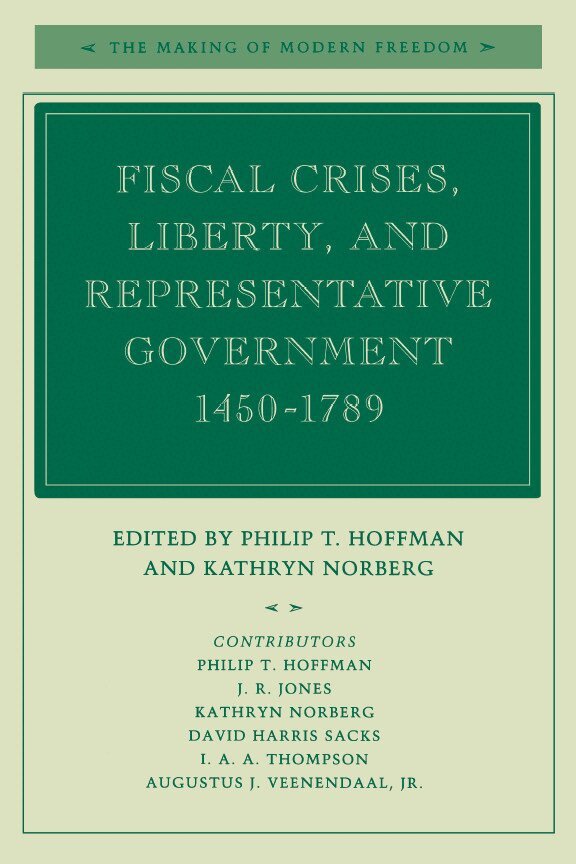
Fiscal Crises, Liberty, and Representative Government 1450-1789
Av Philip T. Hoffman, Kathryn Norberg
Häftad, 2002
352 kr
Lägg i varukorg
This volume, one of the books in the "Making of Modern Freedom" series, is a collection of essays by eminent historians who explore the relationship between state finance and political development in fifteenth and sixteenth century Europe. They analyze how during this period European states were …
Why Did Europe Conquer the World?
E-bok, 2015
279 kr
Lägg i varukorg
The startling economic and political answers behind Europe''s historical dominance Between 1492 and 1914, Europeans conquered 84 percent of the globe. But why did Europe establish global dominance, when for centuries the Chinese, Japanese, Ottomans, and South Asians were far more advanced? In Why …
Why Did Europe Conquer the World?
Inbunden, 2015
304 kr
Tillfälligt slut
Between 1492 and 1914, Europeans conquered 84 percent of the globe. But why did Europe establish global dominance, when for centuries the Chinese, Japanese, Ottomans, and South Asians were far more advanced? In Why Did Europe Conquer the World?, Philip Hoffman demonstrates that conventional …