Kathryn Norberg - Böcker
Visar alla böcker från författaren Kathryn Norberg. Handla med fri frakt och snabb leverans.
7 produkter
7 produkter
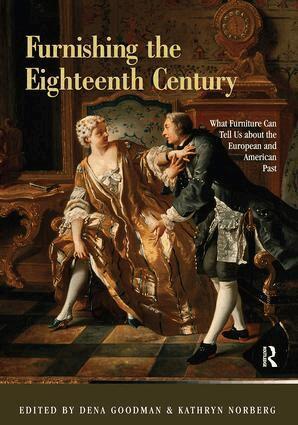
Furnishing the Eighteenth Century
What Furniture Can Tell Us About the European and American Past
Häftad, Engelska, 2010
677 kr
Skickas inom 10-15 vardagar
Furnishing the Eighteenth Century provides an illuminating, interdisciplinary look into European and American furniture during the century that connoisseurs and collectors consider its golden age. Lavishly illustrated, this lively collection of essays by historians, art historians, and literary scholars examines the ways furniture of this period reflects the global contacts and social rituals developed in eighteenth-century Europe and America. Drawing on literature, painting, account books and death inventories, this diverse compilation explores how and why eighteenth-century men and women on both sides of the Atlantic purchased and used furniture. Ultimately, these essays make the past come alive, showing us what made desks, tables and chairs deeply meaningful in their own time and historically informative today.Contributors: Donna Bohanan, Natacha Coquery, Madeleine Dobie, Dena Goodman, Mimi Hellman, David Jaffee, Ann Smart Martin, Kathryn Norberg, Chaela Pastore, David Porter, Mary Salzman, Carolyn Sargentson
Furnishing the Eighteenth Century
What Furniture Can Tell Us About the European and American Past
Inbunden, Engelska, 2006
2 150 kr
Skickas inom 10-15 vardagar
Furnishing the Eighteenth Century provides an illuminating, interdisciplinary look into European and American furniture during the century that connoisseurs and collectors consider its golden age. Lavishly illustrated, this eclectic and lively collection of essays by historians, art historians, and literary scholars examines the many ways furniture of this period reflects the complex social and cultural issues that shaped this century in both Europe and America. In addition to furniture and portraiture, this diverse compilation considers literature, account books, and handbooks, allowing for a revealing look at how these furnishings created, contested, and subverted their cultures on both sides of the Atlantic. Ultimately, these essays make the past come alive, showing us what made this furniture meaningful in its own time, and why it is still meaningful today.
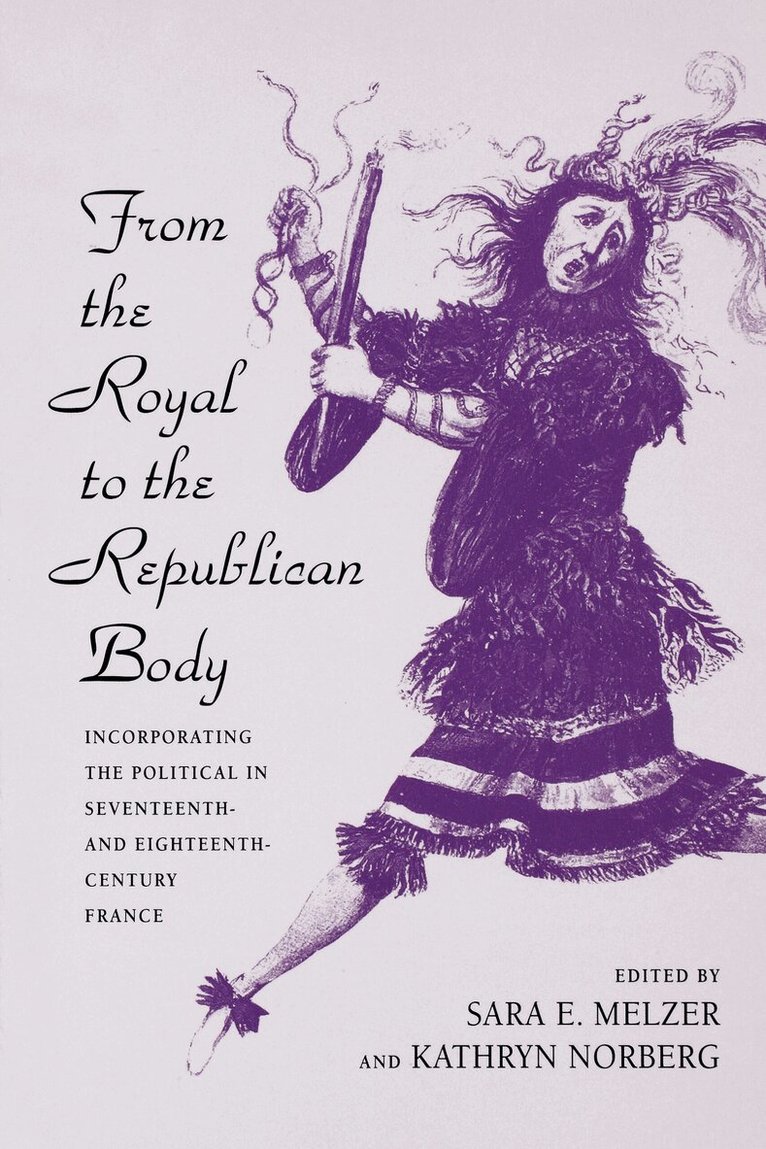
From the Royal to the Republican Body
Incorporating the Political in Seventeenth- and Eighteenth-Century France
Häftad, Engelska, 1998
609 kr
Skickas inom 3-6 vardagar
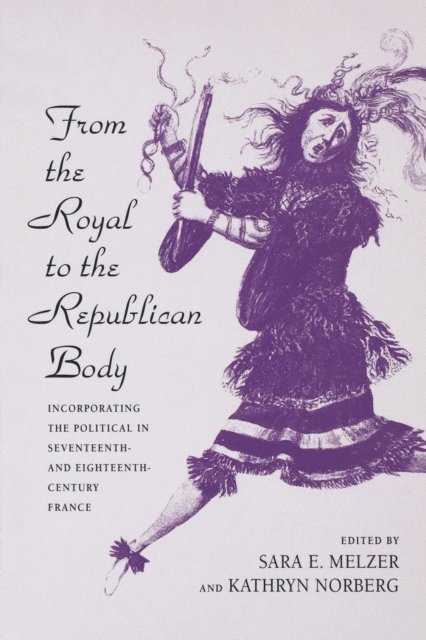
In this innovative volume, leading scholars examine the role of the body as a primary site of political signification in seventeenth- and eighteenth-century France. Some essays focus on the sacralization of the king's body through a gendered textual and visual rhetoric. Others show how the monarchy mastered subjects' minds by disciplining the body through dance, music, drama, art, and social rituals. The last essays in the volume focus on the unmaking of the king's body and the substitution of a new, republican body. Throughout, the authors explore how race and gender shaped the body politic under the Bourbons and during the Revolution. This compelling study expands our conception of state power and demonstrates that seemingly apolitical activities like the performing arts, dress and ritual, contribute to the state's hegemony. From the Royal to the Republican Body will be an essential resource for students and scholars of history, literature, music, dance and performance studies, gender studies, art history, and political theory.
835 kr
Skickas inom 3-6 vardagar
Rich and Poor in Grenoble, 1600–1814 reframes early modern French poor relief as an analytical lens on social structure, culture, and economic change. Rejecting siloed treatments of institutions, attitudes, or “the poor” as separate objects of study, Kathryn Norberg reconstructs the shifting relationship between elites and the indigent at their point of closest contact. Set within a single city of average size and typical trajectories, the book contests the homogenizing “Old Regime” frame by tracing long-run transformations across confessional revival, Enlightenment, and Revolution. Post-Tridentine Catholicism, confraternal activism, and the punitive humanitarianism of the seventeenth century (“seigneurial” charity) give way to eighteenth-century institutional retrenchment and new sensibilities toward poverty—culminating in a politically driven renaissance of relief after 1789. Throughout, Norberg integrates institutional history (hospitals, workhouses, dépôts de mendicité), elite discourse, and popular culture to show how religious imaginaries, economic dislocation, crime, illegitimacy, and mobility interacted to reshape the moral economy of assistance.Methodologically, the study is notable for its mixed archival and quantitative design. Norberg mobilizes an unusually rich evidentiary base—criminal court dossiers, bread-distribution rolls, registers of beggars and inmates—and, crucially, some 5,000 last wills and testaments. By pairing qualitative readings with statistical tools (including multiple regression and tobit analysis) and converting monetary values to constant livres, she tracks rates and meanings of charitable giving, distinguishes bequests to the poor from gifts to the Church, and gauges the reach of Counter-Reformation devotion and the impact of Enlightenment critiques. Key findings include a late-seventeenth-century surge in almsgiving absent any decline in poverty or crime; an eighteenth-century rise in illegitimacy amid falling violence; and an Enlightenment “modernization” of relief that narrowed rather than expanded aid. For historians of France, social welfare, religion, and the history of quantification, this is a model city study that restores poor relief to the center of debates on culture, inequality, and state formation.This title is part of UC Press's Voices Revived program, which commemorates University of California Press’s mission to seek out and cultivate the brightest minds and give them voice, reach, and impact. Drawing on a backlist dating to 1893, Voices Revived makes high-quality, peer-reviewed scholarship accessible once again using print-on-demand technology. This title was originally published in 1985.
777 kr
Skickas inom 7-10 vardagar
Rich and Poor in Grenoble, 1600–1814 reframes early modern French poor relief as an analytical lens on social structure, culture, and economic change. Rejecting siloed treatments of institutions, attitudes, or “the poor” as separate objects of study, Kathryn Norberg reconstructs the shifting relationship between elites and the indigent at their point of closest contact. Set within a single city of average size and typical trajectories, the book contests the homogenizing “Old Regime” frame by tracing long-run transformations across confessional revival, Enlightenment, and Revolution. Post-Tridentine Catholicism, confraternal activism, and the punitive humanitarianism of the seventeenth century (“seigneurial” charity) give way to eighteenth-century institutional retrenchment and new sensibilities toward poverty—culminating in a politically driven renaissance of relief after 1789. Throughout, Norberg integrates institutional history (hospitals, workhouses, dépôts de mendicité), elite discourse, and popular culture to show how religious imaginaries, economic dislocation, crime, illegitimacy, and mobility interacted to reshape the moral economy of assistance.Methodologically, the study is notable for its mixed archival and quantitative design. Norberg mobilizes an unusually rich evidentiary base—criminal court dossiers, bread-distribution rolls, registers of beggars and inmates—and, crucially, some 5,000 last wills and testaments. By pairing qualitative readings with statistical tools (including multiple regression and tobit analysis) and converting monetary values to constant livres, she tracks rates and meanings of charitable giving, distinguishes bequests to the poor from gifts to the Church, and gauges the reach of Counter-Reformation devotion and the impact of Enlightenment critiques. Key findings include a late-seventeenth-century surge in almsgiving absent any decline in poverty or crime; an eighteenth-century rise in illegitimacy amid falling violence; and an Enlightenment “modernization” of relief that narrowed rather than expanded aid. For historians of France, social welfare, religion, and the history of quantification, this is a model city study that restores poor relief to the center of debates on culture, inequality, and state formation.This title is part of UC Press's Voices Revived program, which commemorates University of California Press’s mission to seek out and cultivate the brightest minds and give them voice, reach, and impact. Drawing on a backlist dating to 1893, Voices Revived makes high-quality, peer-reviewed scholarship accessible once again using print-on-demand technology. This title was originally published in 1985.
332 kr
Skickas inom 7-10 vardagar
This volume, one of the books in the "Making of Modern Freedom" series, is a collection of essays by eminent historians who explore the relationship between state finance and political development in fifteenth and sixteenth century Europe. They analyze how during this period European states were engaged in nearly continuous warfare and how those warfares produced fiscal crises. As a result, rulers were forced to enter into novel fiscal agreements with their subjects, often providing their subjects more political power, in exchange. The volume begins with two essays on England. David Harris Sacks traces the politics of government finance from the fifteenth century to the eve of the Civil War, and J. R. Jones carries the story forward into the eighteenth century, when representative government was jeopardized by new and powerful financial interests. The third essay, by Augustus J. Veenendaal, Jr., explains why the Netherlands' exceptional ability to raise money by taxes and loans allowed them to wage war without the severe financial difficultes experiencd by other European powers. Two essays on Spain by I. A. A. Thompson follow the changing fortunes of the Cortes of Castile, relating its role to the desperate manipulation of Spanish fiscal policy as it came into conflict with the dearly held liberties of Castilian citizens.The two final essays deal with the consequences of absolutism in France. Philip T. Hoffman details the fiscal effect of noble privileges and explores the political ramifications of the country's repeated financial crises, and Kathryn Norberg explains why the fiscal crisis of 1789 finally brought down the monarchy.
508 kr
Skickas inom 7-10 vardagar
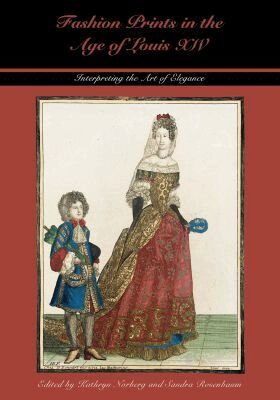
Between 1678 and 1710, Parisian presses printed hundreds of images of elegantly attired men and women dressed in the latest mode, and posed to display every detail of their clothing and accessories. Long used to illustrate dress of the period, these fashion prints have been taken at face value and used uncritically. Drawing on perspectives from art history, costume history, French literature, museum conservation and theatrical costuming, the essays in this volume explore what the prints represent and what they reveal about fashion and culture in the seventeenth century.With more than one hundred illustrations, Fashion Prints in the Age of Louis XIV constitutes not only an innovative analysis of fashion engravings, but also one of the most comprehensive collections of seventeenth-century fashion images available in print.