Giovanbattista Tusa - Böcker
Visar alla böcker från författaren Giovanbattista Tusa. Handla med fri frakt och snabb leverans.
8 produkter
8 produkter
284 kr
Skickas
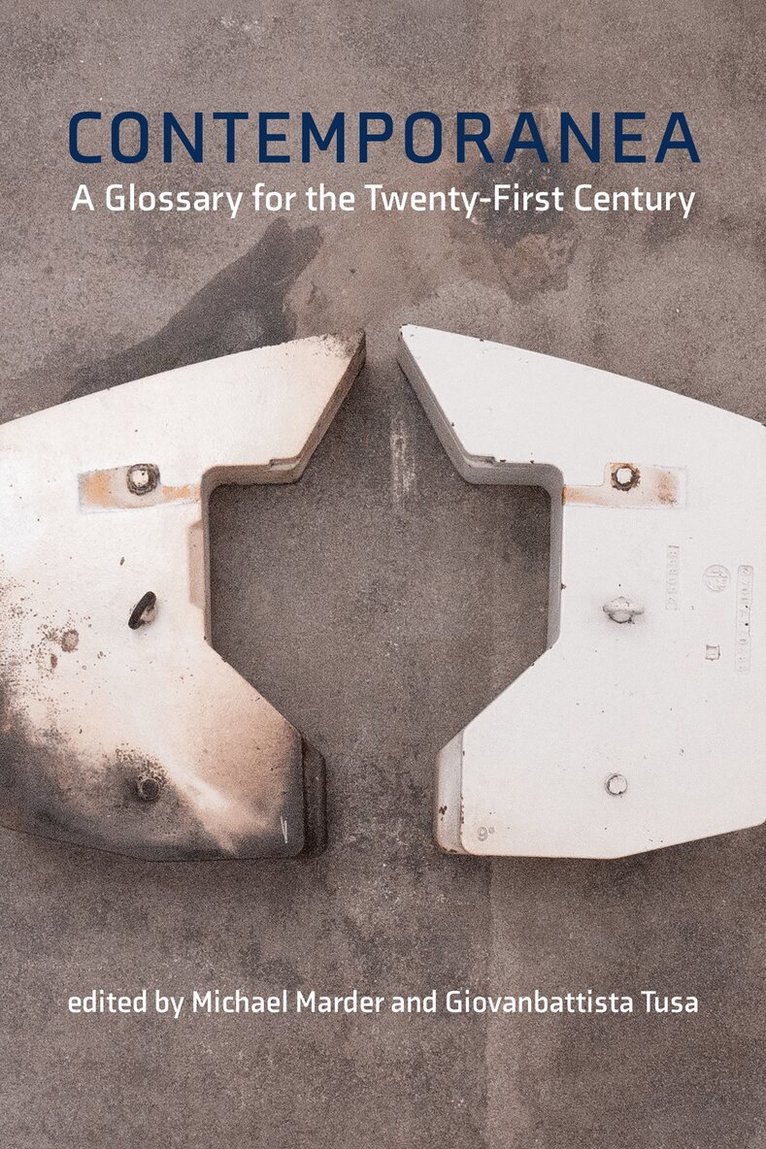
A groundbreaking, multidisciplinary collection that rethinks our present moment and anticipates the key concepts that will shape and direct the twenty-first century.Contemporanea is a nascent lexicon for the twenty-first century edited by seasoned philosophers and authors Michael Marder and Giovanbattista Tusa. The collection showcases perspectives from a range of noteworthy thinkers in philosophy, ecology, and cultural studies, as well as artists, from across the globe, including Slavoj Zizek, Timothy Morton, Denise Ferreira Da Silva, and Vandana Shiva, who each describe what they anticipate will be the concepts shaping the trajectory of this century—everything from the world state to the nuclear taboo, automation to Teslaism, plant sexuality to arachnomancy, and ecotrauma to resonances, to name a few.This century, as the editors explain, has to date grounded itself in the debris of the preceding century, whose revolutions and struggles failed to transform our time: post-colonialism, post-fascism, and post-liberalism have morphed into neocolonialism, neoliberalism, and neofascism, often combined in a previously unimaginable mix. And, just as the political developments at the beginning of the twenty-first century revived and reshuffled those of the preceding epoch, so too have philosophical trends sought to breathe fresh life into the stillborn -isms of the past—realism, vitalism, logicism, materialism, empiricism, criticism—adding the adjective “new” and sometimes “radical” before them. To articulate a different future, another language is needed. And, to develop another language, one needs to develop fresh concepts, including the concepts proposed in this collection.ContributorsMieke Bal, Claudia Baracchi, Amanda Boetzkes, Erik Bordeleau, Anita Chari, Emanuele Coccia, Valentina Desideri, Roberto Esposito, Filipe Ferreira, Denise Ferreira da Silva, Claire Fontaine, Graham Harman, Yogi Hale Hendlin, Ranjit Hoskote, Cymene Howe, Daniel Innerarity, Joela Jacobs, Ken Kawashima, Sabu Kohso, Bogna Konior, Brandon LaBelle, Anna Longo, Artemy Magun, Michael Marder, Michael Marder, Jason Bahbak Mohaghegh, Timothy Morton, Mycelium, Jean-Luc Nancy, Bahar Noorizadeh, Kelly Oliver, Uriel Orlow, Richard Polt, Marcia Sá Cavalcante Schuback, Tomás Saraceno, Vandana Shiva, Anton Tarasyuk, Anaïs Tondeur, Giovanbattista Tusa, Sjoerd van Tuinen, Santiago Zabala, Zahi Zalloua, Slavoj Žižek
484 kr
Kommande
Do our political systems and democracies really reflect the complex reality of the 21st century? Or does politics seem to be legislating about yesterday’s world? In his latest book, Daniel Innerarity warns of the gap between the political concepts that serve as our guide and our overly complex reality that has long ceased to respond to them. Arguing that this theoretical deficit leads to a political practice that simplifies and impoverishes our democracies, nourishing the demagogues and sustaining reassuring old narratives, Innerarity proposes a modern update of key political concepts, from power and sovereignty to territory and representation. The theory of democracy originates from a time of relative social and political simplicity. There was less pluralism, less interdependence, political entities were autarkic, and the technological tools they had to handle had nothing to do with the sophistication of our artificial intelligence, our financial system, or the technological advances in medicine. And yet, Innerarity argues, there is no need to despair. If democracy has made the transition from the polis to the nation-state, from direct democracy to representative democracy, there is no reason to suppose that it cannot face new challenges, as long as it is provided with an adequate political architecture.Drawing on a broad range of sources, including classical and contemporary theorists, A Theory of Complex Democracy presents a new theory of democracy and government for the 21st century, a theory that starts from the premise that the most promising rejuvenation of our democracies is to make them more complex.
742 kr
Skickas inom 10-15 vardagar
Rethinking the philosophy of Immanuel Kant in the age of artificial intelligence.What could be called an intelligent machine? Are machines capable of being moral? Does an algorithm for perpetual peace exist? In this groundbreaking new work, Yuk Hui considers how current debates on artificial intelligence echo historical philosophical discussions about the workings of the mind, with the philosophy of Immanuel Kant emerging as a lens through which to consider the ethical and political implications of AI and robotics in a new light. Addressing fundamental questions around machine intelligence and morality, transcendental idealism and learning, and the metaphysics of machines, the history of AI and Kantian ideas are expertly woven together alongside an array of figures in the histories of technology and philosophy: from Gottfried Wilhelm Leibniz and Alan Turing to Hubert Dreyfus and Jacques de Vaucanson. In asking how we can understand AI in light of the challenges Kant posed to both rationalism and empiricism, and how revisiting Kant can help us better comprehend the nature and limitations of contemporary technologies, Kant Machine is an essential critical contribution both to Kant studies and to the philosophy of digital technology.
445 kr
Skickas inom 7-10 vardagar
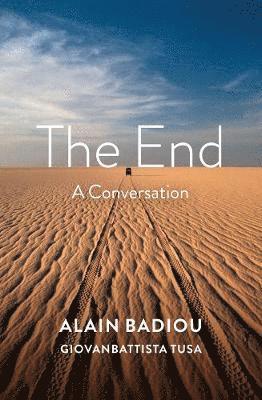
The notion of ‘the end’ has long occupied philosophical thought. In light of the horrors of the twentieth century, some writers have gone so far as to declare the end of philosophy itself, emphasizing the impossibility of thinking after Auschwitz. In this book the distinguished philosopher Alain Badiou, in dialogue with Giovanbattista Tusa, argues that we must renounce ‘the pathos of completion’ and continue to think philosophically. To accept the atrocities of the twentieth century as marking the end of philosophy is intolerable precisely because it buys into the totalizing doctrines of the perpetrators. Badiou contends that philosophical thinking is needed now more than ever to counter the totalizing effects of globalized capitalism, which prescribes no objective for human life other than integration into its system, giving rise to a widespread sense of hopelessness and nihilism.This book will appeal to the many followers of Badiou’s work and to anyone interested in contemporary philosophy and radical political theory.
138 kr
Skickas inom 7-10 vardagar
The notion of ‘the end’ has long occupied philosophical thought. In light of the horrors of the twentieth century, some writers have gone so far as to declare the end of philosophy itself, emphasizing the impossibility of thinking after Auschwitz. In this book the distinguished philosopher Alain Badiou, in dialogue with Giovanbattista Tusa, argues that we must renounce ‘the pathos of completion’ and continue to think philosophically. To accept the atrocities of the twentieth century as marking the end of philosophy is intolerable precisely because it buys into the totalizing doctrines of the perpetrators. Badiou contends that philosophical thinking is needed now more than ever to counter the totalizing effects of globalized capitalism, which prescribes no objective for human life other than integration into its system, giving rise to a widespread sense of hopelessness and nihilism.This book will appeal to the many followers of Badiou’s work and to anyone interested in contemporary philosophy and radical political theory.
1 698 kr
Skickas inom 10-15 vardagar
This pioneering volume explores the extraordinary Portuguese poet Fernando Pessoa (1888–1935) and his relationship to philosophy. On the one hand, this book reveals Pessoa’s serious knowledge of philosophy and playful philosophical explorations and how he has the gift of synthesizing, appropriating, and subverting complex ideas into his art; and, on the other hand, the chapters shed new light on central aspects and problems of philosophy through the prism of Pessoa’s diverse writings. The volume includes sixteen new essays from an international group of scholars, analyzing Pessoa’s multifaceted poetic work alongside philosophical themes and movements, from conceptions of time, ancient and modern aesthetics, philosophy of language, transcendentalism, immanence, and nihilism; to Islamic philosophy, Indian philosophy, Daoism, neo-paganism, and the philosophy of the self. The breadth of his work provides a springboard for new thinking on the aesthetic and the spiritual, the logic of value and capitalist modernity, and ecological thought and postmodernism. The volume also includes the most complete English translation of Pessoa's text (written by his heteronym Álvaro de Campos) called "Notes for the Memory of my Master Caeiro."
561 kr
Skickas inom 10-15 vardagar
This pioneering volume explores the extraordinary Portuguese poet Fernando Pessoa (1888–1935) and his relationship to philosophy. On the one hand, this book reveals Pessoa’s serious knowledge of philosophy and playful philosophical explorations and how he has the gift of synthesizing, appropriating, and subverting complex ideas into his art; and, on the other hand, the chapters shed new light on central aspects and problems of philosophy through the prism of Pessoa’s diverse writings. The volume includes sixteen new essays from an international group of scholars, analyzing Pessoa’s multifaceted poetic work alongside philosophical themes and movements, from conceptions of time, ancient and modern aesthetics, philosophy of language, transcendentalism, immanence, and nihilism; to Islamic philosophy, Indian philosophy, Daoism, neo-paganism, and the philosophy of the self. The breadth of his work provides a springboard for new thinking on the aesthetic and the spiritual, the logic of value and capitalist modernity, and ecological thought and postmodernism. The volume also includes the most complete English translation of Pessoa's text (written by his heteronym Álvaro de Campos) called "Notes for the Memory of my Master Caeiro."
335 kr
Skickas inom 5-8 vardagar
One hundred years after the birth of Pier Paolo Pasolini, his oeuvre might best be described as “une pensée”, as a meandering thought-provoking thought, to quote Jean-Luc Godard’s exceptional comment on Pasolini in Histoire(s) du cinéma. Pasolini scholarship has certainly increased in recent years, but mainly from the perspective of Italian Studies and with a particular focus on his poetry, prose and film. The proposed volume instead highlights the interest of his work for the history of twentieth-century philosophy. It therefore compiles key writings by philosophers who are relatively unknown even within the context of contemporary French and Italian thought. By collecting little known or newly translated essays from these philosophers, the volume aims to foster a contemporary discussion about the (in-)actuality of Pasolini’s work.