Giulia Riccò - Böcker
Visar alla böcker från författaren Giulia Riccò. Handla med fri frakt och snabb leverans.
3 produkter
3 produkter
152 kr
Skickas inom 7-10 vardagar
Contributors to this special issue of Radical History Review study histories of fascism and antifascism after 1945 to show how fascist ideology continues to circulate and be opposed transnationally despite its supposed death at the end of World War II. The essays cover the use of fascism in the 1970s construction of the Latinx Left, the connection of antifascism and anti-imperialism in 1960s Italian Communist internationalism, post-dictatorship Argentina and the transhistorical alliance between Las Madres and travestÍ activism, cultures of antifascism in contemporary Japan, and global fascism as portrayed through the British radical right's attempted alliance with Qathafi's Libya. The issue also includes a discussion about teaching fascism through fiction in the age of Trump, a reflection on the practices of archiving and displaying antifascist objects to various publics, and reviews of recent works on antifascism, punk music, and the Rock Against Racism movement.Contributors. Benjamin Bland, Mark Bray, Rosa Hamilton, Jessica Namakkal, Giulia RiccÒ, Cole Rizki, Eric Roubinek, Antonino Scalia, Stuart Schrader, Vivian Shaw, Michael Staudenmaier
1 300 kr
Skickas inom 10-15 vardagar
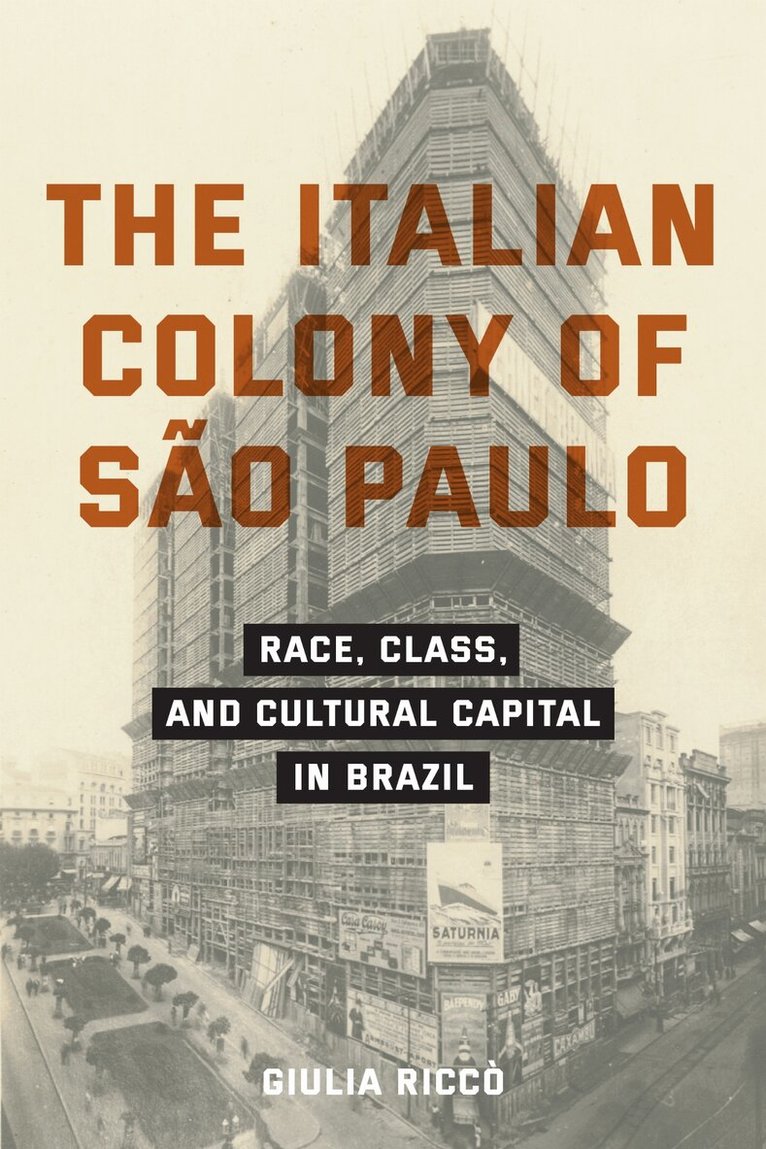
WINNER, 2024 ALDO AND JEANNE SCAGLIONE PUBLICATION AWARD FOR A MANUSCRIPT IN ITALIAN LITERARY STUDIES, MODERN LANGUAGES ASSOCIATIONIntroduces a way to study migration that privileges literary analysis over and against sociological data and insists on the importance of culture in the production of political identities This book argues that Italians first became racialized as white in São Paulo, Brazil, at the turn of the twentieth century. Whereas Italians in the United States struggled with xenophobia and were often not fully acknowledged as white, in São Paulo, due to a series of social, economic, and cultural factors, Italians became closely associated with ideas of whiteness, modernization, and civilization. This book brings to light how the overlooked experiences of Italians in Brazil complicate conventional narratives about the racial ambiguity and oppression of Italians in the Americas, on the one hand, and the conflation of Italians with cultural and economic backwardness in Europe, on the other. In the book, close readings of a wide array of texts—the travel writings of Gina Lombroso Ferrero, the short stories of Antônio de Alcântara Machado, the columns of José Correia Leite, the political essays of Miguel Reale, and the memoirs of Zélia Gattai—trace a "New World Italian discourse," or the overlapping narratives about Italian racial, economic, and cultural superiority that constructed and maintained Italians’ status as a model minority in São Paulo. These discursive practices represent essential antecedents to the racial nationalism that reared its ugly head in Italy throughout the twentieth century and remain central to contemporary debates about national identity in the Italian public sphere.The Italian Colony of São Paulo: Race, Class, and Cultural Capital in Brazil is available from the publisher on an open-access basis.
413 kr
Skickas
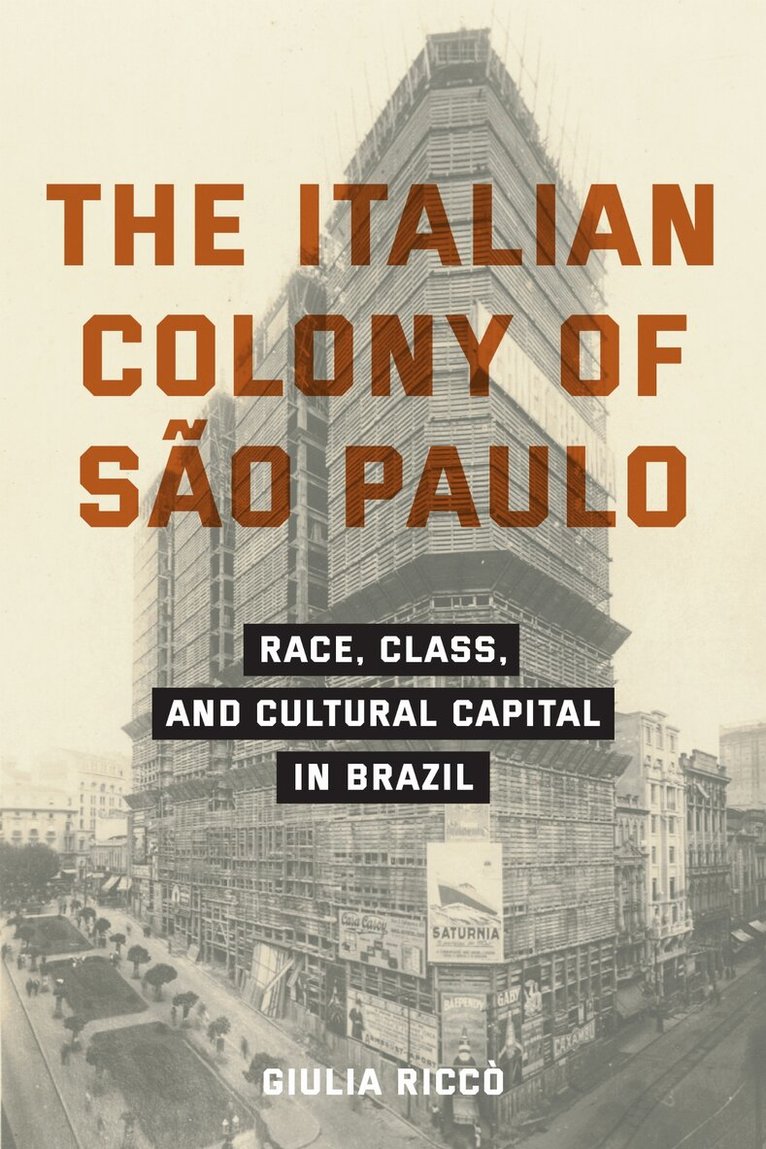
WINNER, 2024 ALDO AND JEANNE SCAGLIONE PUBLICATION AWARD FOR A MANUSCRIPT IN ITALIAN LITERARY STUDIES, MODERN LANGUAGES ASSOCIATIONIntroduces a way to study migration that privileges literary analysis over and against sociological data and insists on the importance of culture in the production of political identities This book argues that Italians first became racialized as white in São Paulo, Brazil, at the turn of the twentieth century. Whereas Italians in the United States struggled with xenophobia and were often not fully acknowledged as white, in São Paulo, due to a series of social, economic, and cultural factors, Italians became closely associated with ideas of whiteness, modernization, and civilization. This book brings to light how the overlooked experiences of Italians in Brazil complicate conventional narratives about the racial ambiguity and oppression of Italians in the Americas, on the one hand, and the conflation of Italians with cultural and economic backwardness in Europe, on the other. In the book, close readings of a wide array of texts - the travel writings of Gina Lombroso Ferrero, the short stories of Antônio de Alcântara Machado, the columns of José Correia Leite, the political essays of Miguel Reale, and the memoirs of Zélia Gattai - trace a "New World Italian discourse," or the overlapping narratives about Italian racial, economic, and cultural superiority that constructed and maintained Italians’ status as a model minority in São Paulo. These discursive practices represent essential antecedents to the racial nationalism that reared its ugly head in Italy throughout the twentieth century and remain central to contemporary debates about national identity in the Italian public sphere.The Italian Colony of São Paulo: Race, Class, and Cultural Capital in Brazil /i>is available from the publisher on an open-access basis.