Gökçe Yurdakul - Böcker
Visar alla böcker från författaren Gökçe Yurdakul. Handla med fri frakt och snabb leverans.
3 produkter
3 produkter
1 164 kr
Skickas inom 7-10 vardagar
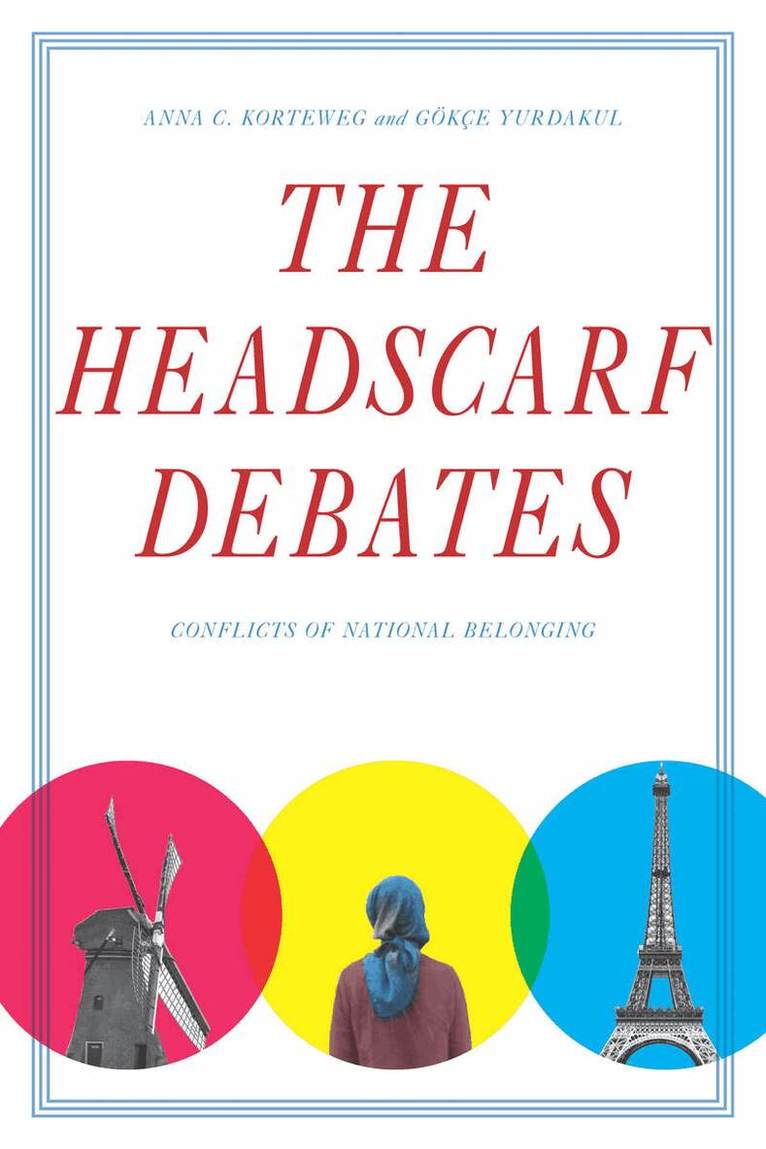
The headscarf is an increasingly contentious symbol in countries across the world. Those who don the headscarf in Germany are referred to as "integration-refusers." In Turkey, support by and for headscarf-wearing women allowed a religious party to gain political power in a strictly secular state. A niqab-wearing Muslim woman was denied French citizenship for not conforming to national values. And in the Netherlands, Muslim women responded to the hatred of popular ultra-right politicians with public appeals that mixed headscarves with in-your-face humor. In a surprising way, the headscarf—a garment that conceals—has also come to reveal the changing nature of what it means to belong to a particular nation. All countries promote national narratives that turn historical diversities into imagined commonalities, appealing to shared language, religion, history, or political practice. The Headscarf Debates explores how the headscarf has become a symbol used to reaffirm or transform these stories of belonging. Anna Korteweg and Gökçe Yurdakul focus on France, Germany, and the Netherlands—countries with significant Muslim-immigrant populations—and Turkey, a secular Muslim state with a persistent legacy of cultural ambivalence. The authors discuss recent cultural and political events and the debates they engender, enlivening the issues with interviews with social activists, and recreating the fervor which erupts near the core of each national identity when threats are perceived and changes are proposed.The Headscarf Debates pays unique attention to how Muslim women speak for themselves, how their actions and statements reverberate throughout national debates. Ultimately, The Headscarf Debates brilliantly illuminates how belonging and nationhood is imagined and reimagined in an increasingly global world.
287 kr
Skickas inom 10-15 vardagar
The headscarf is an increasingly contentious symbol in countries across the world. Those who don the headscarf in Germany are referred to as "integration-refusers." In Turkey, support by and for headscarf-wearing women allowed a religious party to gain political power in a strictly secular state. A niqab-wearing Muslim woman was denied French citizenship for not conforming to national values. And in the Netherlands, Muslim women responded to the hatred of popular ultra-right politicians with public appeals that mixed headscarves with in-your-face humor. In a surprising way, the headscarf—a garment that conceals—has also come to reveal the changing nature of what it means to belong to a particular nation. All countries promote national narratives that turn historical diversities into imagined commonalities, appealing to shared language, religion, history, or political practice. The Headscarf Debates explores how the headscarf has become a symbol used to reaffirm or transform these stories of belonging. Anna Korteweg and Gökçe Yurdakul focus on France, Germany, and the Netherlands—countries with significant Muslim-immigrant populations—and Turkey, a secular Muslim state with a persistent legacy of cultural ambivalence. The authors discuss recent cultural and political events and the debates they engender, enlivening the issues with interviews with social activists, and recreating the fervor which erupts near the core of each national identity when threats are perceived and changes are proposed.The Headscarf Debates pays unique attention to how Muslim women speak for themselves, how their actions and statements reverberate throughout national debates. Ultimately, The Headscarf Debates brilliantly illuminates how belonging and nationhood is imagined and reimagined in an increasingly global world.
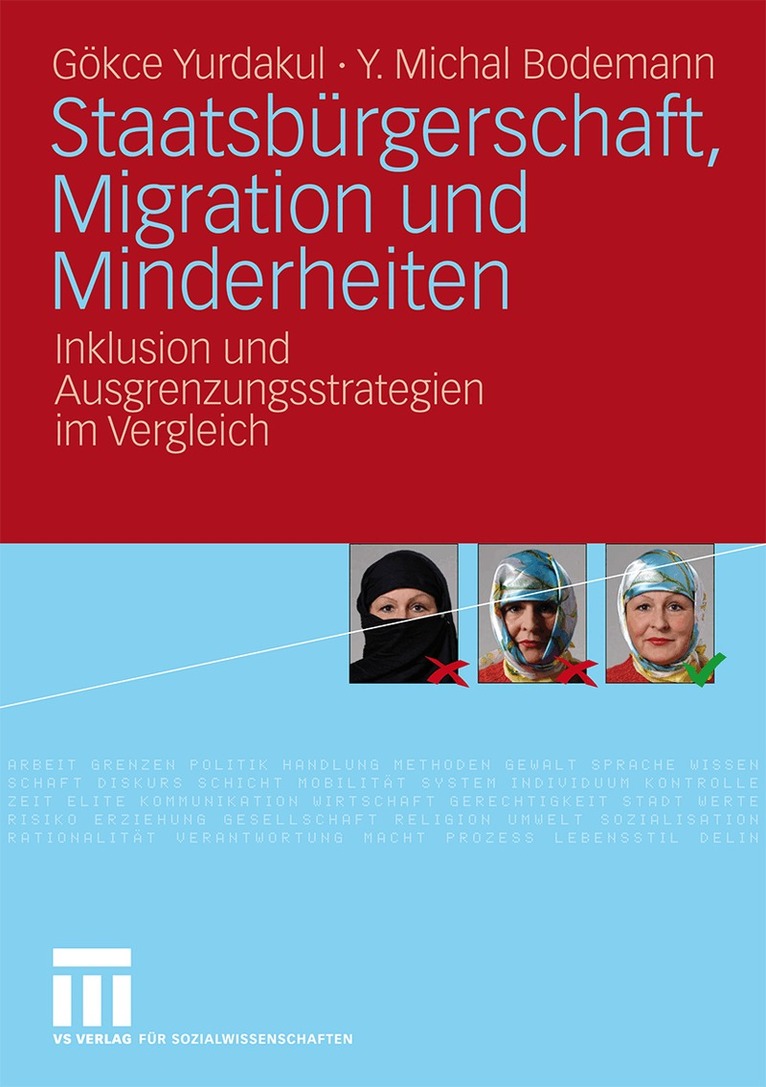
Staatsbürgerschaft, Migration und Minderheiten
Inklusion und Ausgrenzungsstrategien im Vergleich
Häftad, Tyska, 2010
452 kr
Skickas inom 10-15 vardagar
Das Buch befasst sich mit den Beziehungen zwischen Migranten und ethnischen Minderheiten und den Herausforderungen, die sie dem Nationalstaat gegenüber darstellen. Die verschiedenen Formen der Inklusion innerhalb des Nationalstaats werden aus einer transatlantischen Perspektive untersucht. Es werden Fragen der Assimilation, Integration und des Multikulturalismus erörtert, indem die nordamerikanischen und westeuropäischen Literaturen einander vergleichend gegenübergestellt werden. Der wichtigste Beitrag zur soziologischen Diskussion über Einwanderung und Ethnizität besteht darin, die interethnischen Beziehungen zwischen Juden und Türken und ihre spezifischen Verbindungen zum deutschen Nationalstaat und zur deutschen Identität genauer zu betrachten. Vorrangiges Ziel ist eine vergleichende Darstellung der transatlantischen Migrations- und Ethnizitätsdebatten sowie der Debatten über Identität, Erinnerung und Geschlecht.