Gregory W. Noble - Böcker
Visar alla böcker från författaren Gregory W. Noble. Handla med fri frakt och snabb leverans.
7 produkter
7 produkter
1 130 kr
Skickas inom 5-8 vardagar
East Asia is a powerhouse of automobile production. Yet, across the region, national automobile industries have had strikingly different patterns of development. Despite starting from equally low levels of performance and initially similar strategies, countries have experienced vastly different results. From Thailand's success as an assembly hub for foreign automakers and China's unexpected achievements in building its own car industry, to South Korea's impressive development of an integrated industry, to the Philippines' persistent weakness, these divergent paths offer a fascinating window into the determinants of economic growth. The Political Economy of Automotive Industrialization in East Asia provides a political explanation for why development strategies and performance have been so uneven within one of the world's most important regions. Utilizing interviews and original-language research from multiple nations, this book explains that factors such as market size and neoclassical economic policies alone cannot explain these patterns of development. Richard F. Doner, Gregory W. Noble, and John Ravenhill instead highlight the significance of two sets of factors: countries' very different capabilities for implementing policies and the political forces that help to explain the emergence of effective institutions. Through cross-national analyses of China, Taiwan, South Korea, Indonesia, Malaysia, the Philippines, and Thailand, the book sets up a clear structure for understanding industrial development and how it enables or constrains the capabilities of domestic firms. Brief comparisons with Brazil, Mexico, and other developing countries confirm the utility of the analytic framework and demonstrate how it is superior both to accounts in mainstream economics and much of political science, which fail to give sufficient emphasis to the role of public and public-private institutions, or provide an explanation of the political bases of those institutions.In a world where auto assemblers and suppliers are facing new challenges in an ever-evolving industry--such as the transition to electric and autonomous vehicles--this book offers a crucial perspective on the centrality of institutional capacities and political economy. By tracing the divergent trajectories of seven nations, The Political Economy of Automotive Industrialization in East Asia offers lessons beyond the automobile industry that illustrate the broader importance of institutions to economic growth.
536 kr
Skickas inom 5-8 vardagar
East Asia is a powerhouse of automobile production. Yet, across the region, national automobile industries have had strikingly different patterns of development. Despite starting from equally low levels of performance and initially similar strategies, countries have experienced vastly different results. From Thailand's success as an assembly hub for foreign automakers and China's unexpected achievements in building its own car industry, to South Korea's impressive development of an integrated industry, to the Philippines' persistent weakness, these divergent paths offer a fascinating window into the determinants of economic growth. The Political Economy of Automotive Industrialization in East Asia provides a political explanation for why development strategies and performance have been so uneven within one of the world's most important regions. Utilizing interviews and original-language research from multiple nations, this book explains that factors such as market size and neoclassical economic policies alone cannot explain these patterns of development. Richard F. Doner, Gregory W. Noble, and John Ravenhill instead highlight the significance of two sets of factors: countries' very different capabilities for implementing policies and the political forces that help to explain the emergence of effective institutions. Through cross-national analyses of China, Taiwan, South Korea, Indonesia, Malaysia, the Philippines, and Thailand, the book sets up a clear structure for understanding industrial development and how it enables or constrains the capabilities of domestic firms. Brief comparisons with Brazil, Mexico, and other developing countries confirm the utility of the analytic framework and demonstrate how it is superior both to accounts in mainstream economics and much of political science, which fail to give sufficient emphasis to the role of public and public-private institutions, or provide an explanation of the political bases of those institutions.In a world where auto assemblers and suppliers are facing new challenges in an ever-evolving industry--such as the transition to electric and autonomous vehicles--this book offers a crucial perspective on the centrality of institutional capacities and political economy. By tracing the divergent trajectories of seven nations, The Political Economy of Automotive Industrialization in East Asia offers lessons beyond the automobile industry that illustrate the broader importance of institutions to economic growth.
1 311 kr
Skickas inom 7-10 vardagar
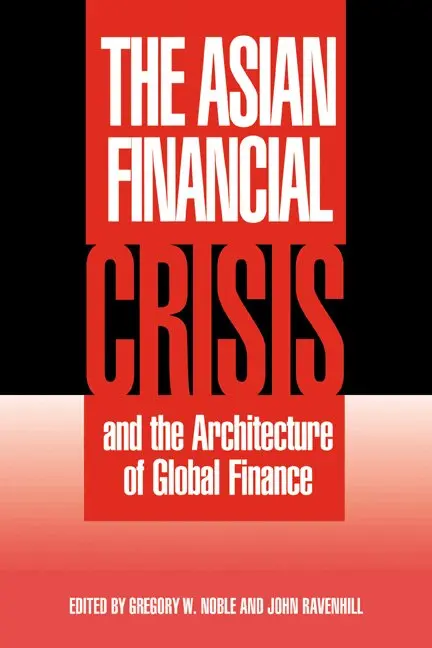
The financial crises across Asia in 1997-98 ignited fierce debate about domestic economic weaknesses and flaws in the international financial system. Some analysts blamed Asian governments for inadequate prudential supervision, widespread failures of corporate governance and even 'crony capitalism'. Others assailed the inherent instability of global financial markets and what they considered to be hasty and ill-conceived liberalization taken at the behest of Western-dominated international financial institutions. In this volume a distinguished group of political scientists, economists and practitioners examines the political and economic causes and consequences of the crisis. They ask: To what extent were domestic economic factors to blame for the crises? Why were some economies more prone to crisis than others? What are the costs and benefits of international financial liberalization?
360 kr
Skickas inom 7-10 vardagar
The financial crises across Asia in 1997-98 ignited fierce debate about domestic economic weaknesses and flaws in the international financial system. Some analysts blamed Asian governments for inadequate prudential supervision, widespread failures of corporate governance and even 'crony capitalism'. Others assailed the inherent instability of global financial markets and what they considered to be hasty and ill-conceived liberalization taken at the behest of Western-dominated international financial institutions. In this volume a distinguished group of political scientists, economists and practitioners examines the political and economic causes and consequences of the crisis. They ask: To what extent were domestic economic factors to blame for the crises? Why were some economies more prone to crisis than others? What are the costs and benefits of international financial liberalization?
1 051 kr
Skickas inom 10-15 vardagar
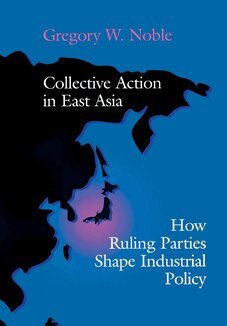
As one Asian economic crisis follows another, sending shock waves through the global market, questions about the making and conduct of industrial policy in the East take on a special urgency. Observers are sharply divided as to whether the ubiquitous attempts at cooperation among competing firms in Asia have been a key to competitiveness or a corrosive form of collusion. This timely book offers a close look at the impact of industrial policies on collective action in East Asia—in Japan and Taiwan and, more briefly, in South Korea. Systematically comparative and based on interviews and original research in the local languages, it focuses on forms of collective action such as cartels, standardization, and research and development consortia in the consumer electronics and minimill steel industries. The book combines detailed case studies with analyses of the political, bureaucratic, and industrial environments in which policy is crafted. It also considers how these environments have evolved in the past decade as long-ruling conservative parties have been challenged in all three countries.Among the book's findings is a surprising disparity between the ways in which Japan and Taiwan have handled collective action policy, despite their many historical, demographic, and economic similarities. Collective Action in East Asia also brings to light unexpected inconsistencies in the effectiveness of Japanese policy, which frequently succeeds with R&D consortia but struggles with cartels. Studying both the rapid-growth period of the 1980s and the more recent economic slowdown in East Asia, this book provides crucial information for an understanding of today's global economy.
234 kr
Skickas inom 7-10 vardagar
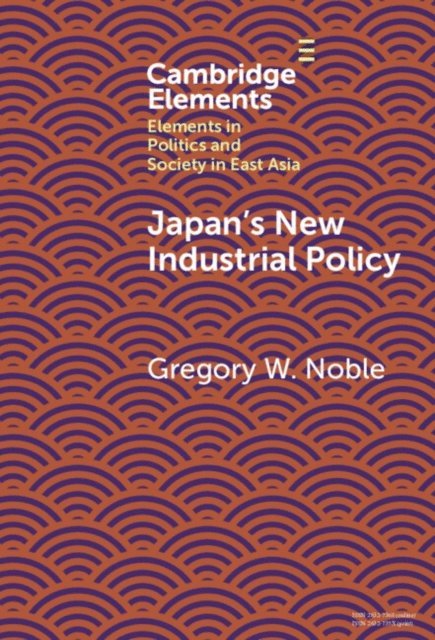
Once hailed for implementing an industrial policy so effective that it transformed Japan into a model 'developmental state,' from the 1980s Japan steadily liberalized its economy and Japanese firms increasingly shifted production abroad via outward foreign direct investment. Yet industrial policy did not just fade away. With the emergence of new competitors in South Korea and Taiwan, and especially the rise of China as a security threat, the Japanese government strove to enhance the viability and competitiveness of Japanese firms as a means to strengthen economic security and reduce reliance on imported energy. Using newly compiled data on Japan's policy apparatus, political environment, and policy challenges, this Element examines how Japan, once an exemplar of 'catch up' industrialization, has struggled to 'keep up' with new challenges to national economic security, and more briefly considers how its policy evolution compares to those of its East Asian neighbors.
753 kr
Skickas inom 7-10 vardagar
Once hailed for implementing an industrial policy so effective that it transformed Japan into a model 'developmental state,' from the 1980s Japan steadily liberalized its economy and Japanese firms increasingly shifted production abroad via outward foreign direct investment. Yet industrial policy did not just fade away. With the emergence of new competitors in South Korea and Taiwan, and especially the rise of China as a security threat, the Japanese government strove to enhance the viability and competitiveness of Japanese firms as a means to strengthen economic security and reduce reliance on imported energy. Using newly compiled data on Japan's policy apparatus, political environment, and policy challenges, this Element examines how Japan, once an exemplar of 'catch up' industrialization, has struggled to 'keep up' with new challenges to national economic security, and more briefly considers how its policy evolution compares to those of its East Asian neighbors.