H. E. Chehabi - Böcker
Visar alla böcker från författaren H. E. Chehabi. Handla med fri frakt och snabb leverans.
7 produkter
7 produkter
2 003 kr
Skickas inom 5-8 vardagar
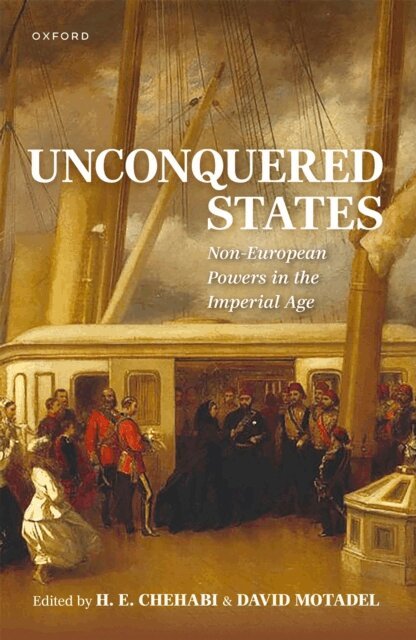
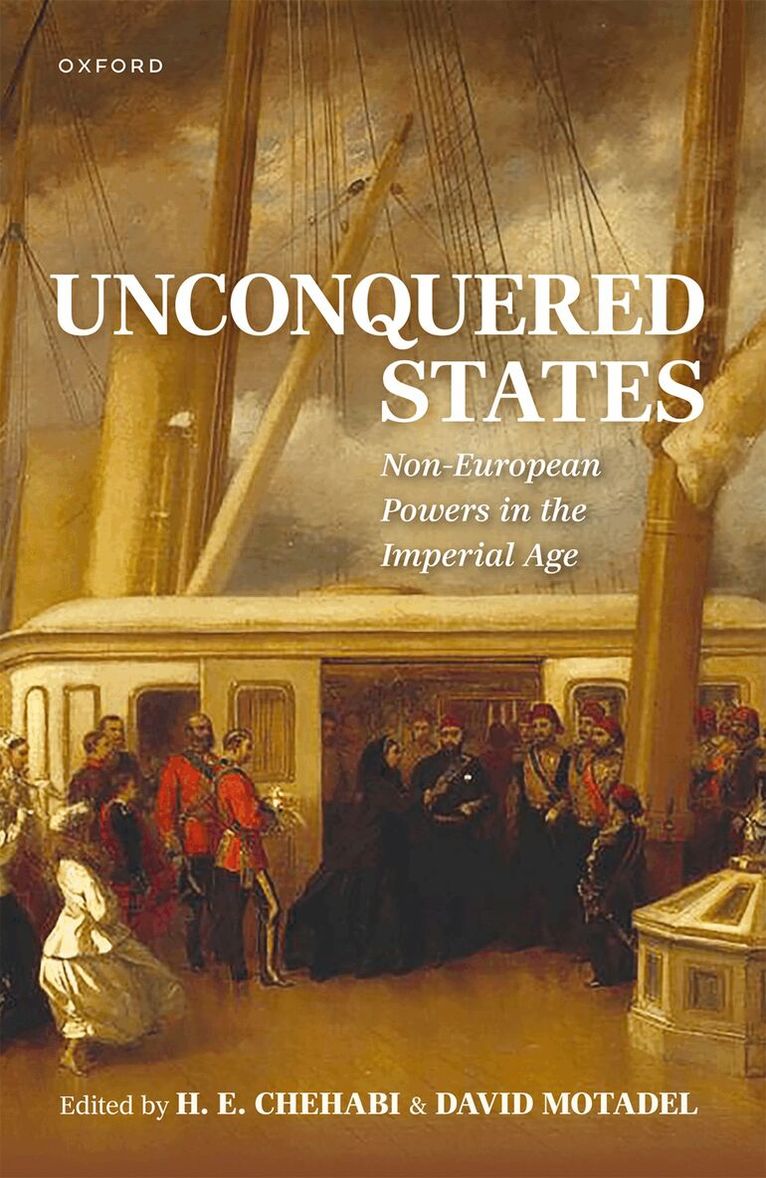
In the heyday of empire, most of the world was ruled, directly or indirectly, by the European powers. Unconquered States explores the struggles for sovereignty of the few nominally independent non-Western states in the imperial age. It examines the ways in which countries such as China, Ethiopia, Japan, the Ottoman Empire, Persia, and Siam managed to keep European imperialism at bay, whereas others, such as Hawai'i, Korea, Madagascar, Morocco, and Tonga, long struggled, but ultimately failed, to maintain their sovereignty. The chapters in this book address four major aspects of the relations these countries had with the Western imperial powers: armed conflict and military reform, unequal treaties and capitulations, diplomatic encounters, and royal diplomacy. Bringing together scholars from five continents, this book provides the first comprehensive global history of the engagement of the independent non-European states with the European empires, reshaping our understanding of sovereignty, territoriality, and hierarchy in the modern world order.
Del 3 - Ilex Series
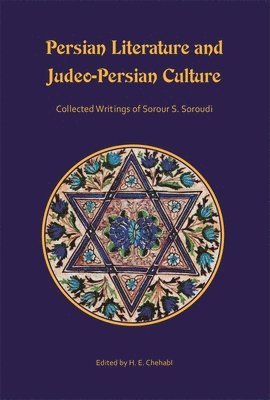
Persian Literature and Judeo-Persian Culture
Collected Writings of Sorour S. Soroudi
Häftad, Engelska, 2010
262 kr
Skickas inom 7-10 vardagar
This volume presents several articles and other writings of Sorour S. Soroudi (1938–2002), who taught in the Department of Iranian Studies at the Hebrew University for three decades. Soroudi’s research was concentrated in three main areas, all of which are well represented in this collection. First, Soroudi was an early specialist in modern Persian poetry, particularly that of the constitutional era; her studies and translations did much to bring this poetry to the attention of critics and scholars. Second, on the basis of extensive fieldwork as well as literary study, Soroudi contributed greatly to the study of Judeo-Persian literature and folk culture. Third, Soroudi explored the history and culture of Iranian Jewry, which she situated in the larger context of Iranian history. This volume, meticulously and sensitively edited by Houchang E. Chehabi, brings together many of Dr. Soroudi’s published articles in these two areas. Included in this book is a previously unpublished piece as well as an article that appears here in English for the first time.
Del 16 - Ilex Series
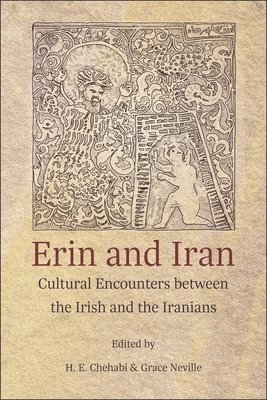
Erin and Iran
Cultural Encounters between the Irish and the Iranians
Häftad, Engelska, 2015
210 kr
Skickas inom 7-10 vardagar
In Erin and Iran, ten essays by North American and European scholars discuss parallel themes in and interactions between Irish and Iranian cultures. In the first section three essays explore common elements in pre-Christian Irish and pre-Islamic Iranian mythologies, common elements that have often been pointed out by scholars of Indo-European mythology but rarely examined in detail. In the following section four essays address literary subjects, ranging from medieval romances such as Tristan and Isolde and Vis and Ramin to twentieth-century novels such as James Joyce’s Ulysses and Simin Daneshvar’s Savushun. In the last section three nineteenth-century travelogues are presented, two written by Irish travelers to Iran and one written by an Indo-Persian traveler to Ireland. Together, these studies constitute the first-ever collection of articles dealing with cultural encounters between the Irish and the Iranians.
153 kr
Skickas inom 7-10 vardagar
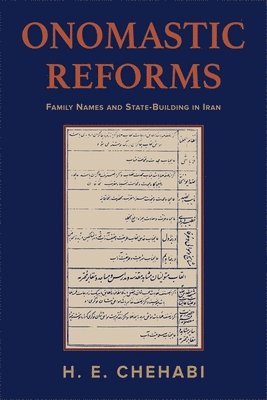
In the mid-1920s, the Iranian state legislated a wide-ranging reform of the citizenry’s naming practices. Honorary titles and honorifics were abolished, family names were made obligatory, and an office for registering names and citizens’ life events (birth, marriage, divorce, and death) was established. The main motivation for this onomastic reform was conscription, which necessitated knowledge of young men’s ages, identities, and whereabouts. The introduction of conscription was itself part of the state-building efforts that followed the weakening of the central government induced by the First World War.In Onomastic Reforms, H. E. Chehabi explains the traditional naming practices of Iranians before the reform, describes the public debates surrounding their obsolescence, traces the legislative measures and decrees that constituted the reform, and explores the ways Iranians chose or invented surnames for themselves.
402 kr
Kommande
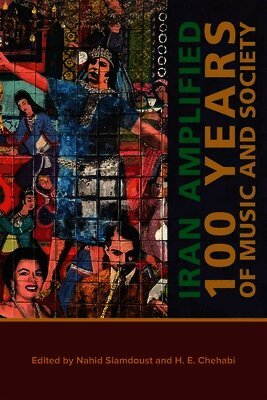
Iran Amplified: One Hundred Years of Music and Society, the first edited volume on music in modern Iran, presents a cross-genre collection of compelling scholarship, musician narratives, and primary sources. This groundbreaking volume, seizing on this burgeoning academic field, offers historiography and critical examination of music’s significant role in social and political mediation in Iran spanning the twentieth century. It also investigates central analytical vectors such as Islam, gender, media technology, alterity, transnational flows, and diasporic communities. As demonstrated at critical moments in Iranian history—from the Constitutional Revolution of 1906–1911 to 1960s and 1970s Third-Worldist activism, the 1979 Revolution, the Iran-Iraq War, the 2009 Green Movement, the 2022 Woman, Life, Freedom Uprising and beyond—music has played a pivotal role in mediating and expressing social and political discourses. Music has also been significant in coalescing sentiments and subjectivities throughout seemingly quieter periods of nation-building during the Pahlavi era, the post-WWII period of Great Power machinations, the cosmopolitan 1970s era, and the post-war reconstruction period of the 1990s. This timely volume, compiled by two leading readers of Iranian culture, finally affords music its important place in the scholarship of modern Iran.
Iran's Constitutional Revolution
Popular Politics, Cultural Transformations and Transnational Connections
Häftad, Engelska, 2022
447 kr
Skickas inom 10-15 vardagar
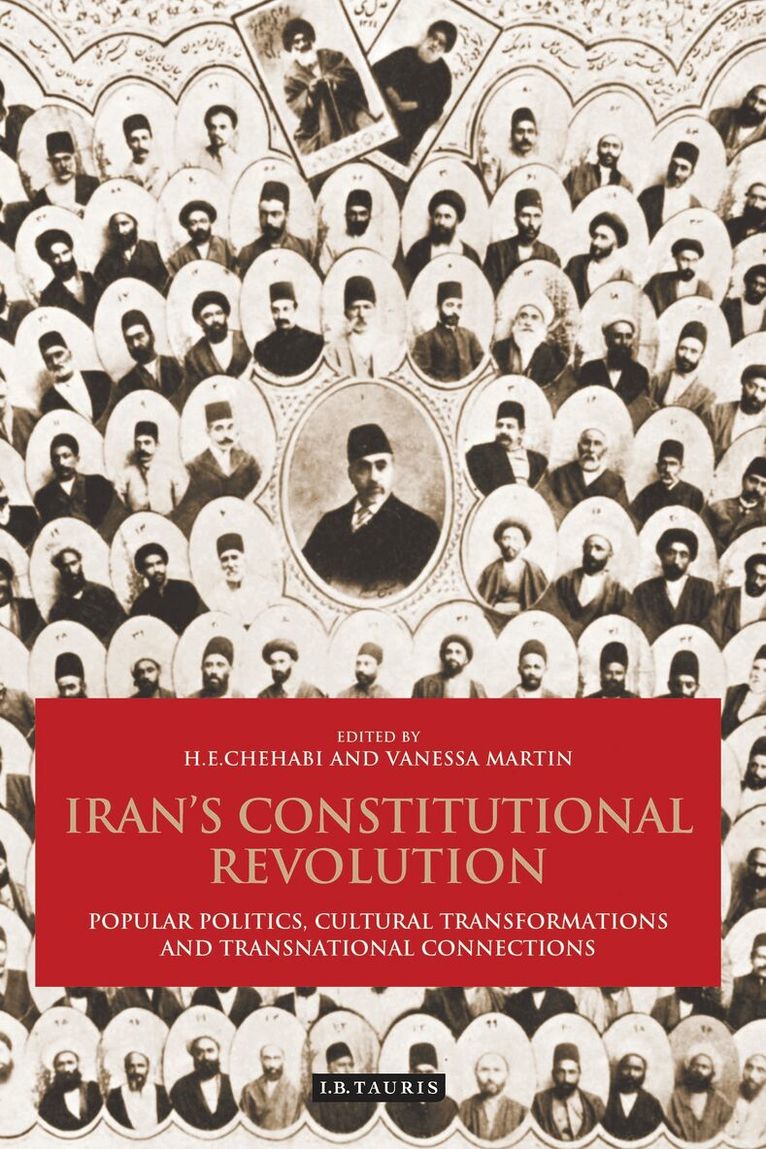
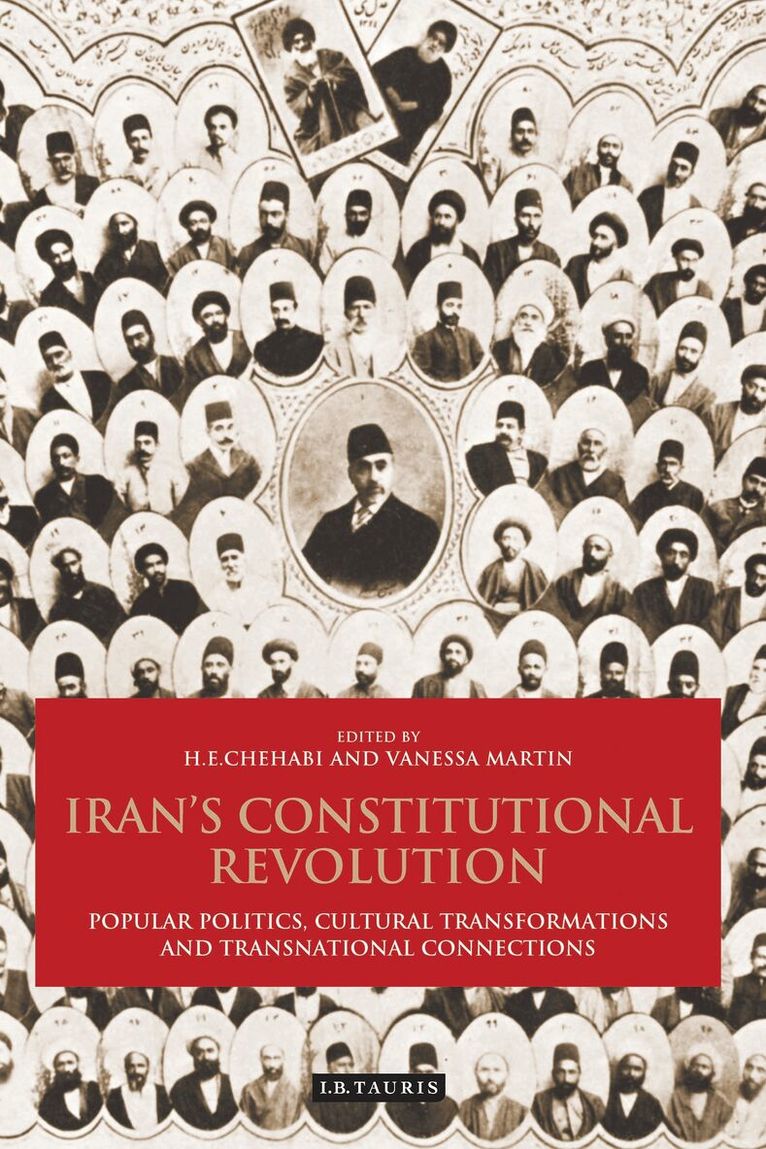
Born out of a fundamental tension between the old-fashioned and inadequate Qajar monarchy of Mozaffar al-Din Sah and Mohammad Ali Shah, and new reformist democratic ideals, the Iranian Constitutional Revolution of 1906 represents a pivotal moment in the formation of modern Iran. The collapse of the state through financial indigence and foreign pressure - which in the end also consumed the new regime - created a vacuum, which became the subject of many different visions. These included the anti-constitutionalist arguments of Fazlollah Nuri; the moderate Shi'i vision of Tabatabai'I; the more gradualist secular approach of bureaucrats such as Sani-e Dowleh and Nasser Al-Molk; the various radical visions of Taqizadeh and Sattar Khan, as well as the Bakhtiaris. What were the reformists' various aims and how much did they accomplish in the years before Reza Shah seized power? How do events in Iran compare with similar uprisings in other parts of the world? And what role does the Constitutional Revolution continue to play in defining Iranian self-identity?This important and authoritative new book explores all the many different facets of the Revolution, drawing on newly available sources as well as cutting edge research from around the globe to present a definitive account.
Iran's Constitutional Revolution
Popular Politics, Cultural Transformations and Transnational Connections
Inbunden, Engelska, 2010
1 833 kr
Skickas inom 10-15 vardagar
Born out of a fundamental tension between the old-fashioned and inadequate Qajar monarchy of Mozaffar al-Din Sah and Mohammad Ali Shah, and new reformist democratic ideals, the Iranian Constitutional Revolution of 1906 represents a pivotal moment in the formation of modern Iran. The collapse of the state through financial indigence and foreign pressure - which in the end also consumed the new regime - created a vacuum, which became the subject of many different visions. These included the anti-constitutionalist arguments of Fazlollah Nuri; the moderate Shi'i vision of Tabatabai'I; the more gradualist secular approach of bureaucrats such as Sani-e Dowleh and Nasser Al-Molk; the various radical visions of Taqizadeh and Sattar Khan, as well as the Bakhtiaris. What were the reformists' various aims and how much did they accomplish in the years before Reza Shah seized power? How do events in Iran compare with similar uprisings in other parts of the world? And what role does the Constitutional Revolution continue to play in defining Iranian self-identity?This important and authoritative new book explores all the many different facets of the Revolution, drawing on newly available sources as well as cutting edge research from around the globe to present a definitive account.