Harald zur Hausen - Böcker
Visar alla böcker från författaren Harald zur Hausen. Handla med fri frakt och snabb leverans.
7 produkter
7 produkter
880 kr
Skickas inom 5-8 vardagar
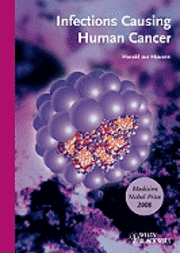
Infections must be thought as one of the most important, if not the most important, risk factors for cancer development in humans. Approximately 15-20% of all cases of cancer around the world are caused by viruses. Theestablishment of a causal relationship between the presence of specific infective agents and certain types of human cancer represents a key step in the development of novel therapeutic and preventive strategies. In this book, Professor zur Hausen (Nobel Prize in Physiology/Medicine 2008) provides a thorough and comprehensive overview on carcinogenic infective agents -- viruses, bacteria, parasites and protozoons -- as well as their corresponding transforming capacities and mechanisms. The result is an invaluable and instructive reference for all oncologists, microbiologists and molecular biologists working in the area of infections and cancer. The author was among the first scientists to reveal the cervical cancer-inducing mechanisms of human papilloma viruses and isolated HPV16 and HPV18, and, as early as 1976, published the hypothesis that wart virusesplay a role in the development of this type of cancer.
291 kr
Skickas inom 10-15 vardagar
463 kr
Skickas inom 10-15 vardagar
1 632 kr
Skickas inom 10-15 vardagar
It is not unreasonable to suspect that persistence of at least some specific TT virus genotypes may result in some infected individuals in a definable pathogenicity. The authors believe that this volume provides the first hints in support of this view.
1 632 kr
Skickas inom 10-15 vardagar
Eleven years ago the circular DNA of a novel single-stranded virus has been cloned and partially characterized by Nishizawa and Okamoto and their colleagues. According to the initials of the patient from whom the isolate originated, the virus was named TT virus. This name has been subsequently changed by the International Committee on Taxonomy of Viruses (ICTV) into Torque teno virus, permitting the further use of the abbreviation TTV. Although initially suspected to play a role in non A –E hepatitis, subsequent studies failed to support this notion.Within a remarkably short period of time it became clear that TT viruses are widely spread globally, infect a large proportion of all human populations studied thus far and represent an extremely heterogeneous group of viruses, now labelled as Anelloviruses. TT virus-like infections have also been noted in various animal species. The classification of this virus group turns out to be difficult, their DNA contains between 2200 and 3800 nucleotides, related so-called TT-mini-viruses and a substantial proportion of intragenomic recombinants further complicate attempts to combine these viruses into a unifying phylogenetic concept.
392 kr
Skickas inom 10-15 vardagar
Etwa 3 Milliarden Genbausteine umfaßt das Erbgut des Menschen, an dessen Entschlüsselung Forscher in aller Welt arbeiten. Verständlich und aktuell informiert dieses Buch über die wichtigsten Forschungsprojekte und ihre Ergebnisse. Es zeigt, welche Hoffnungen in die medizinische Anwendung der Genforschung sich bislang erfüllt haben, wo Gentests und Gentherapien heute möglich sind oder wo sie in naher Zukunft entwickelt werden können. Eine kritische Diskussion gilt der Frage nach der Patentierung von Genen und der möglichen Diskriminierung von Personen und Volksgruppen durch Gentests. An ausgewählten Beispielen wird schließlich gezeigt, wie sich mit Hilfe der Gene ein Blick zurück in die Evolution tun läßt. Ein ausführliches Glossar mit der Erklärung wichtiger Fachbegriffe schließt das Buch ab.
Del 186 - Current Topics in Microbiology and Immunology
Human Pathogenic Papillomaviruses
Häftad, Engelska, 2012
1 091 kr
Skickas inom 10-15 vardagar
The hypothesis that cancer of the cervix is infectious was raised more than 150 years ago (Rigoni-Stern 1842). The first cell-free transmissions of papillomas were reported 95 years ago (McFadyan and Hobday 1898). A report of cell- free trans-mission of human warts was published in 1907 (Ciuffo). Thus, since these initial discoveries papillomavirus research has had to go a long way before it became possible to link these infections to cancer of the cervix (Durst et al. 1983; Boshart et al. 1984). Table 1 lists a selection of the publications that form the basis for our present understand- ing of the role of human pathogenic papillomaviruses (H PV) in human cancers. The identification of specific H PV types in cervical cancer in 1983, 1984 and in subsequent years substantially boosted activities in papillomavirus research. In part this is because cancer of the cervix ranks first in cancer incidence in develop- ing countries and is an important cause of cancer death in affluent societies (Parkin etal. 1984; I.A.R.C. 1989). Premalignant cervical lesions, particularly in affluent soci- eties, also contribute considerably to morbidity.Moreover, the availability of cell lines harboring H PV DNA and the identification of H PV genes as oncogenes have permitted in vitro analyses of H PV genome persistence, gene expression, and gene functions.