Hermann Kulke - Böcker
Visar alla böcker från författaren Hermann Kulke. Handla med fri frakt och snabb leverans.
12 produkter
12 produkter
3 202 kr
Skickas inom 10-15 vardagar
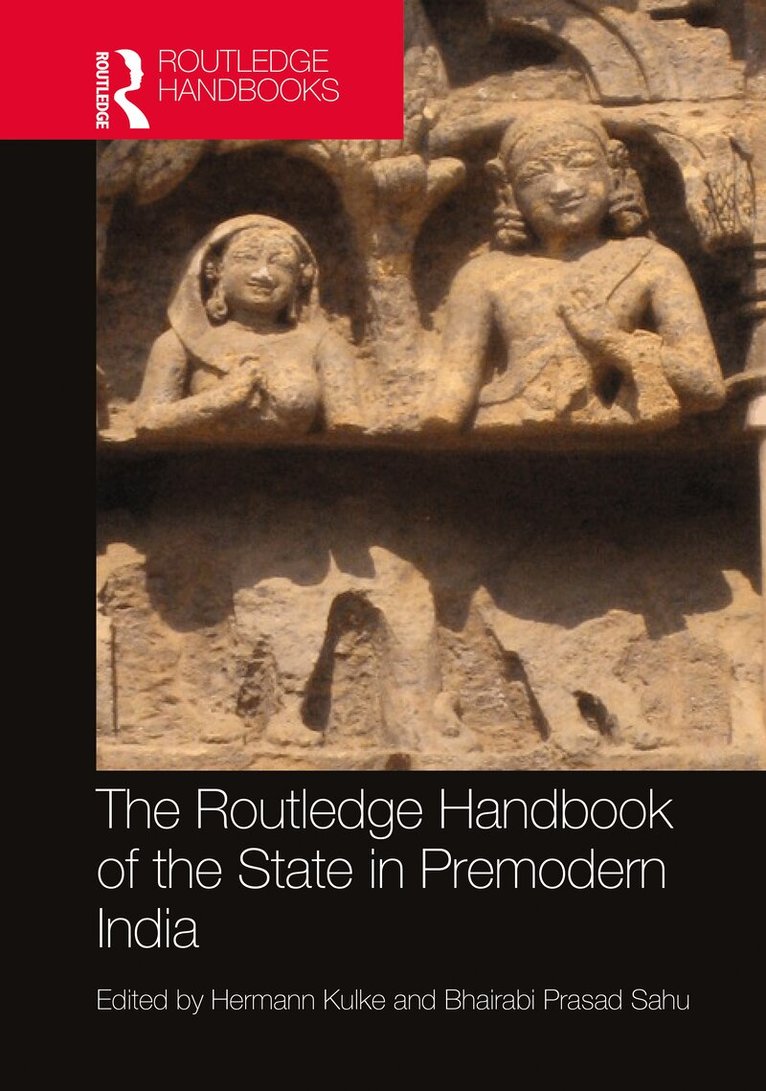
This handbook presents a multilayered and multidimensional history of state formation in premodern India.It explores dense and rich local and subregional historiography from the mid-first millennium BC to the eighteenth century in South Asia. Shifting the focus away from economic and political factors, this handbook revises the conventional understanding of states and empires and locates them in their quotidian conduct and activity on socio-cultural and concomitant factors.Comprehensive in scope, this handbook addresses a range of themes connected with the idea of state formation in the subcontinent. It includes discussions and debates on ritual practices and the Brahmanical order in early India; the Delhi Sultanate and role of Sultans among the Hindu kings; the cosmopolitan ‘Islamicate’ cultural influences on Puranic Hinduism; cultural background of the Mughal state.The handbook examines new questions and ideologies of state formation, such as:facets of violence and resistance;the significance of the autonomous spaces and forests;regional elites, including ‘Little kings’; tribal background of some famous cults;trade and maritime commerce;royal patronage, courtly manners, lineage formation;imperial architecture, monuments, and temple, among others.Featuring case studies from different part of the India subcontinent, and with contributions by renowned historians, this authoritative handbook will be an indispensable reading for teachers, scholars, and students of early India, medieval India, premodern India, South Asian history, Asian history, historiography, economic history, historical sociology, and South Asia studies.
663 kr
Skickas inom 10-15 vardagar
This handbook presents a multilayered and multidimensional history of state formation in premodern India.It explores dense and rich local and subregional historiography from the mid-first millennium BC to the eighteenth century in South Asia. Shifting the focus away from economic and political factors, this handbook revises the conventional understanding of states and empires and locates them in their quotidian conduct and activity on socio-cultural and concomitant factors.Comprehensive in scope, this handbook addresses a range of themes connected with the idea of state formation in the subcontinent. It includes discussions and debates on ritual practices and the Brahmanical order in early India; the Delhi Sultanate and role of Sultans among the Hindu kings; the cosmopolitan ‘Islamicate’ cultural influences on Puranic Hinduism; cultural background of the Mughal state.The handbook examines new questions and ideologies of state formation, such as:facets of violence and resistance;the significance of the autonomous spaces and forests;regional elites, including ‘Little kings’; tribal background of some famous cults;trade and maritime commerce;royal patronage, courtly manners, lineage formation;imperial architecture, monuments, and temple, among others.Featuring case studies from different part of the India subcontinent, and with contributions by renowned historians, this authoritative handbook will be an indispensable reading for teachers, scholars, and students of early India, medieval India, premodern India, South Asian history, Asian history, historiography, economic history, historical sociology, and South Asia studies.
2 160 kr
Skickas inom 10-15 vardagar
Presenting the grand sweep of Indian history from antiquity to the present, A History of India is a detailed and authoritative account of the major political, economic, social and cultural forces that have shaped the history of the Indian subcontinent. Hermann Kulke and Dietmar Rothermund provide a comprehensive overview of the structural pattern of Indian history, covering each historical period in equal depth. Fully revised throughout, the sixth edition of this highly accessible book has been brought up to date with analysis of recent events such as the 2014 election and its consequences, and includes more discussion of subjects such as caste and gender, Islam, foreign relations, partition, and the press and television.This new edition contains an updated chronology of key events and a useful glossary of Indian terms, and is highly illustrated with maps and photographs. Supplemented by a companion website (www.routledge.com/cw/kulke), it is a valuable resource for students of Indian history.
750 kr
Skickas inom 10-15 vardagar
Presenting the grand sweep of Indian history from antiquity to the present, A History of India is a detailed and authoritative account of the major political, economic, social and cultural forces that have shaped the history of the Indian subcontinent. Hermann Kulke and Dietmar Rothermund provide a comprehensive overview of the structural pattern of Indian history, covering each historical period in equal depth. Fully revised throughout, the sixth edition of this highly accessible book has been brought up to date with analysis of recent events such as the 2014 election and its consequences, and includes more discussion of subjects such as caste and gender, Islam, foreign relations, partition, and the press and television.This new edition contains an updated chronology of key events and a useful glossary of Indian terms, and is highly illustrated with maps and photographs. Supplemented by a companion website (www.routledge.com/cw/kulke), it is a valuable resource for students of Indian history.
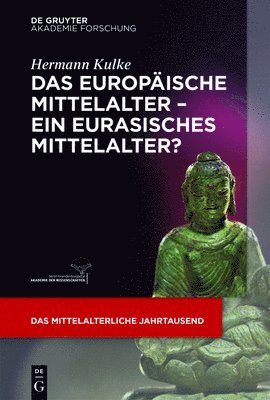
Del 3 - Mittelalterliche Jahrtausend
europäische Mittelalter - ein eurasisches Mittelalter?
Häftad, Tyska, 2016
217 kr
Skickas inom 5-8 vardagar
352 kr
Skickas inom 3-6 vardagar
329 kr
Skickas inom 5-8 vardagar
1 144 kr
Skickas inom 11-20 vardagar
Kings and Cults contains a selection of articles of H. Kulke on various aspects of K]satra and K]setra, the interconnected domains of temporal and sacred power in medieval India and Southeast Asia. Thematically these papers are intertwined by a study of the quest of medieval rulers for legitimation through religious institutions. Of particular interest in this regard are the changing modes of legitimation at different stages of state formation, ranging from princely patronage of tribal deities by early emerging ‘kings’ to the construction of imperial temples by the rulers of great regional ‘imperial’ kingdoms. A particularly characteristic feature of India is the great temple cities as centres of regional cults and pilgrimage which became the major focus of later medieval royal patronage. Another important aspect of Kulke’s work is historiography as a means of late medieval royal legitimation, linking legendary history of these sacred places and?royal?patronage?with?dynastic?claims.About half of the papers focus on Puri in Orissa and its Jagann?tha cult which forms a major field work of Kulke’s studies. South India is represented by two papers on religious policy of the C?las and the early rulers of Vijayanagara. Four papers deal with Southeast Asia. They reveal that Southeast Asian indigenous rulers faced very similar structural and ideological problems which they tried to solve through similar ritual means as?their?contemporary?Indian?‘colleagues’.
995 kr
Skickas inom 11-20 vardagar
Contemporary research on Hinduism has thrown up a number of micro studies and new, overall theories giving rise to various questions: Do conventional notions about Hinduism need to be reformulated on the basis of new evidences and modern theories? Is it prudent to interpret Hinduism without an interdisciplinary and contextual approach? In short, what does Hinduism mean? The above issues were discussed at the IXth European Conference of Modern South Asian Studies held Heidelberg, Germany.This volume contains thirteen papers presented for discussion there – discussions which were lively and thought-provoking – along with four additional contributions.Papers included are: Hinduism or three-thousand-three-hundred-and-six ways to invoke a construct; Hinduism: On the proper use of a deceptive term; Syndicated Hinduism; The emergence of modern 'Hinduism' as a concept and as an institution: a reappraisal with special reference to South India; Religion, reaction and change: The role of sects in Hinduism; Hinduism through Western glasses: a critique of some Western views on Hinduism; Hindu-Muslim interactions in medieval Maharashtra; The concept of the ideal Brahmin as an ideological construct; Hinduism and National Liberation Movement in India: Hinduism as seen by Niza?ri? Isma?'ili? missionaries of western India: the evidence of the Gina?n; Multiple approaches to a living Hindu myth: the Lord of the Govardhan hill; Bhakti and Monasticism; Staying on the goddess's eyelid: devotion and reversal of values in Hindu Bengal; Hinduism in diaspora: the transformation of tradition in Trinidad; The polythetic-prototype approach to Hinduism; Hinduism: the five components and their interaction; Something lost, something gained: translations of Hinduism.The papers reflect a wide variety of opinions on what Hinduism means and are a distinct contribution to our understanding of Hinduism, which cannot be forced into watertight inflexible categories.
1 111 kr
Skickas inom 11-20 vardagar
Twenty years after the publication of The Cult of Jagannath (Eschmann, Kulke and Tnpathi eds. 1978. Manohar), a conference was held in Heidelberg, Germany, at which some of the past foci of Orissan research were reconsidered. By thus ‘revisiting Jagannath’ it was considered whether, in what respect and to what degree a shift in methods, theories paradigms or intellectual interests has taken place during the past two decades. The articles published in this book represent rewritten versions of papers held at this conference. They include contributions from social anthropology, history, Indology, religious studies archaeology, and political science, discussing topics as diverse as religious practices among Orissan adivasis, the renewal of the body of Jagannath, the history of Mahima Dharma sect, the ritual politics of a Dhenkanal village, and the rebellious attitude of a jungle king. Compared with the Jagannath volume of 1978, a certain shift in interest can be discerned, away from the centre and the dominant groups to (apparently) peripheral or marginal areas or groups. Thus, for example, the present volume features contributions on little kings rather than the Gajapatis, on west Orissa rather than the central Mahanadi delta, on fishermen rather than Brahmans, and on village cults rather than the Puri temple. And even where Jagannath is re-investigated, it is his worship by subaltern groups rather than the scriptural, orthodox view that is the present focus of study.
443 kr
Skickas inom 7-10 vardagar
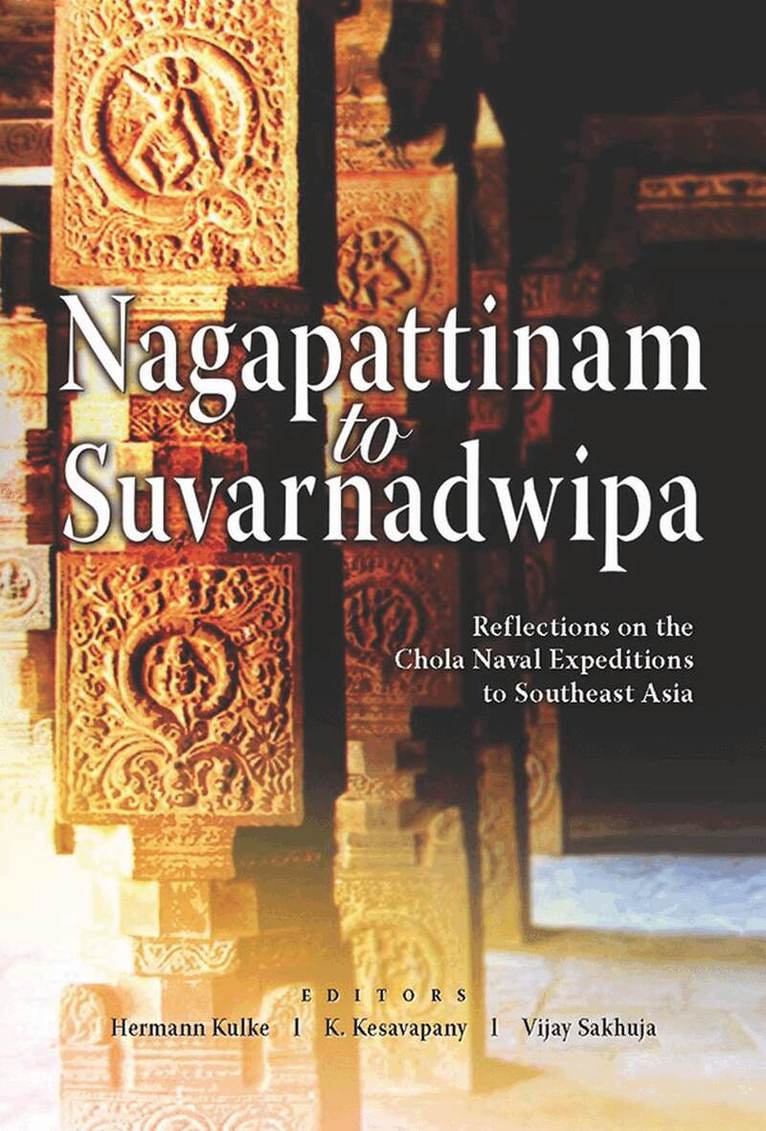
The South Indian Chola kings had developed a sophisticated maritime enterprise based on sea based commerce with trading contacts in Malaya, Sumatra and China. This had resulted in an ocean going fleet that was dispatched by the Chola King Rajendra Choladeva I against the Srivijaya Kingdom. The essays in this volume reflect on the naval expedition, which is also mentioned in the inscription dated 1030-31 of the big temple of Tanjavur in South India. Perhaps the most significant contribution of this volume to Asian maritime history is the translations of ancient and medieval Tamil and Sanskrit inscriptions relating to Southeast Asia and China and the Chinese Texts describing or referring to the Chola Kingdom as Zhunian.
670 kr
Skickas inom 10-15 vardagar
The South Indian Chola kings had developed a sophisticated maritime enterprise based on sea based commerce with trading contacts in Malaya, Sumatra and China. This had resulted in an ocean going fleet that was dispatched by the Chola King Rajendra Choladeva I against the Srivijaya Kingdom. The essays in this volume reflect on the naval expedition, which is also mentioned in the inscription dated 1030-31 of the big temple of Tanjavur in South India. Perhaps the most significant contribution of this volume to Asian maritime history is the translations of ancient and medieval Tamil and Sanskrit inscriptions relating to Southeast Asia and China and the Chinese Texts describing or referring to the Chola Kingdom as Zhunian.