Hugh Dauncey – författare
Visar alla böcker från författaren Hugh Dauncey. Handla med fri frakt och snabb leverans.
19 produkter
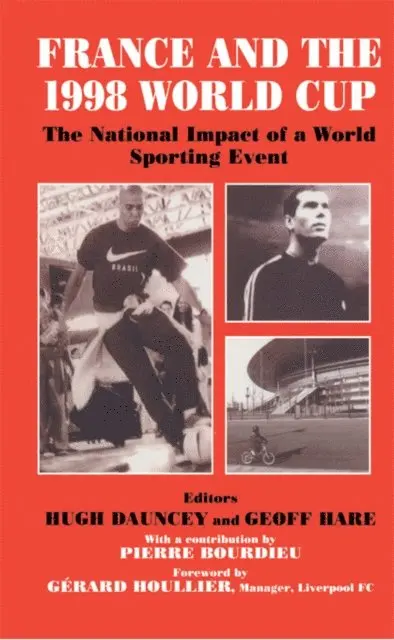
France and the 1998 World Cup
The National Impact of a World Sporting Event
Häftad, 1999
925 kr
Lägg i varukorg
The contributions here cover the major socio-economic, political, cultural and sporting dimensions of the 1998 World Cup. It is set within the sporting context of the history and organization of French football and the French tradition of using major sporting events to focus world attention.
France and the 1998 World Cup
The National Impact of a World Sporting Event
Inbunden, 1999
2746 kr
Lägg i varukorg
The contributions here cover the major socio-economic, political, cultural and sporting dimensions of the 1998 World Cup. It is set within the sporting context of the history and organization of French football and the French tradition of using major sporting events to focus world attention.
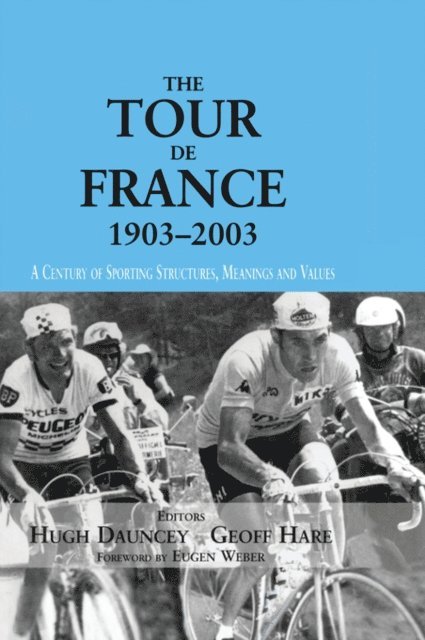
Tour De France, 1903-2003
A Century of Sporting Structures, Meanings and Values
Inbunden, 2003
2915 kr
Lägg i varukorg
This book analyses the Tour de France over its long history both as France's most prestigious and famous sporting event and as a European and, increasingly, a world cycling competition. This study provides interdisciplinary and varied perspectives on the sporting, cultural, social, economic and …
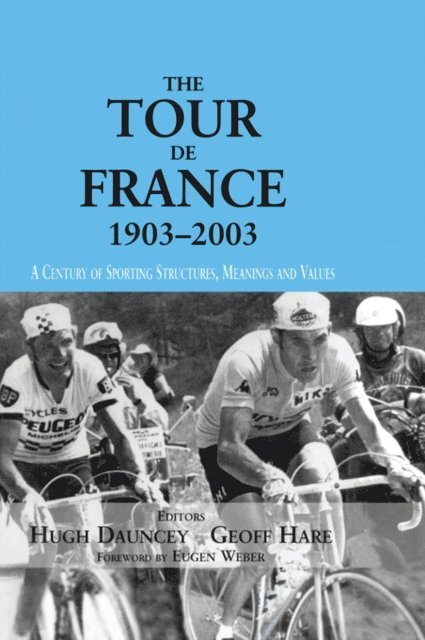
Tour De France, 1903-2003
A Century of Sporting Structures, Meanings and Values
Häftad, 2003
873 kr
Lägg i varukorg
This book analyses the Tour de France over its long history both as France's most prestigious and famous sporting event and as a European and, increasingly, a world cycling competition. This study provides interdisciplinary and varied perspectives on the sporting, cultural, social, economic and …
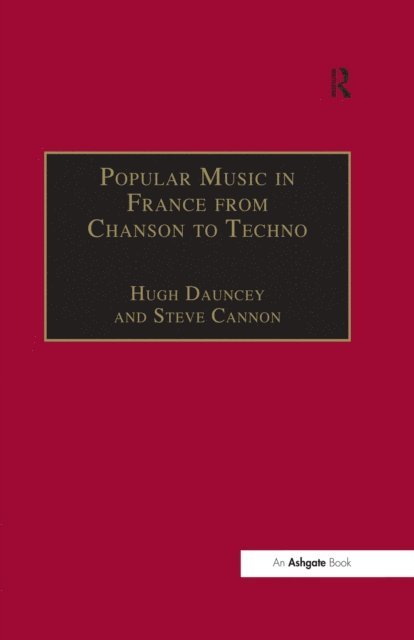
Popular Music in France from Chanson to Techno
Culture, Identity and Society
Inbunden, 2003
2588 kr
Lägg i varukorg
In France during the 1960s and 1970s, popular music became a key component of socio-cultural modernisation as the music/record industry became increasingly important in both economic and cultural terms in response to demographic changes and the rise of the modern media. As France began questioning …
France and the 1998 World Cup
The National Impact of a World Sporting Event
E-bok, 2014
1067 kr
Lägg i varukorg
The contributions here cover the major socio-economic, political, cultural and sporting dimensions of the 1998 World Cup. It is set within the sporting context of the history and organization of French football and the French tradition of using major sporting events to focus world attention.
France and the 1998 World Cup
The National Impact of a World Sporting Event
E-bok, 2014
1091 kr
Lägg i varukorg
The contributions here cover the major socio-economic, political, cultural and sporting dimensions of the 1998 World Cup. It is set within the sporting context of the history and organization of French football and the French tradition of using major sporting events to focus world attention.
Tour De France, 1903-2003
A Century of Sporting Structures, Meanings and Values
E-bok, 2004
977 kr
Lägg i varukorg
This book analyses the Tour de France over its long history both as France''s most prestigious and famous sporting event and as a European and, increasingly, a world cycling competition. This study provides interdisciplinary and varied perspectives on the sporting, cultural, social, economic and …
Tour De France, 1903-2003
A Century of Sporting Structures, Meanings and Values
E-bok, 2004
999 kr
Lägg i varukorg
This book analyses the Tour de France over its long history both as France''s most prestigious and famous sporting event and as a European and, increasingly, a world cycling competition. This study provides interdisciplinary and varied perspectives on the sporting, cultural, social, economic and …
Stereo: Comparative Perspectives on the Sociological Study of Popular Music in France and Britain
Av Philippe Le Guern, Hugh Dauncey
Häftad, 2016
952 kr
Lägg i varukorg
The term 'Popular Music' has traditionally denoted different things in France and Britain. In France, the very concept of 'popular' music has been fiercely debated and contested, whereas in Britain and more largely throughout what the French describe as the 'Anglo-saxon' world 'popular music' has …
Popular Music in France from Chanson to Techno
Culture, Identity and Society
Häftad, 2016
952 kr
Lägg i varukorg
In France during the 1960s and 1970s, popular music became a key component of socio-cultural modernisation as the music/record industry became increasingly important in both economic and cultural terms in response to demographic changes and the rise of the modern media. As France began questioning …
Stereo: Comparative Perspectives on the Sociological Study of Popular Music in France and Britain
Av Philippe Le Guern, Hugh Dauncey
E-bok, 2016
1124 kr
Lägg i varukorg
The term ''Popular Music'' has traditionally denoted different things in France and Britain. In France, the very concept of ''popular'' music has been fiercely debated and contested, whereas in Britain and more largely throughout what the French describe as the ''Anglo-saxon'' world ''popular …
Stereo: Comparative Perspectives on the Sociological Study of Popular Music in France and Britain
Av Philippe Le Guern, Hugh Dauncey
E-bok, 2016
1124 kr
Lägg i varukorg
The term ''Popular Music'' has traditionally denoted different things in France and Britain. In France, the very concept of ''popular'' music has been fiercely debated and contested, whereas in Britain and more largely throughout what the French describe as the ''Anglo-saxon'' world ''popular …
Popular Music in France from Chanson to Techno
Culture, Identity and Society
E-bok, 2017
1124 kr
Lägg i varukorg
In France during the 1960s and 1970s, popular music became a key component of socio-cultural modernisation as the music/record industry became increasingly important in both economic and cultural terms in response to demographic changes and the rise of the modern media. As France began questioning …
Popular Music in France from Chanson to Techno
Culture, Identity and Society
E-bok, 2017
1124 kr
Lägg i varukorg
In France during the 1960s and 1970s, popular music became a key component of socio-cultural modernisation as the music/record industry became increasingly important in both economic and cultural terms in response to demographic changes and the rise of the modern media. As France began questioning …
Stereo: Comparative Perspectives on the Sociological Study of Popular Music in France and Britain
Av Philippe Le Guern, Hugh Dauncey
Inbunden, 2010
2588 kr
Lägg i varukorg
The term 'Popular Music' has traditionally denoted different things in France and Britain. In France, the very concept of 'popular' music has been fiercely debated and contested, whereas in Britain and more largely throughout what the French describe as the 'Anglo-saxon' world 'popular music' has …
French Cycling
A Social and Cultural History
Av Hugh Dauncey
Inbunden, 2012
781 kr
Lägg i varukorg
An Open Access edition of this book is available on the Liverpool University Press website and the OAPEN library.French Cycling: a Social and Cultural History aims to provide a balanced and detailed analytical survey of the complex leisure activity, sport, and industry that is cycling in France. …