Ian Alexander Moore - Böcker
Visar alla böcker från författaren Ian Alexander Moore. Handla med fri frakt och snabb leverans.
10 produkter
10 produkter
1 322 kr
Skickas inom 7-10 vardagar
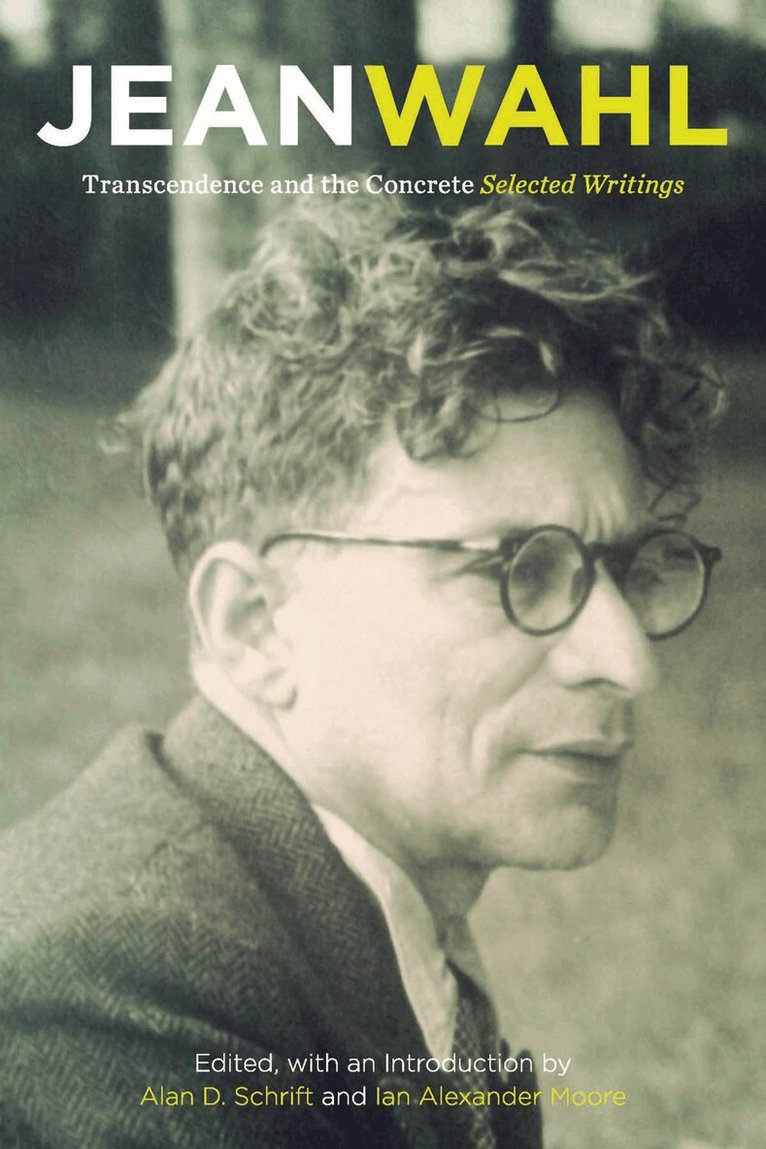
Jean Wahl (1888–1974), once considered by the likes of Georges Bataille, Gilles Deleuze, Emmanuel Levinas, and Gabriel Marcel to be among the greatest French philosophers, has today nearly been forgotten outside France. Yet his influence on French philosophical thought can hardly be overestimated. Levinas wrote that "during over a half century of teaching and research, [Wahl] was the life force of the academic, extra-academic, and even, to a degree anti-academic philosophy necessary to a great culture." And Deleuze, for his part, commented that "Apart from Sartre, who remained caught none the less in the trap of the verb to be, the most important philosopher in France was Jean Wahl."Besides engaging with the likes of Bataille, Bergson, Deleuze, Derrida, Levinas, Maritain, and Sartre, Wahl also played a significant role, in some cases almost singlehandedly, in introducing French philosophy to movements like existentialism, and American pragmatism and literature, and thinkers like Hegel, Kierkegaard, Nietzsche, Jaspers, and Heidegger. Yet Wahl was also an original philosopher and poet in his own right. This volume of selections from Wahl's philosophical writings makes a selection of his most important work available to the English-speaking philosophical community for the first time.Jean Wahl was Professor of Philosophy at the Sorbonne from 1936 to 1967, save during World War II, which he spent in the United States, having escaped from the Drancy internment camp. His books to appear in English include The Pluralist Philosophies of England and America (Open Court, 1925), The Philosopher's Way (Oxford UP, 1948), A Short History of Existentialism (Philosophical Library, 1949), and Philosophies of Existence (Schocken, 1969).
401 kr
Skickas inom 7-10 vardagar
Jean Wahl (1888–1974), once considered by the likes of Georges Bataille, Gilles Deleuze, Emmanuel Levinas, and Gabriel Marcel to be among the greatest French philosophers, has today nearly been forgotten outside France. Yet his influence on French philosophical thought can hardly be overestimated. Levinas wrote that "during over a half century of teaching and research, [Wahl] was the life force of the academic, extra-academic, and even, to a degree anti-academic philosophy necessary to a great culture." And Deleuze, for his part, commented that "Apart from Sartre, who remained caught none the less in the trap of the verb to be, the most important philosopher in France was Jean Wahl."Besides engaging with the likes of Bataille, Bergson, Deleuze, Derrida, Levinas, Maritain, and Sartre, Wahl also played a significant role, in some cases almost singlehandedly, in introducing French philosophy to movements like existentialism, and American pragmatism and literature, and thinkers like Hegel, Kierkegaard, Nietzsche, Jaspers, and Heidegger. Yet Wahl was also an original philosopher and poet in his own right. This volume of selections from Wahl's philosophical writings makes a selection of his most important work available to the English-speaking philosophical community for the first time.Jean Wahl was Professor of Philosophy at the Sorbonne from 1936 to 1967, save during World War II, which he spent in the United States, having escaped from the Drancy internment camp. His books to appear in English include The Pluralist Philosophies of England and America (Open Court, 1925), The Philosopher's Way (Oxford UP, 1948), A Short History of Existentialism (Philosophical Library, 1949), and Philosophies of Existence (Schocken, 1969).
721 kr
Kommande
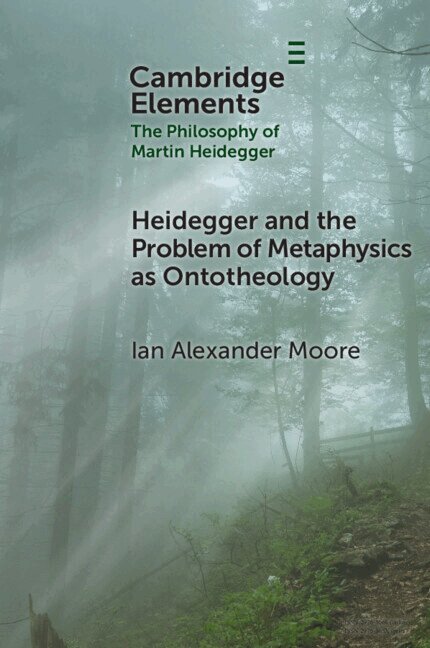
Heidegger characterizes the history and essence of metaphysics as ontotheological. Ontotheology concentrates on the being of entities and conceives of this being in two interdependent ways. First, as common to all entities, being serves as the ontological ground for their coherence and intelligibility. Second, being is understood theologically, that is, by recourse to a highest entity that both exemplifies what is common to entities and serves as the causal foundation of entities and their being. Heidegger often speaks of an ontological difference, but what interests him is not simply the difference between entities and their being but what enables us to make this distinction in the first place, that is, being itself. Notoriously, Heidegger accuses the philosophical tradition of neglecting this non-ontotheological, enabling condition. This Element reconstructs and critiques Heidegger's conception of metaphysics as ontotheological. It then examines his non-ontotheological understanding of being itself, God, and divinity.
241 kr
Kommande
Heidegger characterizes the history and essence of metaphysics as ontotheological. Ontotheology concentrates on the being of entities and conceives of this being in two interdependent ways. First, as common to all entities, being serves as the ontological ground for their coherence and intelligibility. Second, being is understood theologically, that is, by recourse to a highest entity that both exemplifies what is common to entities and serves as the causal foundation of entities and their being. Heidegger often speaks of an ontological difference, but what interests him is not simply the difference between entities and their being but what enables us to make this distinction in the first place, that is, being itself. Notoriously, Heidegger accuses the philosophical tradition of neglecting this non-ontotheological, enabling condition. This Element reconstructs and critiques Heidegger's conception of metaphysics as ontotheological. It then examines his non-ontotheological understanding of being itself, God, and divinity.
953 kr
Tillfälligt slut
Provides the first systematic interpretation of Heidegger's relation to Eckhart, centering on the idea that we must release ourselves in order to know the truth.In the late Middle Ages the philosopher and mystic Meister Eckhart preached that to know the truth you must be the truth. But how to be the truth? Eckhart's answer comes in the form of an imperative: release yourself, let be. Only then will you be able to understand that the deepest meaning of being is releasement and become who you truly are. This book interprets Eckhart's Latin and Middle High German writings under the banner of an imperative of releasement, and then shows how the twentieth-century thinker Martin Heidegger creatively appropriates this idea at several stages of his career. Heidegger had a lifelong fascination with Eckhart, referring to him as "the old master of letters and life." Drawing on archival material and Heidegger's marginalia in his personal copies of Eckhart's writings, Moore argues that Eckhart was one of the most important figures in Heidegger's philosophy. This book also contains previously unpublished documents by Heidegger on Eckhart, as well as the first English translation of Nishitani Keiji's essay "Nietzsche's Zarathustra and Meister Eckhart," which he initially gave as a presentation in one of Heidegger's classes in 1938.
464 kr
Skickas inom 5-8 vardagar
Provides the first systematic interpretation of Heidegger's relation to Eckhart, centering on the idea that we must release ourselves in order to know the truth.In the late Middle Ages the philosopher and mystic Meister Eckhart preached that to know the truth you must be the truth. But how to be the truth? Eckhart's answer comes in the form of an imperative: release yourself, let be. Only then will you be able to understand that the deepest meaning of being is releasement and become who you truly are. This book interprets Eckhart's Latin and Middle High German writings under the banner of an imperative of releasement, and then shows how the twentieth-century thinker Martin Heidegger creatively appropriates this idea at several stages of his career. Heidegger had a lifelong fascination with Eckhart, referring to him as "the old master of letters and life." Drawing on archival material and Heidegger's marginalia in his personal copies of Eckhart's writings, Moore argues that Eckhart was one of the most important figures in Heidegger's philosophy. This book also contains previously unpublished documents by Heidegger on Eckhart, as well as the first English translation of Nishitani Keiji's essay "Nietzsche's Zarathustra and Meister Eckhart," which he initially gave as a presentation in one of Heidegger's classes in 1938.
551 kr
Skickas inom 5-8 vardagar
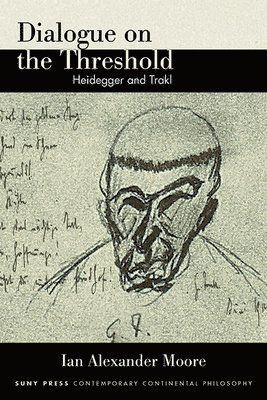
A reconstruction and critical interpretation of Heidegger's remarkable relationship to the poet Georg Trakl.Winner of the 2023 Symposium Book Award presented by Symposium: Canadian Journal of Continental Philosophy In the early 1950s, German philosopher Martin Heidegger proclaimed the Austrian expressionist Georg Trakl to be the poet of his generation and of the hidden Occident. Trakl, a guilt-ridden lyricist who died of a cocaine overdose in the early days of World War I, thus became for Heidegger a redemptive successor to Hölderlin. Drawing on Derrida's Geschlecht series and substantial archival research, Dialogue on the Threshold explores the productive and problematic tensions that pervade Heidegger's reading of Trakl and reflects more broadly on the thresholds that separate philosophy from poetry, gathering from dispersion, the same from the other, and the native from the foreigner. Ian Alexander Moore examines why Heidegger was reluctant to follow Trakl's invitation to cross these thresholds, even though his encounter with the poet did compel him to take up, in astounding ways, many underrepresented topics in his philosophical corpus such as sexual difference, pain, animality, and Christianity. A contribution not just to Heidegger and Trakl studies but also, more modestly, to the old quarrel between philosophy and poetry, Dialogue on the Threshold concludes with new translations of eighteen poems by Trakl.
1 406 kr
Skickas inom 5-8 vardagar
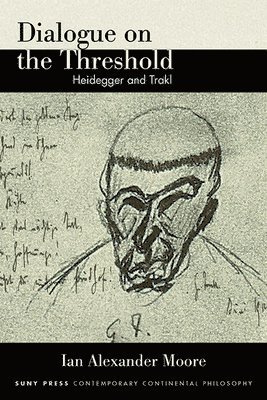
A reconstruction and critical interpretation of Heidegger's remarkable relationship to the poet Georg Trakl.Winner of the 2023 Symposium Book Award presented by Symposium: Canadian Journal of Continental Philosophy In the early 1950s, German philosopher Martin Heidegger proclaimed the Austrian expressionist Georg Trakl to be the poet of his generation and of the hidden Occident. Trakl, a guilt-ridden lyricist who died of a cocaine overdose in the early days of World War I, thus became for Heidegger a redemptive successor to Hölderlin. Drawing on Derrida's Geschlecht series and substantial archival research, Dialogue on the Threshold explores the productive and problematic tensions that pervade Heidegger's reading of Trakl and reflects more broadly on the thresholds that separate philosophy from poetry, gathering from dispersion, the same from the other, and the native from the foreigner. Ian Alexander Moore examines why Heidegger was reluctant to follow Trakl's invitation to cross these thresholds, even though his encounter with the poet did compel him to take up, in astounding ways, many underrepresented topics in his philosophical corpus such as sexual difference, pain, animality, and Christianity. A contribution not just to Heidegger and Trakl studies but also, more modestly, to the old quarrel between philosophy and poetry, Dialogue on the Threshold concludes with new translations of eighteen poems by Trakl.
Neo–Aristotelianism and the Medieval Renaissance – On Aquinas, Ockham, and Eckhart
Häftad, Engelska, 2020
347 kr
Skickas inom 7-10 vardagar
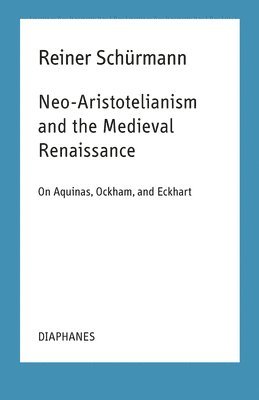
In this lecture course, Reiner Schürmann develops the idea that, in between the spiritual Carolingian Renaissance and the secular humanist Renaissance, there was a distinctive medieval Renaissance connected with the rediscovery of Aristotle. Focusing on Thomas Aquinas’s ontology and epistemology, William of Ockham’s conceptualism, and Meister Eckhart’s speculative mysticism, Schürmann shows how thought began to break free from religion and the hierarchies of the feudal, neo-Platonic order and devote its attention to otherness and singularity. A crucial supplement to Schürmann’s magnum opus Broken Hegemonies, Neo-Aristotelianism and the Medieval Renaissance will be essential reading for anyone interested in the rise and fall of Western principles, and thus in how to think and act today.
517 kr
Skickas inom 7-10 vardagar
Never-before-published writing from a key twentieth-century philosopher. In 1962, Reiner Schürmann began studying at the Dominican school of theology Le Saulchoir, outside Paris. That experience radically shaped his life and work, enabling him to begin to develop many of the ideas for which he would later be known: letting be, life without why, ontological anarchy, and the tragic double bind. Ways of Releasement contains never-before-published material from Schürmann’s early period as well as a report Schürmann wrote about his encounter with Heidegger; a précis of his autobiographical novel, Origins; and translations and new editions of later groundbreaking essays. Ways of Releasement concludes with an extensive afterword setting Schürmann’s writings in the context of his thinking and life.