Ian Mueller – författare
Visar alla böcker från författaren Ian Mueller. Handla med fri frakt och snabb leverans.
9 produkter
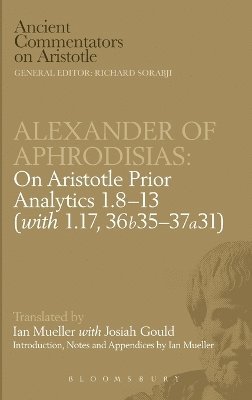
Alexander of Aphrodisias: On Aristotle Prior Analytics: 1.8-13 (with 1.17, 36b35-37a31)
Av of Aphrodisias Alexander, Ian Mueller
Inbunden, 1999
2132 kr
Lägg i varukorg
This series translates the 15,000 pages of philosophical writings by the ancient Greek commentators on Aristotle, written mainly between 200 and 600 AD. Now translated into English, these works include introductions, notes and comprehensive indexes, filling a gap in the history of European thought.
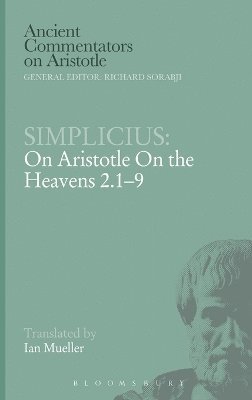
On Aristotle "On the Heavens 2.1-9"
Av of Cilicia Simplicius, Ian Mueller
Inbunden, 2004
2132 kr
Lägg i varukorg
Aristotle believed that the outermost stars are carried round us on a transparent sphere. There are directions in the universe and a preferred direction of rotation. The sun moon and planets are carried on different revolving spheres. The spheres and celestial bodies are composed of an everlasting …
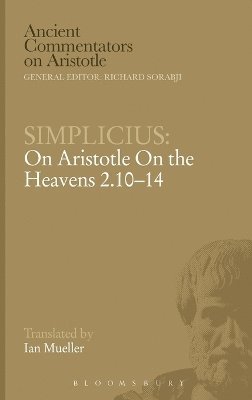
On Aristotle on the Heavens 2.10-14
Av Ian Mueller
Inbunden, 2005
1854 kr
Lägg i varukorg
Aristotle believed that the outermost stars are carried round us on a transparent sphere. There are directions in the universe and a preferred direction of rotation. The sun moon and planets are carried on different revolving spheres. The spheres and celestial bodies are composed of an everlasting …
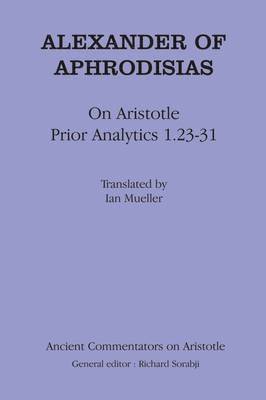
Alexander Aphrodisias Analytics
On Aristotle "Prior Analytics 1.23-31"
Av Ian Mueller
Inbunden, 2006
1854 kr
Lägg i varukorg
Until the launch of this series over fifteen years ago, the 15,000 volumes of the ancient Greek commentators on Aristotle, written mainly between 200 and 600 AD, constituted the largest corpus of extant Greek philosophical writings not translated into English or other European languages. Over 40 …
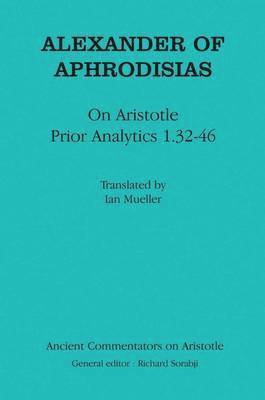
Alexander of Aphrodisias
On Aristotle "Prior Analytics 1.32-46"
Av Ian Mueller
Inbunden, 2006
1854 kr
Lägg i varukorg
Until the launch of this series over fifteen years ago, the 15,000 volumes of the ancient Greek commentators on Aristotle, written mainly between 200 and 600 AD, constituted the largest corpus of extant Greek philosophical writings not translated into English or other European languages. Over 40 …
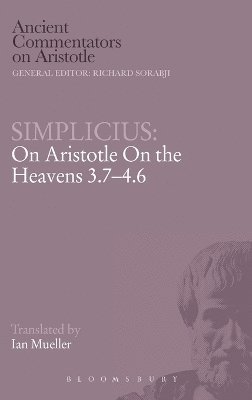
Simplicius
On Aristotle "On the Heavens 3.7-4.6"
Inbunden, 2009
2281 kr
Lägg i varukorg
Commenting on the end of Aristotle "On the Heavens" Book 3, Simplicius examines Aristotle's criticisms of Plato's theory of elemental chemistry in the "Timaeus". Plato makes the characteristics of the four elements depend on the shapes of component corpuscles and ultimately on the arrangement of …
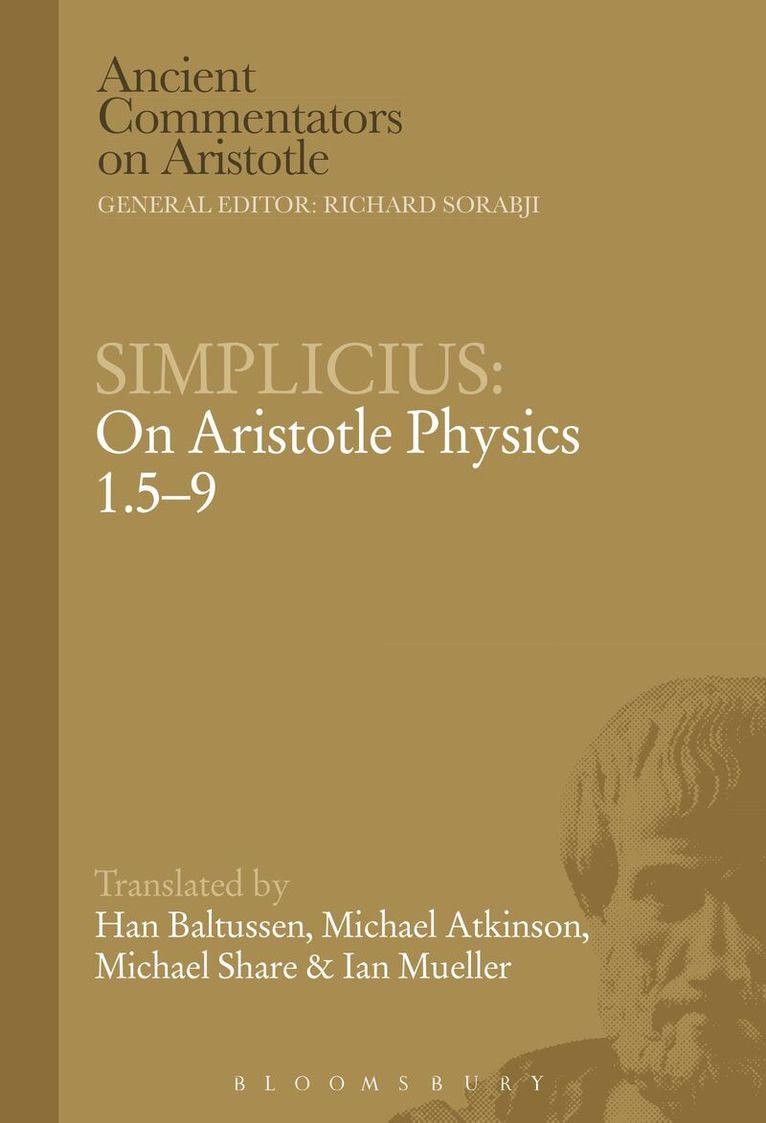
Simplicius: On Aristotle Physics 1.5-9
Av Han Baltussen, Michael Atkinson m. fl.
Inbunden, 2012
2281 kr
Lägg i varukorg
In the chapters of his 'Physics' commented on here, Aristotle disagrees with Pre-Socratic philosophers about the basic principles that explain natural changes. But he finds some agreement among them that at least two contrary properties must be involved, for example hot and cold. His own view is …
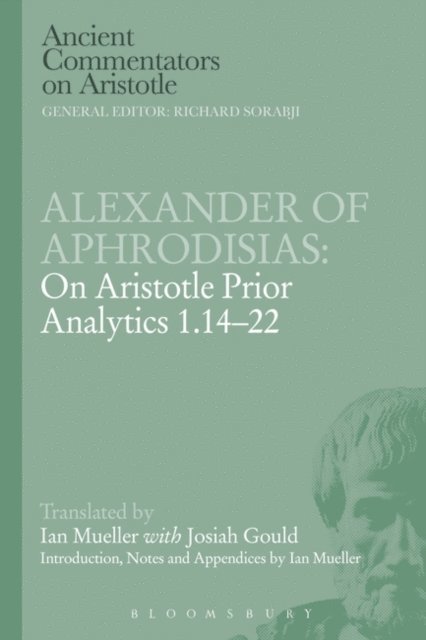
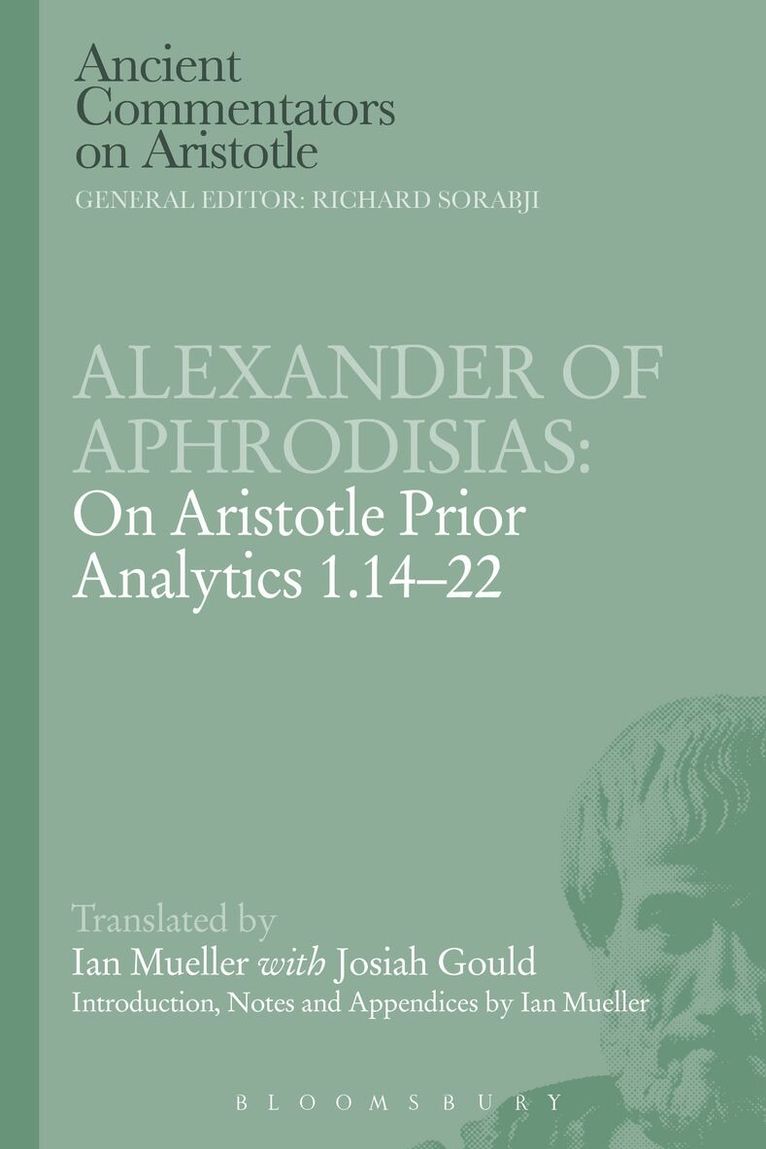
Alexander of Aphrodisias: On Aristotle Prior Analytics 1.14-22
Av Ian Mueller
E-bok, 2014
608 kr
Lägg i varukorg
The commentary of Alexander of Aphrodisias on Aristotle''s Prior Analytics 1.8-22 is a very important text, being the main ancient commentary with chapters in which Aristotle invented modal logic - the logic of propositions about what is necessary or contingent (possible). The first volume of Ian …
Alexander of Aphrodisias: On Aristotle Prior Analytics 1.14-22
Av Ian Mueller, Richard Sorabji
Häftad, 2014
561 kr
Lägg i varukorg
The commentary of Alexander of Aphrodisias on Aristotle's Prior Analytics 1.8-22 is a very important text, being the main ancient commentary with chapters in which Aristotle invented modal logic - the logic of propositions about what is necessary or contingent (possible). The first volume of Ian …