Imogen Goold – författare
Visar alla böcker från författaren Imogen Goold. Handla med fri frakt och snabb leverans.
18 produkter
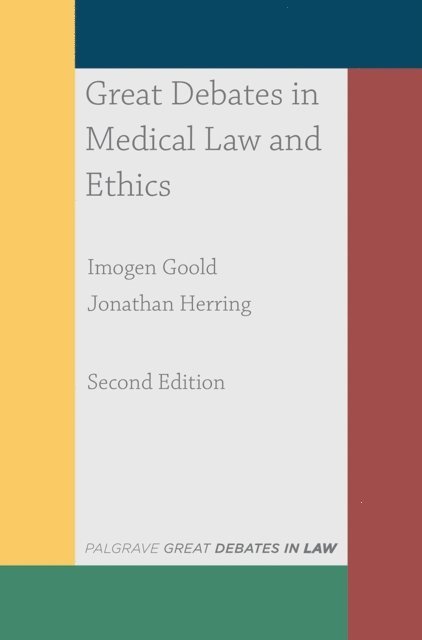
Great Debates in Medical Law and Ethics
Av Imogen Goold, Jonathan Herring
Häftad, 2018
460 kr
Lägg i varukorg
This textbook is an ambitious and engaging introduction to the more advanced writings on medical law and ethics, primarily designed to allow students to ‘get under the skin’ of the topic and begin to build their critical thinking and analysis skills. Each chapter is structured around key questions …
Great Debates in Medical Law and Ethics
Av Imogen Goold, Jonathan Herring
E-bok, 2018
491 kr
Lägg i varukorg
This textbook is an ambitious and engaging introduction to the more advanced writings on medical law and ethics, primarily designed to allow students to ''get under the skin'' of the topic and begin to build their critical thinking and analysis skills. Each chapter is structured around key …
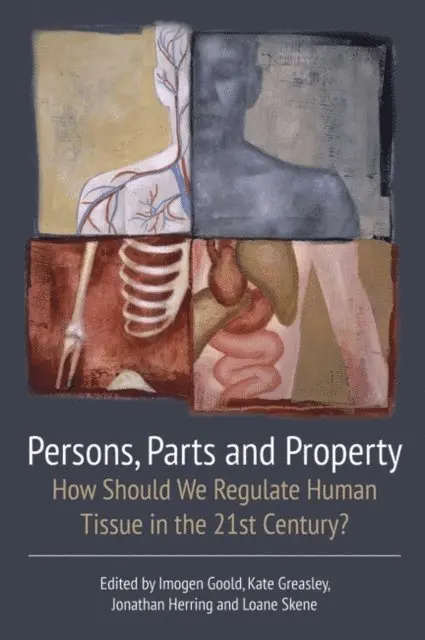
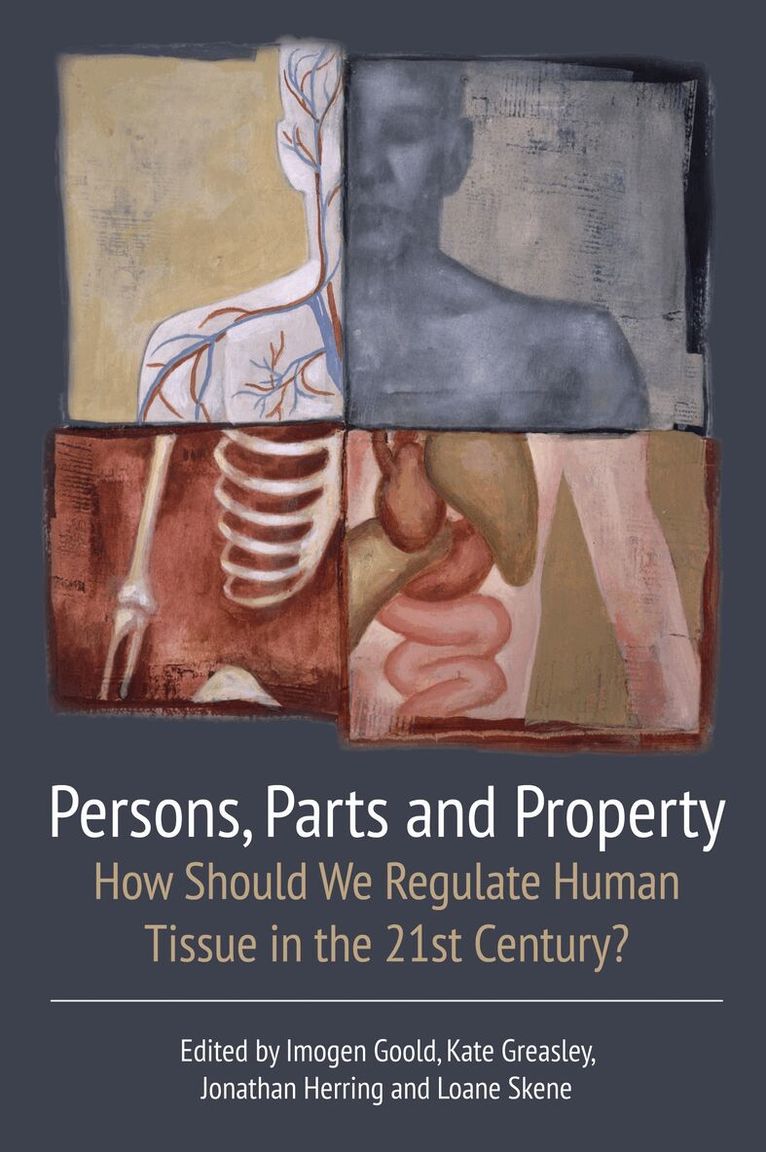
Persons, Parts and Property
How Should we Regulate Human Tissue in the 21st Century?
Av Imogen Goold, Kate Greasley m. fl.
Häftad, 2016
551 kr
Lägg i varukorg
The debate over whether human bodies and their parts should be governed by the laws of property has accelerated with the pace of technological change. Having long held that a corpse could not be property, the common law first recognised that there could be a property interest in human tissue in …
Debating Autonomy
Av Imogen Goold, Jonathan Herring
Häftad, 2025
325 kr
Kommande
Who is best placed in medical decision-making, to decide: the patient or the doctor? In this important new volume in the Debating Law series, Imogen Goold argues that the law should strongly support individual choice and autonomy. Medical decisions, she argues, are deeply personal, with …
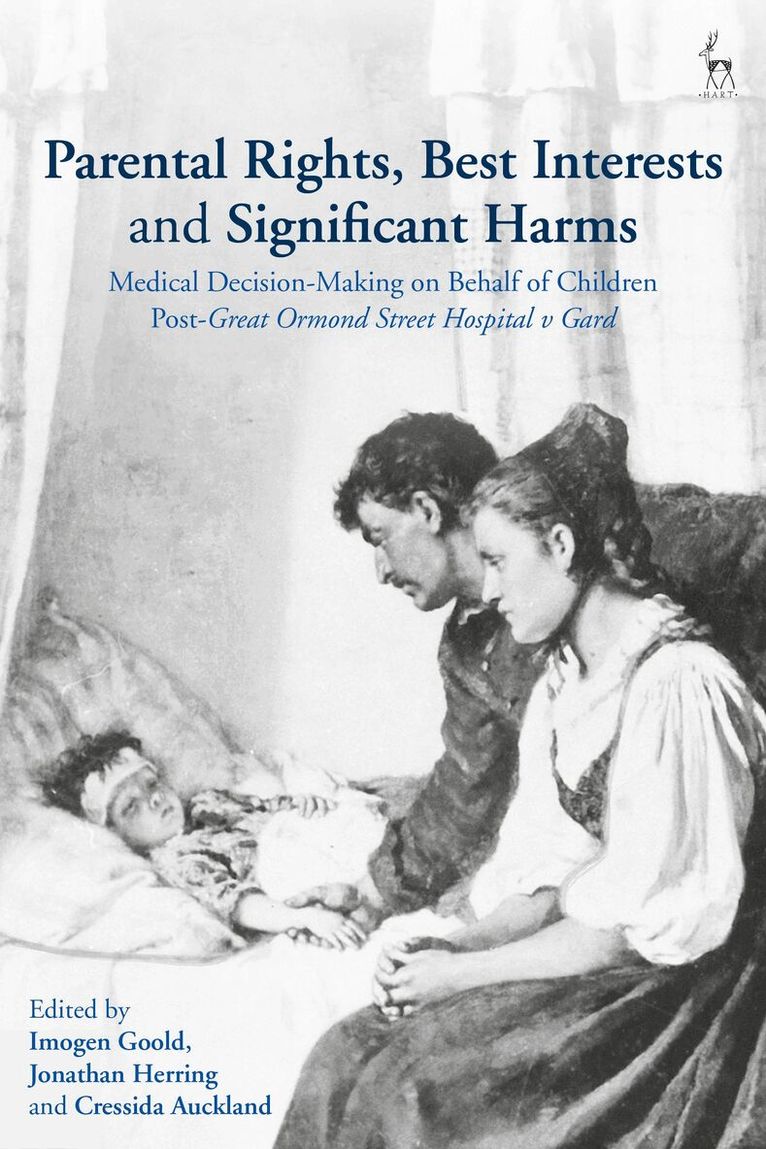
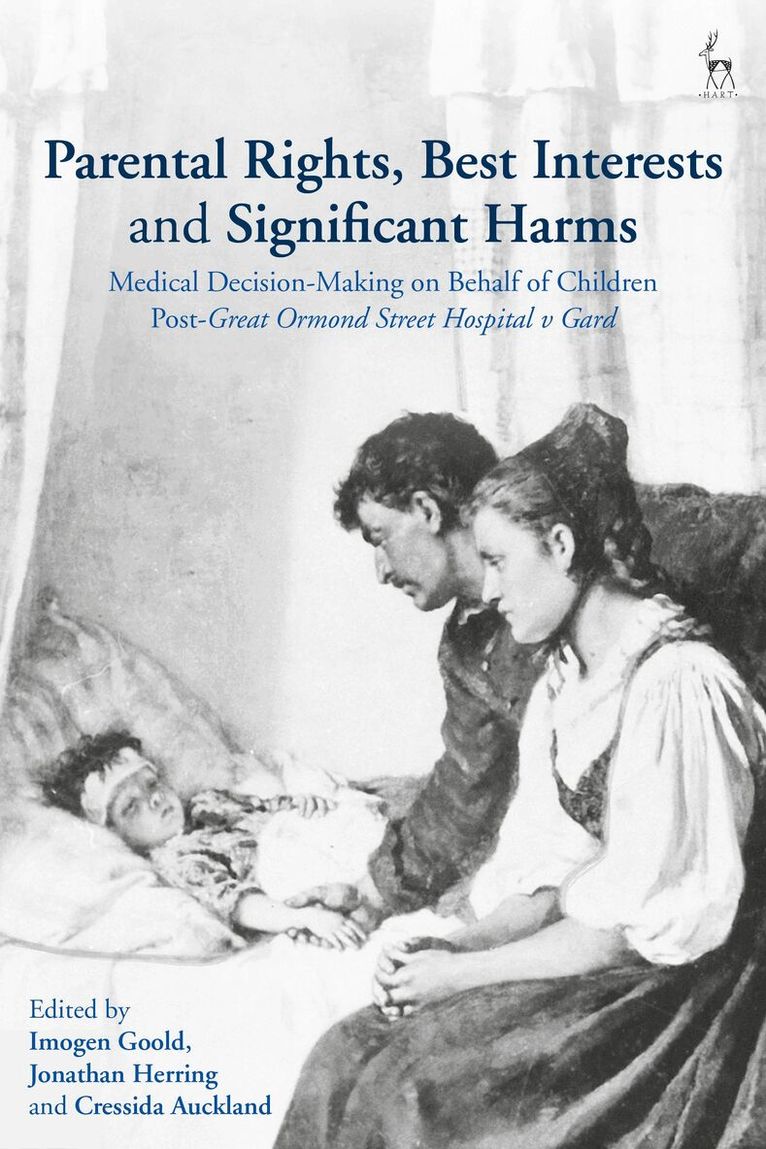
Parental Rights, Best Interests and Significant Harms
Medical Decision-Making on Behalf of Children Post-Great Ormond Street Hospital v Gard
Av Imogen Goold, Jonathan Herring m. fl.
Inbunden, 2019
1108 kr
Lägg i varukorg
This timely collection brings together philosophical, legal and sociological perspectives on the crucial question of who should make decisions about the fate of a child suffering from a serious illness. In particular, the collection looks at whether the current ‘best interests’ threshold is the …
Parental Rights, Best Interests and Significant Harms
Medical Decision-Making on Behalf of Children Post-Great Ormond Street Hospital v Gard
Av Imogen Goold, Jonathan Herring m. fl.
E-bok, 2019
502 kr
Lägg i varukorg
This timely collection brings together philosophical, legal and sociological perspectives on the crucial question of who should make decisions about the fate of a child suffering from a serious illness. In particular, the collection looks at whether the current ''best interests'' threshold is the …
Parental Rights, Best Interests and Significant Harms
Medical Decision-Making on Behalf of Children Post-Great Ormond Street Hospital v Gard
Av Imogen Goold, Jonathan Herring m. fl.
E-bok, 2019
502 kr
Lägg i varukorg
This timely collection brings together philosophical, legal and sociological perspectives on the crucial question of who should make decisions about the fate of a child suffering from a serious illness. In particular, the collection looks at whether the current ''best interests'' threshold is the …
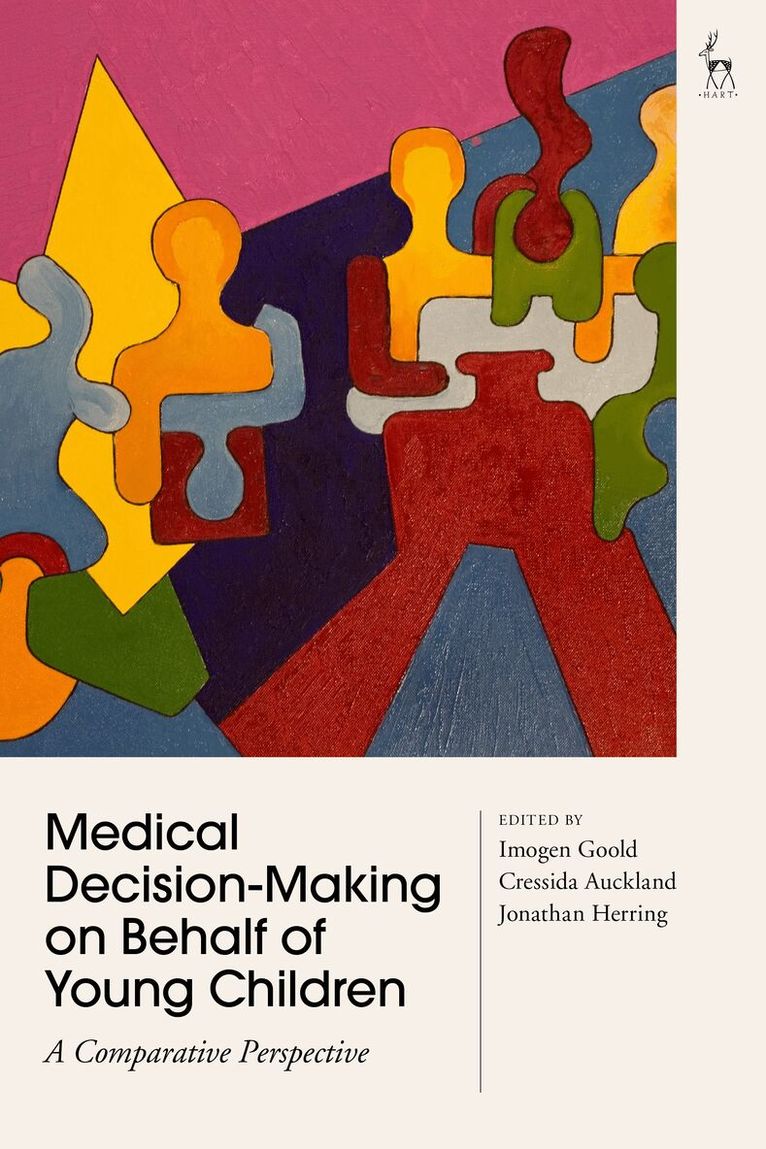
Medical Decision-Making on Behalf of Young Children
A Comparative Perspective
Av Imogen Goold, Cressida Auckland m. fl.
Inbunden, 2020
1302 kr
Lägg i varukorg
In the wake of the Charlie Gard and Alfie Evans cases, a wide-ranging international conversation was started regarding alternative thresholds for intervention and the different balances that can be made in weighing up the rights and interests of the child, the parent’s rights and responsibilities …
Medical Decision-Making on Behalf of Young Children
A Comparative Perspective
Av Imogen Goold, Cressida Auckland m. fl.
E-bok, 2020
603 kr
Lägg i varukorg
In the wake of the Charlie Gard and Alfie Evans cases, a wide-ranging international conversation was started regarding alternative thresholds for intervention and the different balances that can be made in weighing up the rights and interests of the child, the parent''s rights and responsibilities …
Medical Decision-Making on Behalf of Young Children
A Comparative Perspective
Av Imogen Goold, Cressida Auckland m. fl.
E-bok, 2020
617 kr
Lägg i varukorg
In the wake of the Charlie Gard and Alfie Evans cases, a wide-ranging international conversation was started regarding alternative thresholds for intervention and the different balances that can be made in weighing up the rights and interests of the child, the parent''s rights and responsibilities …
Medical Decision-Making on Behalf of Young Children
A Comparative Perspective
Av Imogen Goold, Cressida Auckland m. fl.
Häftad, 2022
564 kr
Lägg i varukorg
In the wake of the Charlie Gard and Alfie Evans cases, a wide-ranging international conversation was started regarding alternative thresholds for intervention and the different balances that can be made in weighing up the rights and interests of the child, the parent’s rights and responsibilities …
Parental Rights, Best Interests and Significant Harms
Medical Decision-Making on Behalf of Children Post-Great Ormond Street Hospital v Gard
Av Imogen Goold, Jonathan Herring m. fl.
Häftad, 2021
460 kr
Lägg i varukorg
This timely collection brings together philosophical, legal and sociological perspectives on the crucial question of who should make decisions about the fate of a child suffering from a serious illness. In particular, the collection looks at whether the current ‘best interests’ threshold is the …
Great Debates in Medical Law and Ethics
Av Imogen Goold, Jonathan Herring
E-bok, 2018
502 kr
Lägg i varukorg
This textbook is an ambitious and engaging introduction to the more advanced writings on medical law and ethics, primarily designed to allow students to ''get under the skin'' of the topic and begin to build their critical thinking and analysis skills. Each chapter is structured around key …
Persons, Parts and Property
How Should We Regulate Human Tissue in the 21st Century?
Av Imogen Goold, Kate Greasley m. fl.
E-bok, 2014
602 kr
Lägg i varukorg
The debate over whether human bodies and their parts should be governed by the laws of property has accelerated with the pace of technological change. Having long held that a corpse could not be property, the common law first recognised that there could be a property interest in human tissue in …
Persons, Parts and Property
How Should We Regulate Human Tissue in the 21st Century?
Av Imogen Goold, Kate Greasley m. fl.
E-bok, 2014
602 kr
Lägg i varukorg
The debate over whether human bodies and their parts should be governed by the laws of property has accelerated with the pace of technological change. Having long held that a corpse could not be property, the common law first recognised that there could be a property interest in human tissue in …
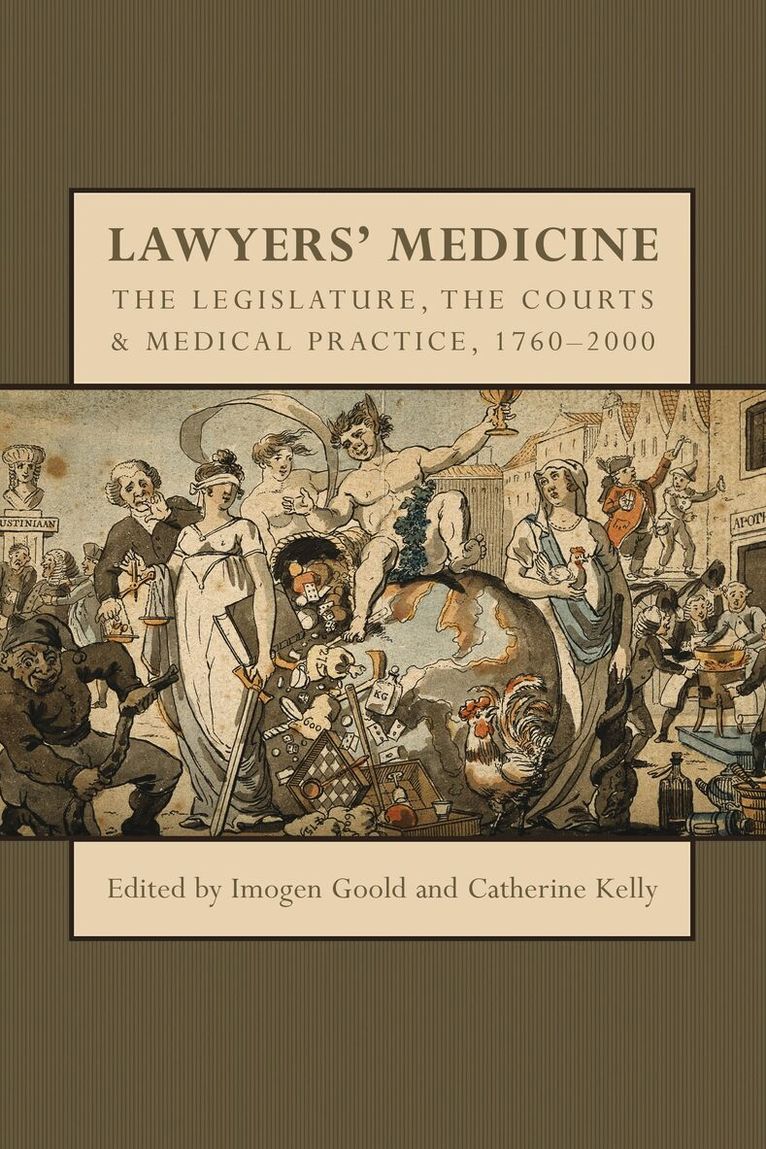
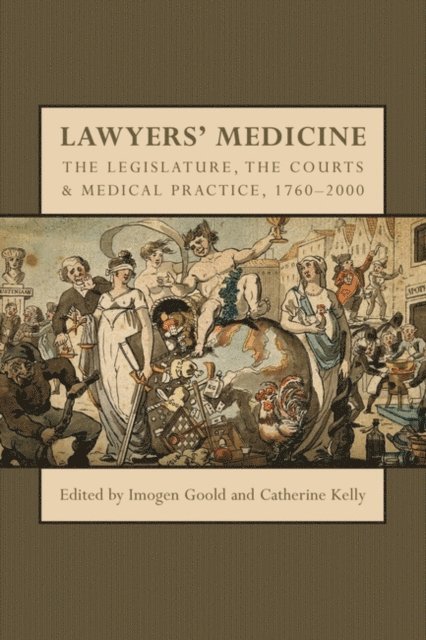
Lawyers' Medicine
The Legislature, the Courts and Medical Practice, 1760-2000
Av Imogen Goold, Catherine Kelly
Häftad, 2009
849 kr
Lägg i varukorg
This book investigates how the the requirements, limitations and intellectual structure of the British legal process have shaped medicine and medical practice. The story of this inter-relationship is greatly under-researched, which is particularly concerning given that the legal system remains a …
Lawyers' Medicine
The Legislature, the Courts and Medical Practice, 1760-2000
Av Imogen Goold, Catherine Kelly
E-bok, 2009
932 kr
Lägg i varukorg
This book investigates how the requirements, limitations and intellectual structure of the British legal process have shaped medicine and medical practice. The story of this inter-relationship is greatly under-researched, which is particularly concerning given that the legal system remains a …
Persons, Parts and Property
How Should we Regulate Human Tissue in the 21st Century?
Av Imogen Goold, Kate Greasley m. fl.
Inbunden, 2014
1302 kr
Lägg i varukorg
The debate over whether human bodies and their parts should be governed by the laws of property has accelerated with the pace of technological change. Having long held that a corpse could not be property, the common law first recognised that there could be a property interest in human tissue in …