Ina Baghdiantz-MacCabe - Böcker
Visar alla böcker från författaren Ina Baghdiantz-MacCabe. Handla med fri frakt och snabb leverans.
4 produkter
4 produkter
461 kr
Skickas inom 10-15 vardagar
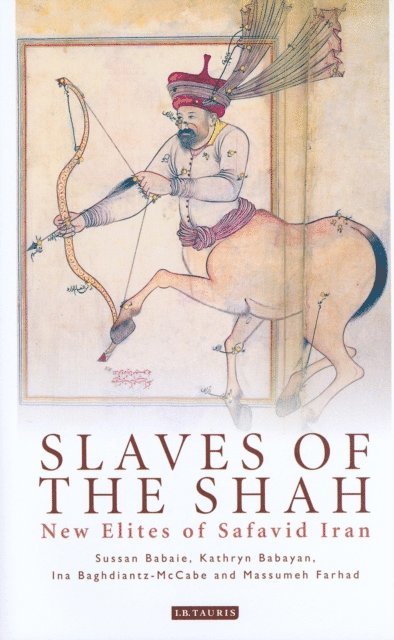
The Safavid dynasty represented the pinnacle of Iran's power and influence in its early modern history. The evidence of this - the creation of a nation state, military expansion and success, economic dynamism and the exquisite art and architecture of the period is well-known. What is less understood is the extent to which the Safavid success depended on an elite originating from outside Iran: the slaves of Caucasian descent and the Armenian merchants of Isfahan. This book describes how these elites, following their conversion to Islam, helped to transform Isfahan's urban, artistic and social landscape.
Orientalism in Early Modern France
Eurasian Trade, Exoticism, and the Ancien Régime
Inbunden, Engelska, 2008
1 888 kr
Skickas inom 10-15 vardagar
Francis I's ties with the Ottoman Empire marked the birth of court-sponsored Orientalism in France. Under Louis XIV, French society was transformed by cross-cultural contacts with the Ottomans, India, Persia, China, Siam and the Americas. The consumption of silk, cotton cloth, spices, coffee, tea, china, gems, flowers and other luxury goods transformed daily life and gave rise to a new discourse about the 'Orient' which in turn shaped ideas about science, economy and politics, and against absolutist monarchy. An original account of the ancient regime, this book highlights France's use of the exotic and analyzes French discourse about Islam and the 'Orient'.
1 703 kr
Skickas inom 10-15 vardagar
Diasporas large-scale ethnic migrations have been a source of growing concern as we try to understand the nature of community, identity and nationalism. Traditionally, diaspora communities have been understood to be pariah communities, and most work on diasporas has focused on specific groups such as the Jewish or African Diaspora. This book is unique in arguing against traditional interpretations and in taking a comparative look at a range of diasporas, including the Jewish, Arab, Chinese, Japanese, Indian, Maltese, Greek and Armenian diasporas.Taking the past four centuries into consideration, the authors examine diaspora trading networks across the globe on both a regional and international level. They investigate the common patterns and practices in the enterprises of diaspora peoples and entrepreneurs. The regions covered include Western Europe, the Mediterranean, South West Asia and the Indian Ocean, and South East Asia. Global networks of diaspora trading groups were crucial to international trade well before the twentieth century, yet because they were not part of established institutions they have remained elusive to economists, sociologists and historians.Through an understanding of diaspora trading networks, we learn not only about diaspora communities but also about the roots of the modern global economy.
541 kr
Skickas inom 10-15 vardagar
Diasporas large-scale ethnic migrations have been a source of growing concern as we try to understand the nature of community, identity and nationalism. Traditionally, diaspora communities have been understood to be pariah communities, and most work on diasporas has focused on specific groups such as the Jewish or African Diaspora. This book is unique in arguing against traditional interpretations and in taking a comparative look at a range of diasporas, including the Jewish, Arab, Chinese, Japanese, Indian, Maltese, Greek and Armenian diasporas. Taking the past four centuries into consideration, the authors examine diaspora trading networks across the globe on both a regional and international level. They investigate the common patterns and practices in the enterprises of diaspora peoples and entrepreneurs. The regions covered include Western Europe, the Mediterranean, South West Asia and the Indian Ocean, and South East Asia. Global networks of diaspora trading groups were crucial to international trade well before the twentieth century, yet because they were not part of established institutions they have remained elusive to economists, sociologists and historians.Through an understanding of diaspora trading networks, we learn not only about diaspora communities but also about the roots of the modern global economy.