Sussan Babaie – författare
Visar alla böcker från författaren Sussan Babaie. Handla med fri frakt och snabb leverans.
12 produkter
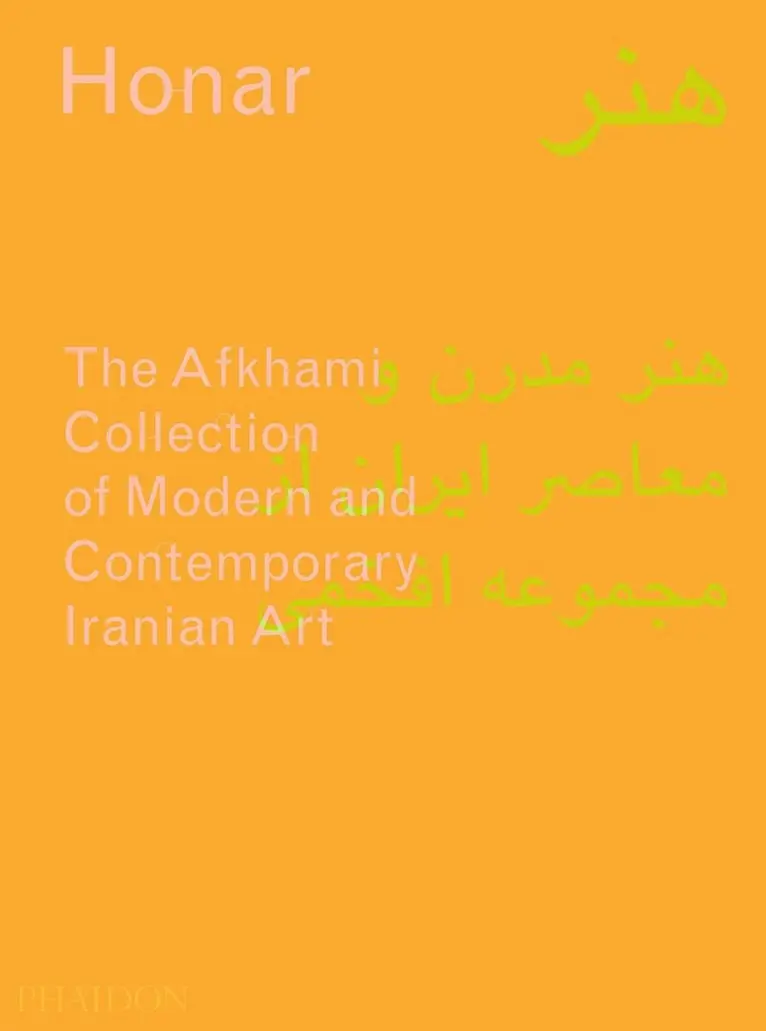
Honar
The Afkhami Collection of Modern and Contemporary Iranian Art
Av Sussan Babaie, Venetia Porter m. fl.
Inbunden, 2017
951 kr
Lägg i varukorg
The first and only book on one of the finest private collections of contemporary Iranian artThis sumptuous volume features almost 250 contemporary artworks and a selection of medieval and early modern Islamic art - the heralded collection of Mohammed Afkhami, a prominent player at the cultural and …
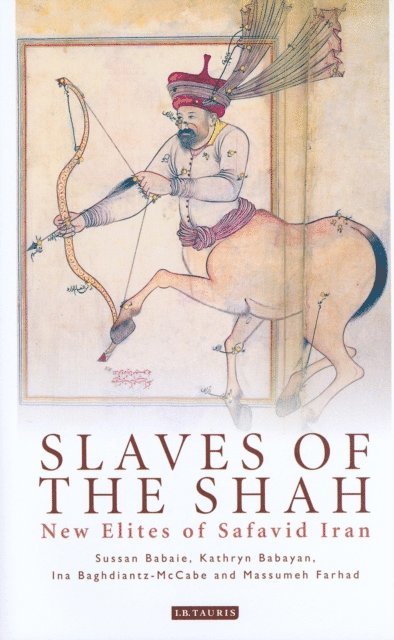
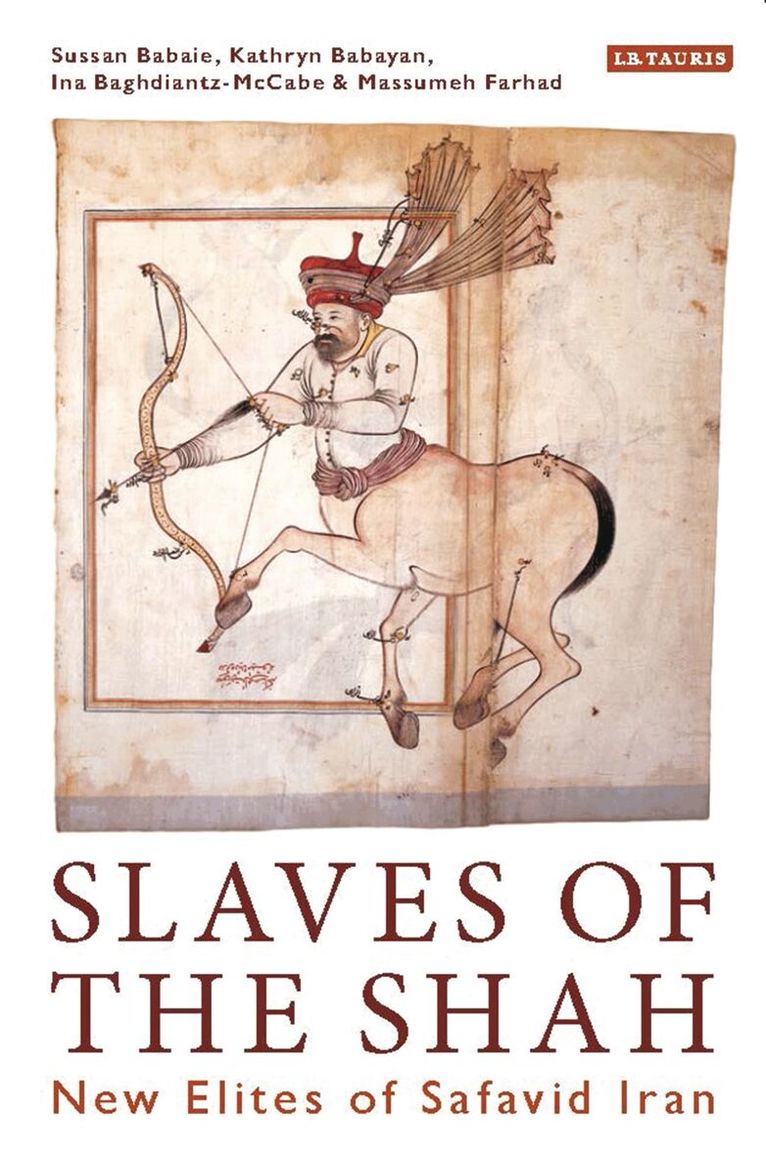
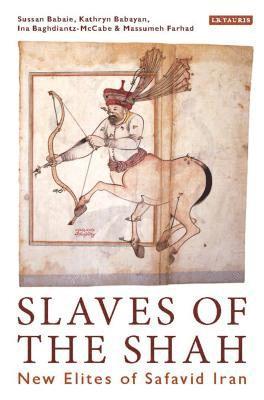
Slaves of the Shah
New Elites of Safavid Iran
Av Sussan Babaie, Kathryn Babayan m. fl.
E-bok, 2004
530 kr
Lägg i varukorg
The Savafid dynasty represented, in political, cultural and economic terms the pinnacle of Iran's power and influence in its early modern history. The evidence for this -the creation of a nation state, military expansion and success, economic dynamism and the exquisite art and architecture of the …
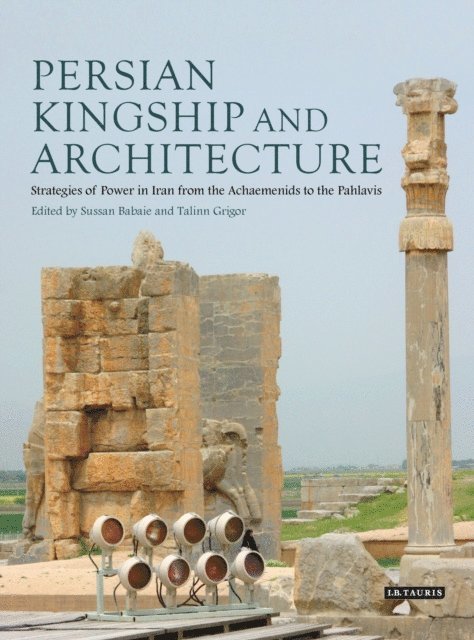
Persian Kingship and Architecture
Strategies of Power in Iran from the Achaemenids to the Pahlavis
Av Sussan Babaie, Talinn Grigor
E-bok, 2015
1926 kr
Lägg i varukorg
Since the Shah went into exile and the Islamic Republic was established in 1979 in the wake of the Iranian Revolution, the very idea of monarchy in Iran has been contentious. Yet, as Persian Kingship and Architecture argues, the institution of kingship has historically played a pivotal role in …
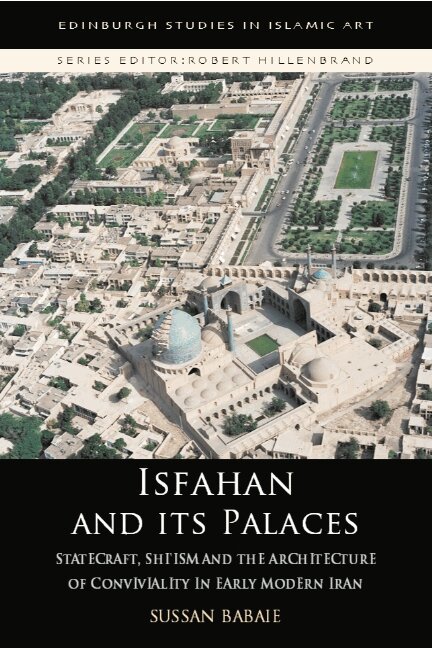
Isfahan and its Palaces
Statecraft, Shi`ism and the Architecture of Conviviality in Early Modern Iran
Häftad, 2018
607 kr
Lägg i varukorg
This beautifully illustrated history of Safavid Isfahan (1501–1722) explores the architectural and urban forms and networks of socio-cultural action that reflected a distinctly early-modern and Perso-Shi‘i practice of kingship.An immense building campaign, initiated in 1590-91, transformed Isfahan …
Iran After the Mongols
E-bok, 2019
915 kr
Lägg i varukorg
Following the devastating Mongol conquest of Baghdad in 1258, the domination of the Abbasids declined leading to successor polities, chiefly among them the Ilkhanate in Greater Iran, Iraq and the Caucasus. Iranian cultural identities were reinstated within the lands that make up today's Iran, …
Iran After the Mongols
E-bok, 2019
935 kr
Lägg i varukorg
Following the devastating Mongol conquest of Baghdad in 1258, the domination of the Abbasids declined leading to successor polities, chiefly among them the Ilkhanate in Greater Iran, Iraq and the Caucasus. Iranian cultural identities were reinstated within the lands that make up today's Iran, …
Slaves of the Shah
New Elites of Safavid Iran
Av Sussan Babaie, Kathryn Babayan m. fl.
Häftad, 2017
489 kr
Lägg i varukorg
The Safavid dynasty represented the pinnacle of Iran's power and influence in its early modern history. The evidence of this - the creation of a nation state, military expansion and success, economic dynamism and the exquisite art and architecture of the period is well-known. What is less …
Iran After the Mongols
Inbunden, 2019
858 kr
Lägg i varukorg
Following the devastating Mongol conquest of Baghdad in 1258, the domination of the Abbasids declined leading to successor polities, chiefly among them the Ilkhanate in Greater Iran, Iraq and the Caucasus. Iranian cultural identities were reinstated within the lands that make up today’s Iran, …
Slaves of the Shah
New Elites of Safavid Iran
Av Sussan Babaie, K. Babayan m. fl.
Inbunden, 2004
2365 kr
Lägg i varukorg
The Savafid dynasty represented, in political, cultural and economic terms the pinnacle of Iran's power and influence in its early modern history. The evidence for this -the creation of a nation state, military expansion and success, economic dynamism and the exquisite art and architecture of the …
MYAL - My Aleppo
Av Mafaldo Ade, Pierre Antaki m. fl.
Inbunden, 2011
636 kr
Lägg i varukorg
Book & CD. Aleppo is not perceived outside the Arab world as a "metropolis" -- at the same limo, though, the city with a five thousand year old history is one of the world's oldest cities. In this way, MYAL (My Aleppo) is to be understood as a special study about the development of the term …
The Mercantile Effect: Art and Exchange in the Islamicate World During the 17th and 18th Centuries
Av Sussan Babaie, Melanie Gibson
Inbunden
591 kr
Tillfälligt slut
Geometry and Art
In the Modern Middle East
Inbunden, 2019
407 kr
Tillfälligt slut
In a groundbreaking volume about the use of Islamic geometry in modern and contemporary art from the region, Middle East art expert and Sothebys Deputy Chairman Roxane Zand, and Dr Sussan Babaie professor of Islamic arts at the Courtauld Institute of Artof the University of London, explore ways in …