Io Manolessou – författare
Visar alla böcker från författaren Io Manolessou. Handla med fri frakt och snabb leverans.
6 produkter
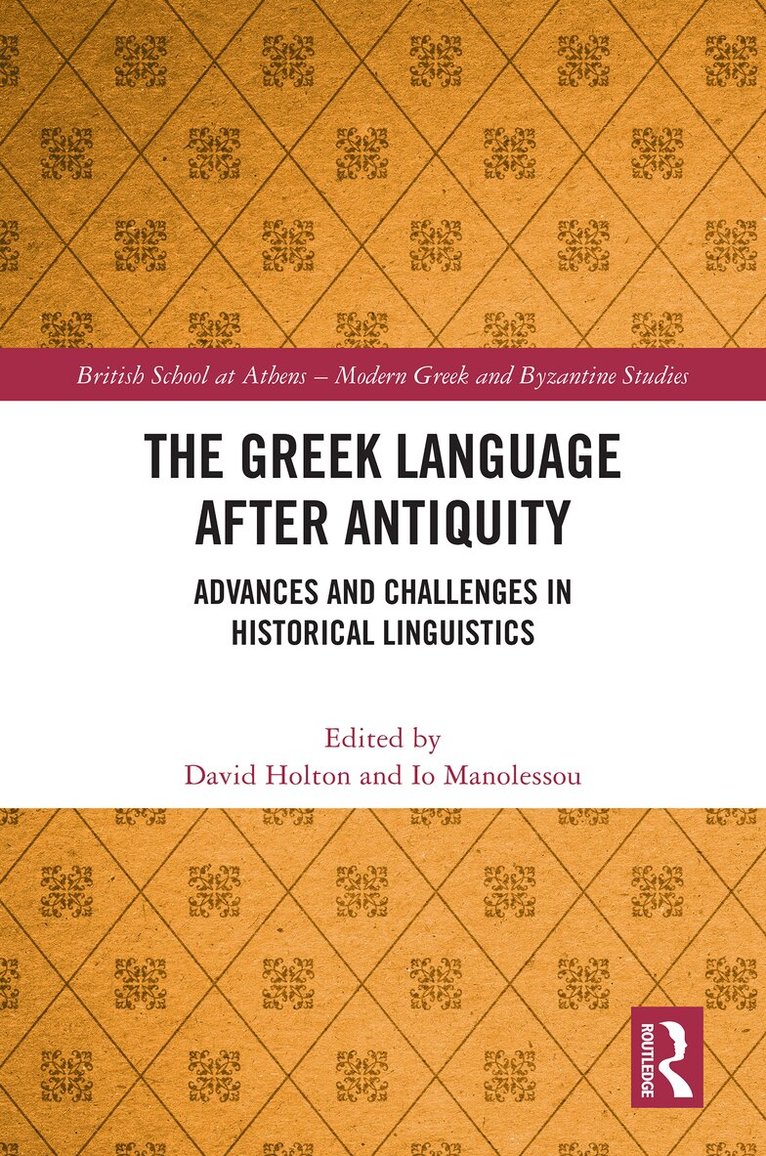
Greek Language after Antiquity
Advances and Challenges in Historical Linguistics
Av David Holton, Io Manolessou
Inbunden, 2025
2586 kr
Lägg i varukorg
The Greek Language after Antiquity offers an in-depth look at the diachrony of the Greek language, focusing on a period relatively neglected by modern scholarship: the more than 1,000 years between the end of Antiquity and the early modern period. These studies, written by experts in the field, …
Greek Language after Antiquity
Advances and Challenges in Historical Linguistics
Av David Holton, Io Manolessou
Häftad, 2026
727 kr
Lägg i varukorg
The Greek Language after Antiquity offers an in-depth look at the diachrony of the Greek language, focusing on a period relatively neglected by modern scholarship: the more than 1,000 years between the end of Antiquity and the early modern period. These studies, written by experts in the field, …
Greek Language after Antiquity
Advances and Challenges in Historical Linguistics
Av Io Manolessou, David Holton
E-bok, 2025
856 kr
Lägg i varukorg
The Greek Language after Antiquity offers an in-depth look at the diachrony of the Greek language, focusing on a period relatively neglected by modern scholarship: the more than 1,000 years between the end of Antiquity and the early modern period. These studies, written by experts in the field, …
Greek Language after Antiquity
Advances and Challenges in Historical Linguistics
Av Io Manolessou, David Holton
E-bok, 2025
838 kr
Lägg i varukorg
The Greek Language after Antiquity offers an in-depth look at the diachrony of the Greek language, focusing on a period relatively neglected by modern scholarship: the more than 1,000 years between the end of Antiquity and the early modern period. These studies, written by experts in the field, …
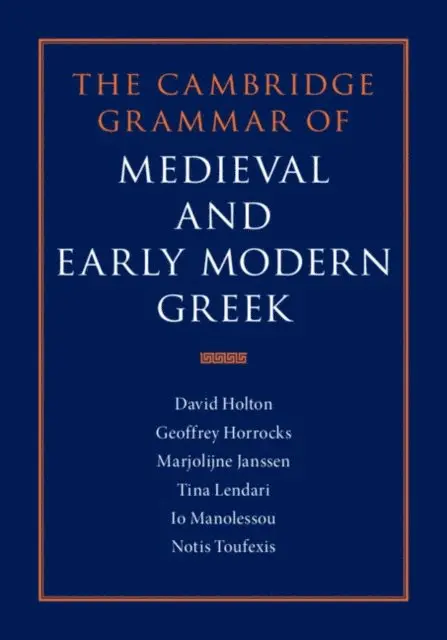
Cambridge Grammar of Medieval and Early Modern Greek
Av Notis Toufexis, Io Manolessou m. fl.
E-bok, 2019
5891 kr
Lägg i varukorg
The Greek language has a written history of more than 3,000 years. While the classical, Hellenistic and modern periods of the language are well researched, the intermediate stages are much less well known, but of great interest to those curious to know how a language changes over time. The …
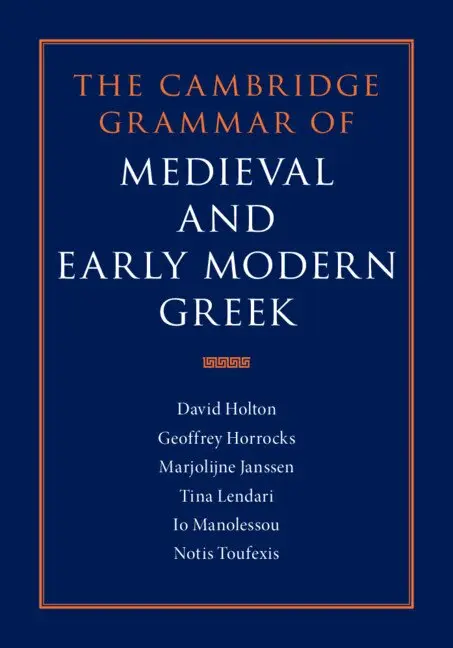
The Cambridge Grammar of Medieval and Early Modern Greek 4 Volume Hardback Set
Av David Holton, Geoffrey Horrocks m. fl.
2019
7745 kr
Tillfälligt slut
The Greek language has a written history of more than 3,000 years. While the classical, Hellenistic and modern periods of the language are well researched, the intermediate stages are much less well known, but of great interest to those curious to know how a language changes over time. The …