Irina Paperno - Böcker
Visar alla böcker från författaren Irina Paperno. Handla med fri frakt och snabb leverans.
12 produkter
12 produkter
Del 17 - California Slavic Studies
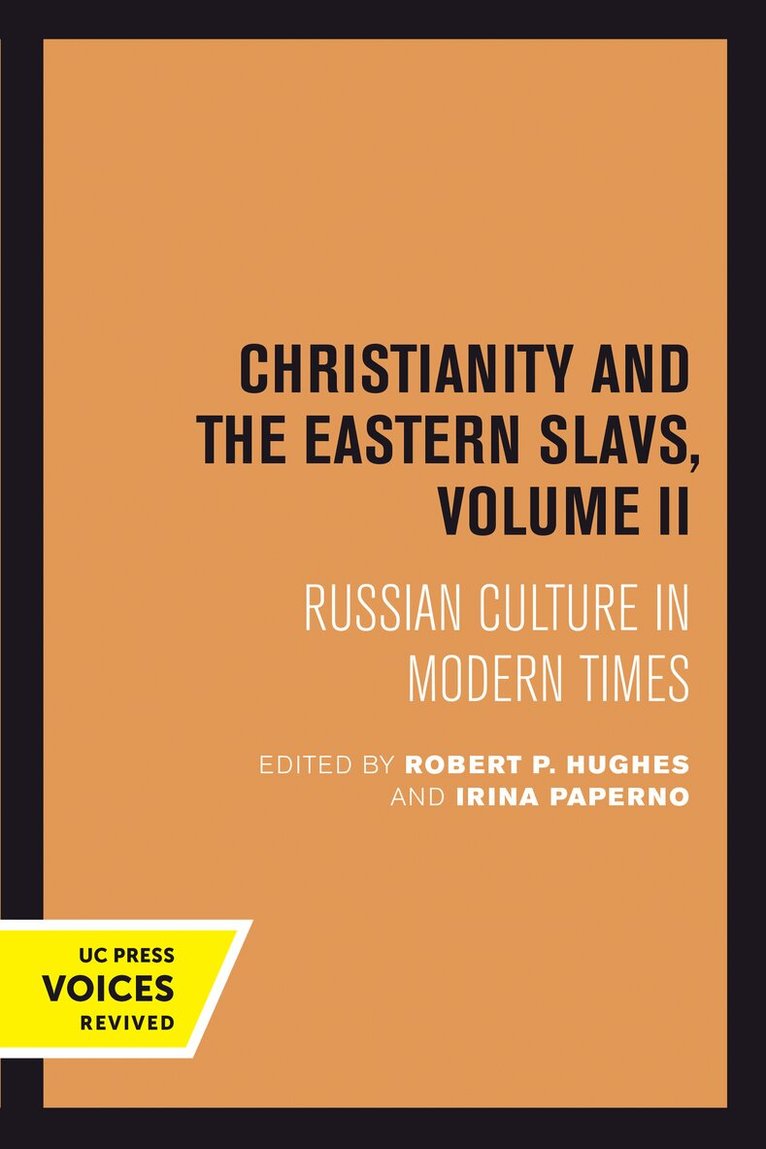
Christianity and the Eastern Slavs, Volume II
Russian Culture in Modern Times
Häftad, Engelska, 2018
321 kr
Skickas inom 7-10 vardagar
This publication in three volumes originated in papers delivered at two conferences held in May 1988 at the University of California, Berkeley, and the Kennan Institute for Advanced Russian Studies in Washington, DC. Like many other conferences organized that year in the United States, Europe, and the Soviet Union, they were convened to commemorate the millennium of the acceptance of Christianity in Rus'. This collection of essays throws light on the enormous, truly unique role that the Christian tradition has played throughout the centuries in shaping the nations that spring from Kievan Rus'—the Russians, Ukrainians, and Belorussians. Although these volumes devote greater attention to Russian culture, the investigation of the issue in the history of Christianity in Ukrainian and Belorussian cultures occupies an important and integral part of the project. Volume ISlavic Cultures in the Middle AgesEdited by Boris Gasparov and Olga Raevsky-Hughes Volume IIRussian Culture in Modern TimesEdited by Robert P. Hughes and Irina Paperno Volume IIIRussian Literature in Modern TimesEdited by Boris Gasparov, Robert P. Hughes, Irina Paperno, and Olga Raevsky-Hughes This title is part of UC Press's Voices Revived program, which commemorates University of California Press’s mission to seek out and cultivate the brightest minds and give them voice, reach, and impact. Drawing on a backlist dating to 1893, Voices Revived makes high-quality, peer-reviewed scholarship accessible once again using print-on-demand technology. This title was originally published in 1994.
Del 18 - California Slavic Studies
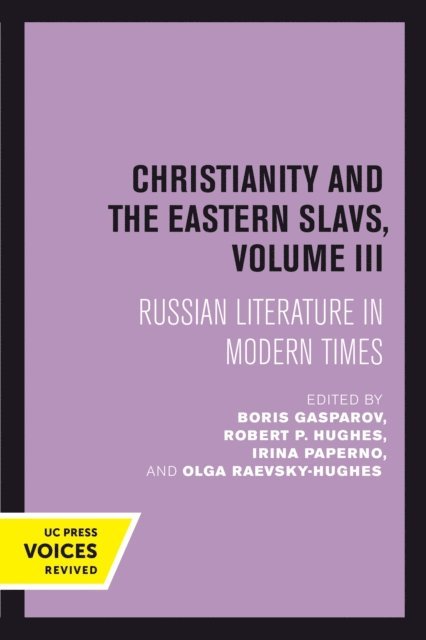
Christianity and the Eastern Slavs, Volume III
Russian Literature in Modern Times
Häftad, Engelska, 2018
370 kr
Skickas inom 7-10 vardagar
This publication in three volumes originated in papers delivered at two conferences held in May 1988 at the University of California, Berkeley, and the Kennan Institute for Advanced Russian Studies in Washington, DC. Like many other conferences organized that year in the United States, Europe, and the Soviet Union, they were convened to commemorate the millennium of the acceptance of Christianity in Rus'. This collection of essays throws light on the enormous, truly unique role that the Christian tradition has played throughout the centuries in shaping the nations that spring from Kievan Rus'—the Russians, Ukrainians, and Belorussians. Although these volumes devote greater attention to Russian culture, the investigation of the issue in the history of Christianity in Ukrainian and Belorussian cultures occupies an important and integral part of the project. Volume ISlavic Cultures in the Middle AgesEdited by Boris Gasparov and Olga Raevsky-Hughes Volume IIRussian Culture in Modern TimesEdited by Robert P. Hughes and Irina Paperno Volume IIIRussian Literature in Modern TimesEdited by Boris Gasparov, Robert P. Hughes, Irina Paperno, and Olga Raevsky-Hughes This title is part of UC Press's Voices Revived program, which commemorates University of California Press’s mission to seek out and cultivate the brightest minds and give them voice, reach, and impact. Drawing on a backlist dating to 1893, Voices Revived makes high-quality, peer-reviewed scholarship accessible once again using print-on-demand technology. This title was originally published in 1993.
Del 17 - California Slavic Studies
Christianity and the Eastern Slavs, Volume II
Russian Culture in Modern Times
Inbunden, Engelska, 2024
1 469 kr
Skickas inom 3-6 vardagar
This publication in three volumes originated in papers delivered at two conferences held in May 1988 at the University of California, Berkeley, and the Kennan Institute for Advanced Russian Studies in Washington, DC. Like many other conferences organized that year in the United States, Europe, and the Soviet Union, they were convened to commemorate the millennium of the acceptance of Christianity in Rus'. This collection of essays throws light on the enormous, truly unique role that the Christian tradition has played throughout the centuries in shaping the nations that spring from Kievan Rus'—the Russians, Ukrainians, and Belorussians. Although these volumes devote greater attention to Russian culture, the investigation of the issue in the history of Christianity in Ukrainian and Belorussian cultures occupies an important and integral part of the project. Volume ISlavic Cultures in the Middle AgesEdited by Boris Gasparov and Olga Raevsky-Hughes Volume IIRussian Culture in Modern TimesEdited by Robert P. Hughes and Irina Paperno Volume IIIRussian Literature in Modern TimesEdited by Boris Gasparov, Robert P. Hughes, Irina Paperno, and Olga Raevsky-Hughes This title is part of UC Press's Voices Revived program, which commemorates University of California Press’s mission to seek out and cultivate the brightest minds and give them voice, reach, and impact. Drawing on a backlist dating to 1893, Voices Revived makes high-quality, peer-reviewed scholarship accessible once again using print-on-demand technology. This title was originally published in 1994.
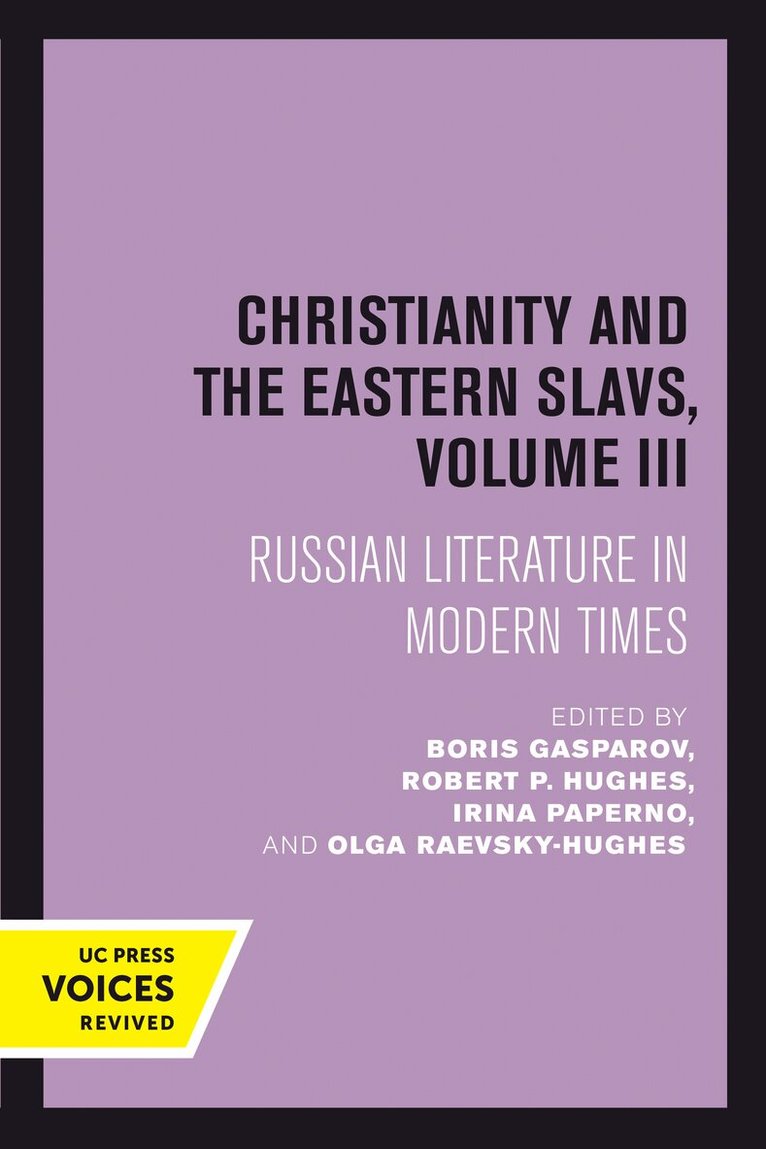
Del 18 - California Slavic Studies
Christianity and the Eastern Slavs, Volume III
Russian Literature in Modern Times
Inbunden, Engelska, 2024
1 690 kr
Skickas inom 3-6 vardagar
This publication in three volumes originated in papers delivered at two conferences held in May 1988 at the University of California, Berkeley, and the Kennan Institute for Advanced Russian Studies in Washington, DC. Like many other conferences organized that year in the United States, Europe, and the Soviet Union, they were convened to commemorate the millennium of the acceptance of Christianity in Rus'. This collection of essays throws light on the enormous, truly unique role that the Christian tradition has played throughout the centuries in shaping the nations that spring from Kievan Rus'—the Russians, Ukrainians, and Belorussians. Although these volumes devote greater attention to Russian culture, the investigation of the issue in the history of Christianity in Ukrainian and Belorussian cultures occupies an important and integral part of the project. Volume ISlavic Cultures in the Middle AgesEdited by Boris Gasparov and Olga Raevsky-Hughes Volume IIRussian Culture in Modern TimesEdited by Robert P. Hughes and Irina Paperno Volume IIIRussian Literature in Modern TimesEdited by Boris Gasparov, Robert P. Hughes, Irina Paperno, and Olga Raevsky-Hughes This title is part of UC Press's Voices Revived program, which commemorates University of California Press’s mission to seek out and cultivate the brightest minds and give them voice, reach, and impact. Drawing on a backlist dating to 1893, Voices Revived makes high-quality, peer-reviewed scholarship accessible once again using print-on-demand technology. This title was originally published in 1993.
1 518 kr
Skickas inom 10-15 vardagar
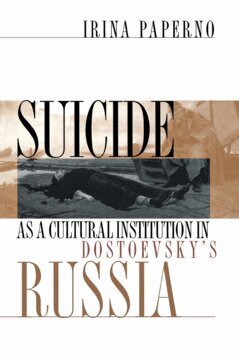
In the popular and scientific imagination, suicide has always been an enigmatic act that defies, and yet demands, explanation. Throughout the centuries, philosophers and writers, journalists and scientists have attempted to endow this act with meaning. In the nineteenth century, and especially in Russia, suicide became the focus for discussion of such issues as the immortality of the soul, free will and determinism, the physical and the spiritual, the individual and the social. Analyzing a variety of sources—medical reports, social treatises, legal codes, newspaper articles, fiction, private documents left by suicides—Irina Paperno describes the search for the meaning of suicide. Paperno focuses on Russia of the 1860s–1880s, when suicide was at the center of public attention.
831 kr
Skickas inom 10-15 vardagar
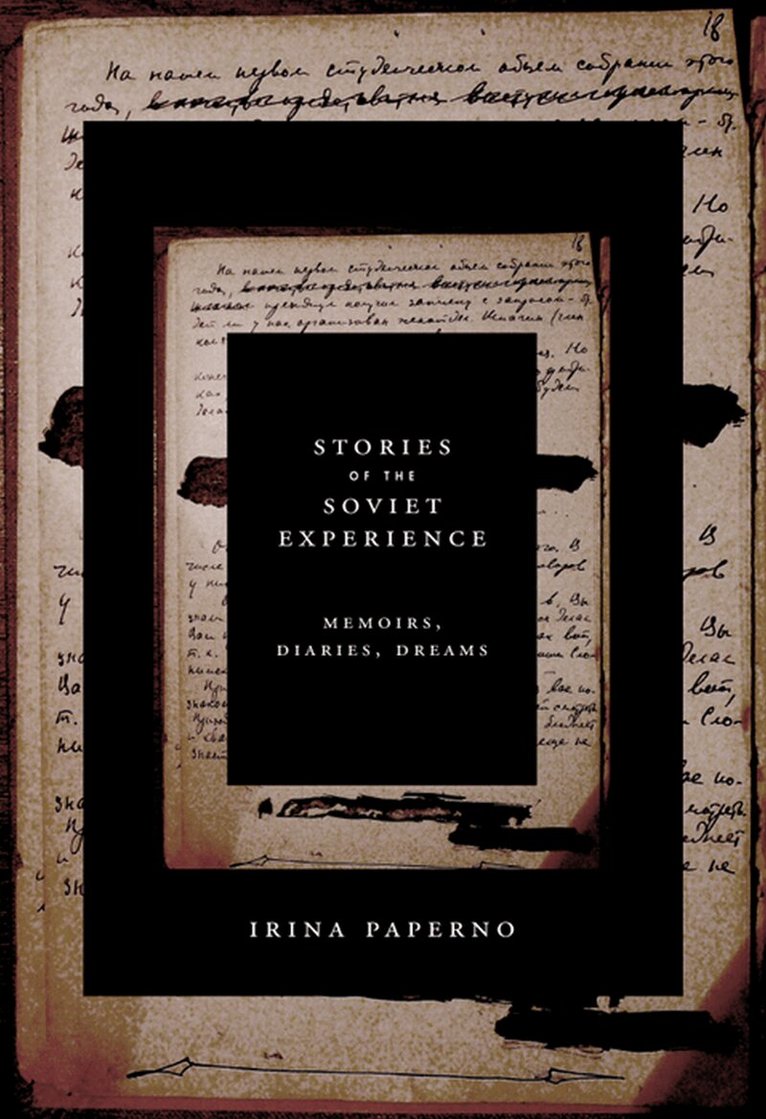
Beginning with glasnost in the late 1980s and continuing into the present, scores of personal accounts of life under Soviet rule, written throughout its history, have been published in Russia, marking the end of an epoch. In a major new work on private life and personal writings, Irina Paperno explores this massive outpouring of human documents to uncover common themes, cultural trends, and literary forms. The book argues that, diverse as they are, these narratives—memoirs, diaries, notes, blogs—assert the historical significance of intimate lives shaped by catastrophic political forces, especially the Terror under Stalin and World War II. Moreover, these published personal documents create a community where those who lived through the Soviet era can gain access to the inner recesses of one another's lives. This community strives to forge a link to the tradition of Russia's nineteenth-century intelligentsia; thus the Russian "intelligentsia" emerges as an additional implicit subject of this book.The book surveys hundreds of personal accounts and focuses on two in particular, chosen for their exceptional quality, scope, and emotional power. Notes about Anna Akhmatova is the diary Lidiia Chukovskaia, a professional editor, kept to document the day-to-day life of her friend, the great Russian poet Anna Akhmatova. Evgeniia Kiseleva, a barely literate former peasant, kept records in notebooks with the thought of crafting a movie script from the story of her life. The striking parallels and contrasts between these two documents demonstrate how the Soviet state and the idea of history shaped very different lives and very different life stories. The book also analyzes dreams (most of them terror dreams) recounted in the diaries and memoirs of authors ranging from a peasant to well-known writers, a Party leader, and Stalin himself. History, Paperno shows, invaded their dreams, too. With a sure grasp of Russian cultural history, great sensitivity to the men and women who wrote, and a command of European and American scholarship on life writing, Paperno places diaries and memoirs of the Soviet experience in a rich historical and conceptual frame. An important and lasting contribution to the history of Russian culture at the end of an epoch, Stories of the Soviet Experience also illuminates the general logic and specific uses of personal narratives.
613 kr
Skickas inom 7-10 vardagar
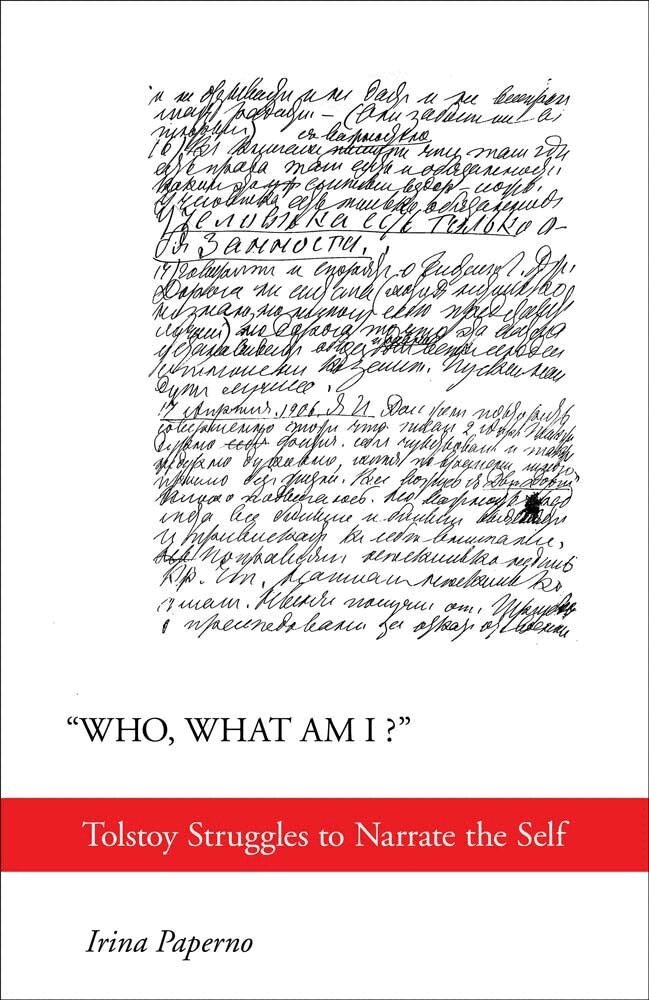
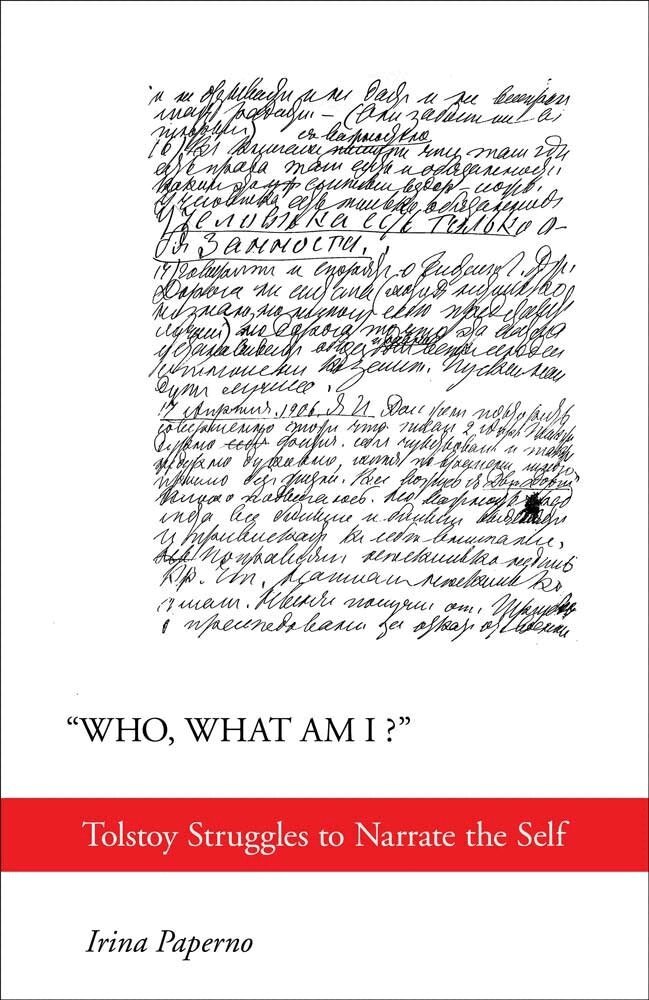
"God only knows how many diverse, captivating impressions and thoughts evoked by these impressions... pass in a single day. If it were only possible to render them in such a way that I could easily read myself and that others could read me as I do." Such was the desire of the young Tolstoy. Although he knew that this narrative utopia—turning the totality of his life into a book—would remain unfulfilled, Tolstoy would spend the rest of his life attempting to achieve it. "Who, What Am I?" is an account of Tolstoy's lifelong attempt to find adequate ways to represent the self, to probe its limits and, ultimately, to arrive at an identity not based on the bodily self and its accumulated life experience. This book guides readers through the voluminous, highly personal nonfiction writings that Tolstoy produced from the 1850s until his death in 1910. The variety of these texts is enormous, including diaries, religious tracts, personal confessions, letters, autobiographical fragments, and the meticulous accounts of dreams. For Tolstoy, inherent in the structure of the narrative form was a conception of life that accorded linear temporal order a predominant role, and this implied finitude. Tolstoy refused to accept that human life stopped with death and that the self was limited to what could be remembered and told. In short, Tolstoy's was a philosophical and religious quest, and he followed in the footsteps of many, from Plato and Augustine to Rousseau and Schopenhauer. In reconstructing Tolstoy's struggles, this book reflects on the problems of self and narrative as well as provides an intellectual and psychological biography of the writer.
433 kr
Skickas inom 10-15 vardagar
Beginning with glasnost in the late 1980s and continuing into the present, scores of personal accounts of life under Soviet rule, written throughout its history, have been published in Russia, marking the end of an epoch. In a major new work on private life and personal writings, Irina Paperno explores this massive outpouring of human documents to uncover common themes, cultural trends, and literary forms. The book argues that, diverse as they are, these narratives—memoirs, diaries, notes, blogs—assert the historical significance of intimate lives shaped by catastrophic political forces, especially the Terror under Stalin and World War II. Moreover, these published personal documents create a community where those who lived through the Soviet era can gain access to the inner recesses of one another's lives. This community strives to forge a link to the tradition of Russia's nineteenth-century intelligentsia; thus the Russian "intelligentsia" emerges as an additional implicit subject of this book.The book surveys hundreds of personal accounts and focuses on two in particular, chosen for their exceptional quality, scope, and emotional power. Notes about Anna Akhmatova is the diary Lidiia Chukovskaia, a professional editor, kept to document the day-to-day life of her friend, the great Russian poet Anna Akhmatova. Evgeniia Kiseleva, a barely literate former peasant, kept records in notebooks with the thought of crafting a movie script from the story of her life. The striking parallels and contrasts between these two documents demonstrate how the Soviet state and the idea of history shaped very different lives and very different life stories. The book also analyzes dreams (most of them terror dreams) recounted in the diaries and memoirs of authors ranging from a peasant to well-known writers, a Party leader, and Stalin himself. History, Paperno shows, invaded their dreams, too. With a sure grasp of Russian cultural history, great sensitivity to the men and women who wrote, and a command of European and American scholarship on life writing, Paperno places diaries and memoirs of the Soviet experience in a rich historical and conceptual frame. An important and lasting contribution to the history of Russian culture at the end of an epoch, Stories of the Soviet Experience also illuminates the general logic and specific uses of personal narratives.
407 kr
Skickas inom 10-15 vardagar
In the popular and scientific imagination, suicide has always been an enigmatic act that defies, and yet demands, explanation. Throughout the centuries, philosophers and writers, journalists and scientists have attempted to endow this act with meaning. In the nineteenth century, and especially in Russia, suicide became the focus for discussion of such issues as the immortality of the soul, free will and determinism, the physical and the spiritual, the individual and the social. Analyzing a variety of sources—medical reports, social treatises, legal codes, newspaper articles, fiction, private documents left by suicides—Irina Paperno describes the search for the meaning of suicide. Paperno focuses on Russia of the 1860s–1880s, when suicide was at the center of public attention.
299 kr
Skickas inom 10-15 vardagar
"God only knows how many diverse, captivating impressions and thoughts evoked by these impressions... pass in a single day. If it were only possible to render them in such a way that I could easily read myself and that others could read me as I do." Such was the desire of the young Tolstoy. Although he knew that this narrative utopia—turning the totality of his life into a book—would remain unfulfilled, Tolstoy would spend the rest of his life attempting to achieve it. "Who, What Am I?" is an account of Tolstoy's lifelong attempt to find adequate ways to represent the self, to probe its limits and, ultimately, to arrive at an identity not based on the bodily self and its accumulated life experience. This book guides readers through the voluminous, highly personal nonfiction writings that Tolstoy produced from the 1850s until his death in 1910. The variety of these texts is enormous, including diaries, religious tracts, personal confessions, letters, autobiographical fragments, and the meticulous accounts of dreams. For Tolstoy, inherent in the structure of the narrative form was a conception of life that accorded linear temporal order a predominant role, and this implied finitude. Tolstoy refused to accept that human life stopped with death and that the self was limited to what could be remembered and told. In short, Tolstoy's was a philosophical and religious quest, and he followed in the footsteps of many, from Plato and Augustine to Rousseau and Schopenhauer. In reconstructing Tolstoy's struggles, this book reflects on the problems of self and narrative as well as provides an intellectual and psychological biography of the writer.
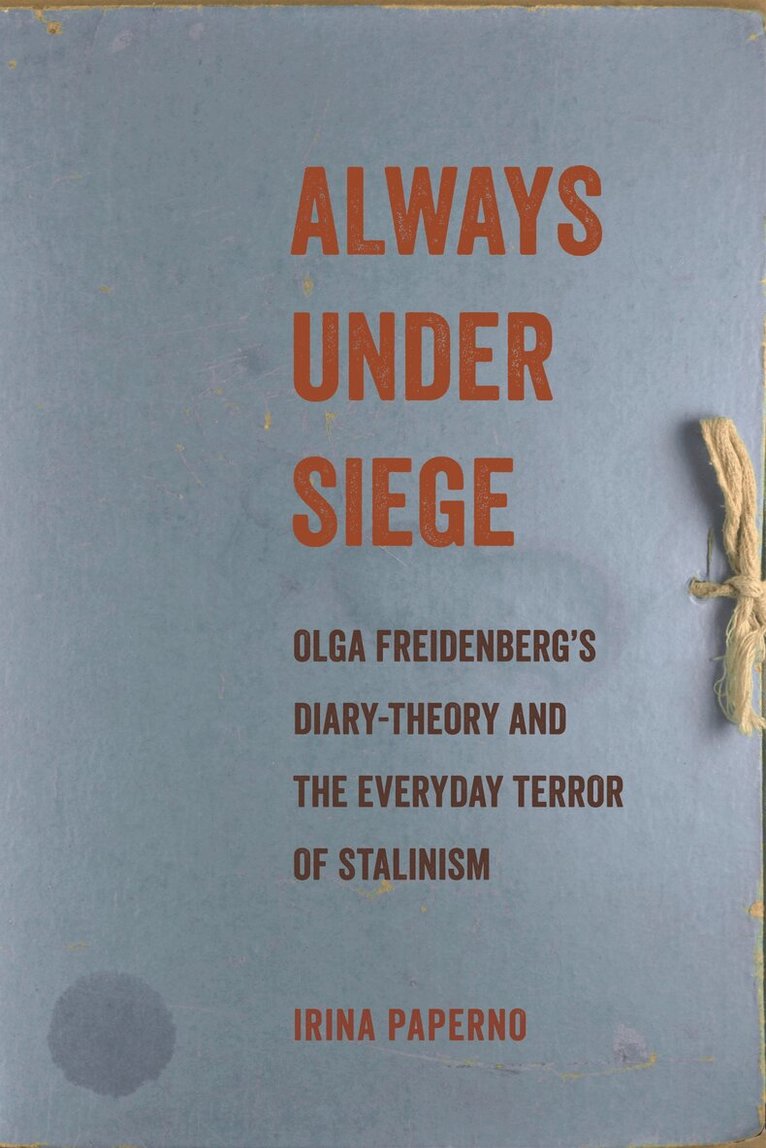
Always Under Siege
Olga Freidenberg's Diary-Theory and the Everyday Terror of Stalinism
Inbunden, Engelska, 2026
1 745 kr
Skickas inom 10-15 vardagar
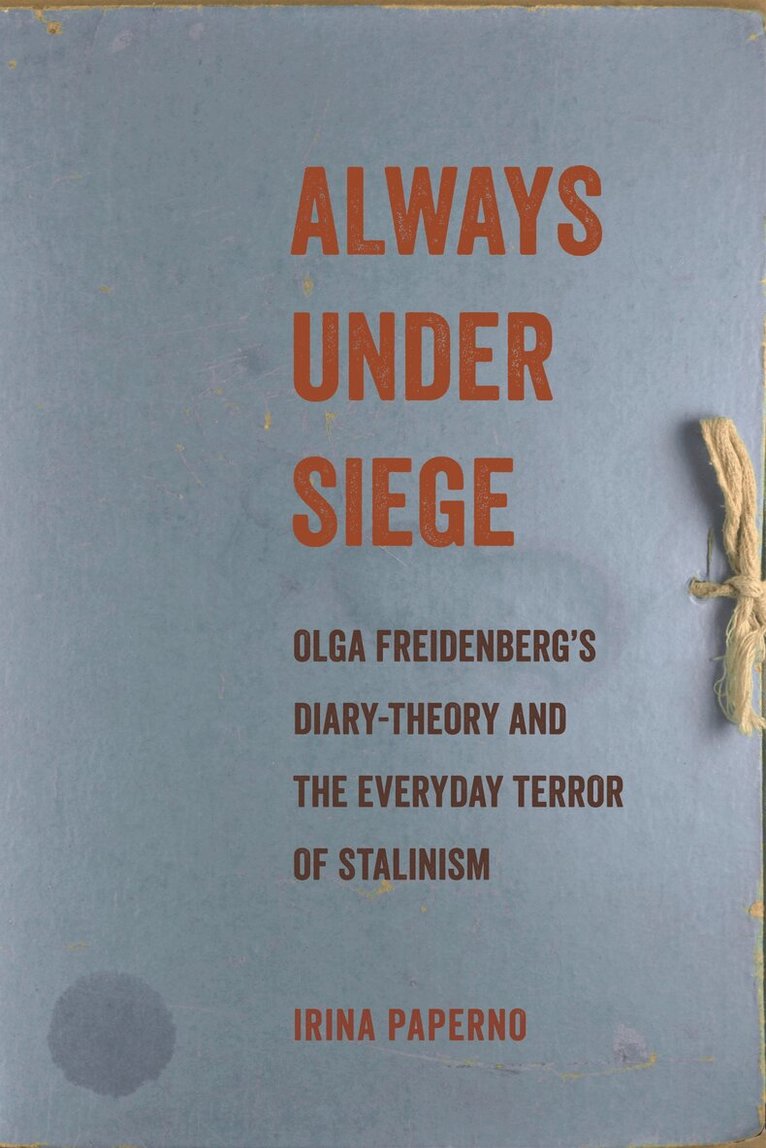
Always Under Siege presents a remarkable and harrowing account of life in dark times that describes and embodies strategies of physical and moral survival. Irina Paperno brings to light the autobiographical chronicle (her "notes") of Olga Freidenberg (1890–1955), a pioneering Russian philologist and cultural theorist (and cousin of Boris Pasternak), who endured Stalin's purges, the Leningrad blockade during World War II, and the suffocating repression that followed. Using concepts of scholarship to understand what was happening to her and around her, Freidenberg transformed daily ordeal into what Paperno calls a "diary-theory," not just a record of events but a reflection on how power invades home, body, and mind.Analyzing Freidenberg's personal writings, kept hidden for decades, Paperno shows how she used myth, metaphor, and ethnographic description to interpret the everyday terror of life under Stalin. Comparing Freidenberg's ideas, developed in isolation, with those of contemporaries like Hannah Arendt, who witnessed Hitler's rise, Paperno identifies in Freidenberg's "notes" a compelling theory of totalitarian oppression. Presenting a singular testament of resilience, despair, and stubborn creative intellect, Paperno's book shows what it means to live and to think in a state of siege.
Always Under Siege
Olga Freidenberg's Diary-Theory and the Everyday Terror of Stalinism
Häftad, Engelska, 2026
355 kr
Skickas
Always Under Siege presents a remarkable and harrowing account of life in dark times that describes and embodies strategies of physical and moral survival. Irina Paperno brings to light the autobiographical chronicle (her "notes") of Olga Freidenberg (1890–1955), a pioneering Russian philologist and cultural theorist (and cousin of Boris Pasternak), who endured Stalin's purges, the Leningrad blockade during World War II, and the suffocating repression that followed. Using concepts of scholarship to understand what was happening to her and around her, Freidenberg transformed daily ordeal into what Paperno calls a "diary-theory," not just a record of events but a reflection on how power invades home, body, and mind.Analyzing Freidenberg's personal writings, kept hidden for decades, Paperno shows how she used myth, metaphor, and ethnographic description to interpret the everyday terror of life under Stalin. Comparing Freidenberg's ideas, developed in isolation, with those of contemporaries like Hannah Arendt, who witnessed Hitler's rise, Paperno identifies in Freidenberg's "notes" a compelling theory of totalitarian oppression. Presenting a singular testament of resilience, despair, and stubborn creative intellect, Paperno's book shows what it means to live and to think in a state of siege.