James A. Delle - Böcker
Visar alla böcker från författaren James A. Delle. Handla med fri frakt och snabb leverans.
10 produkter
10 produkter
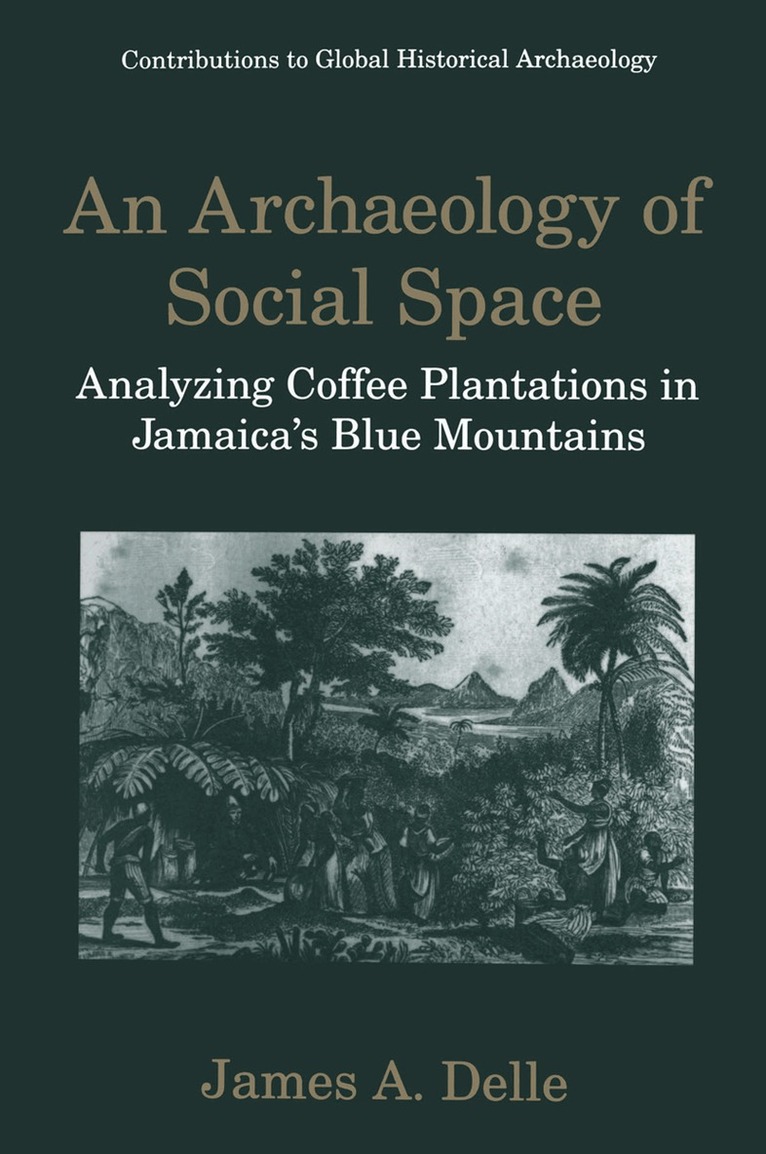
Archaeology of Social Space
Analyzing Coffee Plantations in Jamaica’s Blue Mountains
Inbunden, Engelska, 1998
1 096 kr
Skickas inom 10-15 vardagar
James Delle has solved a number of problems in Caribbean archaeology with An Archaeology of Social Space. He deals with most of the problems by using historical archaeology, and clearly implicates Ameri canist prehistorians. Although this book is about coffee plantations in the Blue Mountains area of Jamaica, it is actually about the whole Caribbean. Just as it is about all archaeology, not only historical archaeology, it is also a book about colonialism and national inde pendence and how these two enormous events happened in the context of eighteenth and nineteenth century capitalism. The first issue raised appears to be an academic topic that has come to be known as landscape archaeology. Landscape archaeology considers the planned spaces around living places. The topic is big, comprehensive, and new within historical archaeology. Its fundamen tal insight is that in the early modern and modern worlds everything within view could be made into money. Seeing occurs in space and from 1450, or a little before, everything that could be seen could, potentially, be measured. The measuring-and the accompanying culture of record ing called a scriptural economy-became a way of controlling people in space, for a profit. Dr. Delle thus explores maps, local philosophies of settlement, town dwelling, housing, and the actual condition of plantations and their buildings now, so as to describe coffee-Jamaica from 1790-1860.
370 kr
Skickas inom 7-10 vardagar
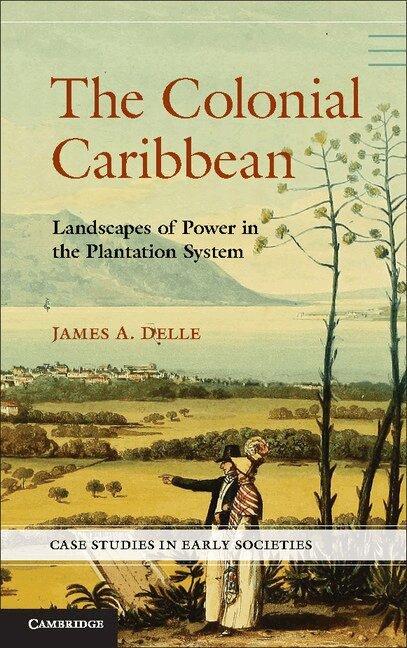
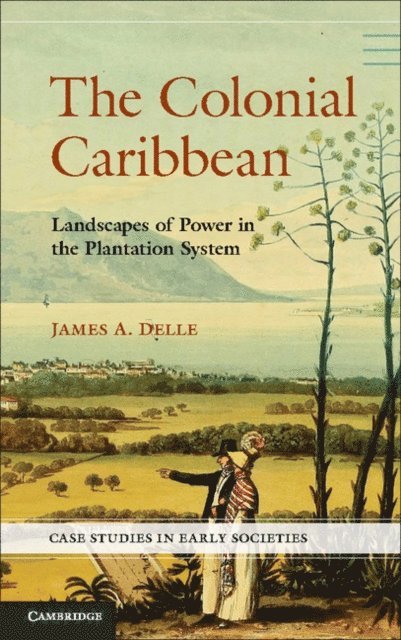
The Colonial Caribbean is an archaeological analysis of the Jamaican plantation system at the turn of the nineteenth century. Focused specifically on coffee plantation landscapes and framed by Marxist theory, the analysis considers plantation landscapes using a multiscalar approach to landscape archaeology. James A. Delle considers spatial phenomena ranging from the diachronic settlement pattern of the island as a whole to the organization of individual house and yard areas located within the villages of enslaved workers. Delle argues that a Marxist approach to landscape archaeology provides a powerful theoretical framework to understand how the built environment played a direct role in the negotiation of social relations in the colonial Caribbean.
1 024 kr
Skickas inom 7-10 vardagar
The Colonial Caribbean is an archaeological analysis of the Jamaican plantation system at the turn of the nineteenth century. Focused specifically on coffee plantation landscapes and framed by Marxist theory, the analysis considers plantation landscapes using a multiscalar approach to landscape archaeology. James A. Delle considers spatial phenomena ranging from the diachronic settlement pattern of the island as a whole to the organization of individual house and yard areas located within the villages of enslaved workers. Delle argues that a Marxist approach to landscape archaeology provides a powerful theoretical framework to understand how the built environment played a direct role in the negotiation of social relations in the colonial Caribbean.
886 kr
Skickas inom 10-15 vardagar
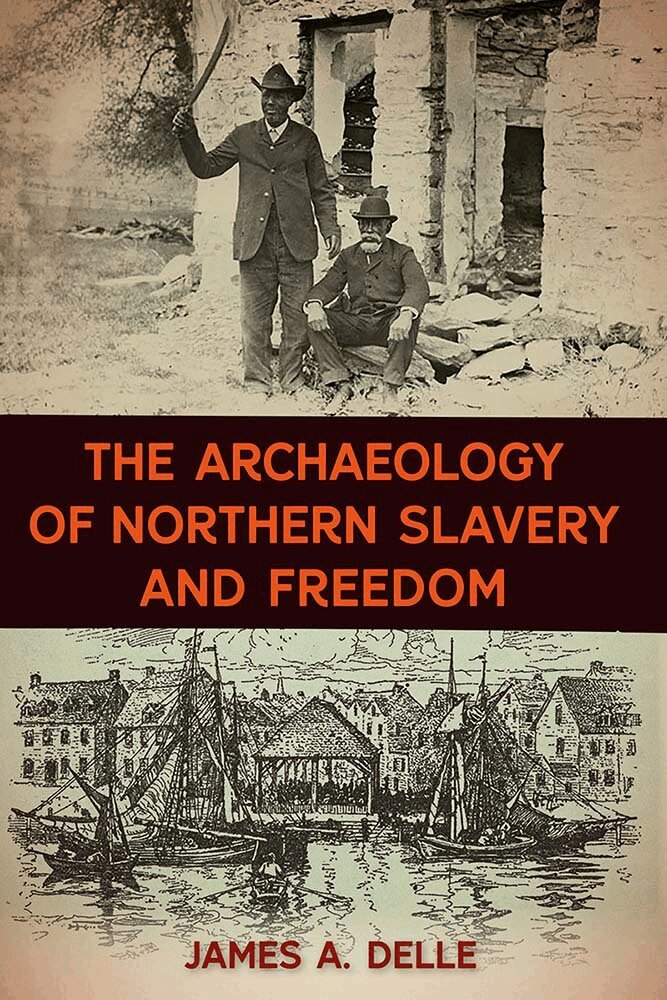
Investigating what life was like for African Americans north of the Mason-Dixon Line during the eighteenth and nineteenth centuries, James Delle presents the first overview of archaeological research on the topic in this book, debunking the notion that the “free” states of the Northeast truly offered freedom and safety for African Americans. Excavations at cities including New York and Philadelphia reveal that slavery was a crucial part of the expansion of urban life as late as the 1840s. The case studies in this book also show that enslaved African-descended people frequently staffed suburban manor houses and agricultural plantations. Moreover, for free blacks, racist laws such as the Fugitive Slave Act of 1850 limited the experience of freedom in the region. Delle explains how members of the African diaspora created rural communities of their own and worked in active resistance against the institution of slavery.Delle shows that archaeology can challenge dominant historical narratives by recovering material artifacts that express the agency of their makers and users, many of whom were written out of the documentary record. Emphasizing that race-based slavery began in the Northeast and persisted there for nearly two centuries, this book corrects histories that have been whitewashed and forgotten. A volume in the series the American Experience in Archaeological Perspective, edited by Michael S. Nassaney.
373 kr
Skickas inom 7-10 vardagar
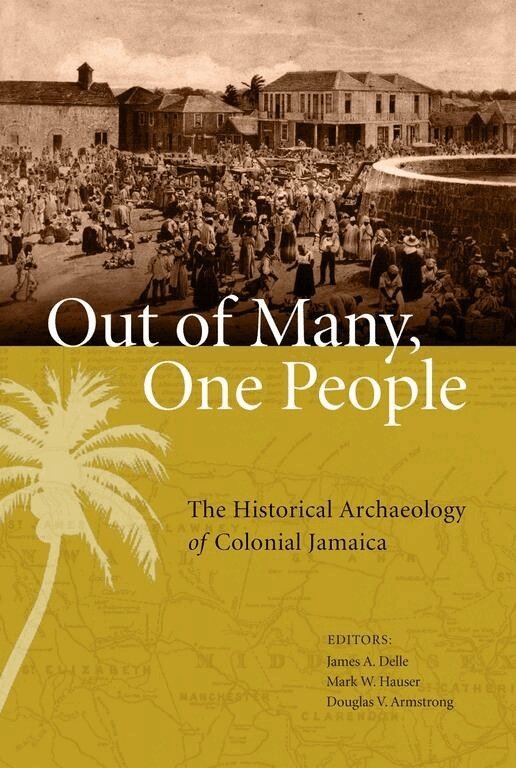
As a source of colonial wealth and a crucible for global culture, Jamaica has had a profound impact on the formation of the modern world system. From the island's economic and military importance to the colonial empires it has hosted and the multitude of ways in which diverse people from varied parts of the world have coexisted in and reacted against systems of inequality, Jamaica has long been a major focus of archaeological studies of the colonial period. This volume assembles for the first time the results of nearly three decades of historical archaeology in Jamaica. Scholars present research on maritime and terrestrial archaeological sites, addressing issues such as: the early Spanish period at Seville la Nueva; the development of the first major British settlement at Port Royal; the complexities of the sugar and coffee plantation system, and the conditions prior to, and following, the abolition of slavery in Jamaica. The everyday life of African Jamaican people is examined by focusing on the development of Jamaica's internal marketing system, consumer behaviour among enslaved people, iron-working and ceramic-making traditions, and the development of a sovereign Maroon society at Nanny Town. Out of Many, One People paints a complex and fascinating picture of life in colonial Jamaica, and demonstrates how archaeology has contributed to heritage preservation on the island.
Archaeology of Social Space
Analyzing Coffee Plantations in Jamaica’s Blue Mountains
Häftad, Engelska, 2013
1 096 kr
Skickas inom 10-15 vardagar
James Delle has solved a number of problems in Caribbean archaeology with An Archaeology of Social Space. He deals with most of the problems by using historical archaeology, and clearly implicates Ameri canist prehistorians. Although this book is about coffee plantations in the Blue Mountains area of Jamaica, it is actually about the whole Caribbean. Just as it is about all archaeology, not only historical archaeology, it is also a book about colonialism and national inde pendence and how these two enormous events happened in the context of eighteenth and nineteenth century capitalism. The first issue raised appears to be an academic topic that has come to be known as landscape archaeology. Landscape archaeology considers the planned spaces around living places. The topic is big, comprehensive, and new within historical archaeology. Its fundamen tal insight is that in the early modern and modern worlds everything within view could be made into money. Seeing occurs in space and from 1450, or a little before, everything that could be seen could, potentially, be measured. The measuring-and the accompanying culture of record ing called a scriptural economy-became a way of controlling people in space, for a profit. Dr. Delle thus explores maps, local philosophies of settlement, town dwelling, housing, and the actual condition of plantations and their buildings now, so as to describe coffee-Jamaica from 1790-1860.
337 kr
Skickas inom 10-15 vardagar
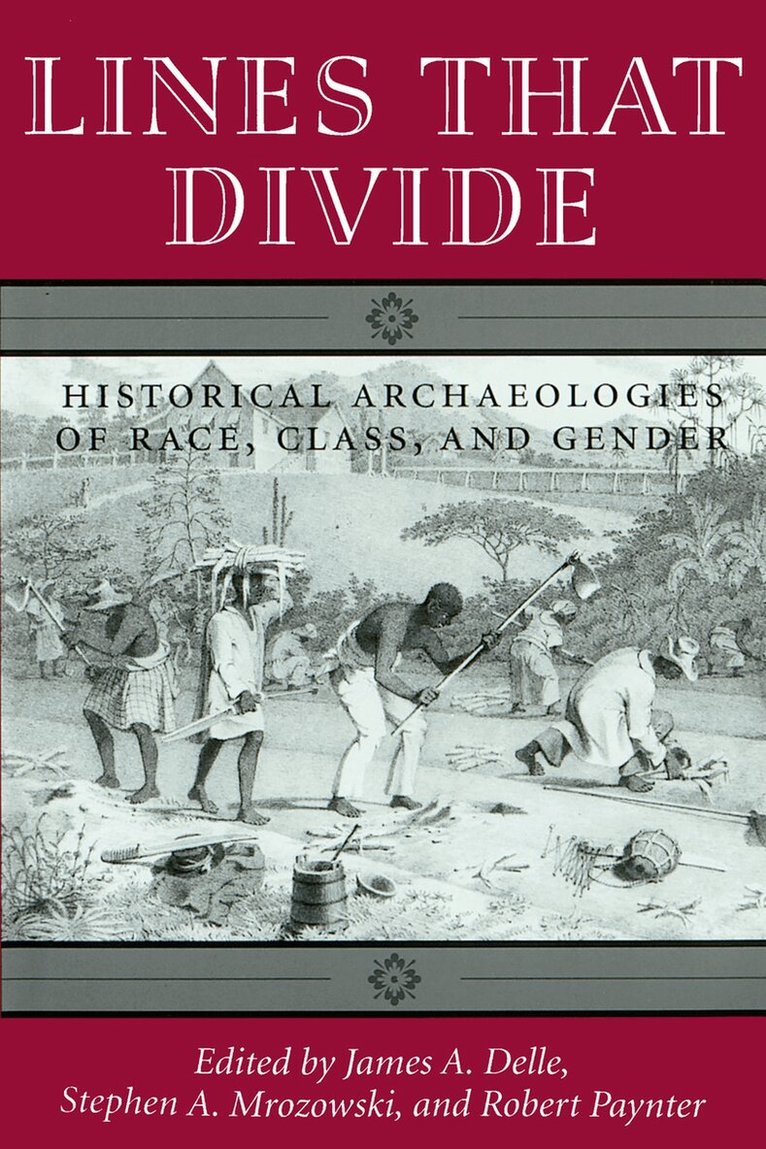
"A truly creative, rigorous, and novel interdisciplinary collection that rethinks some of historical archaeology’s most fundamental questions."—Paul Mullins, Indiana University–Purdue UniversityThe division of human society by race, class, and gender has been addressed by scholars in many of the social sciences. Now historical archaeologists are demonstrating how material culture can be used to examine the processes that have erected boundaries between people.Drawing on case studies from around the world, the essays in this volume highlight diverse moments in the rise of capitalist civilization both in Western Europe and its colonies. In the first section, the contributors address the dynamics of the racial system that emerged from European colonialism. They show how archaeological remains shed light on the institution of slavery in the American Southeast, on the treatment of Native Americans by Mormon settlers, and on the color line in colonial southern Africa. The next group of articles considers how gender was negotiated in nineteenth-century New York City, in colonial Ecuador, and on Jamaican coffee plantations. A final section focuses on the issue of class division by examining the built environment of eighteenth-century Catalonia and material remains and housing from early industrial Massachusetts.These essays constitute an archaeology of capitalism and clearly demonstrate the importance of history in shaping cultural consciousness. Arguing that material culture is itself an active agent in the negotiation of social difference, they reveal the ways in which historical archaeologists can contribute to both the definition and dismantling of the lines that divide.
Archaeologies of Slavery and Freedom in the Caribbean
Exploring the Spaces in Between
Inbunden, Engelska, 2016
996 kr
Skickas inom 10-15 vardagar
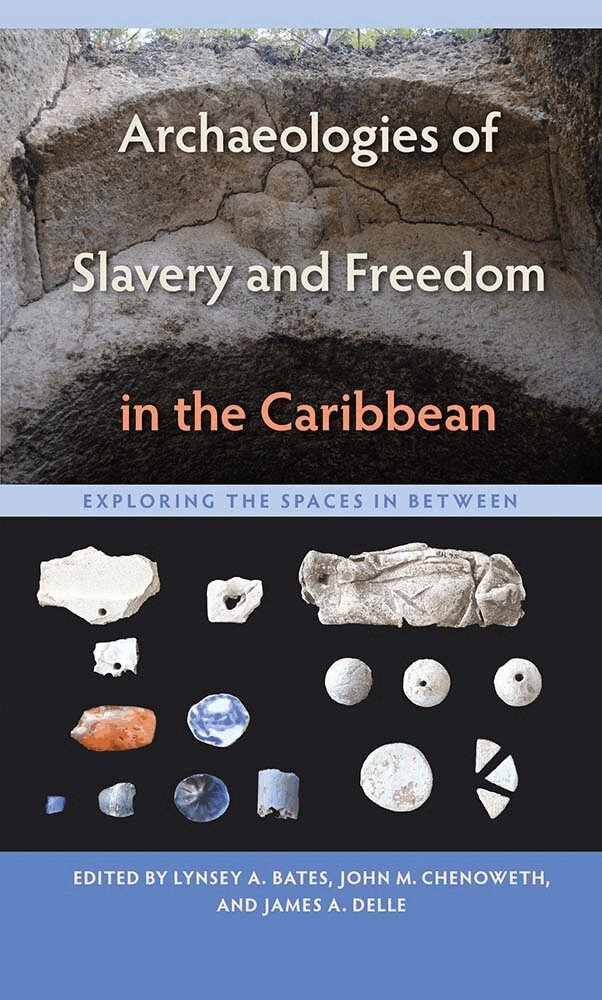
Caribbean plantations and the forces that shaped them—slavery, sugar, capitalism, and the tropical, sometimes deadly environment—have been studied extensively. This volume turns the focus to the places and times where the rules of the plantation system did not always apply, including the interstitial spaces that linked enslaved Africans with their neighbors at other plantations. The essays also explore the lives of “poor whites,” Afro-descendant members of military garrisons, and free people of color, demonstrating that binary models of black slaves and white planters do not fully encompass the diversity of identities before and after Emancipation. Employing innovative research tools and integrating data from Dominica, St. Lucia, the Dominican Republic, Jamaica, Barbados, Nevis, Montserrat, and the British Virgin Islands, these essays offer a deeper understanding of the complex world within and beyond the sprawling sugar estates.
1 051 kr
Skickas inom 10-15 vardagar
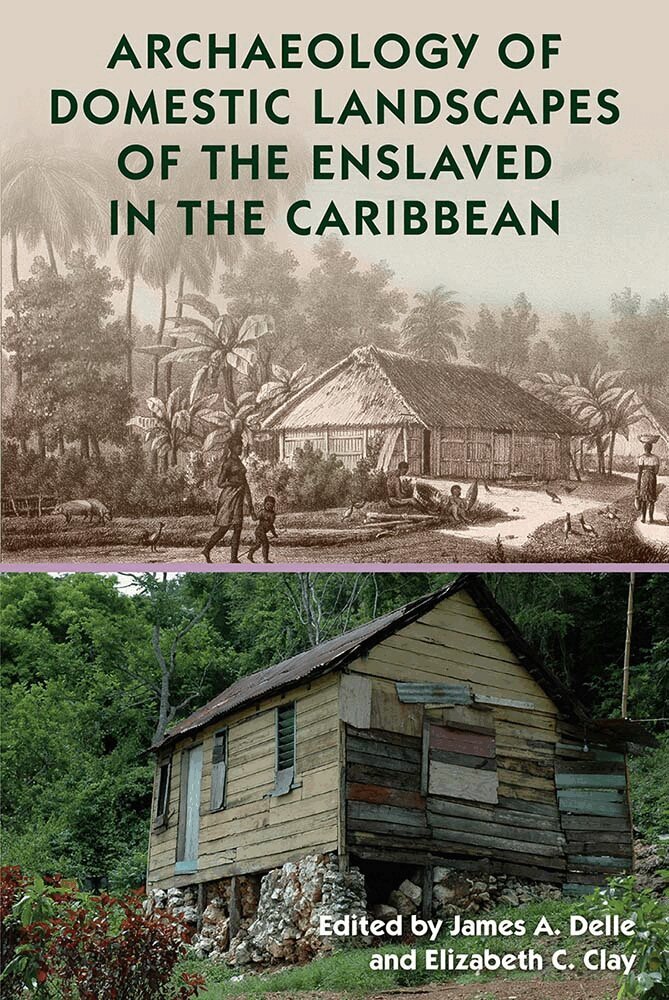
While previous research on household archaeology in the colonial Caribbean has drawn heavily on artifact analysis, this volume provides the first in-depth examination of the architecture of slave housing during this period. It examines the considerations that went into constructing and inhabiting living spaces for the enslaved and reveals the diversity of people and practices in these settings.Contributors present case studies using written descriptions, period illustrations, architectural features, and other evidence to illustrate the wide variety of built environments for enslaved populations in places including Jamaica, the Bahamas, and the islands of the Lesser Antilles. They investigate how slaves defined their social positions and identities through house, yard, and garden space; they explore what daily life was like for slaves on military compounds; they compare the spatial arrangements of slave villages on plantations based on type of labor; and they show how the style of traditional labor houses became a form of vernacular architecture still in use today.This volume expands our understanding of the wide range of slave experiences across British, French, Dutch, and Danish colonies.
323 kr
Skickas inom 10-15 vardagar
While previous research on household archaeology in the colonial Caribbean has drawn heavily on artifact analysis, this volume provides the first in-depth examination of the architecture of slave housing during this period. It examines the considerations that went into constructing and inhabiting living spaces for the enslaved and reveals the diversity of people and practices in these settings. Contributors present case studies using written descriptions, period illustrations, and standing architecture, in addition to archaeological evidence to illustrate the wide variety of built environments for enslaved populations in places including Jamaica, the Bahamas, and the islands of the Lesser Antilles. They investigate how the enslaved defined their social positions and identities through house, yard, and garden space; they explore what daily life was like for slaves on military compounds; they compare the spatial arrangements of slave villages on plantations based on type of labor; and they show how the style of traditional laborer houses became a form of vernacular architecture still in use today. This volume expands our understanding of the wide range of enslaved experiences across British, French, Dutch, and Danish colonies. A volume in the Florida Museum of Natural History: Ripley P. Bullen Series.Publication of the paperback edition made possible by a Sustaining the Humanities through the American Rescue Plan grant from the National Endowment for the Humanities.