James E. Caron - Böcker
Visar alla böcker från författaren James E. Caron. Handla med fri frakt och snabb leverans.
7 produkter
7 produkter
Del 2 - Humor in America
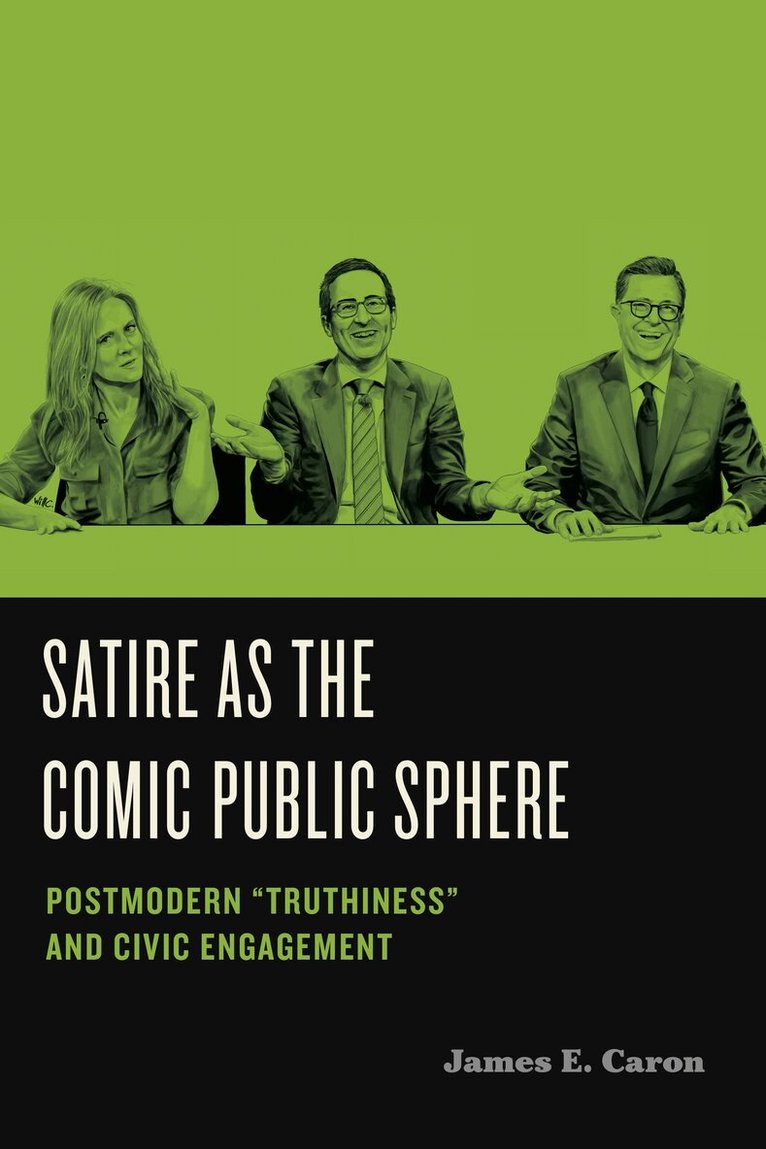
Satire as the Comic Public Sphere
Postmodern “Truthiness” and Civic Engagement
Inbunden, Engelska, 2021
1 179 kr
Skickas inom 7-10 vardagar
Stephen Colbert, Samantha Bee, John Oliver, and Jimmy Kimmel—these comedians are household names whose satirical takes on politics, the news, and current events receive some of the highest ratings on television. In this book, James E. Caron examines these and other satirists through the lenses of humor studies, cultural theory, and rhetorical and social philosophy, arriving at a new definition of the comic art form. Tracing the history of modern satire from its roots in the Enlightenment values of rational debate, evidence, facts, accountability, and transparency, Caron identifies a new genre: “truthiness satire.” He shows how satirists such as Colbert, Bee, Oliver, and Kimmel—along with writers like Charles Pierce and Jack Shafer—rely on shared values and on the postmodern aesthetics of irony and affect to foster engagement within the comic public sphere that satire creates. Using case studies of bits, parodies, and routines, Caron reveals a remarkable process: when evidence-based news reporting collides with a discursive space asserting alternative facts, the satiric laughter that erupts can move the audience toward reflection and possibly even action as the body politic in the public sphere.With rigor, humor, and insight, Caron shows that truthiness satire pushes back against fake news and biased reporting and that the satirist today is at heart a citizen, albeit a seemingly silly one. This book will appeal to anyone interested in and concerned about public discourse in the current era, especially researchers in media studies, communication studies, political science, and literary and cultural studies.
Del 2 - Humor in America
Satire as the Comic Public Sphere
Postmodern “Truthiness” and Civic Engagement
Häftad, Engelska, 2024
284 kr
Skickas inom 7-10 vardagar
Stephen Colbert, Samantha Bee, John Oliver, and Jimmy Kimmel—these comedians are household names whose satirical takes on politics, the news, and current events receive some of the highest ratings on television. In this book, James E. Caron examines these and other satirists through the lenses of humor studies, cultural theory, and rhetorical and social philosophy, arriving at a new definition of the comic art form. Tracing the history of modern satire from its roots in the Enlightenment values of rational debate, evidence, facts, accountability, and transparency, Caron identifies a new genre: “truthiness satire.” He shows how satirists such as Colbert, Bee, Oliver, and Kimmel—along with writers like Charles Pierce and Jack Shafer—rely on shared values and on the postmodern aesthetics of irony and affect to foster engagement within the comic public sphere that satire creates. Using case studies of bits, parodies, and routines, Caron reveals a remarkable process: when evidence-based news reporting collides with a discursive space asserting alternative facts, the satiric laughter that erupts can move the audience toward reflection and possibly even action as the body politic in the public sphere.With rigor, humor, and insight, Caron shows that truthiness satire pushes back against fake news and biased reporting and that the satirist today is at heart a citizen, albeit a seemingly silly one. This book will appeal to anyone interested in and concerned about public discourse in the current era, especially researchers in media studies, communication studies, political science, and literary and cultural studies.
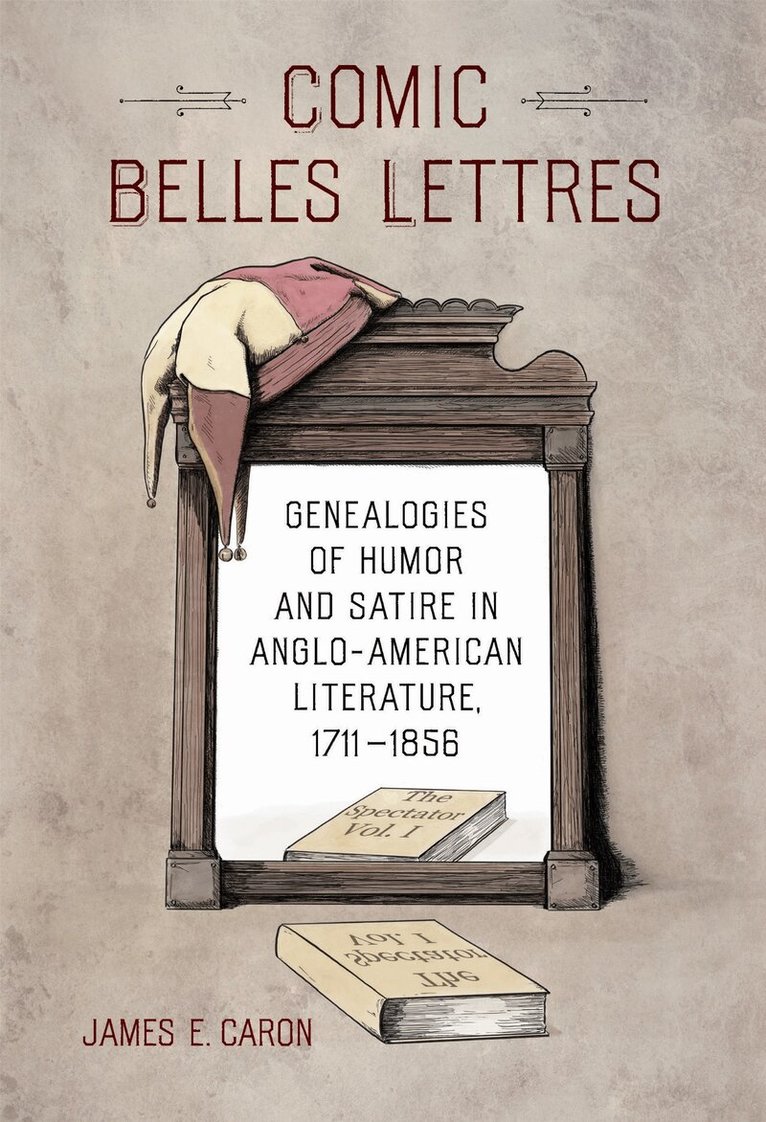
Comic Belles Lettres
Genealogies of Humor and Satire in Anglo-American Literature, 1711–1856
Inbunden, Engelska, 2026
688 kr
Skickas inom 10-15 vardagar
Comic Belles Lettres presents a significant rethinking of standard categories in scholarship on antebellum American humor—such as Old Southwest humorists and literary comedians—to provide a richer analysis of the comic writers of the period. By introducing an alternative aesthetic category, "comic belles lettres," and placing it in a transnational context, James E. Caron details a robust cross-cultural background that includes British and American conceptions of masculinity, the eighteenth-century cult of sensibility, and the "man of feeling" trope. Caron's analysis uncovers a genealogy of comic characters with fresh readings of Washington Irving's Sketch Book, Nathaniel Hawthorne's The Blithedale Romance, and Harriet Beecher Stowe's Uncle Tom's Cabin that not only sweeps up other contemporary authors—Donald Mitchell and Frederic Cozzens—but also includes Joseph Addison's famous character Sir Roger de Coverly. In addition, the investigation moves beyond fictional texts to demonstrate the reach of comic belles lettres by discussing two well-known historical figures, Lewis Gaylord Clark and William Thackeray, who embody the aesthetic's signature figure, the Comic Gentleman. This segment delves into contemporary statements about the nature of comic art and comic laughter along with gendered concerns about the production of satire. Comic Belles Lettres situates this unique mode of aesthetics within discursive practices of the 1850s—reviews, essays, and editorial decisions—that constitute important yet routinely overlooked aspects of the antebellum print archive, resulting in a new way of thinking about Anglo-American comic writing in the eighteenth and nineteenth centuries.
1 213 kr
Skickas inom 10-15 vardagar
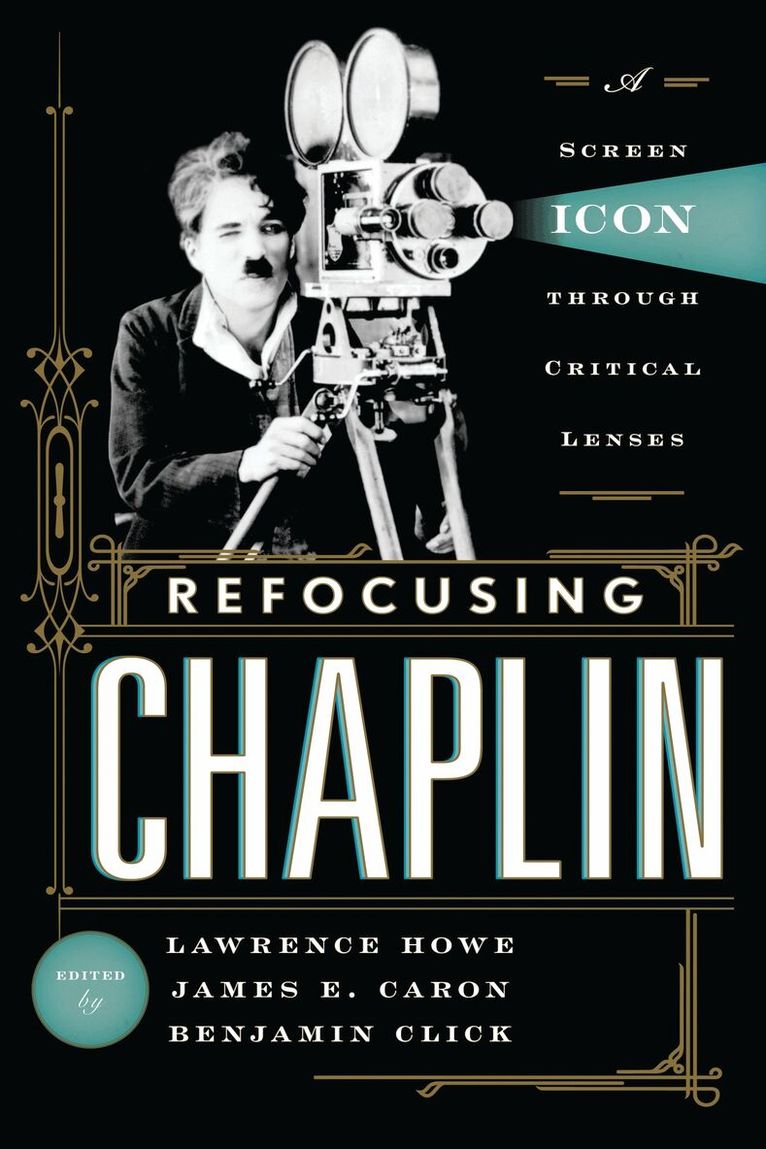
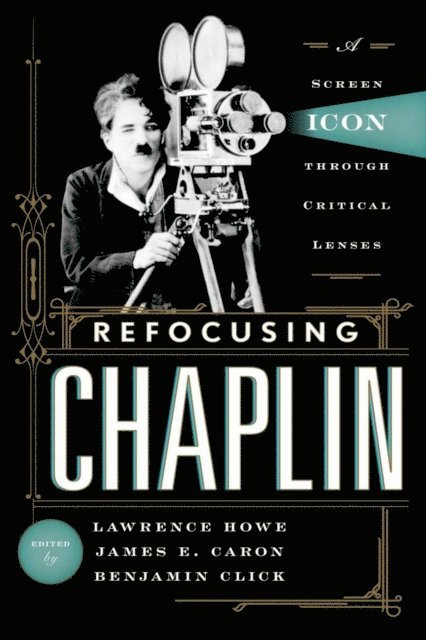
Widely recognized in his character of the Tramp, Charlie Chaplin transcended the role of actor to become screenwriter, director, composer, producer, and finally studio head. The subject of numerous biographical studies, Chaplin has been examined as both myth and man, but these treatments fail to adequately address the often-overlooked complexity of his filmmaking.Refocusing Chaplin: A Screen Icon through Critical Lenses features essays that examine the actor and director through various theoretical perspectives—including Marxism, feminism, gender studies, deconstruction, psychoanalytic criticism, new historicism, performance studies, and cultural criticism. Complementing this range of intellectual inquiry is the wide reach of films discussed, from The Circus (1928), The Gold Rush (1925), and City Lights (1931) to Modern Times (1936), The Great Dictator (1940), Monsieur Verdoux (1947), and Limelight (1952). Shorter films, such as “The Pawnshop” (1916), “The Rink” (1916), and “A Dog’s Life” (1918) are also examined. These essays analyze the tensions between the carefully constructed worlds of Chaplin’s films and their cultural contexts. The varied approaches and range of materials in this volume not only comprehensively assess the screen icon but also foster a conversation that exemplifies the best of intellectual exchange. Refocusing Chaplin provides a unique view into the work of one of cinema’s most important and influential artists.
491 kr
Kommande
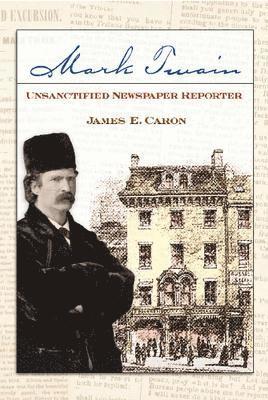
Before Mark Twain became a national celebrity with his best-selling The Innocents Abroad, he was just another struggling writer perfecting his craft—but already “playin’ hell” with the world. In the first book in more than fifty years to examine the initial phase of Samuel Clemens’s writing career, James Caron draws on contemporary scholarship and his own careful readings to offer a fresh and comprehensive perspective on those early years—and to challenge many long-standing views of Mark Twain’s place in the tradition of American humour.Tracing the arc of Clemens’s career from self-described “unsanctified newspaper reporter” to national author between 1862 and 1867, Caron reexamines the early and largely neglected writings—especially the travel letters from Hawaii and the letters chronicling Clemens’s trip from California to New York City. Caron connects those sets of letters with comic materials Clemens had already published, drawing on all known items from this first phase of his career—even the virtually forgotten pieces from the San Francisco Morning Call in 1864—to reveal how Mark Twain’s humour was shaped by the sociocultural context and how it catered to his audience’s sensibilities while unpredictably transgressing its standards.Caron reveals how Sam Clemens’s contemporaries, notably Charles Webb, provided important comic models, and he shows how Clemens not only adjusted to but also challenged the guidelines of the newspapers and magazines for which he wrote, evolving as a comic writer who transmuted personal circumstances into literary art. Plumbing Mark Twain’s cultural significance, Caron draws on anthropological insights from Victor Turner and others to compare the performative aspects of Clemens’s early work to the role of ritual clowns in traditional societies.Brimming with fresh insights into such benchmarks as “Our Fellow Savages of the Sandwich Islands” and “Jim Smiley and His Jumping Frog,” this book is a gracefully written work that reflects both patient research and considered judgment to chart the development of an iconic American talent. Mark Twain, Unsanctified Newspaper Reporter should be required reading for all serious scholars of his work, as well as for anyone interested in the interplay between artistic creativity and the literary marketplace.
1 285 kr
Skickas inom 10-15 vardagar
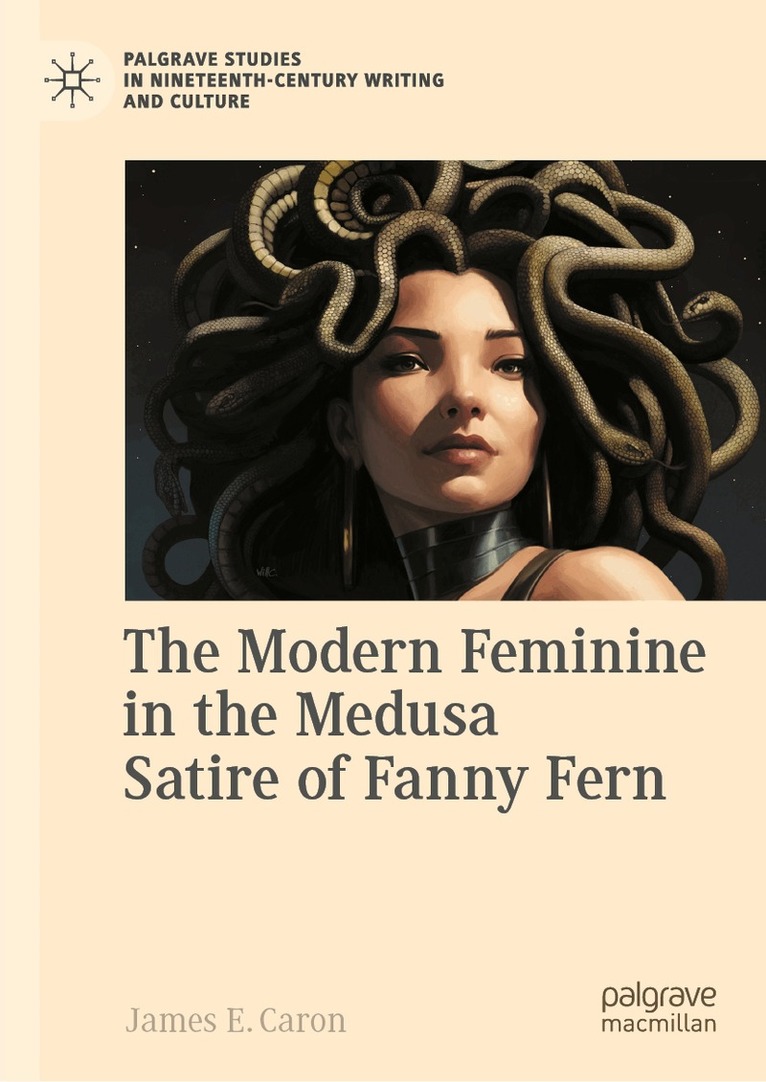
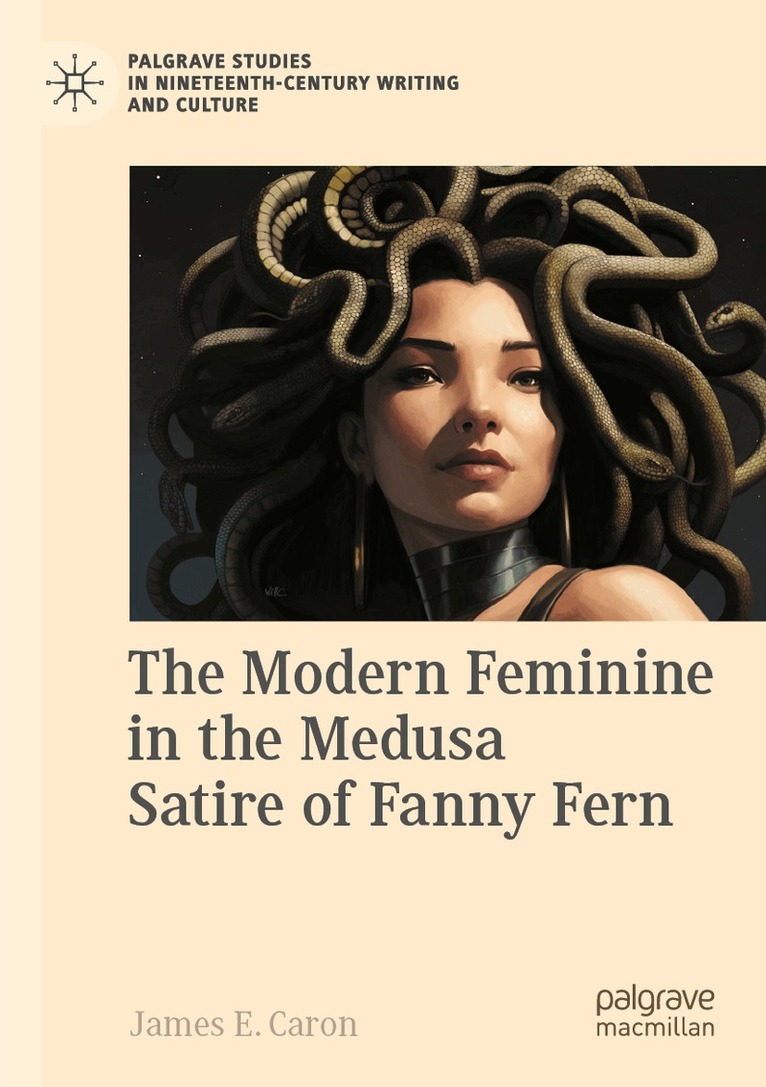
The Modern Feminine in the Medusa Satire of Fanny Fern argues that Sara Parton and her literary alter ego, Fanny Fern, occupy a star-power position within the antebellum literary marketplace dominated by women authors of sentimental fiction, writers Nathaniel Hawthorne (in)famously called “the damn mob of scribbling women.” The Fanny Fern persona represents a nineteenth-century woman voicing the modern feminine within a laughter-provoking bourgeois carnival, a forerunner of Hélène Cixous’s laughing Medusa figure and her theory about écriture féminine. By advancing an innovative theory about an Anglo-American aesthetic, comic belles lettres, Caron explains the comic nuances of Parton’s persona, capable of both an amiable and a caustic satire. The book traces Parton’s burgeoning celebrity, analyzes her satires on cultural expectations of gendered behavior, and provides a close look at her variegated comic style. The book then makes two first-order conclusions: Parton not only offers a unique profile for antebellum women comic writers, but her Fanny Fern persona also anchors a potential genealogy of women comic writers and activists, down to the present day, who could fit Kate Clinton’s concept of fumerism, a feminist style of humor that fumes, that embraces the comic power of a Medusa satire.
1 285 kr
Skickas inom 10-15 vardagar
The Modern Feminine in the Medusa Satire of Fanny Fern argues that Sara Parton and her literary alter ego, Fanny Fern, occupy a star-power position within the antebellum literary marketplace dominated by women authors of sentimental fiction, writers Nathaniel Hawthorne (in)famously called “the damn mob of scribbling women.” The Fanny Fern persona represents a nineteenth-century woman voicing the modern feminine within a laughter-provoking bourgeois carnival, a forerunner of Hélène Cixous’s laughing Medusa figure and her theory about écriture féminine. By advancing an innovative theory about an Anglo-American aesthetic, comic belles lettres, Caron explains the comic nuances of Parton’s persona, capable of both an amiable and a caustic satire. The book traces Parton’s burgeoning celebrity, analyzes her satires on cultural expectations of gendered behavior, and provides a close look at her variegated comic style. The book then makes two first-order conclusions: Parton not only offers a unique profile for antebellum women comic writers, but her Fanny Fern persona also anchors a potential genealogy of women comic writers and activists, down to the present day, who could fit Kate Clinton’s concept of fumerism, a feminist style of humor that fumes, that embraces the comic power of a Medusa satire.