Jane Menken – författare
572 kr
Läs direkt efter köp
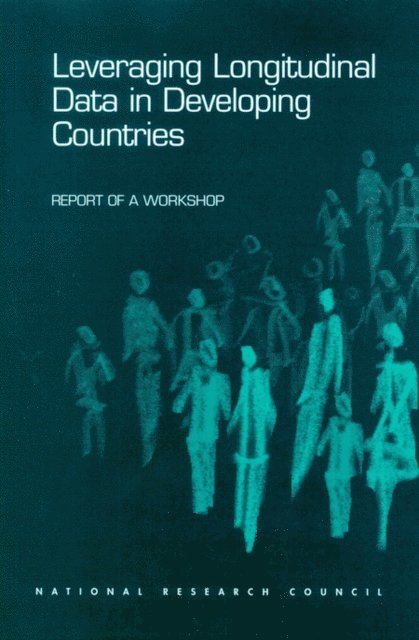
Longitudinal data collection and analysis are critical to social, demographic, and health research, policy, and practice. They are regularly used to address questions of demographic and health trends, policy and program evaluation, and causality. Panel studies, cohort studies, and longitudinal community studies have proved particularly important in developing countries that lack vital registration systems and comprehensive sources of information on the demographic and health situation of their populations. Research using data from such studies has led to scientific advances and improvements in the well-being of individuals in developing countries. Yet questions remain about the usefulness of these studies relative to their expense (and relative to cross-sectional surveys) and about the appropriate choice of alternative longitudinal strategies in different contexts.
For these reasons, the Committee on Population convened a workshop to examine the comparative strengths and weaknesses of various longitudinal approaches in addressing demographic and health questions in developing countries and to consider ways to strengthen longitudinal data collection and analysis. This report summarizes the discussion and opinions voiced at that workshop.
974 kr
Läs direkt efter köp
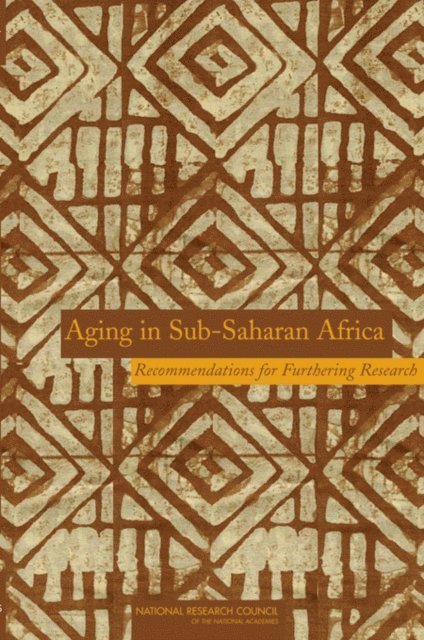
In sub-Saharan Africa, older people make up a relatively small fraction of the total population and are supported primarily by family and other kinship networks. They have traditionally been viewed as repositories of information and wisdom, and are critical pillars of the community but as the HIV/AIDS pandemic destroys family systems, the elderly increasingly have to deal with the loss of their own support while absorbing the additional responsibilities of caring for their orphaned grandchildren.
Aging in Sub-Saharan Africa explores ways to promote U.S. research interests and to augment the sub-Saharan governments'' capacity to address the many challenges posed by population aging. Five major themes are explored in the book such as the need for a basic definition of "older person," the need for national governments to invest more in basic research and the coordination of data collection across countries, and the need for improved dialogue between local researchers and policy makers.
This book makes three major recommendations: 1) the development of a research agenda 2) enhancing research opportunity and implementation and 3) the translation of research findings.
407 kr
Läs direkt efter köp
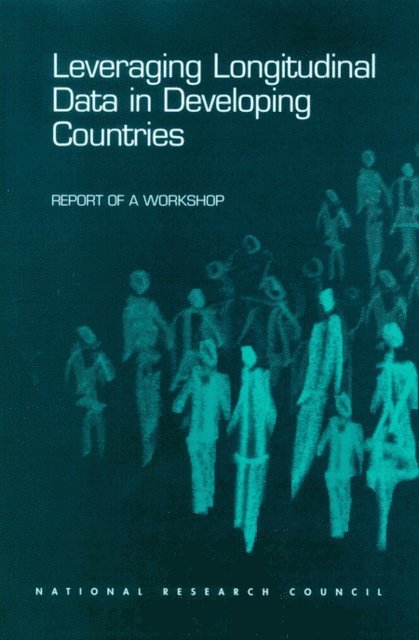
Longitudinal data collection and analysis are critical to social, demographic, and health research, policy, and practice. They are regularly used to address questions of demographic and health trends, policy and program evaluation, and causality. Panel studies, cohort studies, and longitudinal community studies have proved particularly important in developing countries that lack vital registration systems and comprehensive sources of information on the demographic and health situation of their populations. Research using data from such studies has led to scientific advances and improvements in the well-being of individuals in developing countries. Yet questions remain about the usefulness of these studies relative to their expense (and relative to cross-sectional surveys) and about the appropriate choice of alternative longitudinal strategies in different contexts.
For these reasons, the Committee on Population convened a workshop to examine the comparative strengths and weaknesses of various longitudinal approaches in addressing demographic and health questions in developing countries and to consider ways to strengthen longitudinal data collection and analysis. This report summarizes the discussion and opinions voiced at that workshop.
950 kr
Läs direkt efter köp
In sub-Saharan Africa, older people make up a relatively small fraction of the total population and are supported primarily by family and other kinship networks. They have traditionally been viewed as repositories of information and wisdom, and are critical pillars of the community but as the HIV/AIDS pandemic destroys family systems, the elderly increasingly have to deal with the loss of their own support while absorbing the additional responsibilities of caring for their orphaned grandchildren.
Aging in Sub-Saharan Africa explores ways to promote U.S. research interests and to augment the sub-Saharan governments'' capacity to address the many challenges posed by population aging. Five major themes are explored in the book such as the need for a basic definition of "older person," the need for national governments to invest more in basic research and the coordination of data collection across countries, and the need for improved dialogue between local researchers and policy makers.
This book makes three major recommendations: 1) the development of a research agenda 2) enhancing research opportunity and implementation and 3) the translation of research findings.
271 kr
Skickas inom 5-8 vardagar
867 kr
Skickas inom 10-15 vardagar
600 kr
Tillfälligt slut
909 kr
Tillfälligt slut