Jean-Philippe Platteau - Böcker
Visar alla böcker från författaren Jean-Philippe Platteau. Handla med fri frakt och snabb leverans.
14 produkter
14 produkter
Halting Degradation of Natural Resources
Is There a Role for Rural Communities?
Häftad, Engelska, 2000
1 513 kr
Skickas inom 5-8 vardagar
This wide-ranging book, based on a report to the Food and Agriculture Organization of the United Nations, bridges the gap between the enormous amount of empirical literature documenting efforts at managing local-level resources and the quickly growing body of theoretical knowledge dealing with natural resource management. By building a unifying framework, the authors aim to better define the conditions of success or failure of various forms of resource management at the village level. Contrary to a common view according to which mismanagement of such resources is to be ascribed to direct users falling prey to the Tragedy of the Commons', they convincingly argue that there are other important potential explanations, such as lack of awareness about ecological effects of human activities, poverty and heavy discounting of future income streams, uncertainty over future property rights and prices of natural products, and availability of more attractive income opportunities. Moreover, even when mismanagement practices obviously result from strategic interactions among users, many anthropological writings have pointed at crucial aspects that are bypassed by the characterization in terms of the classical Prisoner's Dilemma. Among these aspects, problems of leadership, co-ordination, and heterogeneity are given special emphasis in this book. The theoretical analysis specifies the various economic conditions (such as the extent of resource scarcity and market penetration, the size of user communities, and the nature of different parties' interests in the resource) and social considerations (such as the state of interpersonal communication, the frequency of interactions, the type of leadership, and the extent of mutual trust) under which these problems can possibly be overcome by local user groups. Stress is then laid on the global context within which user groups operate, including the nature and the forms of state intervention and the effects of increasing market integration. To date, this context has generally been uncongenial to community-based resource management; therefore, the authors recommend that, whenever a co-management approach is feasible, the concrete institutional form adopted is tailored to the specific features of local cultures.
1 740 kr
Skickas inom 5-8 vardagar
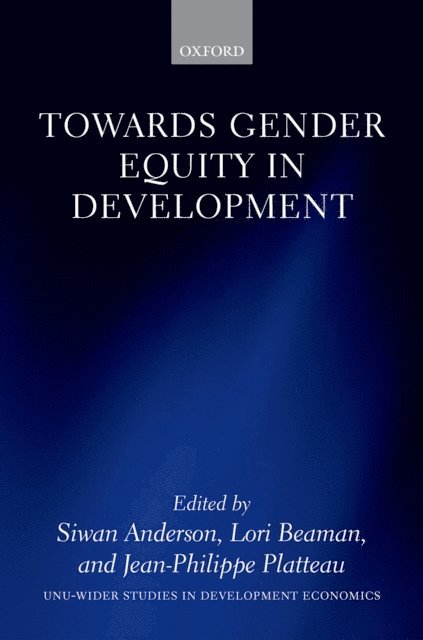
As a result of widespread mistreatment and overt discrimination, women in the developing world often lack autonomy. Towards Gender Equity in Development brings together leading scholars working on gender issues to explore key sources of female empowerment and discuss the current challenges and opportunities for the future.Exploring three key domains, this book adopts a clear multi-disciplinary approach to present different perspectives from gender-focused economics and social research. It covers marriage and women's relative bargaining position within the household; the options available to women outside of marriage and in the context of their community; and overarching discriminatory laws and cultural norms. It engages with questions of how marriage, divorce, and remarriage practices have evolved and with what effects for women; how female empowerment can benefit from improving options and economic and collective action opportunities; and how the government can act as a lawmaker to contribute to modifying norms and practices that disadvantage women.
2 752 kr
Skickas inom 5-8 vardagar
Land is a fundamental productive asset in agrarian economies. The rules that codify access to land and the way jurisdiction over land is distributed among members of a community have a powerful influence over how efficiently land is used, the incidence of poverty, and the level of inequality in the community. Yet we observe that much of the land in less developed countries is underutilized and/or misused from a sustainability standpoint, that lack of access to land or unfavorable terms of access remain a fundamental cause of poverty, and that unmet demands for land can be a source of political destabilization. At the same time, there presently exist unusual opportunities to reopen the issue of access to land. They include an increasing concern with the efficiency costs of inequality in land distribution, devolution of common property resource management to users, large scale redefinitions of property rights in the context of transition economies in Eastern and central Europe and the end of white rule in South Africa, liberalization of land markets, mounting pressure to deal with environmental issues, the proliferation of civil society organizations voicing the demands of the rural poor, and more democratic and decentralized forms of governance. There are many channels of access to land and each of these affects how land is used. While much attention has traditionally been given to state-led redistributive land reforms, this is only one among a variety of options, and currently not the easiest to manage politically. Other channels include inheritance and inter-vivos transfers, intra-household and intra-community land allocations, community titling of open access resources, the distribution of common property resources and the individualization of rights, decollectivization, land markets and land market-assisted land reforms, and land rental contracts. This book analyzes each of these channels of access to land, and recommends ways of making them more effective for poverty reduction.
2 155 kr
Skickas inom 10-15 vardagar
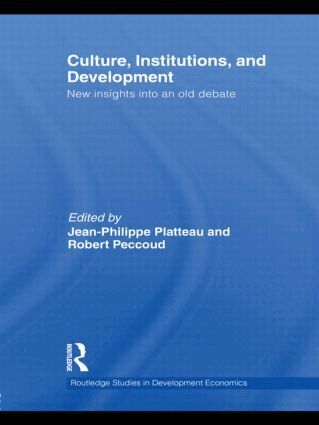
Does culture matter? This question has taken on added significance since fundamentalist revivalism has recently gained ground in different parts of the world. The old controversy between Max Weber and Karl Marx, which centres around the extent to which cultural factors such as social norms and values affect economic growth is of critical importance, particularly because of its policy implications. Indeed, if culture is not an autonomous factor susceptible to influencing economic realities, it should not matter and public authorities can dispense with thinking about cultural interventions. On the other hand, if culture does have a real impact, the question arises as to whether it is conducive or detrimental to economic growth, political liberalization, and the emancipation of individuals among other things.Culture, Institutions, and Development addresses this debate at a concrete level by looking at five important issues: the role of tradition and its influence on development; the role of religion, with special reference to Middle Eastern countries; the role of family, kinship, and ethnic ties in the process of development; the relationship between culture and entrepreneurship; and the relationship between culture and poverty. This collection offers a nuanced view that neither denies nor exaggerates the role of cultural factors in explaining relative growth performances across countries. Instead, the contributors focus on the dynamic, two-way relationship between culture and development in a way that stresses policy stakes and the value of multidisciplinary collaboration between economists, historians and other social scientists. This book will be of interest to postgraduates and researchers in all the social sciences, as well as to professionals working in national development agencies, international organisations, and Non-Governmental Organisations.
753 kr
Skickas inom 10-15 vardagar
Does culture matter? This question has taken on added significance since fundamentalist revivalism has recently gained ground in different parts of the world. The old controversy between Max Weber and Karl Marx, which centres around the extent to which cultural factors such as social norms and values affect economic growth is of critical importance, particularly because of its policy implications. Indeed, if culture is not an autonomous factor susceptible to influencing economic realities, it should not matter and public authorities can dispense with thinking about cultural interventions. On the other hand, if culture does have a real impact, the question arises as to whether it is conducive or detrimental to economic growth, political liberalization, and the emancipation of individuals among other things.Culture, Institutions, and Development addresses this debate at a concrete level by looking at five important issues: the role of tradition and its influence on development; the role of religion, with special reference to Middle Eastern countries; the role of family, kinship, and ethnic ties in the process of development; the relationship between culture and entrepreneurship; and the relationship between culture and poverty. This collection offers a nuanced view that neither denies nor exaggerates the role of cultural factors in explaining relative growth performances across countries. Instead, the contributors focus on the dynamic, two-way relationship between culture and development in a way that stresses policy stakes and the value of multidisciplinary collaboration between economists, historians and other social scientists. This book will be of interest to postgraduates and researchers in all the social sciences, as well as to professionals working in national development agencies, international organisations, and Non-Governmental Organisations.
1 075 kr
Skickas inom 7-10 vardagar
The definitive reference on the most current economics of development and institutionsThe essential role that institutions play in understanding economic development has long been recognized across the social sciences, including in economics. Academic and policy interest in this subject has never been higher. The Handbook of Economic Development and Institutions is the first to bring together in one single volume the most cutting-edge work in this area by the best-known international economists. The volume’s editors, themselves leading scholars in the discipline, provide a comprehensive introduction, and the stellar contributors offer up-to-date analysis into institutional change and its interactions with the dynamics of economic development.This book focuses on three critical issues: the definitions of institutions in order to argue for a causal link to development, the complex interplay between formal and informal institutions, and the evolution and coevolution of institutions and their interactions with the political economy of development. Topics examined include the relationship between institutions and growth, educational systems, the role of the media, and the intersection between traditional systems of patronage and political institutions. Each chapter—covering the frontier research in its area and pointing to new areas of research—is the product of extensive workshopping on the part of the contributors.The definitive reference work on this topic, The Handbook of Economic Development and Institutions will be essential for academics, researchers, and professionals working in the field.
1 521 kr
Skickas inom 7-10 vardagar
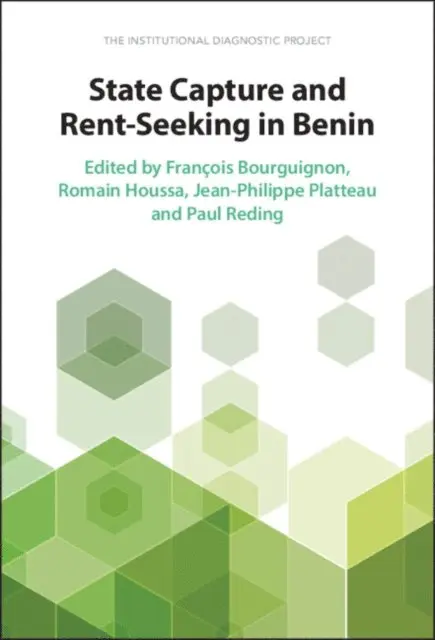
Benin is a small, slow-growing economy whose development relies on two sources of rent that are controlled by self-centred elites: cotton export and illegal cross-border trade with Nigeria. Patrimonialism governs Beninese society as a forceful struggle for political power takes place between the oligarchs who control these sources and use them as formidable levers of power. State Capture and Rent-Seeking in Benin argues that this struggle causes the instability and unpredictability of economic policies, resulting in institutional problems that make economic diversification and growth difficult. Based on a thorough account of the economic, social, and political development of Benin, this institutional diagnostic provides a detailed analysis of its critical institution- and development-sensitive areas such as electoral campaign finance, state capture by business and elites, management of the cotton sector, the tax effort, the informal trading between Benin and Nigeria, and the political economy of land reform.
Institutional Challenges at the Early Stages of Development
Lessons from a Multi-Country Study
Inbunden, Engelska, 2023
1 092 kr
Skickas inom 7-10 vardagar
Despite strong interest in the role of institutions; methods of operation, underlying political forces and their precise nature are still misunderstood. Partial analysis of specific aspects of public interventions simplified historical examples, or rough cross-country relationships tend to be the main guides to policy recommendations. Along with four in-depth country studies, published in companion volumes, Institutional Challenges at the Early Stages of Development gives a thorough review of the experiences of South Korea and Taiwan, offering a new perspective for identifying critical institutional issues. Including those related to state-business relations and the economic structure, and its transformation, analytical tools and concept are provided to help diagnose important hurdles at the early stage of a country's development. This title is also available as Open Access.
Institutional Challenges at the Early Stages of Development
Lessons from a Multi-Country Study
Häftad, Engelska, 2023
357 kr
Skickas inom 7-10 vardagar
Despite strong interest in the role of institutions; methods of operation, underlying political forces and their precise nature are still misunderstood. Partial analysis of specific aspects of public interventions simplified historical examples, or rough cross-country relationships tend to be the main guides to policy recommendations. Along with four in-depth country studies, published in companion volumes, Institutional Challenges at the Early Stages of Development gives a thorough review of the experiences of South Korea and Taiwan, offering a new perspective for identifying critical institutional issues. Including those related to state-business relations and the economic structure, and its transformation, analytical tools and concept are provided to help diagnose important hurdles at the early stage of a country's development. This title is also available as Open Access.
663 kr
Skickas inom 10-15 vardagar
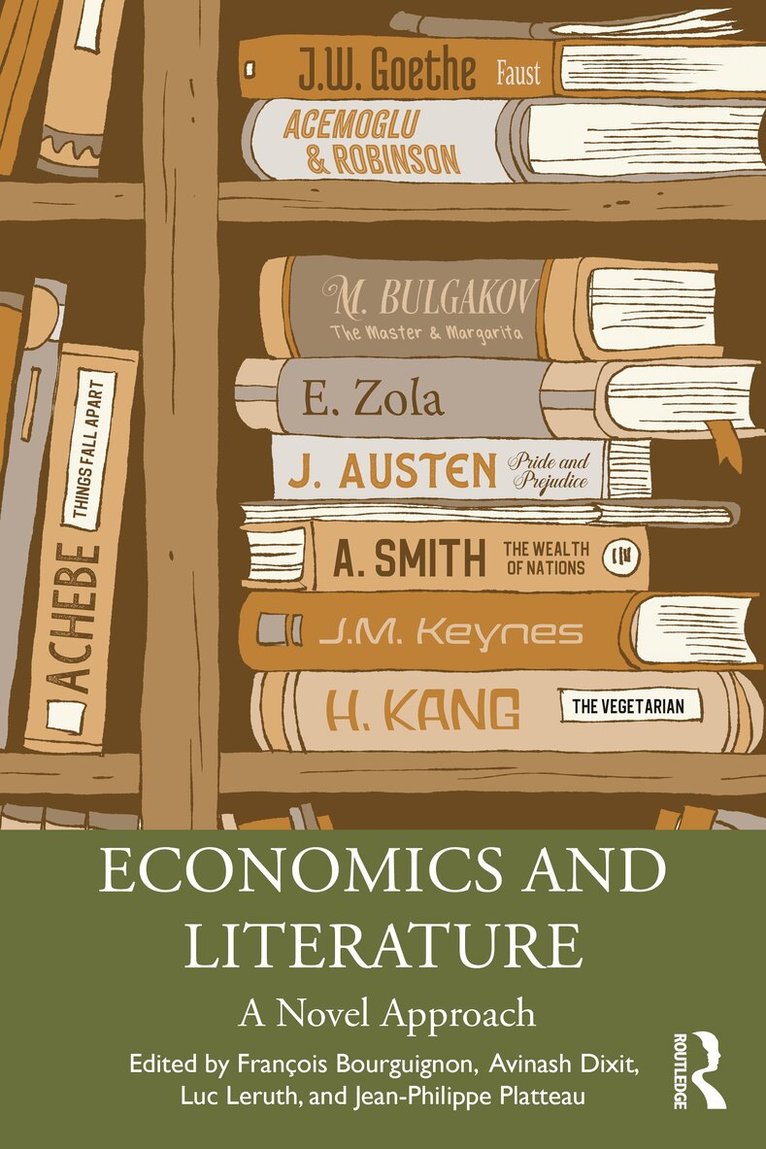
Economics and fiction often pursue parallel objectives. Economists analyze human decisions and interactions in markets and other institutions. Fiction writers also provide keen insights into individual minds and motives, examining how their characters respond to conflict and tensions in varied situations. This book explores the insights to be gained from developing this parallel.In each chapter, economists discuss classic or contemporary literary creations, exploring economic incentives that motivate the characters, the economic mechanisms that tie them together, and/or the economic context in which they live and develop. Exploring the synergy across economics and literature offers new understandings of themes, including capitalism and colonialism, marriage and markets, gender norms, inheritance and estates, and the political economy of poverty. The broad and deep range of literary works includes writers from Shakespeare and Goethe, through Chekov and Steinbeck, to recent Nobelists Abdulrazak Gurnah and Han Kang. By offering new understandings of both economics and literature, readers will gain deeper insights into people’s thought processes, choices, and consequences.This book will captivate readers in economics, social sciences, and the humanities and open their minds to the viewing of economic ideas and concepts through the prism of great works of literature.
2 402 kr
Skickas inom 10-15 vardagar
Economics and fiction often pursue parallel objectives. Economists analyze human decisions and interactions in markets and other institutions. Fiction writers also provide keen insights into individual minds and motives, examining how their characters respond to conflict and tensions in varied situations. This book explores the insights to be gained from developing this parallel.In each chapter, economists discuss classic or contemporary literary creations, exploring economic incentives that motivate the characters, the economic mechanisms that tie them together, and/or the economic context in which they live and develop. Exploring the synergy across economics and literature offers new understandings of themes, including capitalism and colonialism, marriage and markets, gender norms, inheritance and estates, and the political economy of poverty. The broad and deep range of literary works includes writers from Shakespeare and Goethe, through Chekov and Steinbeck, to recent Nobelists Abdulrazak Gurnah and Han Kang. By offering new understandings of both economics and literature, readers will gain deeper insights into people’s thought processes, choices, and consequences.This book will captivate readers in economics, social sciences, and the humanities and open their minds to the viewing of economic ideas and concepts through the prism of great works of literature.
1 311 kr
Tillfälligt slut
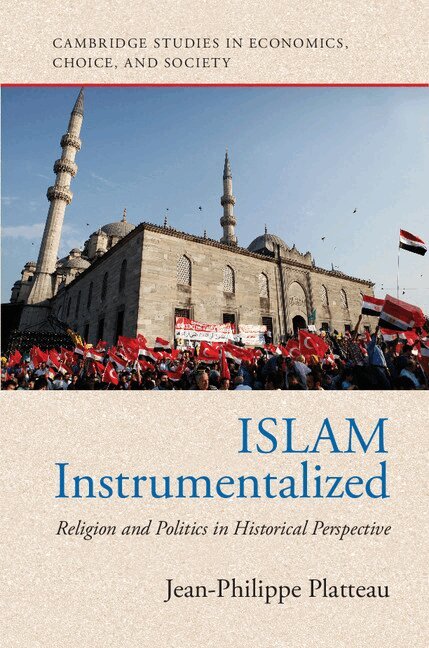
In this book, economist Jean-Philippe Platteau addresses the question: does Islam, the religion of Muslims, bear some responsibility for a lack of economic development in the countries in which it dominates? In his nuanced approach, Platteau challenges the widespread view that the doctrine of Islam is reactionary in the sense that it defends tradition against modernity and individual freedom. He also questions the view that fusion between religion and politics is characteristic of Islam and predisposes it to theocracy. He disagrees with the substantivist view that Islam is a major obstacle to modern development because of a merging of religion and the state, or a fusion between the spiritual and political domains. But he also identifies how Islam's decentralized organization, in the context of autocratic regimes, may cause political instability and make reforms costly.
561 kr
Skickas inom 7-10 vardagar
In this book, economist Jean-Philippe Platteau addresses the question: does Islam, the religion of Muslims, bear some responsibility for a lack of economic development in the countries in which it dominates? In his nuanced approach, Platteau challenges the widespread view that the doctrine of Islam is reactionary in the sense that it defends tradition against modernity and individual freedom. He also questions the view that fusion between religion and politics is characteristic of Islam and predisposes it to theocracy. He disagrees with the substantivist view that Islam is a major obstacle to modern development because of a merging of religion and the state, or a fusion between the spiritual and political domains. But he also identifies how Islam's decentralized organization, in the context of autocratic regimes, may cause political instability and make reforms costly.
2 021 kr
Skickas inom 10-15 vardagar
In order for economic specialization to develop, it is important that well-defined property rights are established and that suspicion and fear of fraud do not pervade transactions. Such conditions cannot be created ex abrubto, but must somehow evolve. What needs to develop is not only suitable practices and rules themselves, but also the public agencies and moral environment without which generalized trust is difficult to establish. The cultural endowment of societies as they have developed over their particular histories is bound to play a major role in this regard, and the matter of cultual endowment is one of the central themes of this book.On the other hand, division of labour does not only require well-enforced property rights and trust in economic dealings. It is also critically conditioned by the thickness of economic space, itself dependent on population density. This provides the second major theme of the volume: market development, including the development of private property rights is not possible, or will remain very incomplete, if populations are thinly spread over large areas of land. The book makes special reference to sub-Saharan Africa.