Jeannie Oakes - Böcker
Visar alla böcker från författaren Jeannie Oakes. Handla med fri frakt och snabb leverans.
10 produkter
10 produkter
506 kr
Skickas inom 5-8 vardagar
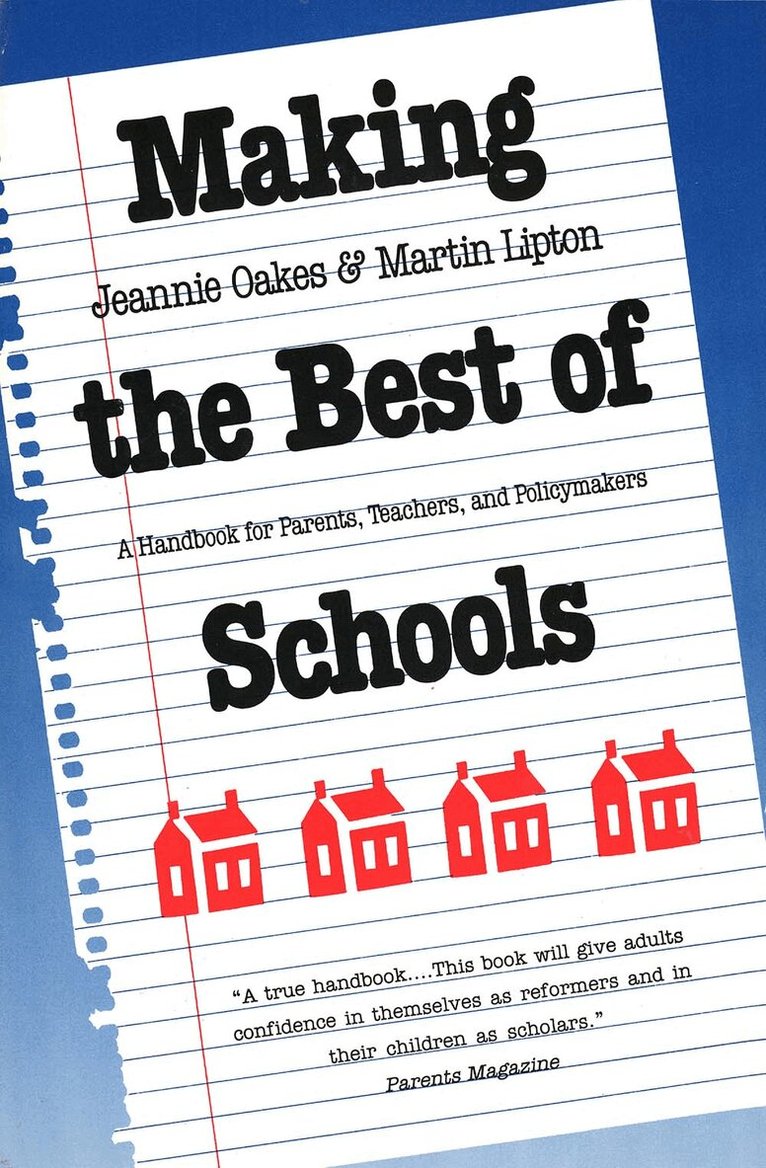
This practical, informative book shows parents and professionals alike how they can work with schools to help children receive the best possible education. Throughout, Oakes and Lipton provide invaluable guidance on such topics as how children learn; how changes at home can increase a child’s success at school; how basic subjects might be taught in more meaningful ways; how children with physical, emotional, social, or learning problems can be mainstreamed successfully; and what reforms are necessary to give all children the schools they need."A true handbook. . . . This book will give adults confidence in themselves as reformers and in their children as scholars."-- Parents Magazine"Finally! A readable book about schools and learning that doesn’t talk down to parents, the public, and teachers. If knowledge is power, then this book is an arsenal of intelligence for dealing with education."-- Albert Shanker, President, American Federation of Teachers"The book speaks to parents who feel too excluded from the inner workings of schools to know how to influence them, and educators who may be too close to see the larger implications of their daily decisions."-- Beth Hakola, Education USA"Making the Best of Schools gives all of us – parents, educators, policymakers, and concerned citizens – some cogent advice on how to make schools work for all young Americans."-- Marian Wright Edelman, President, Children’s Defense Fund"A fine primer for new board members or board members whose expertise lies somewhere outside education. . . . It’s an inviting exploration, steeped in anecdotes and examples of good and bad practice."-- American School Board Journal
Becoming Good American Schools
The Struggle for Civic Virtue in Education Reform
Häftad, Engelska, 2002
310 kr
Skickas inom 7-10 vardagar
"A convincing portrait of teachers actively engaged in educational reform...offering a hopeful yet realistic vision of revitalized democracy inspired by a passion for the public good. This book is an eloquent defense of civic virtue."—Jonathan Kozol, author of Amazing Grace and Savage Inequalities "Rich, realistic, invigorating, and scary. Any middle school educator who has been part of an effort to reform the educational process will see himself or herself in this book--as the brave risk taker, the naive visionary, the frightened frontline trooper, and the touched individual who can make a difference."—Judy Cunningham, principal, South Lake Middle School, Irvine, CaliforniaThis book tells the stories of sixteen schools in California, Illinois, Massachusetts, Texas, and Vermont that sought to alter their structures and practices and become places fostering innovative ideas, caring people, principles of social justice, and democratic processes. Based on longitudinal, comparative case-study research, these accounts attest to the power of committing to public virtue and the struggle of educators to transform that commitment into changed school practice. The authors argue that better schools will come only when policy makers, educators, and citizens move beyond technical and bureaucratic reforms to engage in the same educative, socially just, caring, and participatory processes they want for schoolchildren. Those processes constitute betterment--both the means and the ends of school reform. Becoming Good American Schools is for administrators, policy makers, practitioners, and citizens who are prepared to blend inspiration and caution, idealism and skepticism in their own pursuit of good schools.
360 kr
Skickas inom 11-20 vardagar
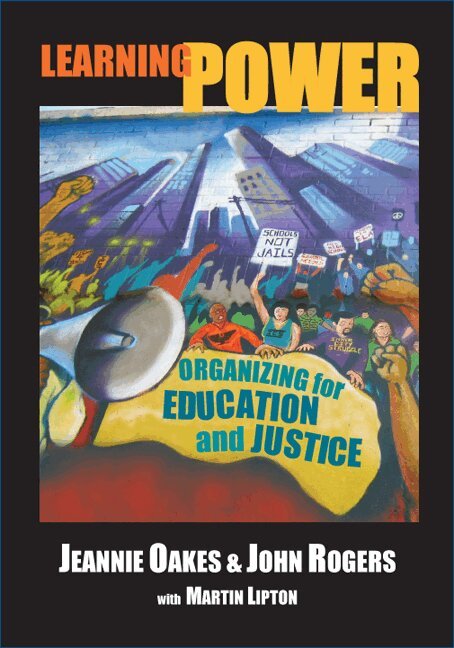
In cities across the nation, low-income African American and Latino parents hope that their children's education will bring a better life. But their schools, typically, are overcrowded, ill equipped, and shamefully under-staffed. Unless things change dramatically, more than half the students will never graduate and many will face a life of poverty-wage work. ""Learning Power"" documents a radical approach to school reform that includes: grassroots public activism informed by social inquiry as the best way to realize Brown v. Board of Education's promise of ""education on equal terms""; activist young people, teachers, parents, and community organizations working to improve schools in our nation's poorest neighborhoods; the voices, images, and actions of people who are organizing to fight for better schools; and a comprehensive critique of the prevailing logic of American schooling and an alternative logic based on justice and participatory democracy. Here are the best arguments against those who want to give up on public schools in America. Read ""Learning Power"" for clear examples of how ordinary people can influence schooling through their organizing and social critique.
1 034 kr
Skickas inom 10-15 vardagar
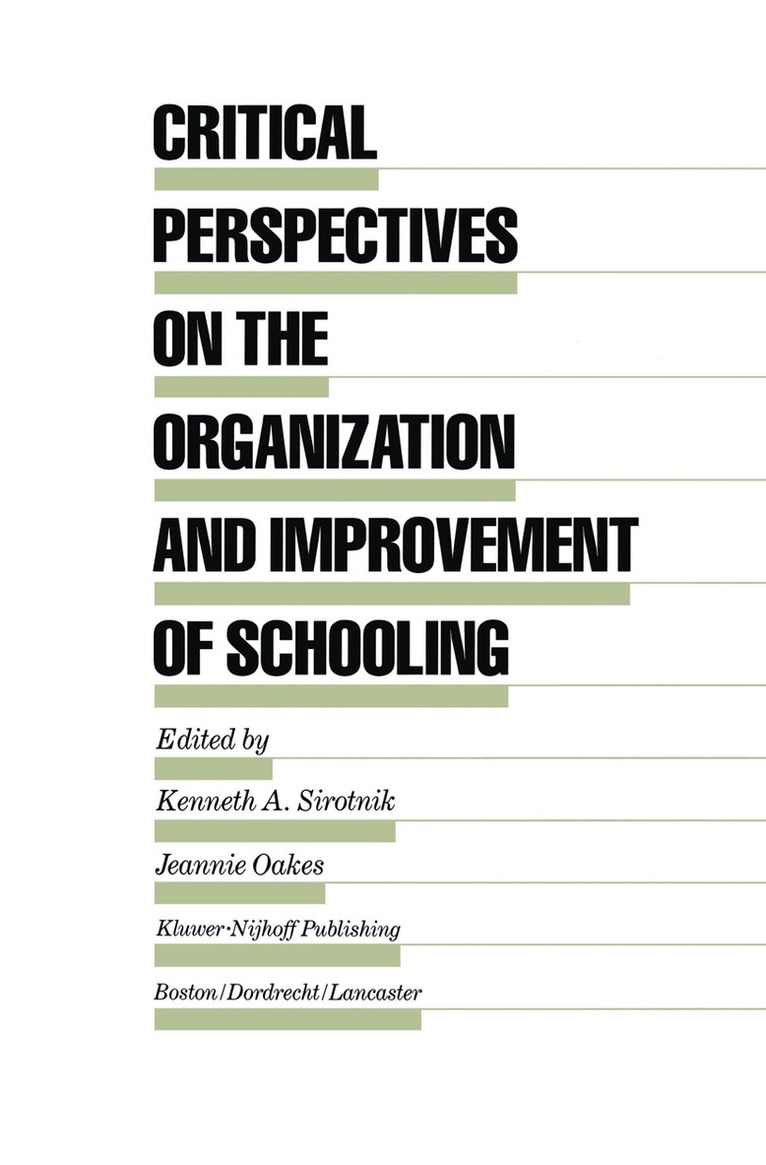
Major "paradigm shifts"-replacing one "world view" with another regarding what constitutes appropriate knowledge do not happen over night. Centuries usually intervene in the process. Even minor shifts admitting alternative world views into the domain of legitimate knowledge producing theory and practice-require decades of controversy, especially, it seems to us, in the field of education. It has only been in the last 20 years or so that the educational research community has begun to accept the "scientific" credibility of the qualitative approaches to inquiry such as participant observation, case study, ethnogra phy, and the like. In fact, these methods, with their long and distinguished philosophical traditions in phenomenology, have really only come into their own within the last decade. The critical perspective on generating and evaluating knowledge and practice-what this book is mostly about-is in many ways a radical depar ture from both the more traditional quantitative and qualitative perspec tives. The traditional approaches, in fact, are far more similar to one another than they are to the critical perspective. This is the case, in our view, for one crucial reason: Both the more quantitative, empirical-analytic and qualitative, interpretive traditions share a fundamental epistemological commitment: they both eschew ideology and human interests as explicit components in their paradigms of inquiry. Ideology and human interests, however, are the "bread and butter" of a critical approach to inquiry.
2 485 kr
Skickas inom 10-15 vardagar
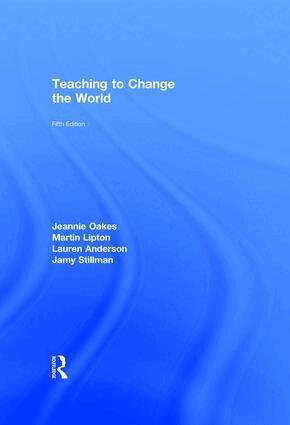
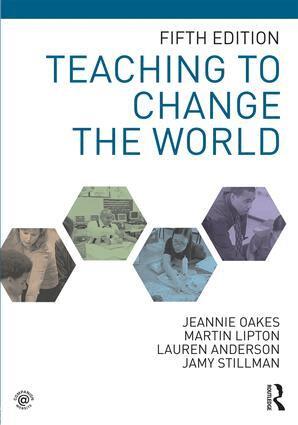
Teaching to Change the World is an up-to-the-moment, engaging, social justice-oriented introduction to education and teaching, and the challenges and opportunities they present. Both foundational and practical, the chapters are organized around conventional topics but in a way that consistently integrates a coherent story that explains why schools are as they are. Taking the position that a hopeful, democratic future depends on ensuring that all students learn, the text pays particular attention to inequalities associated with race, social class, language, gender, and other social categories and explores teachers’ role in addressing them. This thoroughly revised fifth edition remains a vital introduction to the profession for a new generation of teachers who seek to become purposeful, knowledgeable practitioners in our ever-changing educational landscape—for those teachers who see the potential for education to change the world. Features and Updates of the New Edition: • Fully updated Chapter 1, "The U.S. Schooling Dilemma," reflects our current state of education after the 2016 U.S. presidential election. • First-person observations from teachers, including first-year teachers, continue to offer vivid, authentic pictures of what teaching to change the world means and involves. • Additional coverage of the ongoing effects of Common Core highlights the heated public discourse around teaching and teachers, and charter schools. • Attention to diversity and inclusion is treated as integral to all chapters, woven throughout rather than tacked on as separate units. • "Digging Deeper" resources on the new companion website include concrete resources that current and future teachers can use in their classrooms. • "Tools for Critique" provides instructors and students questions, prompts, and activities aimed at encouraging classroom discussion and particularly engaging those students least familiar with the central tenets of social justice education.
1 258 kr
Skickas inom 10-15 vardagar
Teaching to Change the World is an up-to-the-moment, engaging, social justice-oriented introduction to education and teaching, and the challenges and opportunities they present. Both foundational and practical, the chapters are organized around conventional topics but in a way that consistently integrates a coherent story that explains why schools are as they are. Taking the position that a hopeful, democratic future depends on ensuring that all students learn, the text pays particular attention to inequalities associated with race, social class, language, gender, and other social categories and explores teachers’ role in addressing them. This thoroughly revised fifth edition remains a vital introduction to the profession for a new generation of teachers who seek to become purposeful, knowledgeable practitioners in our ever-changing educational landscape—for those teachers who see the potential for education to change the world. Features and Updates of the New Edition: • Fully updated Chapter 1, "The U.S. Schooling Dilemma," reflects our current state of education after the 2016 U.S. presidential election. • First-person observations from teachers, including first-year teachers, continue to offer vivid, authentic pictures of what teaching to change the world means and involves. • Additional coverage of the ongoing effects of Common Core highlights the heated public discourse around teaching and teachers, and charter schools. • Attention to diversity and inclusion is treated as integral to all chapters, woven throughout rather than tacked on as separate units. • "Digging Deeper" resources on the new companion website include concrete resources that current and future teachers can use in their classrooms. • "Tools for Critique" provides instructors and students questions, prompts, and activities aimed at encouraging classroom discussion and particularly engaging those students least familiar with the central tenets of social justice education.
352 kr
Skickas inom 7-10 vardagar
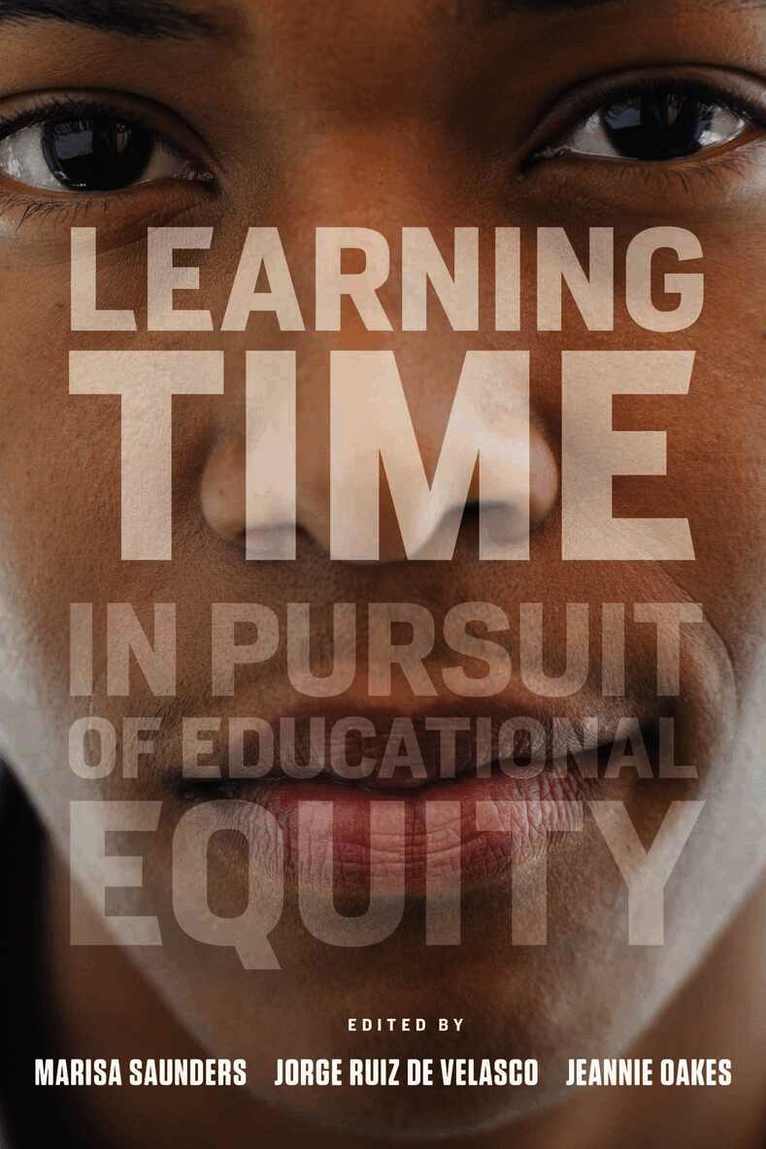
This important book explores how education time can be expanded, reimagined, and reorganized in an effort to enhance the educational opportunities and outcomes of disadvantaged students. The editors and contributors address questions of educational equity and opportunity by considering how best to extend learning time in high-poverty schools.Learning Time examines how the nature, quality, and quantity of education time varies dramatically for affluent and poor children. The book’s contributors provide a comprehensive view of strategies for tackling this issue within the context of the inequities disadvantaged students face. They also explore the positive outcomes associated with expanded learning time and examine the cultural and political underpinnings of our current inequitable system—and describe fundamental, lasting ways to overturn those underlying conditions.This book promises to be a valuable overview of a vital, understudied field and a practical, useful resource for policy makers and practitioners who are determined to implement reforms for underserved youth.
539 kr
Skickas inom 3-6 vardagar
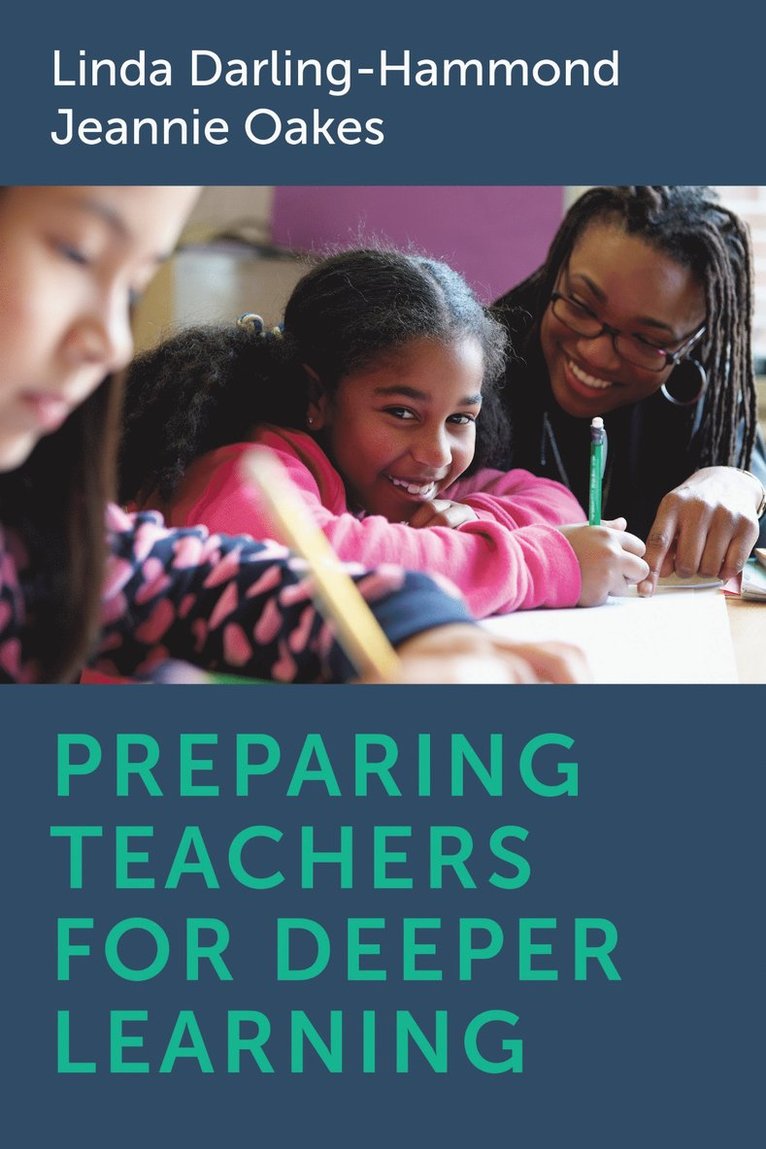
Preparing Teachers for Deeper Learning answers an urgent call for teachers who educate children from diverse backgrounds to meet the demands of a changing world. In today's knowledge economy, teachers must prioritize problem-solving ability, adaptability, critical thinking, and the development of interpersonal and collaborative skills over rote memorization and the passive transmission of knowledge. Authors Linda Darling-Hammond and Jeannie Oakes and their colleagues examine what this means for teacher preparation and showcase the work of programs that are educating for deeper learning, equity, and social justice. Guided by the growing knowledge base in the science of learning and development, the book examines teacher preparation programs at Alverno College, Bank Street College of Education, High Tech High's Intern Program, Montclair State University, San Francisco Teacher Residency, Trinity University, and University of Colorado Denver. These seven programs share a common understanding of how people learn that shape similar innovative practices. With vivid examples of teaching for deeper learning in coursework and classrooms; interviews with faculty, school partners, and novice teachers; surveys of teacher candidates and graduates; and analyses of curriculum and practices, Preparing Teachers for Deeper Learning depicts transformative forms of teaching and teacher preparation that honor and expand all students' abilities, knowledges, and experiences, and reaffirm the promise of educating for a better world.
326 kr
Skickas inom 7-10 vardagar
In their introduction to Beyond Tracking, Jeannie Oakes and Marisa Saunders offer a sobering assessment of American high schools: “Evidence abounds that high schools simply don’t work very well: witness strikingly high dropout rates, large percentages of graduates unprepared to succeed in college or career, education gaps that jeopardize African American and Latino students’ life chances, and widespread student disengagement. This pervasive dysfunction exacts a high price from students and from the nation’s social, economic, and civic welfare.” Beyond Tracking responds to this dilemma by delineating and promoting an innovative and well-defined notion of multiple pathways. The book’s authors clearly distinguish their use of the term “multiple pathways” from any updated version of the tracking system that marked so many American high schools during the past century, and from career and technical education programs. Instead, Oakes and Saunders propose a system of multiple pathways that will “provide both the academic and real-world foundations that students need for advanced learning, training, and preparation for responsible civic participation.” All multiple pathways schools will have four main components: a college-preparatory core; a professional/technical core; field-based learning and realistic workplace simulations; and additional support services to meet the particular needs of students and communities. “In this conception of multiple pathways, students and their families choose from among a variety of options, all of which lead students to the same destination: preparation to succeed in both college and career, not one or the other.” In its detailed and innovative examination of multiple pathways, Beyond Tracking makes a crucial contribution to current discussions about high school reform and the educational challenges of the 21st century.
1 034 kr
Skickas inom 10-15 vardagar
Major "paradigm shifts"-replacing one "world view" with another regarding what constitutes appropriate knowledge do not happen over night. Centuries usually intervene in the process. Even minor shifts admitting alternative world views into the domain of legitimate knowledge producing theory and practice-require decades of controversy, especially, it seems to us, in the field of education. It has only been in the last 20 years or so that the educational research community has begun to accept the "scientific" credibility of the qualitative approaches to inquiry such as participant observation, case study, ethnogra phy, and the like. In fact, these methods, with their long and distinguished philosophical traditions in phenomenology, have really only come into their own within the last decade. The critical perspective on generating and evaluating knowledge and practice-what this book is mostly about-is in many ways a radical depar ture from both the more traditional quantitative and qualitative perspec tives. The traditional approaches, in fact, are far more similar to one another than they are to the critical perspective. This is the case, in our view, for one crucial reason: Both the more quantitative, empirical-analytic and qualitative, interpretive traditions share a fundamental epistemological commitment: they both eschew ideology and human interests as explicit components in their paradigms of inquiry. Ideology and human interests, however, are the "bread and butter" of a critical approach to inquiry.