Jennifer Olmsted - Böcker
Visar alla böcker från författaren Jennifer Olmsted. Handla med fri frakt och snabb leverans.
3 produkter
3 produkter
940 kr
Skickas inom 7-10 vardagar
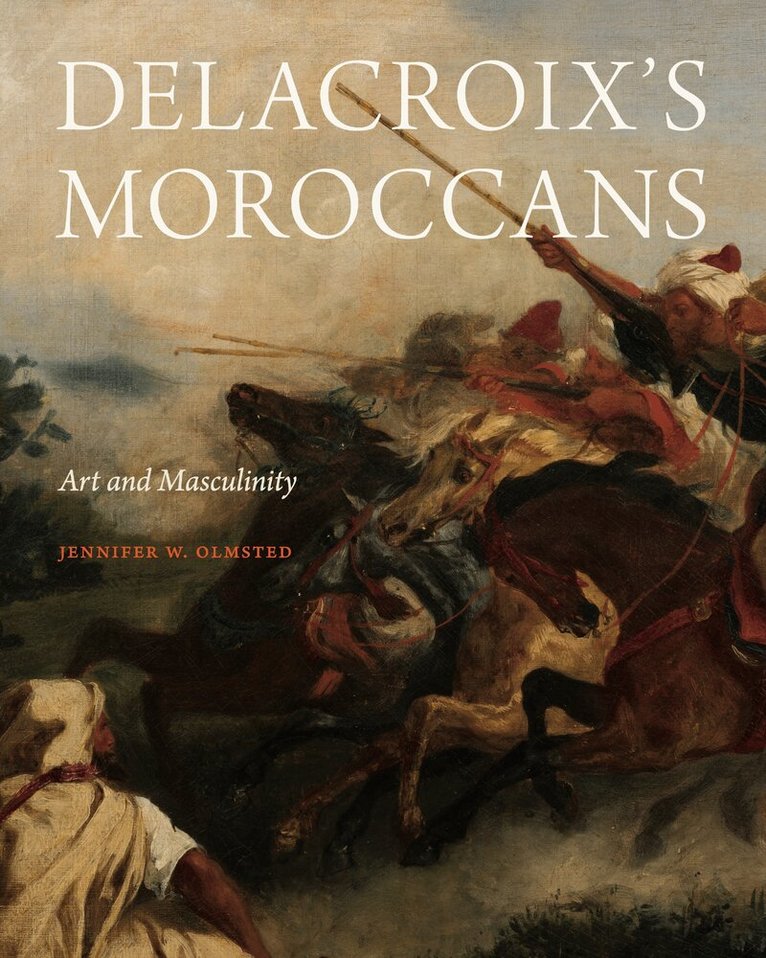
The Women of Algiers in Their Apartment is arguably Eugène Delacroix’s best-known work from his trip to Morocco in 1832, and the attention scholars have paid to it has obscured a crucial fact about Delacroix’s Moroccan subjects: most of his paintings of North Africa depict men rather than women.After serving as a diplomat’s companion on a mission to Morocco, Delacroix went on to devote over three-quarters of his massive North African oeuvre to the military prowess, effective leadership, equestrian virtuosity, and elegant dress of Moroccan men. Using the evidence of his writings, sketches, and paintings, Olmsted argues that rather than embodying a typical colonialist fantasy, Delacroix’s paintings of Moroccan men instead show his subjects as models of heroic masculinity and political sovereignty, a position that ran counter to prevailing French attitudes toward North Africans. In this way, Delacroix’s Moroccans intervenes in the discourse of imperialism to examine the multiple, heterogeneous features of cultural response and provides nuanced readings of the artist’s work that support the idea that European constructions of non-European cultures were not monolithic.Olmsted’s multifaceted analysis creates a powerful and original understanding of Delacroix’s Moroccan oeuvre and a counternarrative to the colonialist imagery of his era. Through close attention to Delacroix’s paintings, drawings, and writings, as well as their historical and political contexts, this book illuminates the artist’s practice and offers a fresh avenue for assessing colonialism and art produced within colonial contexts.
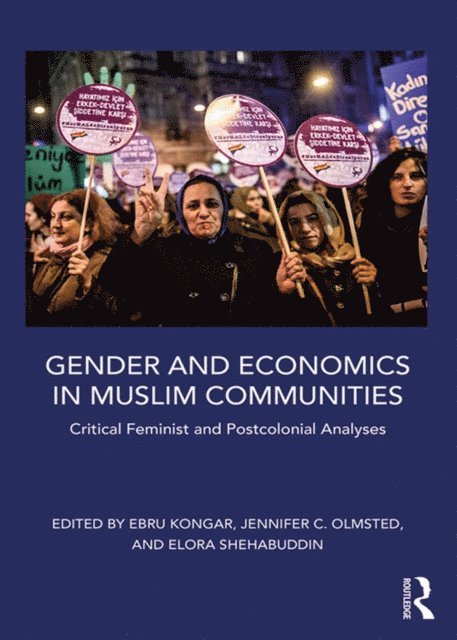
Gender and Economics in Muslim Communities
Critical Feminist and Postcolonial Analyses
Inbunden, Engelska, 2017
2 166 kr
Skickas inom 10-15 vardagar
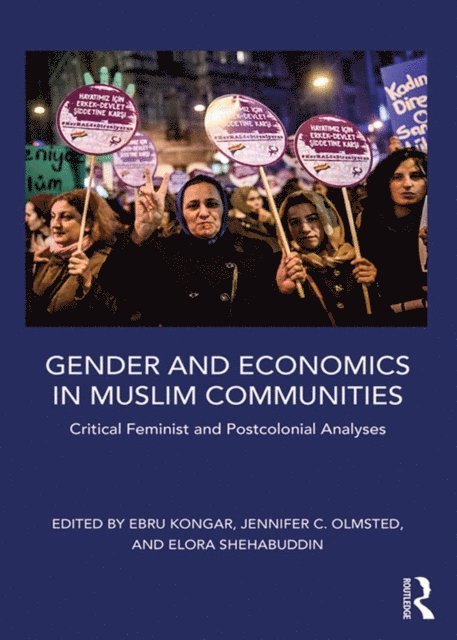
Bringing together feminist analyses of economic processes and outcomes with feminist critiques of Orientalism, this book examines the diverse economic realities facing women in a range of Muslim communities. This approach pays special attention to the role of Islam in economic analyses of gender equality and women’s well-being in Muslim communities, while at the same time challenging biased and inaccurate accounts that essentialize Islam. Nuanced case studies conducted in Bangladesh, Iran, Israel, Nigeria, and Turkey illustrate the historical and institutional diversity of Muslim communities and draw vivid pictures of the everyday economic lives of Muslim women in these communities. These studies are complemented by quantitative analyses that extend beyond inserting Islam as a dummy variable. The contributions represent a wide range of disciplines, including anthropology, economics, gender studies, political science, psychology, and sociology. By placing critiques of Orientalist scholarship in direct dialogue with scholarship on economic development in Muslim contexts, this diverse collection illustrates how different methods and frameworks can work together to provide a better understanding of gender equality and women’s well-being in Muslim contexts. In doing so, the authors aim to facilitate conversations among feminist scholars across disciplines in order to provide a more nuanced picture of the situation facing women in Muslim communities. This book was originally published as a special issue of Feminist Economics.
Gender and Economics in Muslim Communities
Critical Feminist and Postcolonial Analyses
Häftad, Engelska, 2017
668 kr
Skickas inom 10-15 vardagar
Bringing together feminist analyses of economic processes and outcomes with feminist critiques of Orientalism, this book examines the diverse economic realities facing women in a range of Muslim communities. This approach pays special attention to the role of Islam in economic analyses of gender equality and women’s well-being in Muslim communities, while at the same time challenging biased and inaccurate accounts that essentialize Islam. Nuanced case studies conducted in Bangladesh, Iran, Israel, Nigeria, and Turkey illustrate the historical and institutional diversity of Muslim communities and draw vivid pictures of the everyday economic lives of Muslim women in these communities. These studies are complemented by quantitative analyses that extend beyond inserting Islam as a dummy variable. The contributions represent a wide range of disciplines, including anthropology, economics, gender studies, political science, psychology, and sociology. By placing critiques of Orientalist scholarship in direct dialogue with scholarship on economic development in Muslim contexts, this diverse collection illustrates how different methods and frameworks can work together to provide a better understanding of gender equality and women’s well-being in Muslim contexts. In doing so, the authors aim to facilitate conversations among feminist scholars across disciplines in order to provide a more nuanced picture of the situation facing women in Muslim communities. This book was originally published as a special issue of Feminist Economics.