• Fri frakt över 249 kr
  • •
  • Snabba leveranser
  • •
  • Billiga böcker
Kundservice

Du är på sajten för privatpersoner.

Företag, bibliotek eller offentlig verksamhet?

Du handlar på classic.bokus.com, där alla dina funktioner finns intakta.
Till classic.bokus.com
Bokus logotyp. Gå till startsidan.
  • Erbjudanden
  • Nyheter
  • Student
  • Topplistor
  • Barn & ungdom
  • Bokus Play
  • E-böcker
  • Pocketböcker
  • Spel & pussel

10% rabatt på allt med kod: NYSTART10 →

Sidfot

Mina sidor

    Hjälp

    • Kundservice
    • Vanliga frågor och svar
    • Frakt och leverans
    • Retur vid ångerrätt
    • Reklamera vara
    • Betalning
    • Köpvillkor
    • Allmänna villkor
    • Information om webbplatsens tillgänglighet

    Om Bokus

    • Om oss
    • Pressrum
    • För studenter
    • För företag
    • För bibliotek och offentlig verksamhet
    • För leverantörer
    • Hållbarhet

    Populärt

    • Aktuella erbjudanden
    • Presentkort
    • Studentlitteratur
    • Nya böcker
    • Topplistor
    • Signerade böcker
    • Engelska böcker

    Inspiration

    • Boktips
    • BookTok
    • Populära bokserier
    • Barnbokskaraktärer
    • Populära författare
    Logotyp för Bokus
    Följ oss på Facebook (extern länk)Följ oss på Instagram (extern länk)Följ oss på YouTube (extern länk)Följ oss på TikTok (extern länk)
    bokus @ CookiesAnpassa cookiesIntegritetspolicyKöpvillkor
    Till Citymail hemsida (extern länk)Till Budbee hemsida (extern länk)Till Postnord hemsida (extern länk)Till Schenker hemsida (extern länk)Till Early Bird hemsida (extern länk)Till Walleys hemsida (extern länk)
    1. Kultur
    2. Konstböcker
    3. Konsthistoria

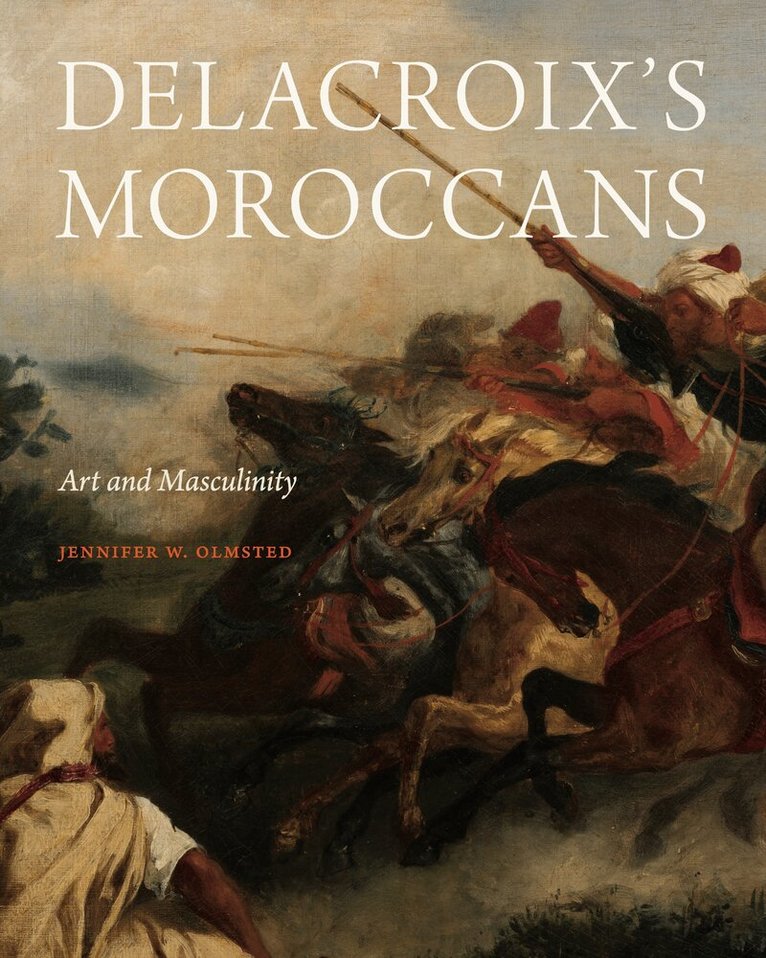
    Delacroix’s Moroccans

    Art and Masculinity

    AvJennifer Olmsted

    Inbunden, Engelska, 2025

    957 kr

    Beställningsvara. Skickas inom 5-8 vardagar. Fri frakt över 249 kr.

    Beskrivning

    The Women of Algiers in Their Apartment is arguably Eugène Delacroix’s best-known work from his trip to Morocco in 1832, and the attention scholars have paid to it has obscured a crucial fact about Delacroix’s Moroccan subjects: most of his paintings of North Africa depict men rather than women.After serving as a diplomat’s companion on a mission to Morocco, Delacroix went on to devote over three-quarters of his massive North African oeuvre to the military prowess, effective leadership, equestrian virtuosity, and elegant dress of Moroccan men. Using the evidence of his writings, sketches, and paintings, Olmsted argues that rather than embodying a typical colonialist fantasy, Delacroix’s paintings of Moroccan men instead show his subjects as models of heroic masculinity and political sovereignty, a position that ran counter to prevailing French attitudes toward North Africans. In this way, Delacroix’s Moroccans intervenes in the discourse of imperialism to examine the multiple, heterogeneous features of cultural response and provides nuanced readings of the artist’s work that support the idea that European constructions of non-European cultures were not monolithic.Olmsted’s multifaceted analysis creates a powerful and original understanding of Delacroix’s Moroccan oeuvre and a counternarrative to the colonialist imagery of his era. Through close attention to Delacroix’s paintings, drawings, and writings, as well as their historical and political contexts, this book illuminates the artist’s practice and offers a fresh avenue for assessing colonialism and art produced within colonial contexts.

    Produktinformation

    • Utgivningsdatum:2025-06-10
    • Mått:203 x 254 x 21 mm
    • Vikt:885 g
    • Format:Inbunden
    • Språk:Engelska
    • Antal sidor:216
    • Förlag:Pennsylvania State University Press
    • ISBN:9780271098968
    • Utmärkelser:Nominated for Jacques Barzun Prize in Cultural History 2025

    Utforska kategorier

    • Konsthistoria inom Kultur

    Mer om författaren

    Jennifer W. Olmsted is Associate Professor of Art History at Wayne State University.

    Recensioner i media

    “Delacroix’s depictions of Morocco have always fascinated viewers, from the moment they were first exhibited right down to the present. It is therefore all the more impressive that Olmsted offers such an original, compelling account, especially by revising our understanding of how they relate to colonialism and masculinity.”—David O’Brien, author of Exiled in Modernity: Delacroix, Civilization, and Barbarism