Jeremiah J. Sims - Böcker
Visar alla böcker från författaren Jeremiah J. Sims. Handla med fri frakt och snabb leverans.
7 produkter
7 produkter
Del 36 - Educational Psychology
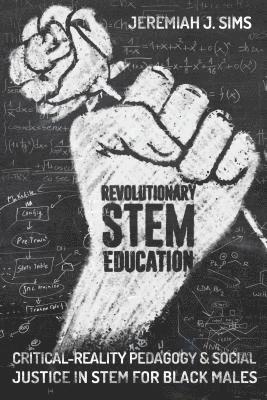
Revolutionary STEM Education
Critical-Reality Pedagogy and Social Justice in STEM for Black Males
Inbunden, Engelska, 2018
1 368 kr
Skickas inom 5-8 vardagar
Revolutionary STEM Education: Critical-Reality Pedagogy and Social Justice in STEM for Black Males by Jeremiah J. Sims, an educator, researcher, and administrator from Richmond, California, is calling for a revolutionary, paradigm shift in the STEM education of and for Black boys. STEM education has been reliant on axioms and purported facts that for far too long have been delivered in a banking or absorption model that is, arguably, anti-critical. Unsurprisingly, this pedagogical approach to STEM education has failed large segments of students; and, this is especially true of African American males. Revolutionary STEM Education highlights, chronicles, and investigates the potential inroads and vistas of a Saturday Science, Technology, Engineering and Math (STEM) program, Male Aptitudes Nurtured for Unlimited Potential (MAN UP), which was designed to foster interest and competence in STEM by middle school Black boys. This program was impelled by a critical-reality based pedagogical approach, which was formulated to arrive at socio-academic synergy, that is, a thoughtful conjoining of students’ real life concerns, joys, ways of being, and socio-cultural identities and the curricular material covered in the courses offered at MAN UP. Sims’ lived-experiences as an inner-city, low-income Black male are interspersed throughout Revolutionary STEM Education; however, the heartbeat of this book is, undoubtedly, the stories of the positive transformation that the MAN UP scholars experienced while becoming more competent in STEM, developing positive STEM identities, and learning to use their STEM knowledge for social justice.
Del 36 - Educational Psychology
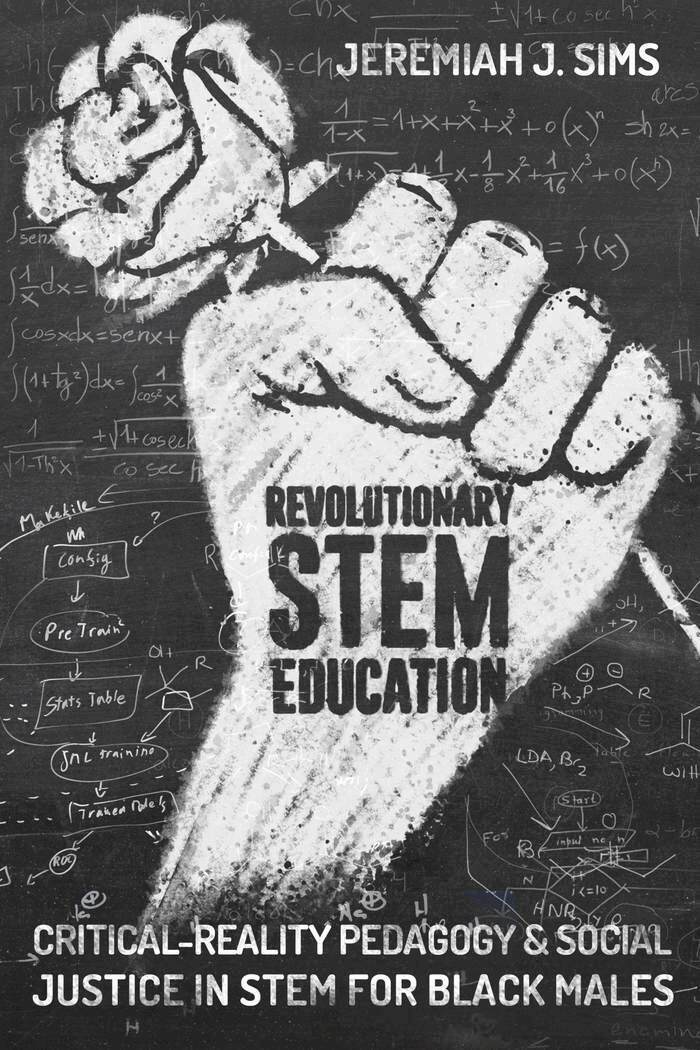
Revolutionary STEM Education
Critical-Reality Pedagogy and Social Justice in STEM for Black Males
Häftad, Engelska, 2018
530 kr
Skickas inom 5-8 vardagar
Revolutionary STEM Education: Critical-Reality Pedagogy and Social Justice in STEM for Black Males by Jeremiah J. Sims, an educator, researcher, and administrator from Richmond, California, is calling for a revolutionary, paradigm shift in the STEM education of and for Black boys. STEM education has been reliant on axioms and purported facts that for far too long have been delivered in a banking or absorption model that is, arguably, anti-critical. Unsurprisingly, this pedagogical approach to STEM education has failed large segments of students; and, this is especially true of African American males. Revolutionary STEM Education highlights, chronicles, and investigates the potential inroads and vistas of a Saturday Science, Technology, Engineering and Math (STEM) program, Male Aptitudes Nurtured for Unlimited Potential (MAN UP), which was designed to foster interest and competence in STEM by middle school Black boys. This program was impelled by a critical-reality based pedagogical approach, which was formulated to arrive at socio-academic synergy, that is, a thoughtful conjoining of students’ real life concerns, joys, ways of being, and socio-cultural identities and the curricular material covered in the courses offered at MAN UP. Sims’ lived-experiences as an inner-city, low-income Black male are interspersed throughout Revolutionary STEM Education; however, the heartbeat of this book is, undoubtedly, the stories of the positive transformation that the MAN UP scholars experienced while becoming more competent in STEM, developing positive STEM identities, and learning to use their STEM knowledge for social justice.
Del 1 - Educational Equity in Community Colleges
Minding the Obligation Gap in Community Colleges and Beyond
Theory and Practice in Achieving Educational Equity
Häftad, Engelska, 2020
373 kr
Tillfälligt slut
It is difficult to find justice-centered books geared specifically for community college practitioners interested in achieving campus wide educational equity. It is even more difficult to find a book in this vein written, exclusively, by community college practitioners. Minding the Obligation Gap in Community Colleges and Beyond is just that: a concerted effort by a cross-representational group of community college practitioners working to catalyze conversations and eventually practices that attend to the most pressing equity gaps in and on our campuses. By illuminating the constitutive parts of the ever-increasing obligation gap, this book offers both theory and practice in reforming community colleges so that they function as disruptive technologies. It is our position that equity-centered community colleges hold the potential to call out, impede, and even disrupt institutionalized polices, pedagogies, and practices that negatively impact poor, ethno-racially minoritized students of color. If you and your college is interested in striving for educational equity campus-wide please join us in this ongoing conversation on how to work for equity for all of the students that we serve.
Del 1 - Educational Equity in Community Colleges
Minding the Obligation Gap in Community Colleges and Beyond
Theory and Practice in Achieving Educational Equity
Inbunden, Engelska, 2020
1 034 kr
Tillfälligt slut
It is difficult to find justice-centered books geared specifically for community college practitioners interested in achieving campus wide educational equity. It is even more difficult to find a book in this vein written, exclusively, by community college practitioners. Minding the Obligation Gap in Community Colleges and Beyond is just that: a concerted effort by a cross-representational group of community college practitioners working to catalyze conversations and eventually practices that attend to the most pressing equity gaps in and on our campuses. By illuminating the constitutive parts of the ever-increasing obligation gap, this book offers both theory and practice in reforming community colleges so that they function as disruptive technologies. It is our position that equity-centered community colleges hold the potential to call out, impede, and even disrupt institutionalized polices, pedagogies, and practices that negatively impact poor, ethno-racially minoritized students of color. If you and your college is interested in striving for educational equity campus-wide please join us in this ongoing conversation on how to work for equity for all of the students that we serve.
Del 2 - Educational Equity in Community Colleges
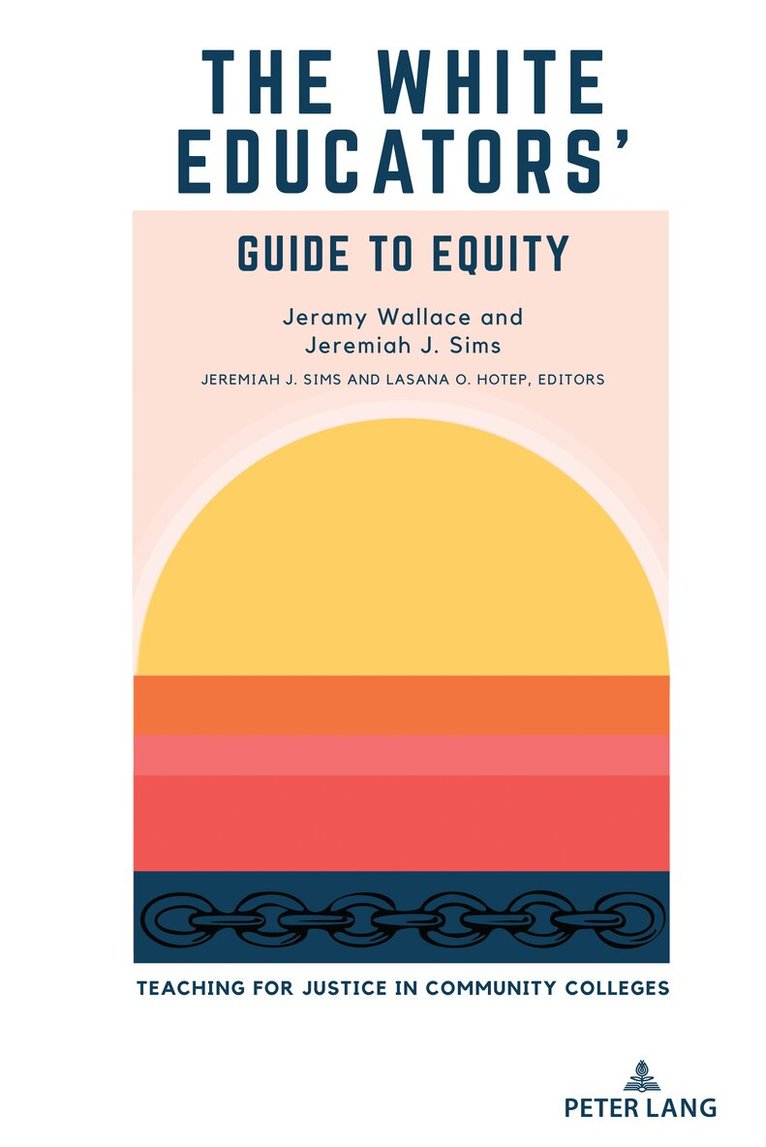
White Educators’ Guide to Equity
Teaching for Justice in Community Colleges
Inbunden, Engelska, 2023
1 121 kr
Skickas inom 5-8 vardagar
In the United States, community colleges are some of the most racially diverse institutions of higher education. And, as such, as argued in Minding the Obligation Gap in Community Colleges and Beyond (Sims et al., 2020), they are uniquely positioned to function as disruptive technologies, that is, spaces that disrupt institutionalized educational inequity. Pedagogy and curriculum must be liberatory if we hope to engender educational equity precisely because nationwide the majority of community college students are students of color and the majority of African American and Latinx college students start their journeys at a community college. The community college professorate is the inverse, as three-quarters of all college professors are white. These demographics create a cultural schism that is preventing students of color and other minoritized groups from reaching their full intellectual and creative potential. This book fills a gap in the academic literature on how community college educators can more effectively serve their diverse students, from interrogating their own white racial identity, to overhauling their curricula and pedagogy, and later by committing to radical love as praxis. While this book’s title explicitly calls on white educators, ultimately, it is for any educator who seeks to dismantle classroom power structures and who strives to create nurturing, justice-advancing curricula."The White Educators’ Guide to Equity is a vital contribution to the literature on how to create racial equity in college settings—and, importantly, in the setting of community colleges, where such work is more important than ever, but often ignored. A must-read for all educators, but particularly those in community colleges looking to transform their institutions."—Tim Wise, Author, White Like Me: Reflections on Race from a Privileged Son "Given the disproportionate number of white faculty in the community system in comparison to the student population, this book is essential in providing the necessary guidance and tools that will allow white teachers to effectively teach students of color. Moreover, this text recognizes that if the community system is going to improve outcomes for students of color that white faculty have obligation to be equipped to have greater understanding of race and racism that would impact what and how they teach."—Edward Bush, President, Cosumnes River College "Improving outcomes for community college students begins with improving one's understanding of race and racism. The first-person perspective of engaging in anti-racist work in this book calls to our core values as community college educators. This book provides guidance, evokes critical self-reflection, and highlights practical tools to effectively educate historically minoritized students, especially for an educational system whose teaching faculty is predominantly white."—Angelica Garcia, President, Berkeley City College
Del 2 - Educational Equity in Community Colleges
White Educators’ Guide to Equity
Teaching for Justice in Community Colleges
Häftad, Engelska, 2023
436 kr
Skickas inom 5-8 vardagar
In the United States, community colleges are some of the most racially diverse institutions of higher education. And, as such, as argued in Minding the Obligation Gap in Community Colleges and Beyond (Sims et al., 2020), they are uniquely positioned to function as disruptive technologies, that is, spaces that disrupt institutionalized educational inequity. Pedagogy and curriculum must be liberatory if we hope to engender educational equity precisely because nationwide the majority of community college students are students of color and the majority of African American and Latinx college students start their journeys at a community college. The community college professorate is the inverse, as three-quarters of all college professors are white. These demographics create a cultural schism that is preventing students of color and other minoritized groups from reaching their full intellectual and creative potential. This book fills a gap in the academic literature on how community college educators can more effectively serve their diverse students, from interrogating their own white racial identity, to overhauling their curricula and pedagogy, and later by committing to radical love as praxis. While this book’s title explicitly calls on white educators, ultimately, it is for any educator who seeks to dismantle classroom power structures and who strives to create nurturing, justice-advancing curricula."The White Educators’ Guide to Equity is a vital contribution to the literature on how to create racial equity in college settings—and, importantly, in the setting of community colleges, where such work is more important than ever, but often ignored. A must-read for all educators, but particularly those in community colleges looking to transform their institutions."—Tim Wise, Author, White Like Me: Reflections on Race from a Privileged Son "Given the disproportionate number of white faculty in the community system in comparison to the student population, this book is essential in providing the necessary guidance and tools that will allow white teachers to effectively teach students of color. Moreover, this text recognizes that if the community system is going to improve outcomes for students of color that white faculty have obligation to be equipped to have greater understanding of race and racism that would impact what and how they teach."—Edward Bush, President, Cosumnes River College "Improving outcomes for community college students begins with improving one's understanding of race and racism. The first-person perspective of engaging in anti-racist work in this book calls to our core values as community college educators. This book provides guidance, evokes critical self-reflection, and highlights practical tools to effectively educate historically minoritized students, especially for an educational system whose teaching faculty is predominantly white."—Angelica Garcia, President, Berkeley City College
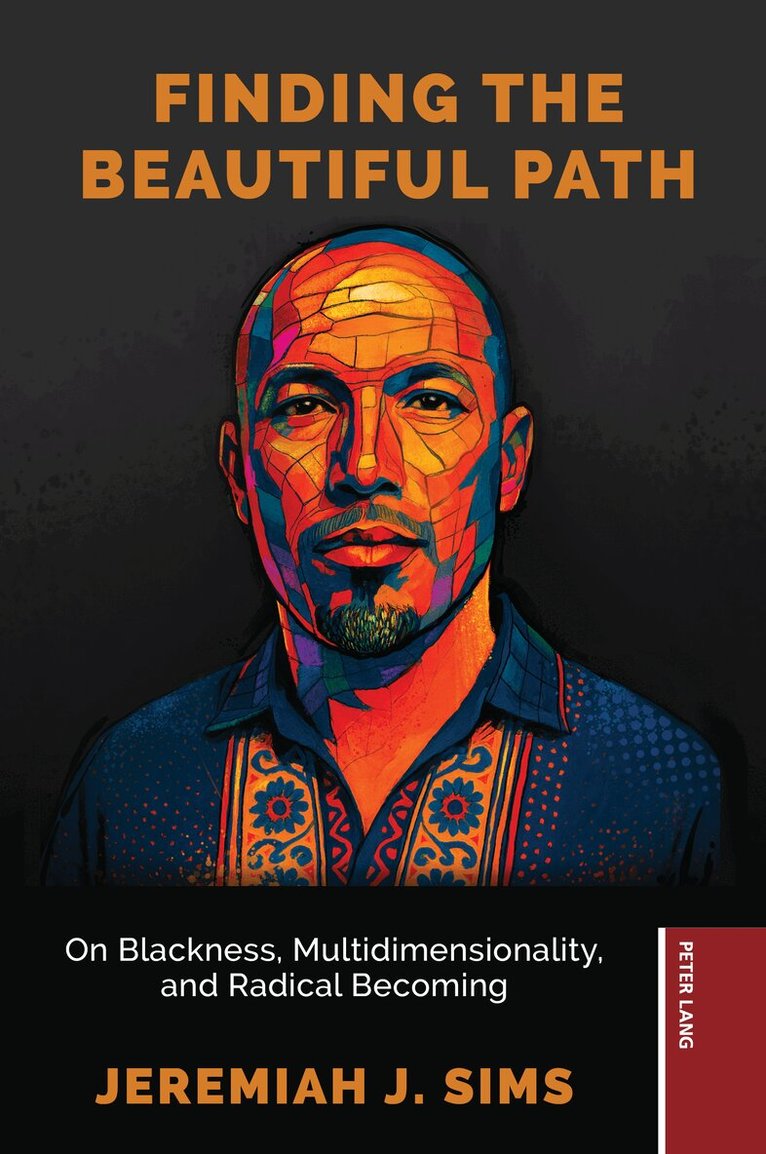
Finding the Beautiful Path
On Blackness, Multidimensionality, and Radical Becoming
Häftad, Engelska, 2026
449 kr
Skickas inom 5-8 vardagar
Finding the Beautiful Path: On Blackness, Multidimensionality, and Radical becoming is memoir, which is a story of resistance, healing, and most of all love. Drawing on my lived experience and scholarly journey—from the streets of Richmond to the halls of UC Berkeley—I offer a deeply personal meditation on what it means to be Black, whole, and free in a world hellbent on your erasure. This is not just theory; it’s testimony. It’s not just critique; it’s love. Through the lenses of Critical Race Theory, trauma studies, and radical love, I trace the ways Blackness has been flattened, feared, and criminalized—while affirming Black life in its full, multidimensional radiance. This book is an offering—a radical invitation to re-member us and imagine otherwise. Because we are not nouns to be defined by trauma; we are verbs. We are movement. We are always becoming. This is the realest work I’ve ever written. Not because I had to—but because I needed to. Because finding the beautiful path is not just possible—it’s urgent. And it begins with telling the truth. Jeremiah Sims’ “Beautiful Path” begins at the intersection of autoethnography and critical race theory where “Blackness, Multidimensionality, and Radical Becoming” collide with racism and anti-blackness. But the wounds and scars of this collision, as Dr. Sims so eloquently reveals, can ultimately heal. Autoethnography uses self-reflection and analysis of personal experiences to explore and explain larger cultural, political, social, and historical issues. Jeremiah’s cogent, compelling narratives of his experiences as a Black man, husband, father, friend, colleague, and Christian on the path to Radical Love and Becoming critically counters narratives and practices of white supremacy that only perpetuate hate and fear. —Jabari Mahiri, Ph.D., Professor of Education, UC Berkeley and Faculty Director of the Leadership Programs