Jesper Raakjær – Författare
Visar alla böcker från författaren Jesper Raakjær. Handla med fri frakt och snabb leverans.
3 produkter
3 produkter
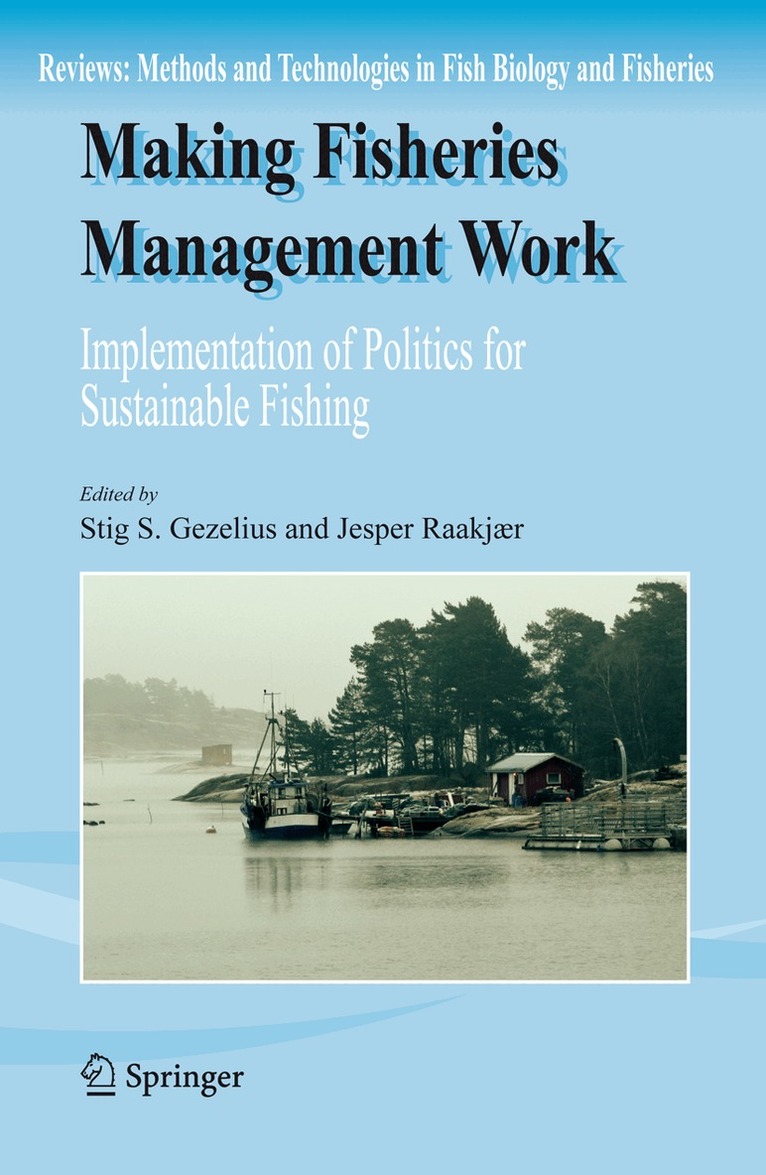
Making Fisheries Management Work
Implementation of Policies for Sustainable Fishing
Inbunden, Engelska, 2008
1 589 kr
Skickas inom 10-15 vardagar
The state of the Northeast Atlantic fisheries in recent years has highlighted - plementation as the Achilles heel of modern fisheries management: discards and unreported or misreported landings are in many cases recognised to effectively subvert sound conservation goals. Social science literature on fisheries mana- ment has tended to regard the implementation of resource conservation policies mainly as a question of effective enforcement. This literature regards surveillance and penalty as the key mechanism through which fishermen keep to catch restr- tions and loyally report their catches. This book emerged because several years of research on fishermen’s compliance had made us uneasy about this rather narrow approach to the problem of implementation. This uneasiness motivated us to widen the approach to the question of implementing conservation policies in the fisheries. Taking Norway as an example, its fishing fleet consists of some 7,000 vessels spread along a coastline of more than 20,000 km, populated by less than 5 million people. The idea of ensuring desirable behaviour through surveillance and - forcement alone is almost absurd in such a context, as the task is impossible by any reasonable means. The Norwegian implementation system has thus had to rely heavily on the incentives provided by the rules and legitimacy created through a century of state/industry collaboration. Different coastal states face very different conditions in terms of solving typical implementation problems such as discards and misreporting.
434 kr
Skickas inom 11-20 vardagar
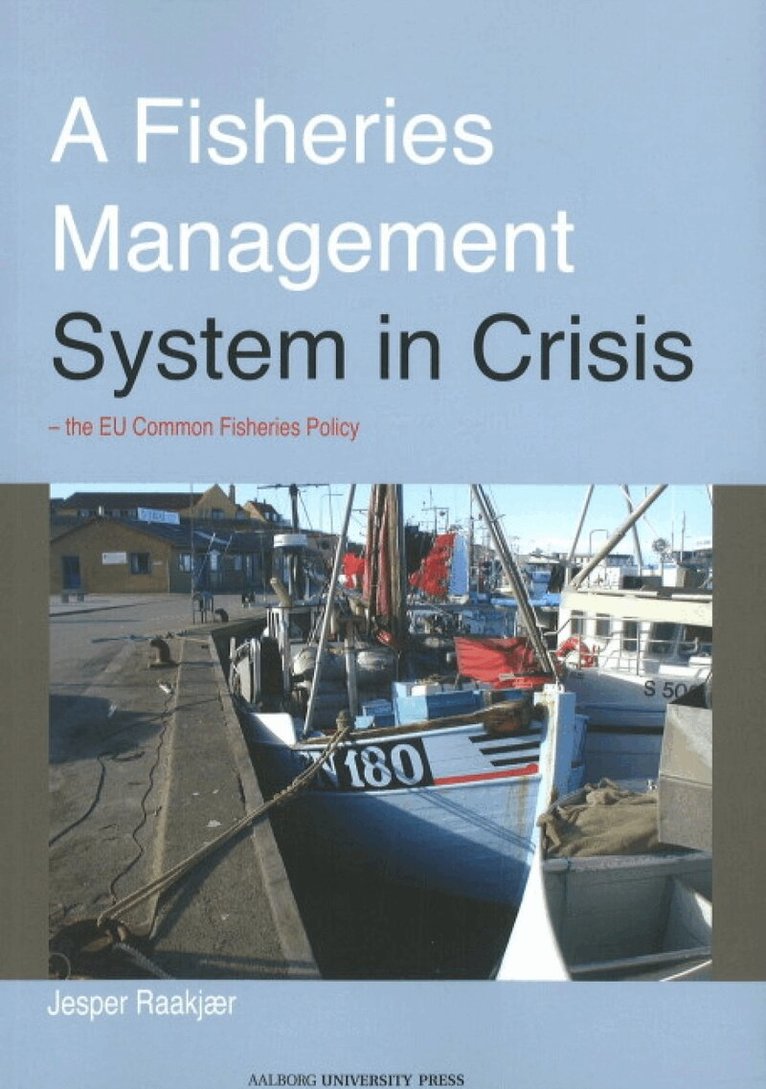
Despite the fact that tremendous effort and many resources have been invested in improving the performance of the CFP, the crisis in the EU fisheries management systems worsens year by year. This crisis has prevailed almost since the Common Fisheries Policy (CFP) was first implemented in 1983. The analytical framework applied in this book is based on four perspectives: Political, Ideational, Institutional/Organisational and Socio-economic: 1) The analyses of the political decision-making processes provide an understanding of the complicated and complex political processes. 2) The analyses of ideational perspectives focus on "new modes of governance" arising from general reforms in EU governance and public administration. 3) The institutional/organisational analyses focus on the fisheries management system as an institution. It explains the complex, multifaceted and often contradictory objectives that the fisheries management system operates within and interacts with. 4) Finally, the socio-economic analyses link the fisheries management system to fishing practices and the fishing communities by identifying the main factors that determine fishing behaviour. The purpose is to examine how well the management schemes fit the practical reality within the social systems and the individual fishermen that are managed.
Making Fisheries Management Work
Implementation of Policies for Sustainable Fishing
Häftad, Engelska, 2010
1 589 kr
Skickas inom 10-15 vardagar
The state of the Northeast Atlantic fisheries in recent years has highlighted - plementation as the Achilles heel of modern fisheries management: discards and unreported or misreported landings are in many cases recognised to effectively subvert sound conservation goals. Social science literature on fisheries mana- ment has tended to regard the implementation of resource conservation policies mainly as a question of effective enforcement. This literature regards surveillance and penalty as the key mechanism through which fishermen keep to catch restr- tions and loyally report their catches. This book emerged because several years of research on fishermen’s compliance had made us uneasy about this rather narrow approach to the problem of implementation. This uneasiness motivated us to widen the approach to the question of implementing conservation policies in the fisheries. Taking Norway as an example, its fishing fleet consists of some 7,000 vessels spread along a coastline of more than 20,000 km, populated by less than 5 million people. The idea of ensuring desirable behaviour through surveillance and - forcement alone is almost absurd in such a context, as the task is impossible by any reasonable means. The Norwegian implementation system has thus had to rely heavily on the incentives provided by the rules and legitimacy created through a century of state/industry collaboration. Different coastal states face very different conditions in terms of solving typical implementation problems such as discards and misreporting.