Jo-Ann Shelton – författare
Visar alla böcker från författaren Jo-Ann Shelton. Handla med fri frakt och snabb leverans.
3 produkter
3 produkter
721 kr
Skickas inom 10-15 vardagar
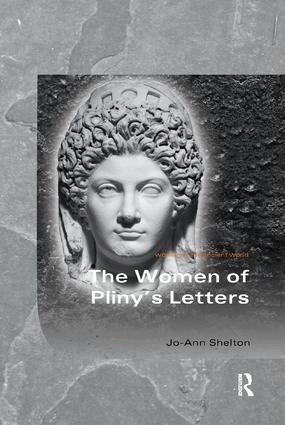
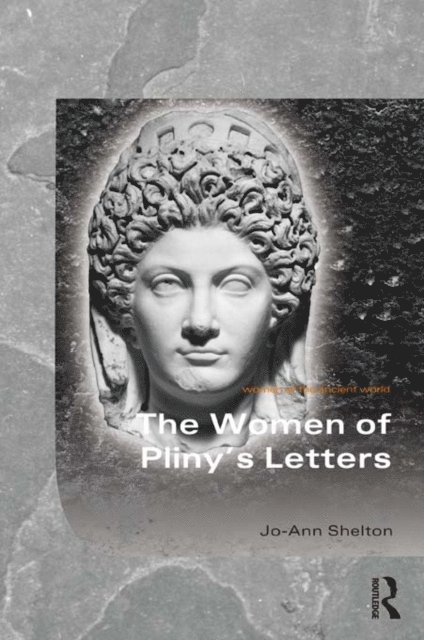
Pliny's letters offer a significant source of information about the lives of Roman women (predominantly, though not exclusively, upper-class women) during the late first and early second centuries CE. In the 368 letters included in his ten published books of epistles, Pliny mentions over 30 women by name, addresses letters to seven, and refers to well over 40 anonymous women. Many of the references are brief comments in letters whose topics are the activities of Pliny's male acquaintances. Nonetheless his letters inform us about the roles of women in Roman families, marriages, and households, and also record the involvement of women in such matters as court cases, property ownership, religious orders, social networks, and political activities. This book has two aims. The first is to bring these women to the foreground, to explore their kinships, relationships, and activities, and to illuminate their lives by viewing them in the social, cultural, and political environments of the period in which they lived. This book utilizes historical, literary, legal, and epigraphical sources to examine the events, circumstances, and attitudes that were the contexts for the lives of these women. The first aim, then, is to gain insight into the reality of their lives.The second aim of this book is to investigate how Pliny defines the ideal behavior for women. In his accounts of the actions of both women and men, Pliny frequently shapes his narratives to promote moral lessons. In several of his letters about women, he elevates his subject to the status of a role model. The second aim of this book is to use the descriptions provided by Pliny to acquire a better understanding of what behavior was admired in Roman women of this period, and to consider how the concept of the model Roman woman is constructed in Pliny.
896 kr
Skickas inom 3-6 vardagar
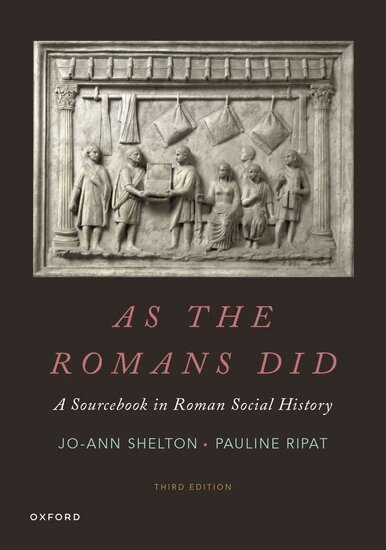
As the Romans Did offers a rich, revealing look at everyday Roman life. It provides clear, lively translations of a fascinating array of documents drawn from Latin and Greek source material--from personal letters, farming manuals, medical texts, and recipes to poetry, graffiti, and tombstone inscriptions. Each selection has been translated into readable, contemporary English. Extensive annotations, abundant biographical notes, maps, appendices, cross-references to related topics, and a newly-updated bibliography provide readers with the historical and cultural background material necessary to appreciate the selections. Arranged thematically into chapters on family life, housing, education, entertainment, religion, and other important topics, the translations reveal the ambitions and aspirations not only of the upper class, but of the average Roman citizen as well. They tell of the success and failure of Rome's grandiose imperialist policies and also of the pleasures and hardships of everyday life. Wide-ranging and lively, the second edition of As the Romans Did offers the most lucid account available of Roman life in all its diversity.
2 352 kr
Skickas inom 10-15 vardagar
Pliny's letters offer a significant source of information about the lives of Roman women (predominantly, though not exclusively, upper-class women) during the late first and early second centuries CE. In the 368 letters included in his ten published books of epistles, Pliny mentions over 30 women by name, addresses letters to seven, and refers to well over 40 anonymous women. Many of the references are brief comments in letters whose topics are the activities of Pliny's male acquaintances. Nonetheless his letters inform us about the roles of women in Roman families, marriages, and households, and also record the involvement of women in such matters as court cases, property ownership, religious orders, social networks, and political activities. This book has two aims. The first is to bring these women to the foreground, to explore their kinships, relationships, and activities, and to illuminate their lives by viewing them in the social, cultural, and political environments of the period in which they lived. This book utilizes historical, literary, legal, and epigraphical sources to examine the events, circumstances, and attitudes that were the contexts for the lives of these women. The first aim, then, is to gain insight into the reality of their lives.The second aim of this book is to investigate how Pliny defines the ideal behavior for women. In his accounts of the actions of both women and men, Pliny frequently shapes his narratives to promote moral lessons. In several of his letters about women, he elevates his subject to the status of a role model. The second aim of this book is to use the descriptions provided by Pliny to acquire a better understanding of what behavior was admired in Roman women of this period, and to consider how the concept of the model Roman woman is constructed in Pliny.