Joan Ed. McCord - Böcker
Visar alla böcker från författaren Joan Ed. McCord. Handla med fri frakt och snabb leverans.
3 produkter
3 produkter
1 548 kr
Skickas inom 10-15 vardagar
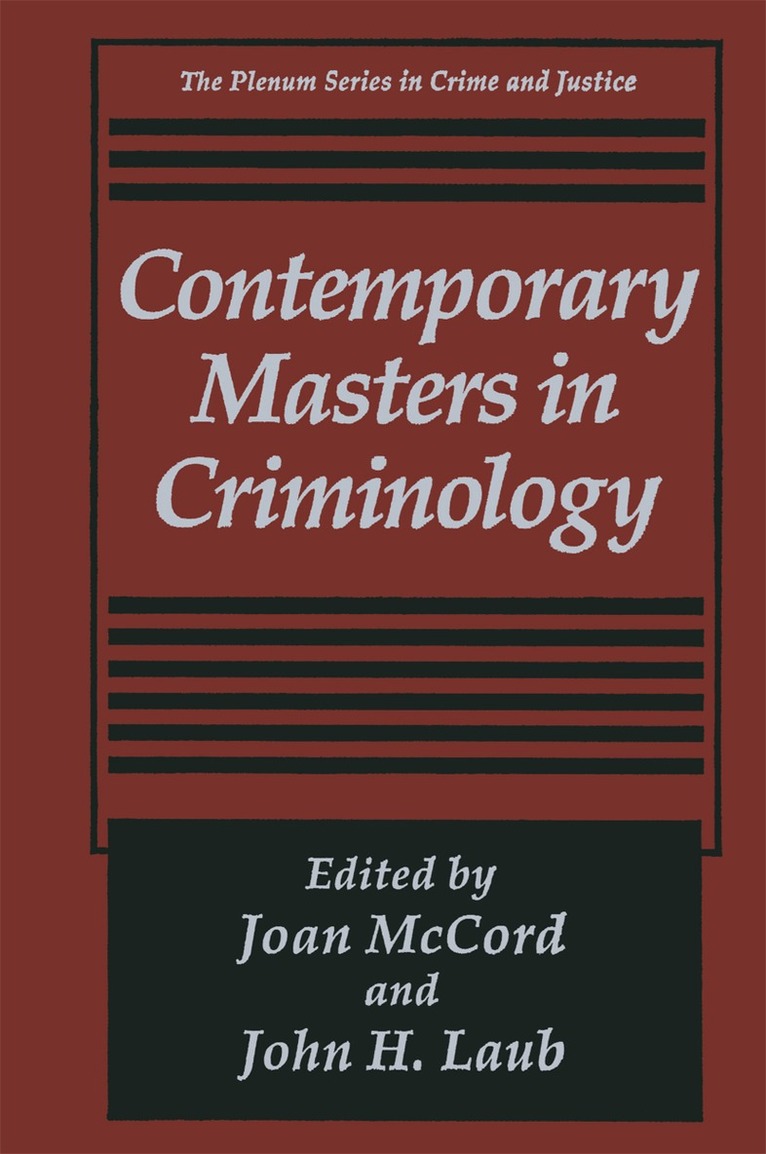
Reflecting a diversity of thought and intellectual power, this unique volume provides undergraduate students with an important historical context and demonstrates the continuity of many issues in the fields of criminology and criminal justice. Commemorating the fiftieth anniversary of the American Society of Criminology, this volume contains previously published articles by the society's president-many of whom are the leading thinkers in the field. Articles examine the philosophy of punishment, policing, the politics of crime and crime control, criminological theory, drug use, white-collar crime, female crime, the study of deviance, parole, prediction studies, and criminal justice policy.
507 kr
Skickas inom 7-10 vardagar
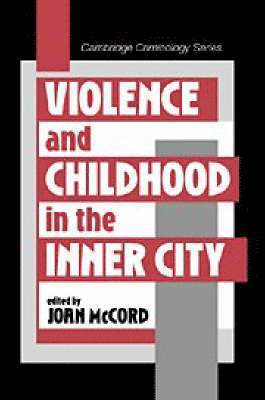
The contributors to this book believe that something can be done to make life in American cities safer, to make growing up in the urban ghettos less risky, and to reduce the violence that so often permeates urban childhoods. They consider why there is so much violence, why some people become violent and others do not, and why violence is more prevalent in some areas. Both biological and psychological characteristics of individuals are considered. The authors also discuss how the urban environment, especially the street culture, affects childhood development. They review a variety of intervention strategies, considering when it would be appropriate to use them and towards whom they should be targeted. Drawing upon ethnographic commentary, laboratory experiments, historical reviews, and program descriptions, this book presents a variety of opinions on the causes of urban violence and the changes necessary to reduce it.
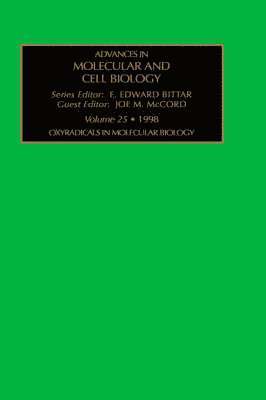
Del 25 - Advances in Molecular and Cell Biology
Oxyradicals in Medical Biology
Inbunden, Engelska, 1998
1 269 kr
Skickas inom 5-8 vardagar
The rapid expansion of the area of free radical biology in the last 25 years has occurred within a framework of assumptions and preconceived notions that has at times directed the course of this movement. The most dominant of these notions has been the view that free radical production is without exception a bad thing, and that the more efficient our elimination of these toxic substances, the better off we will be. The very important observation by Bernard Babior and colleagues in 1973 that activated phagocytes produce superoxide in order to kill micro organisms, served to illustrate that constructive roles are possible for free radicals. For many in the field, however, this merely underscored the deadly nature of oxygen-derived radicals, both from the microbe's point of view and from the host's as well. (Phagocyte-produced superoxide is responsible in part for the tissue injury manifested as inflammation. See Harris and Granger, Chapter 5, and Leff, Hybertson and Repine, Chapter 6.)Mother Nature, however, has a penchant for being able to make a silk purse from a sow's ear. If one is dealt a bad hand, one must simply make the best of it. After two decades of focusing on the destructive side of free radicals, the last few years have begun to reveal a new and finer perspective on free radical metabolism - a role in regulation of cellular function (see Schulze-Osthoff and Baeuerle, Chapter 2). Evidence from a number of sources suggests that an increase in the oxidative status of cell encourages that cell to grow and divide. Increasing the expression of mangnese superoxide dismutase can suppress the malignant phenotype of melanon cells (see Oberley and Oberley, Chapter 3). Oxidative stress beyond a certain poitosis (from the Greek, literally "to fall apart"). Is this suicide response an evolutionary fail-safe device to curtail tumorogenesis? Does oxidative stress-induced apoptosis account for the loss of immune cells in AIDS (see Flores and McCor Chapter 4)?This volume attempts to present the spectrum of roles, both good and bad played by active oxygen species as understood at this point in the evolution of this field of free radical biology.