Inbunden, Engelska, 1998
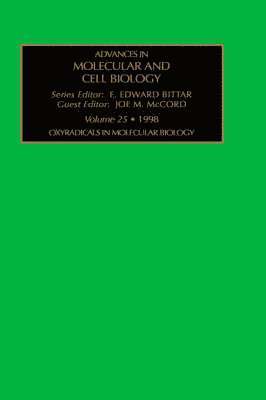
Oxyradicals in Medical Biology
Av Joan Ed. McCord, Joan Ed McCord, J.M. McCord
1335 kr
Beställningsvara. Skickas inom 5-8 vardagar. Fri frakt över 249 kr.
Beskrivning
The rapid expansion of the area of free radical biology in the last 25 years has occurred within a framework of assumptions and preconceived notions that has at times directed the course of this movement. The most dominant of these notions has been the view that free radical production is without exception a bad thing, and that the more efficient our elimination of these toxic substances, the better off we will be. The very important observation by Bernard Babior and colleagues in 1973 that activated phagocytes produce superoxide in order to kill micro organisms, served to illustrate that constructive roles are possible for free radicals. For many in the field, however, this merely underscored the deadly nature of oxygen-derived radicals, both from the microbe's point of view and from the host's as well. (Phagocyte-produced superoxide is responsible in part for the tissue injury manifested as inflammation. See Harris and Granger, Chapter 5, and Leff, Hybertson and Repine, Chapter 6.)
Mother Nature, however, has a penchant for being able to make a silk purse from a sow's ear. If one is dealt a bad hand, one must simply make the best of it. After two decades of focusing on the destructive side of free radicals, the last few years have begun to reveal a new and finer perspective on free radical metabolism - a role in regulation of cellular function (see Schulze-Osthoff and Baeuerle, Chapter 2). Evidence from a number of sources suggests that an increase in the oxidative status of cell encourages that cell to grow and divide. Increasing the expression of mangnese superoxide dismutase can suppress the malignant phenotype of melanon cells (see Oberley and Oberley, Chapter 3). Oxidative stress beyond a certain poitosis (from the Greek, literally "to fall apart"). Is this suicide response an evolutionary fail-safe device to curtail tumorogenesis? Does oxidative stress-induced apoptosis account for the loss of immune cells in AIDS (see Flores and McCor Chapter 4)?
This volume attempts to present the spectrum of roles, both good and bad played by active oxygen species as understood at this point in the evolution of this field of free radical biology.
Mother Nature, however, has a penchant for being able to make a silk purse from a sow's ear. If one is dealt a bad hand, one must simply make the best of it. After two decades of focusing on the destructive side of free radicals, the last few years have begun to reveal a new and finer perspective on free radical metabolism - a role in regulation of cellular function (see Schulze-Osthoff and Baeuerle, Chapter 2). Evidence from a number of sources suggests that an increase in the oxidative status of cell encourages that cell to grow and divide. Increasing the expression of mangnese superoxide dismutase can suppress the malignant phenotype of melanon cells (see Oberley and Oberley, Chapter 3). Oxidative stress beyond a certain poitosis (from the Greek, literally "to fall apart"). Is this suicide response an evolutionary fail-safe device to curtail tumorogenesis? Does oxidative stress-induced apoptosis account for the loss of immune cells in AIDS (see Flores and McCor Chapter 4)?
This volume attempts to present the spectrum of roles, both good and bad played by active oxygen species as understood at this point in the evolution of this field of free radical biology.
Produktinformation
- Utgivningsdatum: 1998-04-23
- Mått: 156 x 234 x 13 mm
- Vikt: 490 g
- Format: Inbunden
- Språk: Engelska
- Serie: Advances in Molecular and Cell Biology
- Antal sidor: 188
- Förlag: Elsevier Science
- ISBN: 9780762303793
Betyg & recensioner
0 recensioner
Inga recensioner tillgängliga.