Advances in Molecular and Cell Biology – serie
Visar alla böcker i serien Advances in Molecular and Cell Biology. Handla med fri frakt och snabb leverans.
19 produkter
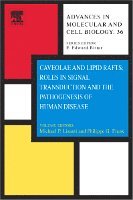
Caveolae and Lipid Rafts: Roles in Signal Transduction and the Pathogenesis of Human Disease
Inbunden, 2005
2696 kr
Lägg i varukorg
Caveolae (latin for little caves) are small structures found at the surface of cells. They are responsible for the regulation of important metabolic pathway. As a consequence, they may play a critical role in several human diseases such as atherosclerosis, cancer, diabetes, and muscular …
Perspectives on Lung Endothelial Barrier Function
Av C.E. Patterson, Edward Bittar
Inbunden, 2004
2021 kr
Lägg i varukorg
This readable, comprehensive text covers endothelial biology from the fundamentals of structure and lung fluid balance physiology to state-of-the-art descriptions of the molecular mechanisms involved in the development of lung failure. The material and illustrations, provided by outstanding experts …
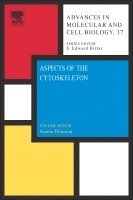
Aspects of the Cytoskeleton
Inbunden, 2007
2407 kr
Lägg i varukorg
This volume provides an overview of the cytoskeleton particularly on the fundamental role the cytoskeleton plays in the regulation of cell structure and function. This book represents new trends in cytoskeletal research that go beyond the traditional approach of identifying new proteins in the …
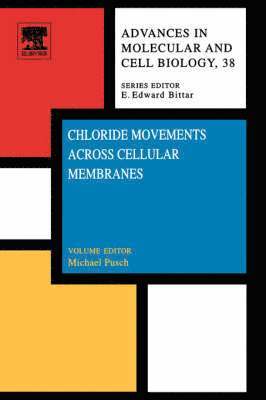
Chloride Movements Across Cellular Membranes
Av Michael Pusch, E. E. Bittar
Inbunden, 2007
2030 kr
Lägg i varukorg
All living cells are surrounded by a lipidic membrane that isolates them from the often harsh environment. However, to take up nutrients, to excrete waste, and to communicate among each other, Nature has invented an incredibly diverse set of transmembrane transport proteins. Specialized …
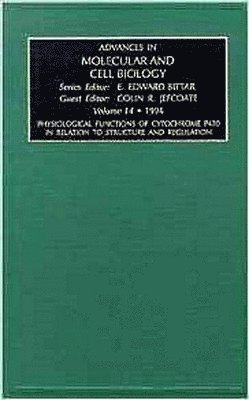
Physiological Functions of Cytochrome P450 in Relation to Structure and Regulation
Inbunden, 1996
1180 kr
Lägg i varukorg
Research on the cytochrome P450 family of genes has traditionally been dominated by forms participating in drug metabolism. This has occurred in spite of early discovery of steroid hydroxy lase P450 cytochromes in the adrenal gland. More recently, contributions on the characterization and …
Cell Adhesion
Av D.R. Colman
Inbunden, 1997
1306 kr
Lägg i varukorg
One prerequisite for the evolution of multicellular organisms was the invention of mechanisms by which cells could adhere to one another. At some point in our history, dividing cells no longer went their separate protozoic ways in the primordial oceans, but instead found that by maintaining an …
Protein Targeting to Mitochondria
Av Hartl, F.U. Hartl
Inbunden, 1997
1335 kr
Lägg i varukorg
A large number of newly-synthesized polypeptides must cross one or several intracellular membranes to reach their functional locations in the eukaryotic cell. The mechanisms of protein trafficking, in particular the post-translational targeting and membrane translocation of proteins, are of …
In VIVO Footprinting
Av Cartwright, I.L. Cartwright
Inbunden, 1997
1335 kr
Lägg i varukorg
The revolution in biological research initiated by the demonstration that particular DNA molecules could be isolated, recombined in novel ways, and conveniently replicated to high copy number in vivo for further study, that is, the recombinant DNA era, has spawned many additional advances, both …
Protein Structural Biology in Biomedical Research, Part A
Inbunden, 1998
1445 kr
Lägg i varukorg
Recent advances in protein structural biology, coupled with new developments in human genetics, have opened the door to understanding the molecular basis of many metabolic, physiological, and developmental processes in human biology. Medical pathologies, and their chemical therapies, are …
Ion Pumps, Part A
Inbunden, 1997
919 kr
Lägg i varukorg
Both eukaryotic and prokaryotic cells depend strongly on the function of ion pumps present in their membranes. The term ion pump, synonymous with active ion-transport system, refers to a membrane-associated protein that translocates ions uphill against an electrochemical potential gradient. Primary …
Oxyradicals in Medical Biology
Av Joan Ed. McCord, Joan Ed McCord m. fl.
Inbunden, 1998
1335 kr
Lägg i varukorg
The rapid expansion of the area of free radical biology in the last 25 years has occurred within a framework of assumptions and preconceived notions that has at times directed the course of this movement. The most dominant of these notions has been the view that free radical production is without …
Intracellular Protein Degradation
Av E. Edward Bittar, A.J. Rivett
Inbunden, 1998
1335 kr
Lägg i varukorg
This volume brings together a set of reviews that provide a summary of our current knowledge of the proteolytic machinery and of the pathways of protein breakdown of prokaryotic and eukaryotic cells. Intracellular protein degradation is much more than just a mechanism for the removal of incorrectly …
The Adhesive Interaction of Cells
Av D. R. Garrod, Edward Bittar m. fl.
Inbunden, 1999
1306 kr
Lägg i varukorg
The aim of "The Adhesive Interaction of Cells" has been to assemble a series of reviews by leading international experts embracing many of the most important recent developments in this rapidly expanding field. The purpose of all biological research is to understand the form and function of living …
The Biology of the Pancreatic Cell
Av Bittar, S.L. Howell
Inbunden, 1999
1306 kr
Lägg i varukorg
As a result of the key advances made more than 30 years ago, specifically the ability to isolate islets of Langerhans from the pancreas, the ability to measure insulin accurately by immunoasay, and the development of microchemical techniques for studying cells and their components, many research …
Gap Junctions
Inbunden, 1999
1197 kr
Lägg i varukorg
The objective in editing this volume was twofold: to provide a reasoned overview of the field as well as to furnish one that provided this overview within the context of the intellectual boundaries of those who initially attempted to define the purview of gap junction research. The latter objective …
Organelles IN VIVO
Av L.B. Chen
Inbunden, 1994
2215 kr
Lägg i varukorg
After a decade of dominance by recombinant DNA technology, the field of molecular and cell biology is witnessing a renewed interest in techniques and approaches that are not driven by DNA acrobatics. In hindsight, this is an inevitable outcome. Deoxyribonucleic acid is not the master; it is only a …
Molecular Processes of Photosynthesis
Av J. Barber, Diane Cogan
Inbunden, 1995
1335 kr
Lägg i varukorg
Research into the basic mechanisms of photosynthesis has a long and distinguished history and has consistently been at the forefront of science. The success of this research, particularly in recent years, suggests that photosynthesis may turn out to be the first complex biological system to have …
Cytoskeleton
Av J. Hesketh
Inbunden, 1996
1539 kr
Lägg i varukorg
It is now clear from a wide range of research that cytoplasm is not merely a buffered solution of proteins and enzymes but contains a series of complex filamentous structures. The cytoskeleton is the collective term given to these filaments. There is a considerable amount of data available on the …
Cell Cycle
Inbunden, 1996
1306 kr
Lägg i varukorg
There has been an enormous advance in our understanding of the regulation of the cell division cycle in the last five years. The leap in understanding has centered on the cell cycle control protein p34 cdc2 and its congeners and on the cyclins. The most important insight to emerge has been that …