Jodi A. Byrd - Böcker
Visar alla böcker från författaren Jodi A. Byrd. Handla med fri frakt och snabb leverans.
5 produkter
5 produkter
295 kr
Skickas inom 10-15 vardagar
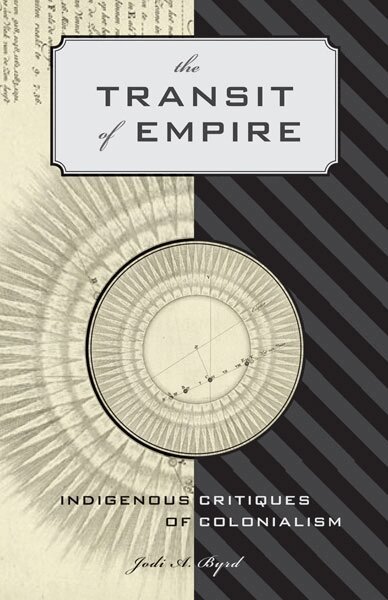
In 1761 and again in 1768, European scientists raced around the world to observe the transit of Venus, a rare astronomical event in which the planet Venus passes in front of the sun. In The Transit of Empire, Jodi A. Byrd explores how indigeneity functions as transit, a trajectory of movement that serves as precedent within U.S. imperial history. Byrd argues that contemporary U.S. empire expands itself through a transferable “Indianness” that facilitates acquisitions of lands, territories, and resources.Examining an array of literary texts, historical moments, and pending legislations-from the Cherokee Nation of Oklahoma’s vote in 2007 to expel Cherokee Freedmen to the Native Hawaiian Government Reorganization bill-Byrd demonstrates that inclusion into the multicultural cosmopole does not end colonialism as it is purported to do. Rather, that inclusion is the very site of the colonization that feeds U.S. empire.Byrd contends that the colonization of American Indian and indigenous nations is the necessary ground from which to reimagine a future where the losses of indigenous peoples are not only visible and, in turn, grieveable, but where indigenous peoples have agency to transform life on their own lands and on their own terms.
1 142 kr
Skickas inom 7-10 vardagar
The contributors to Colonial Racial Capitalism consider anti-Blackness, human commodification, and slave labor alongside the history of Indigenous dispossession and the uneven development of colonized lands across the globe. They demonstrate the co-constitution and entanglement of slavery and colonialism from the conquest of the New World through industrial capitalism to contemporary financial capitalism. Among other topics, the essays explore the historical suturing of Blackness and Black people to debt, the violence of uranium mining on Indigenous lands in Canada and the Belgian Congo, how municipal property assessment and waste management software encodes and produces racial difference, how Puerto Rican police crackdowns on protestors in 2010 and 2011 drew on decades of policing racially and economically marginalized people, and how historic sites in Los Angeles County narrate the Mexican-American War in ways that occlude the war’s imperialist groundings. The volume’s analytic of colonial racial capitalism opens new frameworks for understanding the persistence of violence, precarity, and inequality in modern society.Contributors. Joanne Barker, Jodi A. Byrd, Lisa Marie Cacho, Michael Dawson, Iyko Day, Ruth Wilson Gilmore, Alyosha Goldstein, Cheryl I. Harris, Kimberly Kay Hoang, Brian Jordan Jefferson, Susan Koshy, Marisol LeBrÓn, Jodi Melamed, Laura Pulido
304 kr
Skickas inom 7-10 vardagar
The contributors to Colonial Racial Capitalism consider anti-Blackness, human commodification, and slave labor alongside the history of Indigenous dispossession and the uneven development of colonized lands across the globe. They demonstrate the co-constitution and entanglement of slavery and colonialism from the conquest of the New World through industrial capitalism to contemporary financial capitalism. Among other topics, the essays explore the historical suturing of Blackness and Black people to debt, the violence of uranium mining on Indigenous lands in Canada and the Belgian Congo, how municipal property assessment and waste management software encodes and produces racial difference, how Puerto Rican police crackdowns on protestors in 2010 and 2011 drew on decades of policing racially and economically marginalized people, and how historic sites in Los Angeles County narrate the Mexican-American War in ways that occlude the war’s imperialist groundings. The volume’s analytic of colonial racial capitalism opens new frameworks for understanding the persistence of violence, precarity, and inequality in modern society.Contributors. Joanne Barker, Jodi A. Byrd, Lisa Marie Cacho, Michael Dawson, Iyko Day, Ruth Wilson Gilmore, Alyosha Goldstein, Cheryl I. Harris, Kimberly Kay Hoang, Brian Jordan Jefferson, Susan Koshy, Marisol LeBrÓn, Jodi Melamed, Laura Pulido
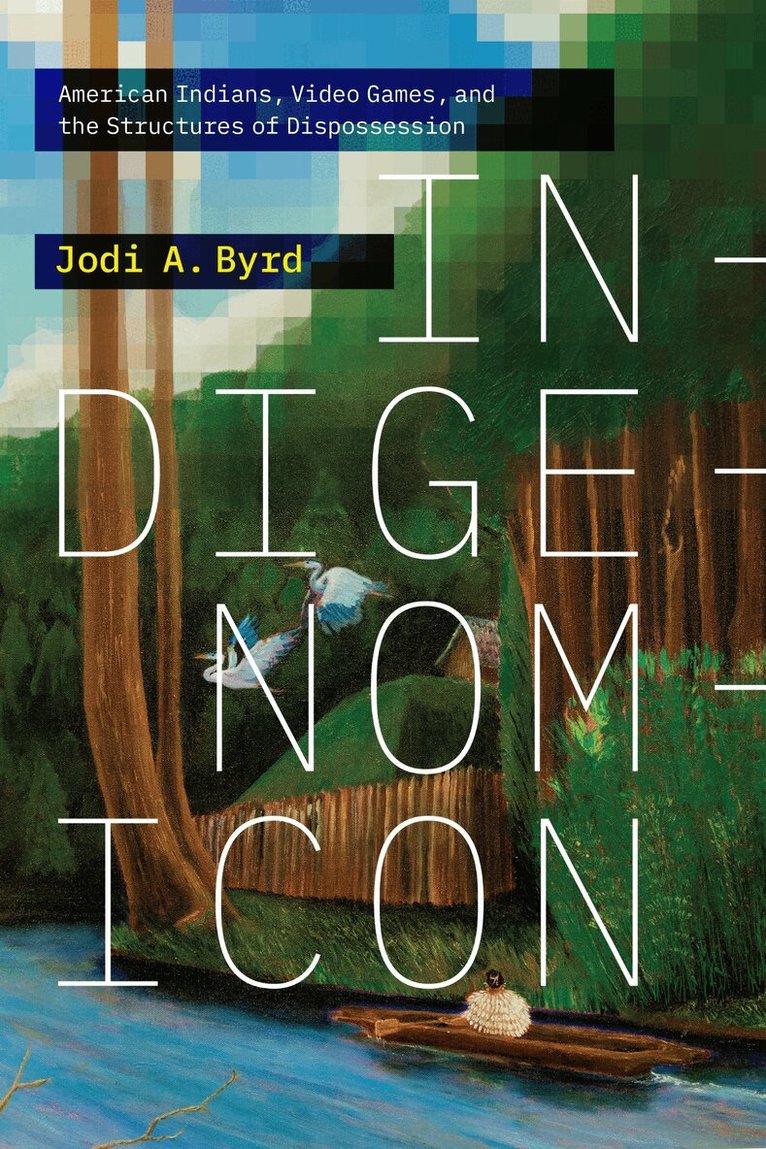
Indigenomicon
American Indians, Video Games, and the Structures of Dispossession
Inbunden, Engelska, 2025
1 267 kr
Skickas inom 7-10 vardagar
Settler colonial studies and Indigenous studies are often assumed to be the same intellectual project. In Indigenomicon, Jodi A. Byrd examines the differences between the two fields by bringing video game studies and Indigenous studies into conversation with Black studies, queer studies, and Indigenous feminist critique. Byrd theorizes “the image of the law of the Indigenous” as structuring dispossession in games including Assassin’s Creed, Animal Crossing, BioShock Infinite, and Demon Souls. They demonstrate how games and play might reveal histories of slavery, genocide, and theft of Indigenous lands even as their structures obscure Indigenous spatial and embodied practices that prioritize relationships with land, water, plants, and spirits. With ground and relationality defined as key concepts, Byrd centers Indigenous visions of dystopias to reveal how game spaces encode settler structures of governance even as the design of games might yet provide vital modes of resistance to Indigenous erasure.
Indigenomicon
American Indians, Video Games, and the Structures of Dispossession
Häftad, Engelska, 2025
296 kr
Skickas inom 7-10 vardagar
Settler colonial studies and Indigenous studies are often assumed to be the same intellectual project. In Indigenomicon, Jodi A. Byrd examines the differences between the two fields by bringing video game studies and Indigenous studies into conversation with Black studies, queer studies, and Indigenous feminist critique. Byrd theorizes “the image of the law of the Indigenous” as structuring dispossession in games including Assassin’s Creed, Animal Crossing, BioShock Infinite, and Demon Souls. They demonstrate how games and play might reveal histories of slavery, genocide, and theft of Indigenous lands even as their structures obscure Indigenous spatial and embodied practices that prioritize relationships with land, water, plants, and spirits. With ground and relationality defined as key concepts, Byrd centers Indigenous visions of dystopias to reveal how game spaces encode settler structures of governance even as the design of games might yet provide vital modes of resistance to Indigenous erasure.