Joel Peters - Böcker
Visar alla böcker från författaren Joel Peters. Handla med fri frakt och snabb leverans.
10 produkter
10 produkter
3 288 kr
Skickas inom 10-15 vardagar
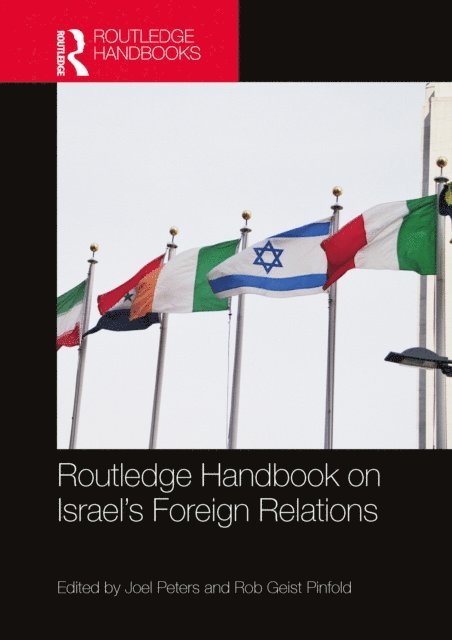
This Handbook provides a comprehensive account of contemporary Israeli diplomacy and analyses the changing dynamics of Israel’s bilateral relations with other states and the international community over the past seventy-five years.Research into Israeli foreign policy has been largely sidelined by debates over security, domestic politics and the Israeli–Palestinian conflict. This Handbook addresses the gap in the literature. Comprising 31 essays written by leading scholars of Israel, the Handbook explicates how domestic, societal and economic interests, together with changing Israeli narratives of identity and location, shape and impact Israeli foreign policy. It illustrates how those factors have influenced foreign policy choices and the instruments – economic cooperation, arms sales, military training, and intelligence sharing – that Israel has utilized in order to promote its interests and build relationships with countries and actors throughout the world. Ultimately, the Handbook refutes Kissinger’s famous dictum that Israel has no foreign policy, and instead follows the whims of its domestic politics. By contrast, this Handbook highlights the rich, diverse and changing tapestry of Israel’s foreign relations.Written in an accessible style, the book is designed for students taking courses in Israel studies and Middle Eastern studies, as well as a general readership interested in Israeli affairs.
703 kr
Skickas inom 10-15 vardagar
This Handbook provides a comprehensive account of contemporary Israeli diplomacy and analyses the changing dynamics of Israel’s bilateral relations with other states and the international community over the past seventy-five years.Research into Israeli foreign policy has been largely sidelined by debates over security, domestic politics and the Israeli–Palestinian conflict. This Handbook addresses the gap in the literature. Comprising 31 essays written by leading scholars of Israel, the Handbook explicates how domestic, societal and economic interests, together with changing Israeli narratives of identity and location, shape and impact Israeli foreign policy. It illustrates how those factors have influenced foreign policy choices and the instruments – economic cooperation, arms sales, military training, and intelligence sharing – that Israel has utilized in order to promote its interests and build relationships with countries and actors throughout the world. Ultimately, the Handbook refutes Kissinger’s famous dictum that Israel has no foreign policy, and instead follows the whims of its domestic politics. By contrast, this Handbook highlights the rich, diverse and changing tapestry of Israel’s foreign relations.Written in an accessible style, the book is designed for students taking courses in Israel studies and Middle Eastern studies, as well as a general readership interested in Israeli affairs.
3 386 kr
Skickas inom 10-15 vardagar
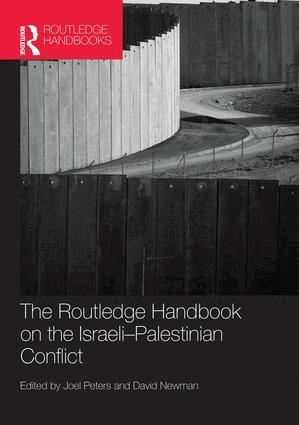
The Israeli-Palestinian conflict is one of the most prominent issues in world politics today. Few other issues have dominated the world’s headlines and have attracted such attention from policy makers, the academic community, political analysts, and the world’s media. The Routledge Handbook on the Israeli- Palestinian Conflict offers a comprehensive and accessible overview of the most contentious and protracted political issue in the Middle East. Bringing together a range of top experts from Israel, Palestine, Europe and North America the Handbook tackles a range of topics including: The historical background to the conflict peace efforts domestic politics critical issues such as displacement, Jerusalem and settler movements the role of outside players such as the Arab states, the US and the EU This Handbook provides the reader with an understanding of the complexity of the issues that need to be addressed in order to resolve the conflict, and a detailed examination of the varied interests of the actors involved. In-depth analysis of the conflict is supplemented by a chronology of the conflict, key documents and a range of maps.The contributors are all leading authorities in their field and have published extensively on the Israeli-Palestinian conflict/peace process. Many have played a leading role in various Track II initiatives accompanying the peace process.
675 kr
Skickas inom 10-15 vardagar
Uneasy Neighbors: Israel and the European Union presents a concise and thorough analysis of significant aspects of Israeli-European relations from the late 1950s to the present day. Its primary concern is to examine major facets of the troubled Israeli-European relations, which are characterized by a love-hate relationship fueled by economic passion and occasional political hostility. This study of Israeli-European relations is important not only because it explores this unusual relationship, but also because it offers insights into how the European Union (E.U.) is actually judged by Israelis as well as serves as an important indicator of how well European intentions have been translated into observable actions in both Israel and the Middle East. In addition, Israeli-European relations reflect what has been faced by the E.U. in the process of setting-up its foreign policy instruments. In other words, the book offers both an analysis of Israeli-European relations, and an observation on the Union's emerging role as an international actor, especially in the Middle East. Despite the importance of Israeli-European relations, the subject has received relatively little attention in the fields of Israeli, European and Middle East studies, outside the context of the Arab-Israeli-Palestinian conflict. A review of the academic literature reveals a limited number of studies on Israeli-E.U. relations. This book attempts to fill this academic gap in our grasp of major aspects of this relationship. Each of the chapters reflects on different dimensions of this relationship. The emphasis is on across-the-board observations and crucial areas for the understanding of Israeli-European relations. In this regard, while the chapters were designed to add up to an inclusive study, each of them can also be read individually.
1 964 kr
Skickas inom 10-15 vardagar
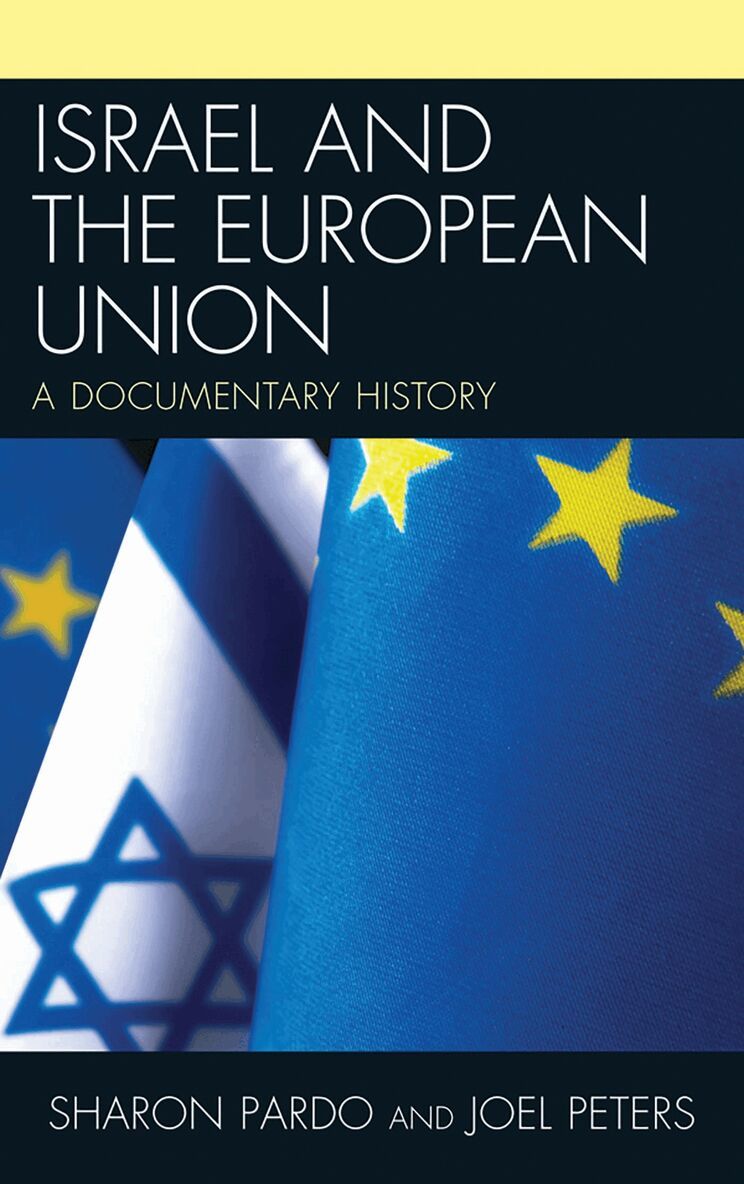
Israel's relations with the European Union stretch back to the early days of the European Community and the signing of the Treaty of Rome in 1957. From that point onward, Israel and Europe have developed an increasingly strong network of political, economic, scientific, and cultural ties. These relations have, however, consisted of a number of conflicting trends. Indeed, even while the EU has become Israel's most important trading partner, the political relationship has been marked by disappointment, frustration, and, at times, even anger.Israel and the European Union: A Documentary History, by Sharon Pardo and Joel Peters, traces the history of these complex relations by bringing together over two hundred documents in one volume. The documents contained in this book are divided into five time periods: i) 1957–1966, Israel Looks to Europe; ii) 1967–1979, Between War and Peace; iii) 1980–1991, From Venice to Madrid; iv) 1992–2003, From Oslo to Barcelona; and v) 2004–2011, A Renaissance Cut Short?. Each section is preceded by a short essay outlining the major themes of Israeli-European Relations during those years. The authors have not added any commentary to the documents themselves and instead have allowed the documents to speak for themselves. The aim of this book is to offer a public record for future researchers and students of the dynamics of European-Israeli relations—as well as of Europe's relationship with the Middle East—over the past fifty years. Israel and the European Union is designed to serve as a companion volume to Pardo and Peters' Uneasy Neighbors: Israel and the European Union (Lexington Books, 2010).
European Union and the Arab Spring
Promoting Democracy and Human Rights in the Middle East
Häftad, Engelska, 2012
675 kr
Skickas inom 10-15 vardagar
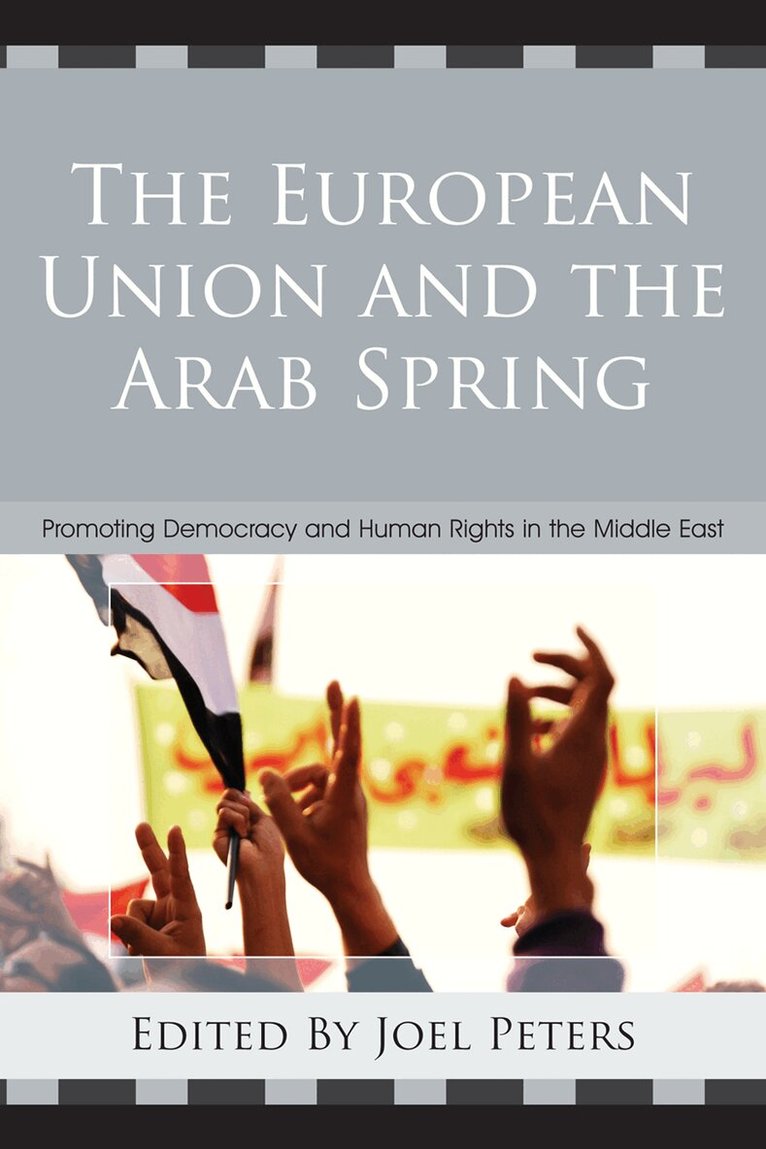
The European Union and the Arab Spring: Promoting Democracy and Human Rights in the Middle East, edited by Joel Peters, analyzes the response of the European Union to recent uprisings in the Middle East. The past year has witnessed a wave of popular uprisings across North Africa and the Middle East which the Western media dubbed “the Arab Spring.” Demanding greater freedoms, political reform, and human rights, the protesters swept away many of the region’s authoritarian autocratic regimes. The events of the Arab Spring have been truly historic. They led to profound changes in the domestic order of Middle Eastern states and societies and impacted the international politics of the region. Additionally, these events necessitate a comprehensive reappraisal by the United States and most notably by the EU in their relations with the states and peoples of the region. This timely collection brings together nine leading authorities on European foreign policy and the Middle East, and investigates three central questions: What role did the European Union play in promoting democracy and human rights in the countries of North Africa and the Middle East? How did the EU respond to the uprisings of the Arab street? What challenges is Europe now facing in its relations with the region? Peters’ The European Union and the Arab Spring is at the forefront of scholarship on this historic socio-political shift in the Middle East and its wider implications for the West.
875 kr
Skickas inom 10-15 vardagar
Israel's relations with the European Union stretch back to the early days of the European Community and the signing of the Treaty of Rome in 1957. From that point onward, Israel and Europe have developed an increasingly strong network of political, economic, scientific, and cultural ties. These relations have, however, consisted of a number of conflicting trends. Indeed, even while the EU has become Israel's most important trading partner, the political relationship has been marked by disappointment, frustration, and, at times, even anger.Israel and the European Union: A Documentary History, by Sharon Pardo and Joel Peters, traces the history of these complex relations by bringing together over two hundred documents in one volume. The documents contained in this book are divided into five time periods: i) 1957–1966, Israel Looks to Europe; ii) 1967–1979, Between War and Peace; iii) 1980–1991, From Venice to Madrid; iv) 1992–2003, From Oslo to Barcelona; and v) 2004–2011, A Renaissance Cut Short?. Each section is preceded by a short essay outlining the major themes of Israeli-European Relations during those years. The authors have not added any commentary to the documents themselves and instead have allowed the documents to speak for themselves. The aim of this book is to offer a public record for future researchers and students of the dynamics of European-Israeli relations—as well as of Europe's relationship with the Middle East—over the past fifty years. Israel and the European Union is designed to serve as a companion volume to Pardo and Peters' Uneasy Neighbors: Israel and the European Union (Lexington Books, 2010).
2 103 kr
Skickas inom 10-15 vardagar
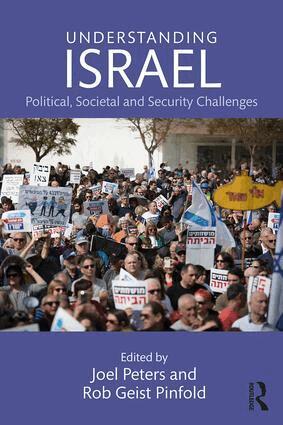
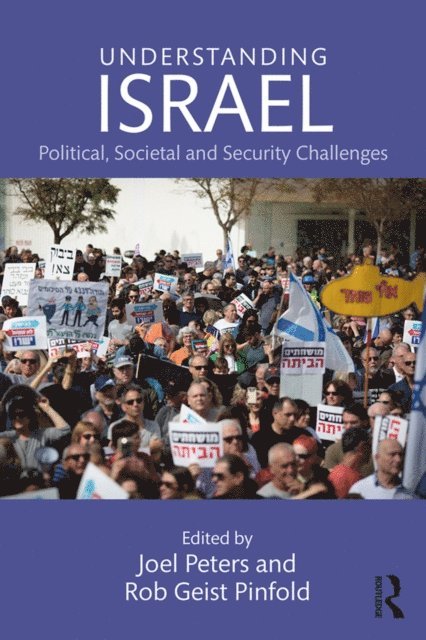
The State of Israel is an unlikely powerhouse in a troubled region. Since 1948, Israel has retained its status as a democratic state without interruption. An investor-friendly environment and skilled workforce have led to a thriving economy, whilst the Israel Defense Forces are one of the most powerful armed forces in the world. Yet Israel is also blighted by a plethora of foreign, domestic and security challenges, some of which threaten the very fabric of the state. The cost of living continues to soar; political corruption appears endemic and the conflict with the Palestinians divides domestic opinion and sours Israeli foreign relations. Thus, contemporary Israel remains perplexing, resisting any straightforward categorizations or generalizations. This book provides a comprehensive, multi-disciplinary analysis of the external and internal threats, opportunities and issues facing contemporary Israel. The book comprises sixteen chapters written by recognized authorities in the field of Israeli Studies. Together, the chapters offer a detailed overview of Israel while separately they provide stand-alone coverage of specific topics under discussion. Part I examines the Israeli Political System, such as the Knesset, political parties and extra-parliamentary politics; Part II addresses issues in Israeli society, including the Israeli economy, the divides between Jews and Arabs, religious and secular Israelis and the struggle for gender equality; and Part III focuses on security, geopolitical and foreign policy challenges, looking at relations between Israel and the Jewish Diaspora, Israeli foreign policy, borders and settlements and regional security threats.By filling an important gap in the study of contemporary Israel, this book is of interest to multiple audiences, most notably students and scholars of Israeli politics, the Middle East and comparative politics.
580 kr
Skickas inom 10-15 vardagar
The State of Israel is an unlikely powerhouse in a troubled region. Since 1948, Israel has retained its status as a democratic state without interruption. An investor-friendly environment and skilled workforce have led to a thriving economy, whilst the Israel Defense Forces are one of the most powerful armed forces in the world. Yet Israel is also blighted by a plethora of foreign, domestic and security challenges, some of which threaten the very fabric of the state. The cost of living continues to soar; political corruption appears endemic and the conflict with the Palestinians divides domestic opinion and sours Israeli foreign relations. Thus, contemporary Israel remains perplexing, resisting any straightforward categorizations or generalizations. This book provides a comprehensive, multi-disciplinary analysis of the external and internal threats, opportunities and issues facing contemporary Israel. The book comprises sixteen chapters written by recognized authorities in the field of Israeli Studies. Together, the chapters offer a detailed overview of Israel while separately they provide stand-alone coverage of specific topics under discussion. Part I examines the Israeli Political System, such as the Knesset, political parties and extra-parliamentary politics; Part II addresses issues in Israeli society, including the Israeli economy, the divides between Jews and Arabs, religious and secular Israelis and the struggle for gender equality; and Part III focuses on security, geopolitical and foreign policy challenges, looking at relations between Israel and the Jewish Diaspora, Israeli foreign policy, borders and settlements and regional security threats.By filling an important gap in the study of contemporary Israel, this book is of interest to multiple audiences, most notably students and scholars of Israeli politics, the Middle East and comparative politics.
780 kr
Skickas inom 10-15 vardagar
The Israeli-Palestinian conflict is one of the most prominent issues in world politics today. Few other issues have dominated the world’s headlines and have attracted such attention from policy makers, the academic community, political analysts, and the world’s media. The Routledge Handbook on the Israeli- Palestinian Conflict offers a comprehensive and accessible overview of the most contentious and protracted political issue in the Middle East. Bringing together a range of top experts from Israel, Palestine, Europe and North America the Handbook tackles a range of topics including: The historical background to the conflict peace efforts domestic politics critical issues such as displacement, Jerusalem and settler movements the role of outside players such as the Arab states, the US and the EU This Handbook provides the reader with an understanding of the complexity of the issues that need to be addressed in order to resolve the conflict, and a detailed examination of the varied interests of the actors involved. In-depth analysis of the conflict is supplemented by a chronology of the conflict, key documents and a range of maps.The contributors are all leading authorities in their field and have published extensively on the Israeli-Palestinian conflict/peace process. Many have played a leading role in various Track II initiatives accompanying the peace process.