Joel Rasmussen - Böcker
Visar alla böcker från författaren Joel Rasmussen. Handla med fri frakt och snabb leverans.
11 produkter
11 produkter
2 106 kr
Skickas inom 5-8 vardagar
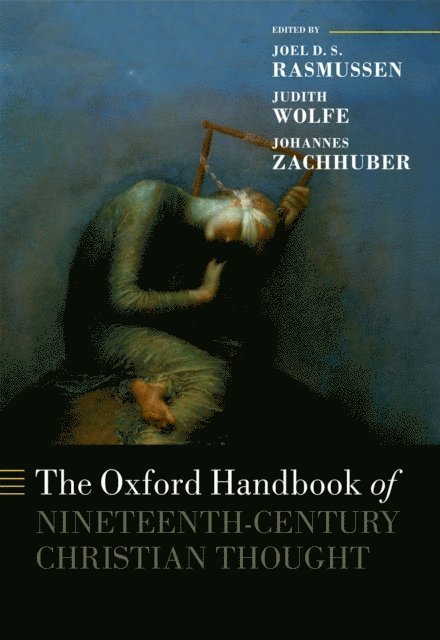
Through various realignments beginning in the Revolutionary era and continuing across the nineteenth century, Christianity not only endured as a vital intellectual tradition, but also contributed importantly to a wide variety of significant conversations, movements, and social transformations across the diverse spheres of intellectual, cultural, and social history. The Oxford Handbook of Nineteenth-Century Christian Thought proposes new readings of the diverse sites and variegated role of the Christian intellectual tradition across what has come to be called 'the long nineteenth century'. It represents the first comprehensive examination of a picture emerging from the twin recognition of Christianity's abiding intellectual influence and its radical transformation and diversification under the influence of the forces of modernity. Part one investigates changing paradigms that determine the evolving approaches to religious matters during the nineteenth century, providing readers with a sense of the fundamental changes at the time. Section two considers human nature and the nature of religion. It explores a range of categories rising to prominence in the course of the nineteenth century, and influencing the way religion in general, and Christianity in particular, were conceived. Part three focuses on the intellectual, cultural, and social developments of the time, while part four looks at Christianity and the arts-a major area in which Christian ideas, stories, and images were used, adapted, and challenged during the nineteenth century. Christianity was radically pluralized in the nineteenth century, and the fifth section is dedicated to 'Christianity and Christianities'. The chapters sketch the major churches and confessions during the period. The final part considers doctrinal themes registering the wealth and scope through broad narrative and individual example. This authoritative reference work offers an indispensible overview of a period whose forceful ideas continue to be present in contemporary theology.
631 kr
Skickas inom 10-15 vardagar
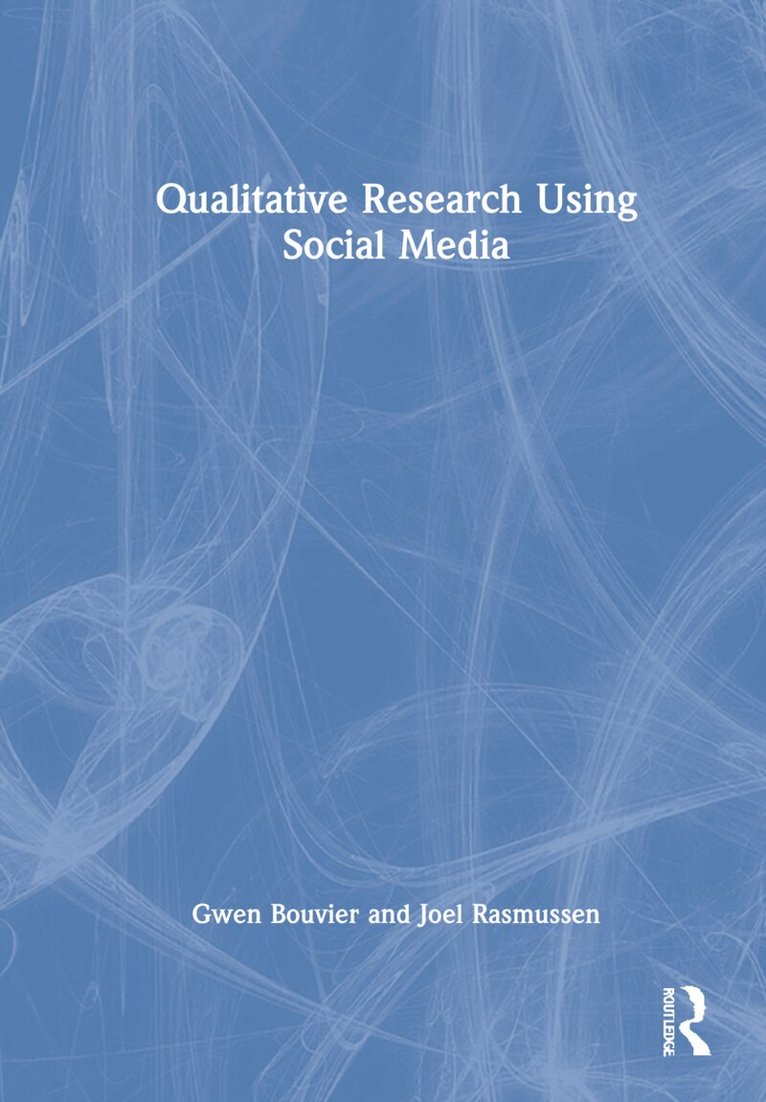
Do you want to study influencers? Opinions and comments on a set of posts? Look at collections of photos or videos on Instagram? Qualitative Research Using Social Media guides the reader in what different kinds of qualitative research can be applied to social media data. It introduces students, as well as those who are new to the field, to developing and carrying out concrete research projects. The book takes the reader through the stages of choosing data, formulating a research question, and choosing and applying method(s).Written in a clear and accessible manner with current social media examples throughout, the book provides a step-by-step overview of a range of qualitative methods. These are presented in clear ways to show how to analyze many different types of social media content, including language and visual content such as memes, gifs, photographs, and film clips. Methods examined include critical discourse analysis, content analysis, multimodal analysis, ethnography, and focus groups. Most importantly, the chapters and examples show how to ask the kinds of questions that are relevant for us at this present point in our societies, where social media is highly integrated into how we live. Social media is used for political communication, social activism, as well as commercial activities and mundane everyday things, and it can transform how all these are accomplished and even what they mean.Drawing on examples from Twitter, Instagram, YouTube, TikTok, Facebook, Snapchat, Reddit, Weibo, and others, this book will be suitable for undergraduate students studying social media research courses in media and communications, as well as other humanities such as linguistics and social science-based degrees.
2 088 kr
Skickas inom 10-15 vardagar
Do you want to study influencers? Opinions and comments on a set of posts? Look at collections of photos or videos on Instagram? Qualitative Research Using Social Media guides the reader in what different kinds of qualitative research can be applied to social media data. It introduces students, as well as those who are new to the field, to developing and carrying out concrete research projects. The book takes the reader through the stages of choosing data, formulating a research question, and choosing and applying method(s).Written in a clear and accessible manner with current social media examples throughout, the book provides a step-by-step overview of a range of qualitative methods. These are presented in clear ways to show how to analyze many different types of social media content, including language and visual content such as memes, gifs, photographs, and film clips. Methods examined include critical discourse analysis, content analysis, multimodal analysis, ethnography, and focus groups. Most importantly, the chapters and examples show how to ask the kinds of questions that are relevant for us at this present point in our societies, where social media is highly integrated into how we live. Social media is used for political communication, social activism, as well as commercial activities and mundane everyday things, and it can transform how all these are accomplished and even what they mean.Drawing on examples from Twitter, Instagram, YouTube, TikTok, Facebook, Snapchat, Reddit, Weibo, and others, this book will be suitable for undergraduate students studying social media research courses in media and communications, as well as other humanities such as linguistics and social science-based degrees.
1 563 kr
Skickas inom 7-10 vardagar
For over a century, the Danish thinker Soren Kierkegaard (1813-55) has been at the center of a number of important discussions, concerning not only philosophy and theology, but also, more recently, fields such as social thought, psychology, and contemporary aesthetics, especially literary theory. Despite his relatively short life, Kierkegaard was an extraordinarily prolific writer, as attested to by the 26-volume Princeton University Press edition of all of his published writings. But Kierkegaard left behind nearly as much unpublished writing, most of which consists of what are called his "journals and notebooks." Kierkegaard has long been recognized as one of history's great journal keepers, but only rather small portions of his journals and notebooks are what we usually understand by the term "diaries." By far the greater part of Kierkegaard's journals and notebooks consists of reflections on a myriad of subjects--philosophical, religious, political, personal. Studying his journals and notebooks takes us into his workshop, where we can see his entire universe of thought.We can witness the genesis of his published works, to be sure--but we can also see whole galaxies of concepts, new insights, and fragments, large and small, of partially (or almost entirely) completed but unpublished works. Kierkegaard's Journals and Notebooks enables us to see the thinker in dialogue with his times and with himself. Volume 4 of this 11-volume series includes the first five of Kierkegaard's well-known "NB" journals, which contain, in addition to a great many reflections on his own life, a wealth of thoughts on theological matters, as well as on Kierkegaard's times, including political developments and the daily press. Kierkegaard wrote his journals in a two-column format, one for his initial entries and the second for the extensive marginal comments that he added later. This edition of the journals reproduces this format, includes several photographs of original manuscript pages, and contains extensive scholarly commentary on the various entries and on the history of the manuscripts being reproduced.
1 563 kr
Skickas inom 7-10 vardagar
For over a century, the Danish thinker Soren Kierkegaard (1813-55) has been at the center of a number of important discussions, concerning not only philosophy and theology, but also, more recently, fields such as social thought, psychology, and contemporary aesthetics, especially literary theory. Despite his relatively short life, Kierkegaard was an extraordinarily prolific writer, as attested to by the 26-volume Princeton University Press edition of all of his published writings. But Kierkegaard left behind nearly as much unpublished writing, most of which consists of what are called his "journals and notebooks." Kierkegaard has long been recognized as one of history's great journal keepers, but only rather small portions of his journals and notebooks are what we usually understand by the term "diaries." By far the greater part of Kierkegaard's journals and notebooks consists of reflections on a myriad of subjects--philosophical, religious, political, personal. Studying his journals and notebooks takes us into his workshop, where we can see his entire universe of thought.We can witness the genesis of his published works, to be sure--but we can also see whole galaxies of concepts, new insights, and fragments, large and small, of partially (or almost entirely) completed but unpublished works. Kierkegaard's Journals and Notebooks enables us to see the thinker in dialogue with his times and with himself. Volume 5 of this 11-volume series includes five of Kierkegaard's important "NB" journals (Journals NB6 through NB10), covering the months from summer 1848 through early May 1849. This was a turbulent period both in the history of Denmark--which was experiencing the immediate aftermath of revolution and the fall of absolutism, a continuing war with the German states, and the replacement of the State Church with the Danish People's Church--and for Kierkegaard personally. The journals in the present volume include Kierkegaard's reactions to the political upheaval, a retrospective account of his audiences with King Christian VIII, deliberations about publishing an autobiographical explanation of his writings, and an increasingly harsh critique of the Danish Church.These journals also reflect Kierkegaard's deep concern over his collision with the satirical journal Corsair, an experience that helped radicalize his view of "essential Christianity" and caused him to ponder the meaning of martyrdom. Kierkegaard wrote his journals in a two-column format, one for his initial entries and the second for the extensive marginal comments that he added later. This edition of the journals reproduces this format, includes several photographs of original manuscript pages, and contains extensive scholarly commentary on the various entries and on the history of the manuscripts being reproduced.
1 563 kr
Skickas inom 7-10 vardagar
For over a century, the Danish thinker Soren Kierkegaard (1813-55) has been at the center of a number of important discussions, concerning not only philosophy and theology, but also, more recently, fields such as social thought, psychology, and contemporary aesthetics, especially literary theory. Despite his relatively short life, Kierkegaard was an extraordinarily prolific writer, as attested to by the 26-volume Princeton University Press edition of all of his published writings. But Kierkegaard left behind nearly as much unpublished writing, most of which consists of what are called his "journals and notebooks." Kierkegaard has long been recognized as one of history's great journal keepers, but only rather small portions of his journals and notebooks are what we usually understand by the term "diaries." By far the greater part of Kierkegaard's journals and notebooks consists of reflections on a myriad of subjects--philosophical, religious, political, personal. Studying his journals and notebooks takes us into his workshop, where we can see his entire universe of thought.We can witness the genesis of his published works, to be sure--but we can also see whole galaxies of concepts, new insights, and fragments, large and small, of partially (or almost entirely) completed but unpublished works. Kierkegaard's Journals and Notebooks enables us to see the thinker in dialogue with his times and with himself. Volume 6 of this 11-volume series includes four of Kierkegaard's important "NB" journals (Journals NB11 through NB14), covering the months from early May 1849 to the beginning of 1850. At this time Denmark was coming to terms with the 1848 revolution that had replaced absolutism with popular sovereignty, while the war with the German states continued, and the country pondered exactly what replacing the old State Church with the Danish People's Church would mean. In these journals Kierkegaard reflects at length on political and, especially, on ecclesiastical developments. His brooding over the ongoing effects of his fight with the satirical journal Corsair continues, and he also examines and re-examines the broader personal and religious significance of his broken engagement with Regine Olsen.These journals also contain reflections by Kierkegaard on a number of his most important works, including the two works written under his "new" pseudonym Anti-Climacus (The Sickness unto Death and Practice in Christianity) and his various attempts at autobiographical explanations of his work. And, all the while, the drumbeat of his radical critique of "Christendom" continues and escalates. Kierkegaard wrote his journals in a two-column format, one for his initial entries and the second for the extensive marginal comments that he added later. This edition of the journals reproduces this format, includes several photographs of original manuscript pages, and contains extensive scholarly commentary on the various entries and on the history of the manuscripts being reproduced.
1 563 kr
Skickas inom 7-10 vardagar
For over a century, the Danish thinker Soren Kierkegaard (1813-55) has been at the center of a number of important discussions, concerning not only philosophy and theology, but also, more recently, fields such as social thought, psychology, and contemporary aesthetics, especially literary theory. Despite his relatively short life, Kierkegaard was an extraordinarily prolific writer, as attested to by the 26-volume Princeton University Press edition of all of his published writings. But Kierkegaard left behind nearly as much unpublished writing, most of which consists of what are called his "journals and notebooks." Kierkegaard has long been recognized as one of history's great journal keepers, but only rather small portions of his journals and notebooks are what we usually understand by the term "diaries." By far the greater part of Kierkegaard's journals and notebooks consists of reflections on a myriad of subjects--philosophical, religious, political, personal. Studying his journals and notebooks takes us into his workshop, where we can see his entire universe of thought.We can witness the genesis of his published works, to be sure--but we can also see whole galaxies of concepts, new insights, and fragments, large and small, of partially (or almost entirely) completed but unpublished works. Kierkegaard's Journals and Notebooks enables us to see the thinker in dialogue with his times and with himself. Kierkegaard wrote his journals in a two-column format, one for his initial entries and the second for the extensive marginal comments that he added later. This edition of the journals reproduces this format, includes several photographs of original manuscript pages, and contains extensive scholarly commentary on the various entries and on the history of the manuscripts being reproduced. Volume 8 of this 11-volume series includes five of Kierkegaard's important "NB" journals (Journals NB21 through NB25), which cover the period from September 1850 to June 1852, and which show Kierkegaard alternately in polemical and reflective postures.The polemics emerge principally in Kierkegaard's opposition to the increasing infiltration of Christianity by worldly concerns, a development that in his view had accelerated significantly in the aftermath of the political and social changes wrought by the Revolution of 1848. Kierkegaard understood the corrupting of Christianity to be in the interest of the powers that be, and he directed his criticism at politicians, the press, and especially the Danish Church itself, particularly church officials who claimed to be "reformers." On the reflective side, Kierkegaard delves into a number of authors and religious figures, some of them for the first time, including Montaigne, Pascal, Seneca, Savonarola, Wesley, and F. W. Newman. These journals also contain Kierkegaard's thoughts on the decisions surrounding the publication of the "Anti-Climacus" writings: The Sickness unto Death and especially Practice in Christianity.Kierkegaard's reader gets the sense both of a gathering storm--by the close of the last journal in this volume, the famous "attack on Christendom" is less than three years away--and a certain hesitancy: What needs reforming, Kierkegaard insists, is not "the doctrine" or "the Church," but "existences," i.e., lives.
Del 1 - Kierkegaard's Journals and Notebooks
Kierkegaard's Journals and Notebooks, Volume 9
Journals NB26–NB30
Inbunden, Engelska, 2017
1 563 kr
Skickas inom 7-10 vardagar
For over a century, the Danish thinker Soren Kierkegaard (1813-55) has been at the center of a number of important discussions, concerning not only philosophy and theology, but also, more recently, fields such as social thought, psychology, and contemporary aesthetics, especially literary theory. Despite his relatively short life, Kierkegaard was an extraordinarily prolific writer, as attested to by the 26-volume Princeton University Press edition of all of his published writings. But Kierkegaard left behind nearly as much unpublished writing, most of which consists of what are called his "journals and notebooks." Kierkegaard has long been recognized as one of history's great journal keepers, but only rather small portions of his journals and notebooks are what we usually understand by the term "diaries." By far the greater part of Kierkegaard's journals and notebooks consists of reflections on a myriad of subjects--philosophical, religious, political, personal. Studying his journals and notebooks takes us into his workshop, where we can see his entire universe of thought.We can witness the genesis of his published works, to be sure--but we can also see whole galaxies of concepts, new insights, and fragments, large and small, of partially (or almost entirely) completed but unpublished works. Kierkegaard's Journals and Notebooks enables us to see the thinker in dialogue with his times and with himself. Kierkegaard wrote his journals in a two-column format, one for his initial entries and the second for the extensive marginal comments that he added later. This edition of the journals reproduces this format, includes several photographs of original manuscript pages, and contains extensive scholarly commentary on the various entries and on the history of the manuscripts being reproduced. Volume 9 of this 11-volume series includes five of Kierkegaard's important "NB" journals (Journals NB26 through NB30), which span from June 1852 to August 1854.This period was marked by Kierkegaard's increasing preoccupation with what he saw as an unbridgeable gulf in Christianity--between the absolute ideal of the religion of the New Testament and the official, state-sanctioned culture of "Christendom," which, embodied by the Danish People's Church, Kierkegaard rejected with increasing vehemence. Crucially, Kierkegaard's nemesis, Bishop Jakob Peter Mynster, died during this period and, in the months following, Kierkegaard can be seen moving inexorably toward the famous "attack on Christendom" with which he ended his life.
Kierkegaard's Journals and Notebooks, Volume 11, Part 2
Loose Papers, 1843-1855
Inbunden, Engelska, 2020
1 563 kr
Skickas inom 7-10 vardagar
For over a century, the Danish thinker Søren Kierkegaard (1813–55) has been at the center of a number of important discussions, concerning not only philosophy and theology, but also, more recently, fields such as social thought, psychology, and contemporary aesthetics, especially literary theory.Despite his relatively short life, Kierkegaard was an extraordinarily prolific writer, as attested to by the 26-volume Princeton University Press edition of all of his published writings. But Kierkegaard left behind nearly as much unpublished writing, most of which consists of what are called his "journals and notebooks." Kierkegaard has long been recognized as one of history's great journal keepers, but only rather small portions of his journals and notebooks are what we usually understand by the term "diaries." By far the greater part of Kierkegaard's journals and notebooks consists of reflections on a myriad of subjects—philosophical, religious, political, personal. Studying his journals and notebooks takes us into his workshop, where we can see his entire universe of thought. We can witness the genesis of his published works, to be sure—but we can also see whole galaxies of concepts, new insights, and fragments, large and small, of partially (or almost entirely) completed but unpublished works. Kierkegaard's Journals and Notebooks enables us to see the thinker in dialogue with his times and with himself.Kierkegaard wrote his journals in a two-column format, one for his initial entries and the second for the extensive marginal comments that he added later. This edition of the journals reproduces this format, includes several photographs of original manuscript pages, and contains extensive scholarly commentary on the various entries and on the history of the manuscripts being reproduced.Volume 11, Parts 1 and 2, present an exciting, enlightening, and enormously varied treasure trove of papers that were found, carefully sorted and stored by Kierkegaard himself, in his apartment after his death. These papers—many of which have never before been published in English—provide a window into many different aspects of Kierkegaard's life and creativity. Volume 11, Part 2, includes writings from the period between 1843, the year in which he published his breakthrough Either/Or, and late September 1855, a few weeks before his death, when he recorded his final reflections on "Christendom." Among the highlights are Kierkegaard's famous description of the "Great Earthquake" that shaped his life; his early reflections on becoming an author; his important, though never-delivered, lectures on "The Dialectic of Ethical and Ethical-Religious Communication"; and his final, incandescent assault on the tendency—new in his time—to harness Christianity in support of a specific social and political order.
1 192 kr
Kommande
Navigating pandemic phases : public health authority communication during COVID-19 in Norway
Häftad, Engelska, 2024
272 kr
Skickas inom 5-8 vardagar
During a pandemic, the advice issued by public health authorities undergoes significant scrutiny, potentially affecting public adherence to recommended measures. Trust and trustworthiness become key. This book analyses the rhetorical strategies of the Norwegian public health authorities as the COVID-19 pandemic moved through phases that presented different rhetorical problems and challenges. Many consider the Norwegian response successful, making it a particularly interesting case. Adopting an organisation-focused viewpoint, the analysis examines communication strategies through a dataset collected as the pandemic evolved. This included observations within communication departments of the main public health agencies during March and April 2020. The study offers five key insights: 1) A pandemic rhetorical situation has changing constraints and opportunities that influence the agency of the rhetor and necessitates bottom-up, continuing situational analysis and attention to perceptions; 2) The notion of “the rhetorical situation” conceptualises different phases that “bleed” into each other; 3) Trust and trustworthiness are negotiated through specific rhetorical strategies; 4) Transparency is the most crucial strategy; 5) Authorities used a combination of invitational rhetoric, providing a role for the citizens to willingly contribute to curbing the virus, and imperative form through simple directives that citizens were expected to follow. The primary audience for this book is scholars and practitioners within crisis communication. The book is written by a team from the “Pandemic Rhetoric” project, financed by the Research Council of Norway, consisting of Øyvind Ihlen (University of Oslo), Sine Nørholm Just (Roskilde University), Jens E. Kjeldsen (University of Bergen), Ragnhild Mølster (University of Bergen), Truls Strand Offerdal (University of Oslo), Joel Rasmussen (Örebro University), and Eli Skogerbø (University of Oslo).