John McWilliams - Böcker
Visar alla böcker från författaren John McWilliams. Handla med fri frakt och snabb leverans.
7 produkter
7 produkter
124 kr
Skickas inom 5-8 vardagar
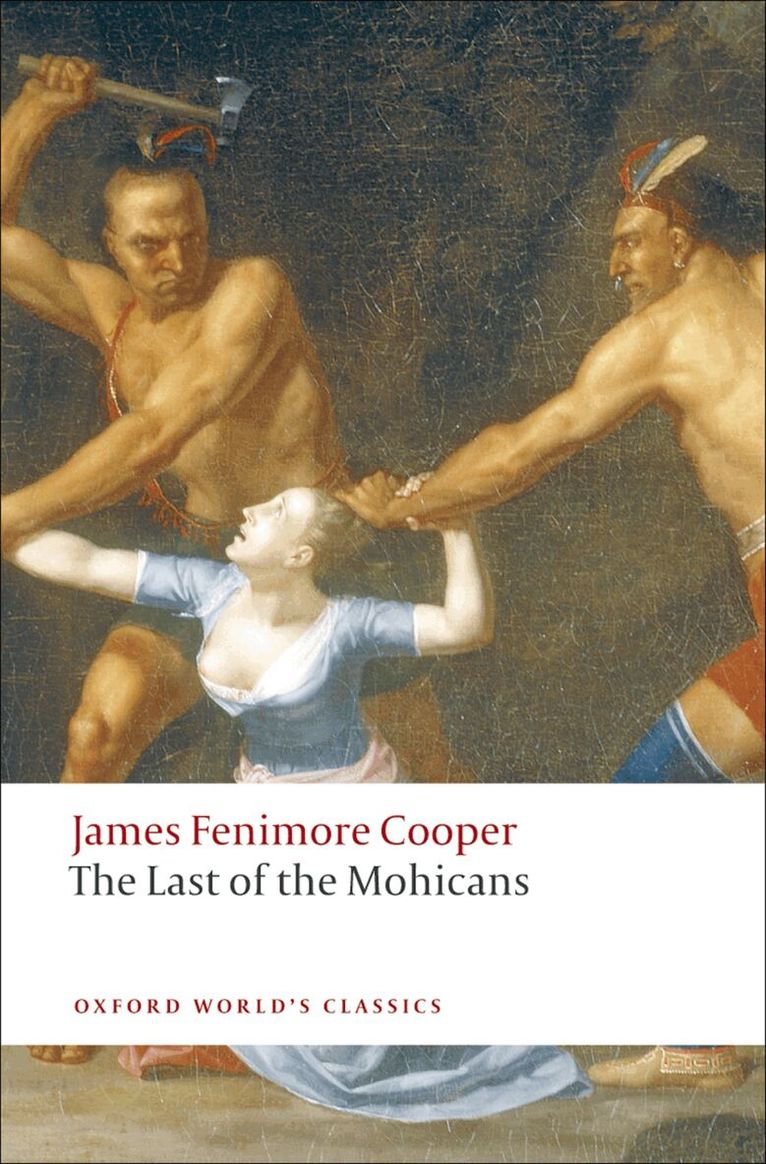
The second of Cooper's five Leatherstocking Tales, this is the one which has consistently captured the imagination of generations since it was first published in 1826. Its success lies partly in the historical role Cooper gives to his Indian characters, against the grain of accumulated racial hostility, and partly in his evocation of the wild beautiful landscapes of North America which the French and the British fought to control throughout the eighteenth century.At the centre of the novel is the celebrated `Massacre' of British troops and their families by Indian allies of the French at Fort William Henry in 1757. Around this historical event, Cooper built a romantic fiction of captivity, sexuality, and heroism, in which the destiny of the Mohicans Chingachgook and his son Uncas is inseparable from the lives of Alice and Cora Munro and of Hawkeye the frontier scout. The controlled, elaborate writing gives natural pace to the violence of the novel's action: like the nature whose plundering Copper laments, the books placid surfaces conceal inexplicable and deathly forces. ABOUT THE SERIES: For over 100 years Oxford World's Classics has made available the widest range of literature from around the globe. Each affordable volume reflects Oxford's commitment to scholarship, providing the most accurate text plus a wealth of other valuable features, including expert introductions by leading authorities, helpful notes to clarify the text, up-to-date bibliographies for further study, and much more.
Del 142 - Cambridge Studies in American Literature and Culture
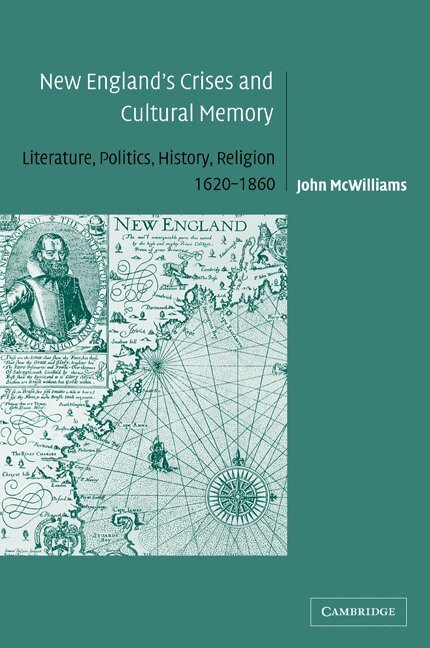
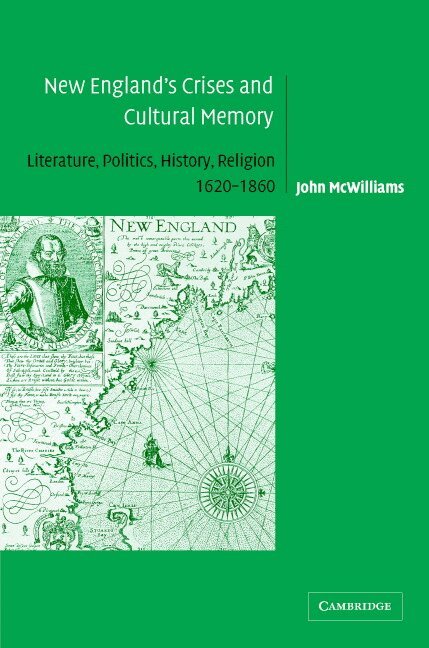
New England's Crises and Cultural Memory
Literature, Politics, History, Religion, 1620-1860
Häftad, Engelska, 2009
629 kr
Skickas inom 7-10 vardagar
In this magisterial study, John McWilliams traces the development of New England's influential cultural identity. Through written responses to historical crises from early New England through the pre-Civil War period, McWilliams argues that the meaning of 'New England' despite claims for its consistency was continuously reformulated. The significance of past crises was forever being reinterpreted for the purpose of meeting succeeding crises. The crises he examines include starvation, the Indian wars, the Salem witch trials, the revolution of 1775-76 and slavery. Integrating history, literature, politics and religion this is one of the most comprehensive studies of the meaning of 'New England' to appear in print. McWilliams considers a range of writing including George Bancroft's History of the United States, the political essays of Samuel Adams, the fiction of Nathaniel Hawthorne and the poetry of Robert Lowell. This compelling book is essential reading for historians and literary critics of New England.
Del 3 - Cambridge Studies in American Literature and Culture
Hawthorne Melville and the American Character
A Looking-Glass Business
Häftad, Engelska, 1986
493 kr
Skickas inom 7-10 vardagar
This book considers the portrayal of the American national character in the writings of Nathaniel Hawthorne and Herman Melville. It examines Hawthorne's abiding concern with the development of New England from colony to province to republic, and analyses Melville's changing evocation of 'the new American', and the difficulties he faced in sustaining his heady nationalistic faith.
Del 142 - Cambridge Studies in American Literature and Culture
New England's Crises and Cultural Memory
Literature, Politics, History, Religion, 1620-1860
Inbunden, Engelska, 2004
1 598 kr
Skickas inom 7-10 vardagar
In this magisterial study, John McWilliams traces the development of New England's influential cultural identity. Through written responses to historical crises from early New England through the pre-Civil War period, McWilliams argues that the meaning of 'New England' despite claims for its consistency was continuously reformulated. The significance of past crises was forever being reinterpreted for the purpose of meeting succeeding crises. The crises he examines include starvation, the Indian wars, the Salem witch trials, the revolution of 1775-76 and slavery. Integrating history, literature, politics and religion this is one of the most comprehensive studies of the meaning of 'New England' to appear in print. McWilliams considers a range of writing including George Bancroft's History of the United States, the political essays of Samuel Adams, the fiction of Nathaniel Hawthorne and the poetry of Robert Lowell. This compelling book is essential reading for historians and literary critics of New England.
183 kr
Skickas
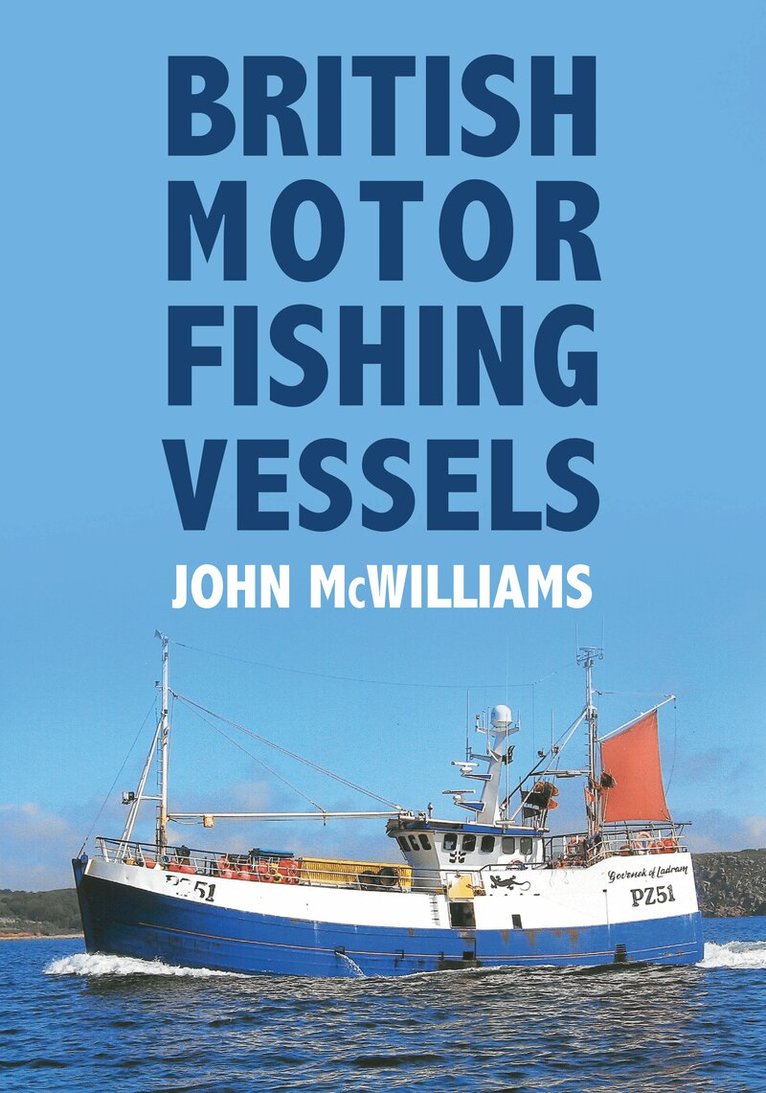
British traditional working boats are famous – Morecambe Bay prawners, Manx luggers, Scots fifies and zulus, Lowestoft and Yarmouth drifters, Yorkshire cobles, Colchester smacks, Hastings beach boats, Brixham trawlers, and many others.Over a century ago, progressive fishermen began to install engines in their boats. Motor fishing boats have been part of our coastal scene since then. Local boatbuilders built local kinds of boat to suit each home port and its fisheries; examples include Cornish pilchard boats and long liners, Devon crabbers and beach boats, motor bawleys and cocklers, motor drifters and seiners, and the famous ring netters of the Clyde ports. These boats have gone or are fast disappearing. This book tells their story.
1 808 kr
Skickas inom 10-15 vardagar
John McWilliams has written the first, much needed account of the ways the promise and threat of political revolution have informed masterpieces of the historical novel. The jolting sense of historical change caused by the French Revolution led to an immense readership for a new kind of fiction, centered on revolution, counter-revolution and warfare, which soon came to be called “the historical novel.” During the turbulent wake of The Declaration of the Rights of Man, promptly followed by the phenomenon of Napoleon Bonaparte, the historical novel thus served as a literary hybrid in the most positive sense of that often-dismissive term. It enabled readers to project personal hopes and anxieties about revolutionary change back into national history. While immersed in the fictive lives of genteel, often privileged heroes, readers could measure their own political convictions against the wavering loyalties of their counterparts in a previous but still familiar time. McWilliams provides close readings of some twenty historical novels, from Scott and Cooper through Tolstoy, Zola and Hugo, to Pasternak and Lampedusa, and ultimately to Marquez and Hilary Mantel, but with continuing regard to historical contexts past and present. He traces the transformation of the literary conventions established by Scott’s Waverley novels, showing both the continuities and the changes needed to meet contemporary times and perspectives. Although the progressive hopes imbedded in Scott’s narrative form proved no longer adaptable to twentieth century carnage and the rise of totalitarianism, the meaning of any single novel emerges through comparison to the tradition of its predecessors. A foreword and epilogue explore the indebtedness of McWilliams’s perspective to the Marxist scholarly tradition of Georg Lukacs and Frederic Jameson, while defining his differences from them. This is a scholarly work of no small ambition and achievement.
668 kr
Skickas inom 10-15 vardagar
John McWilliams has written the first, much needed account of the ways the promise and threat of political revolution have informed masterpieces of the historical novel. The jolting sense of historical change caused by the French Revolution led to an immense readership for a new kind of fiction, centered on revolution, counter-revolution and warfare, which soon came to be called “the historical novel.” During the turbulent wake of The Declaration of the Rights of Man, promptly followed by the phenomenon of Napoleon Bonaparte, the historical novel thus served as a literary hybrid in the most positive sense of that often-dismissive term. It enabled readers to project personal hopes and anxieties about revolutionary change back into national history. While immersed in the fictive lives of genteel, often privileged heroes, readers could measure their own political convictions against the wavering loyalties of their counterparts in a previous but still familiar time. McWilliams provides close readings of some twenty historical novels, from Scott and Cooper through Tolstoy, Zola and Hugo, to Pasternak and Lampedusa, and ultimately to Marquez and Hilary Mantel, but with continuing regard to historical contexts past and present. He traces the transformation of the literary conventions established by Scott’s Waverley novels, showing both the continuities and the changes needed to meet contemporary times and perspectives. Although the progressive hopes imbedded in Scott’s narrative form proved no longer adaptable to twentieth century carnage and the rise of totalitarianism, the meaning of any single novel emerges through comparison to the tradition of its predecessors. A foreword and epilogue explore the indebtedness of McWilliams’s perspective to the Marxist scholarly tradition of Georg Lukacs and Frederic Jameson, while defining his differences from them. This is a scholarly work of no small ambition and achievement.