• Fri frakt över 249 kr
  • •
  • Snabba leveranser
  • •
  • Billiga böcker
Kundservice

Du är på sajten för privatpersoner.

Företag, bibliotek eller offentlig verksamhet?

Du handlar på classic.bokus.com, där alla dina funktioner finns intakta.
Till classic.bokus.com
Bokus logotyp. Gå till startsidan.
  • Erbjudanden
  • Nyheter
  • Student
  • Topplistor
  • Barn & ungdom
  • Bokus Play
  • E-böcker
  • Pocketböcker
  • Spel & pussel

10% rabatt på allt med kod: NYSTART10 →

Sidfot

Mina sidor

    Hjälp

    • Kundservice
    • Vanliga frågor och svar
    • Frakt och leverans
    • Retur vid ångerrätt
    • Reklamera vara
    • Betalning
    • Köpvillkor
    • Allmänna villkor
    • Information om webbplatsens tillgänglighet

    Om Bokus

    • Om oss
    • Pressrum
    • För studenter
    • För företag
    • För bibliotek och offentlig verksamhet
    • För leverantörer
    • Hållbarhet

    Populärt

    • Aktuella erbjudanden
    • Presentkort
    • Studentlitteratur
    • Nya böcker
    • Topplistor
    • Signerade böcker
    • Engelska böcker

    Inspiration

    • Boktips
    • BookTok
    • Populära bokserier
    • Barnbokskaraktärer
    • Populära författare
    Logotyp för Bokus
    Följ oss på Facebook (extern länk)Följ oss på Instagram (extern länk)Följ oss på YouTube (extern länk)Följ oss på TikTok (extern länk)
    bokus @ CookiesAnpassa cookiesIntegritetspolicyKöpvillkor
    Till Citymail hemsida (extern länk)Till Budbee hemsida (extern länk)Till Postnord hemsida (extern länk)Till Schenker hemsida (extern länk)Till Early Bird hemsida (extern länk)Till Walleys hemsida (extern länk)
    1. Skönlitteratur
    2. Litteraturvetenskap

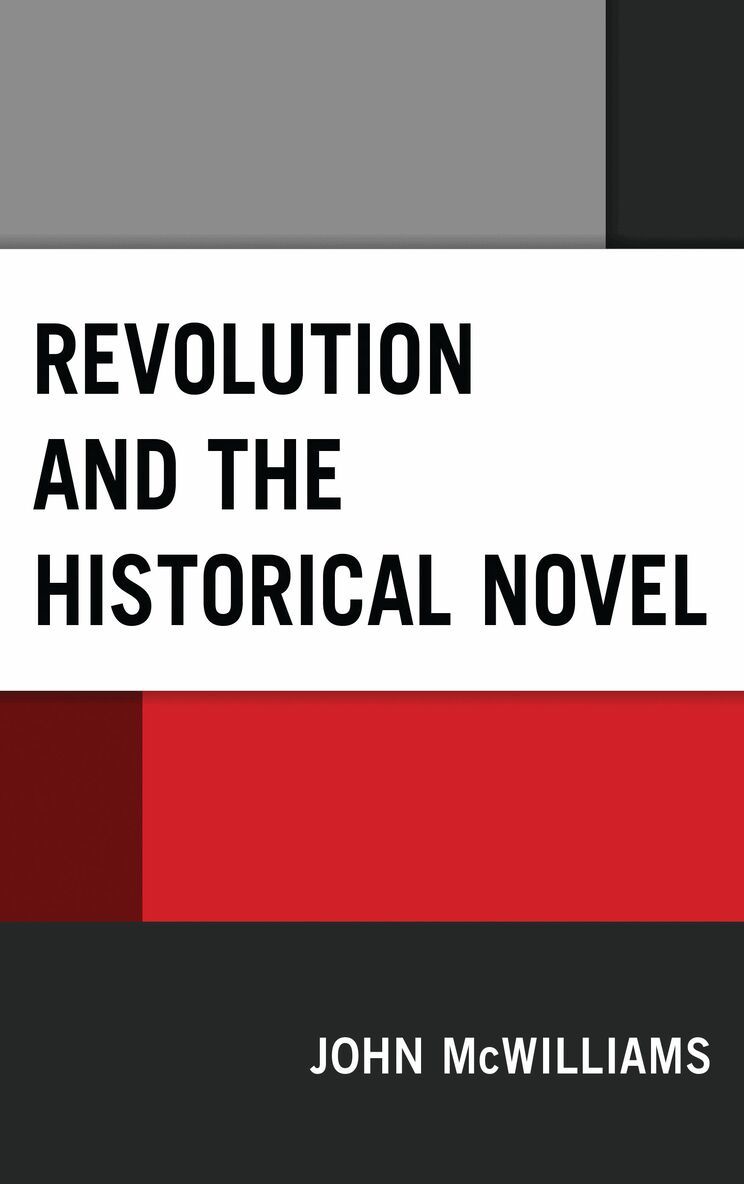
    Revolution and the Historical Novel

    AvJohn McWilliams

    Häftad, Engelska, 2019

    694 kr

    Beställningsvara. Skickas inom 10-15 vardagar. Fri frakt över 249 kr.

    Fler format och utgåvor

    Inbunden

    1 923 kr

    Beskrivning

    John McWilliams has written the first, much needed account of the ways the promise and threat of political revolution have informed masterpieces of the historical novel. The jolting sense of historical change caused by the French Revolution led to an immense readership for a new kind of fiction, centered on revolution, counter-revolution and warfare, which soon came to be called “the historical novel.” During the turbulent wake of The Declaration of the Rights of Man, promptly followed by the phenomenon of Napoleon Bonaparte, the historical novel thus served as a literary hybrid in the most positive sense of that often-dismissive term. It enabled readers to project personal hopes and anxieties about revolutionary change back into national history. While immersed in the fictive lives of genteel, often privileged heroes, readers could measure their own political convictions against the wavering loyalties of their counterparts in a previous but still familiar time. McWilliams provides close readings of some twenty historical novels, from Scott and Cooper through Tolstoy, Zola and Hugo, to Pasternak and Lampedusa, and ultimately to Marquez and Hilary Mantel, but with continuing regard to historical contexts past and present. He traces the transformation of the literary conventions established by Scott’s Waverley novels, showing both the continuities and the changes needed to meet contemporary times and perspectives. Although the progressive hopes imbedded in Scott’s narrative form proved no longer adaptable to twentieth century carnage and the rise of totalitarianism, the meaning of any single novel emerges through comparison to the tradition of its predecessors. A foreword and epilogue explore the indebtedness of McWilliams’s perspective to the Marxist scholarly tradition of Georg Lukacs and Frederic Jameson, while defining his differences from them. This is a scholarly work of no small ambition and achievement.

    Produktinformation

    • Utgivningsdatum:2019-11-07
    • Mått:154 x 225 x 27 mm
    • Vikt:540 g
    • Format:Häftad
    • Språk:Engelska
    • Antal sidor:360
    • Förlag:Bloomsbury Publishing Plc
    • ISBN:9781498503297

    Utforska kategorier

    • Litteraturvetenskap inom Skönlitteratur
    • Djurböcker inom Djur och Natur

    Mer om författaren

    John McWilliams is College Professor of Humanities, Emeritus at Middlebury College.

    Recensioner i media

    Like Martha Bowden in Descendants of Waverley (CH, Mar'17, 54-3103), McWilliams (emer., Middlebury College) insists on a continuous tradition of historical fiction going back to Walter Scott. However, McWilliams also critiques the Marxist theory that has underpinned scholarship on historical fiction since György Lukács's The Historical Novel (Russian, 1937). On the one hand, revolution is prime material for historical novel settings; on the other, though the settings may be revolutionary, the genre is not. Drawing on fiction from the Americas, Britain, France, Italy, and Russia, McWilliams identifies several structural characteristics of the genre that generate narrative stability and “restoration”—not, that is, the dictatorship of the proletariat. These include its preference for middle- and upper-class characters; its emphasis on “neutral ground” (an arena “contested by forces of the Old Order and the New, but possessed by neither”), within which the action unfolds; and its juxtaposition of the “wavering” hero, derived from Scott’s Waverley, with the “fanatics” the “eventual losers.” Except for Boris Pasternak’s downbeat Dr. Zhivago (1957), historical novels bring waverers to a chastened self-awareness that projects “hope for the cultural future” while eradicating the fanatics. An accessible, thought-provoking contribution that challenges some commonplaces in the field.Summing Up: Recommended. Upper-division undergraduates through faculty.

    Innehållsförteckning

    • A Legacy of Walter Scott: Historical Novels of Revolution and Counter-RevolutionForeword: A Search for SynthesisIntroduction: Revolutions and Restorations1. Metaphor: Controlling the Past2. Scott: The Totality of History 3. Transforming the Neutral Ground4. Waverer and Fanatic5. Revolution and Battle Honor6. Men under Trial: Revolutionary Justice7. The Appeal of the Old Order: The Threat of the New8. Women, Children & the Progressive Ending9. New Directions10. Conclusion: Scott’s Legacy: Flaubert and the Marxist Revolutionary Novel, 1848