John Wills - Böcker
Visar alla böcker från författaren John Wills. Handla med fri frakt och snabb leverans.
12 produkter
12 produkter
323 kr
Skickas inom 10-15 vardagar
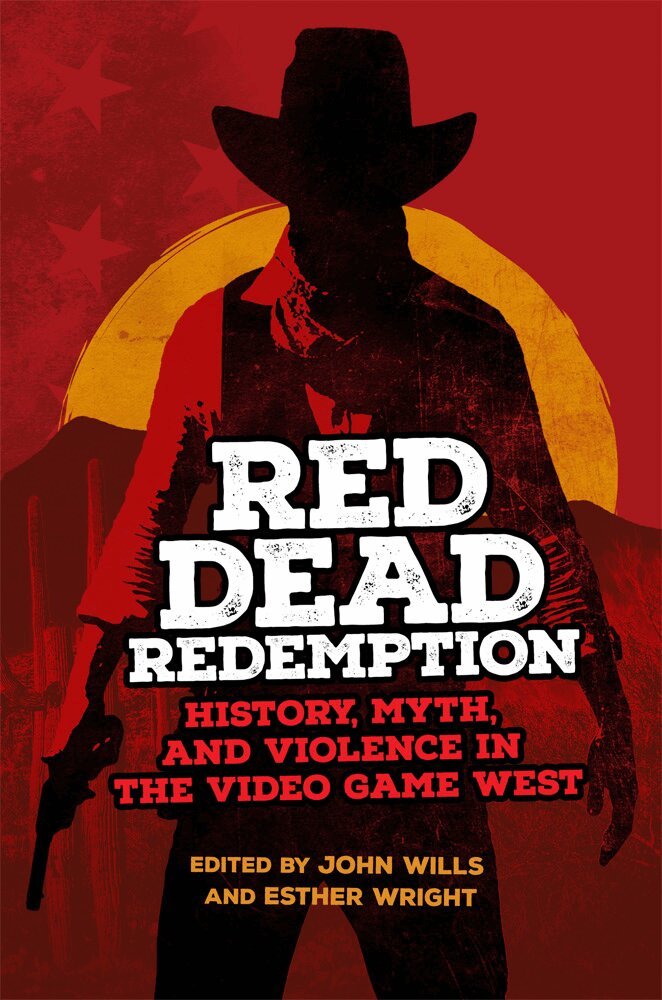
While the Western was dying a slow death across the cultural landscape, it was blazing back to life as a video game in the early twenty-first century. Rockstar Games’ Red Dead franchise, beginning with Red Dead Revolver in 2004, has grown into one of the most critically acclaimed video game franchises of the twenty-first century. Red Dead Redemption: History, Myth, and Violence in the Video Game West offers a critical, interdisciplinary look at this cultural phenomenon at the intersection of game studies and American history.Drawing on game studies, western history, American studies, and cultural studies, the authors train a wide-ranging, deeply informed analytic perspective on the Red Dead franchise—from its earliest incarnation to the latest, Red Dead Redemption 2 (2018). Their intersecting chapters put the series in the context of American history, culture, and contemporary media, with inquiries into issues of authenticity, realism, the meaning of play and commercial promotion, and the relationship between the game and the wider cultural iterations of the classic Western. The contributors also delve into the role the series’ development has played in recent debates around working conditions in the gaming industry and gaming culture.In its redeployment and reinvention of the Western’s myth and memes, the Red Dead franchise speaks to broader aspects of American culture—the hold of the frontier myth and the “Wild West” over the popular imagination, the role of gun culture in society, depictions of gender and ethnicity in mass media, and the increasing allure of digital escapism—all of which come in for scrutiny here, making this volume a vital, sweeping, and deeply revealing cultural intervention.
Invention of the Park
Recreational Landscapes from the Garden of Eden to Disney's Magic Kingdom
Inbunden, Engelska, 2005
867 kr
Skickas inom 5-8 vardagar
The word 'park' conjures a kaleidoscope of bucolic images. Childhood frolics in urban playgrounds. Strolls through the country estates of Stourhead and Versailles. Wilderness adventures in the Serengeti. White-knuckle thrill rides at Blackpool Pleasure Beach and Coney Island. The Invention of the Park explores our fascination with making parks. In a broad-ranging environmental and social history, authors Karen Jones and John Wills search for a common set of ideas that inform park design. From Greek philosophers wandering sacred groves in the ancient world to today's kids watching Mickey Mouse in Disney's Magic Kingdom, the park has inspired and thrilled in equal measure. In a work spanning all five continents and several thousand years, Jones and Wills chart the evolution of the park idea. They ponder the intersection of the green pleasure ground with notions of democracy and freedom, welfare and consumption, conservation and nature. They forward the principle of a universal park idea malleable enough to survive war and revolution.Contributing to a growing literature on global environmental history, the Invention of the Park explores how the park idea has come to transcend national boundaries and found appeal among a worldwide audience. Jones and Wills situate the park as a complex product of natural and cultural forces. Their work is of interest not just to students and scholars of environmental philosophy, history, and landscape design, but to amateur gardeners, rollercoaster 'adrenalin junkies' and all those who like to take a 'walk in the park.'
Invention of the Park
Recreational Landscapes from the Garden of Eden to Disney's Magic Kingdom
Häftad, Engelska, 2005
244 kr
Skickas inom 7-10 vardagar
The word 'park' conjures a kaleidoscope of bucolic images. Childhood frolics in urban playgrounds. Strolls through the country estates of Stourhead and Versailles. Wilderness adventures in the Serengeti. White-knuckle thrill rides at Blackpool Pleasure Beach and Coney Island. The Invention of the Park explores our fascination with making parks. In a broad-ranging environmental and social history, authors Karen Jones and John Wills search for a common set of ideas that inform park design. From Greek philosophers wandering sacred groves in the ancient world to today's kids watching Mickey Mouse in Disney's Magic Kingdom, the park has inspired and thrilled in equal measure. In a work spanning all five continents and several thousand years, Jones and Wills chart the evolution of the park idea. They ponder the intersection of the green pleasure ground with notions of democracy and freedom, welfare and consumption, conservation and nature. They forward the principle of a universal park idea malleable enough to survive war and revolution.Contributing to a growing literature on global environmental history, the Invention of the Park explores how the park idea has come to transcend national boundaries and found appeal among a worldwide audience. Jones and Wills situate the park as a complex product of natural and cultural forces. Their work is of interest not just to students and scholars of environmental philosophy, history, and landscape design, but to amateur gardeners, rollercoaster 'adrenalin junkies' and all those who like to take a 'walk in the park.'
1 498 kr
Skickas inom 7-10 vardagar
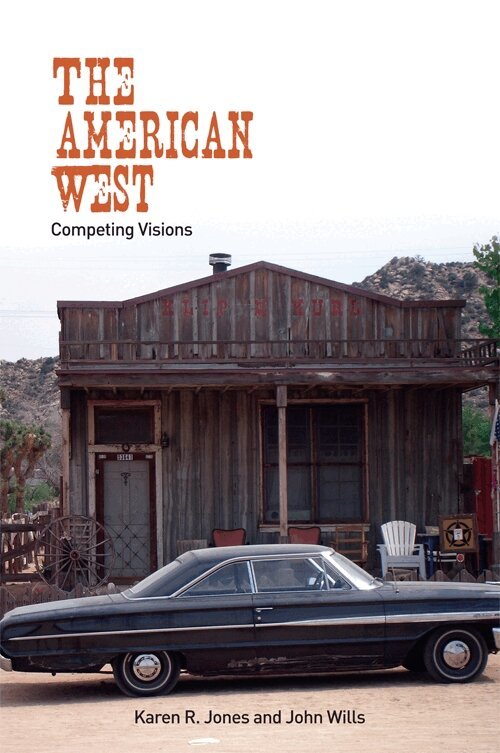
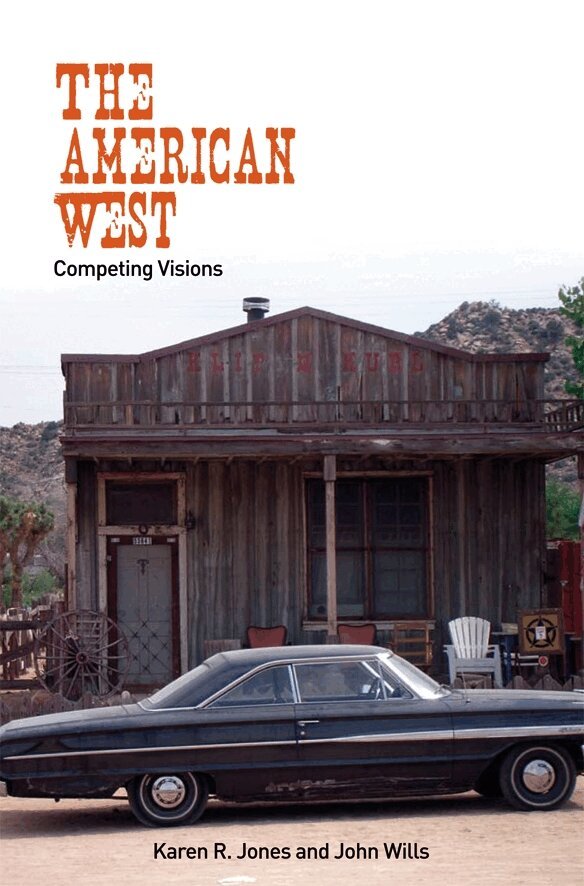
The American West used to be a story of gunfights, glory, wagon trails, and linear progress. Historians such as Frederick Jackson Turner and Hollywood movies such as Stagecoach (1939) and Shane (1953) cast the trans-Mississippi region as a frontier of epic proportions where 'savagery' met 'civilization' and boys became men.During the late 1980s, this old way of seeing the West came under heavy fire. Scholars such as Patricia Nelson Limerick and Richard White forged a fresh story of the region, a new vision of the West, based around the conquest of peoples and landscapes.This book explores the bipolar world of Turner's Old West and Limerick's New West and reveals the values and ambiguities associated with both historical traditions. Sections on Lewis and Clark, the frontier and the cowboy sit alongside work on Indian genocide and women's trail diaries. Images of the region as seen through the arcade Western, Hollywood film and Disney theme parks confirm the West as a symbolic and contested landscape.Tapping into popular fascination with the Cowboy, Hollywood movies, the Indian Wars, and Custer's Last Stand, the authors show the reader how to deconstruct the imagery and reality surrounding Western history.Key Features*Uses popular subjects (the Cowboy, Hollywood westerns, the Indian Wars, and Custer's Last Stand) to enliven the text*Includes 13 b+w illustrations*Interdisciplinary approach covers film, literature, art and historical artefacts
408 kr
Tillfälligt slut
The American West used to be a story of gunfights, glory, wagon trails, and linear progress. Historians such as Frederick Jackson Turner and Hollywood movies such as Stagecoach (1939) and Shane (1953) cast the trans-Mississippi region as a frontier of epic proportions where 'savagery' met 'civilization' and boys became men.During the late 1980s, this old way of seeing the West came under heavy fire. Scholars such as Patricia Nelson Limerick and Richard White forged a fresh story of the region, a new vision of the West, based around the conquest of peoples and landscapes.This book explores the bipolar world of Turner's Old West and Limerick's New West and reveals the values and ambiguities associated with both historical traditions. Sections on Lewis and Clark, the frontier and the cowboy sit alongside work on Indian genocide and women's trail diaries. Images of the region as seen through the arcade Western, Hollywood film and Disney theme parks confirm the West as a symbolic and contested landscape.Tapping into popular fascination with the Cowboy, Hollywood movies, the Indian Wars, and Custer's Last Stand, the authors show the reader how to deconstruct the imagery and reality surrounding Western history.Key Features*Uses popular subjects (the Cowboy, Hollywood westerns, the Indian Wars, and Custer's Last Stand) to enliven the text*Includes 13 b+w illustrations*Interdisciplinary approach covers film, literature, art and historical artefacts
1 266 kr
Skickas inom 7-10 vardagar
Environmental issues in the USA are more important now than ever before. The devastation inflicted by Hurricane Katrina, growing evidence of global warming, and a struggling national energy supply highlight the unfolding crisis. Environmental fears translate into US automobile giants plying consumers with 'fuel efficient' cars in the 'MPG Lounge' of sales. Politicians talk of energy independence and getting tough on polluters. Fears gravitate around a fast-approaching doomsday scenario, an environmental endgame, of wholesale collapse, unless something is done.Yet fears of doomsday are nothing new. John Wills shows how the current environmental crisis is firmly rooted in the past. As well as explaining how today's problems are manifestations of older systems of economics, culture and politics, he also argues that America has already witnessed a range of 'doomsday scenarios,' both real and imagined. He identifies and explores a cast of 'doomsday landscapes' that includes the Battle of the Wilderness in Virginia, the Santa Barbara Oil Spill, the 'Fable for Tomorrow' town featured in Rachel Carson's Silent Spring (1962), and Nevada's Doom Towns 1 and 2 blown apart by atomic testing in the 1950s. He reflects on contemporary ruminations over whether nature as a category endures given both the rising contamination of the US landscape and consumer proclivity for celebrating fake mementos of the outdoors (such as plastic lawn flamingos and artificial plants). And most significantly, he poses the question of whether Americans have been inviting doomsday through their long-term environmental actions.
649 kr
Skickas inom 3-6 vardagar
Environmental issues in the USA are more important now than ever before. The devastation inflicted by Hurricane Katrina, growing evidence of global warming, and a struggling national energy supply highlight the unfolding crisis. Environmental fears translate into US automobile giants plying consumers with 'fuel efficient' cars in the 'MPG Lounge' of sales. Politicians talk of energy independence and getting tough on polluters. Fears gravitate around a fast-approaching doomsday scenario, an environmental endgame, of wholesale collapse, unless something is done.Yet fears of doomsday are nothing new. John Wills shows how the current environmental crisis is firmly rooted in the past. As well as explaining how today's problems are manifestations of older systems of economics, culture and politics, he also argues that America has already witnessed a range of 'doomsday scenarios,' both real and imagined. He identifies and explores a cast of 'doomsday landscapes' that includes the Battle of the Wilderness in Virginia, the Santa Barbara Oil Spill, the 'Fable for Tomorrow' town featured in Rachel Carson's Silent Spring (1962), and Nevada's Doom Towns 1 and 2 blown apart by atomic testing in the 1950s. He reflects on contemporary ruminations over whether nature as a category endures given both the rising contamination of the US landscape and consumer proclivity for celebrating fake mementos of the outdoors (such as plastic lawn flamingos and artificial plants). And most significantly, he poses the question of whether Americans have been inviting doomsday through their long-term environmental actions.
721 kr
Skickas inom 10-15 vardagar
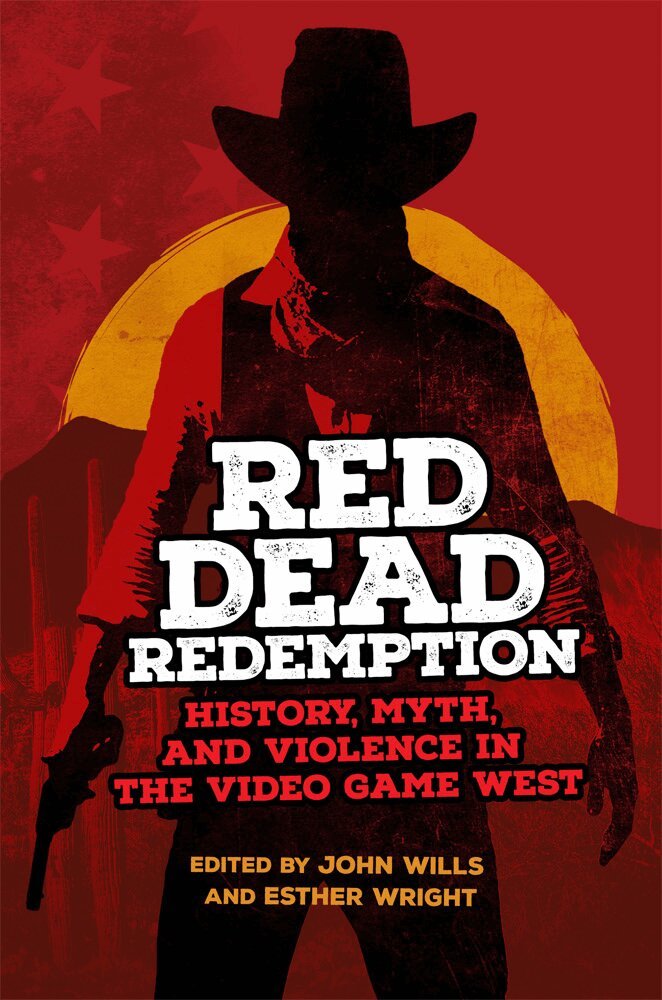
While the Western was dying a slow death across the cultural landscape, it was blazing back to life as a video game in the early twenty-first century. Rockstar Games’ Red Dead franchise, beginning with Red Dead Revolver in 2004, has grown into one of the most critically acclaimed video game franchises of the twenty-first century. Red Dead Redemption: History, Myth, and Violence in the Video Game West offers a critical, interdisciplinary look at this cultural phenomenon at the intersection of game studies and American history.Drawing on game studies, western history, American studies, and cultural studies, the authors train a wide-ranging, deeply informed analytic perspective on the Red Dead franchise—from its earliest incarnation to the latest, Red Dead Redemption 2 (2018). Their intersecting chapters put the series in the context of American history, culture, and contemporary media, with inquiries into issues of authenticity, realism, the meaning of play and commercial promotion, and the relationship between the game and the wider cultural iterations of the classic Western. The contributors also delve into the role the series’ development has played in recent debates around working conditions in the gaming industry and gaming culture.In its redeployment and reinvention of the Western’s myth and memes, the Red Dead franchise speaks to broader aspects of American culture—the hold of the frontier myth and the “Wild West” over the popular imagination, the role of gun culture in society, depictions of gender and ethnicity in mass media, and the increasing allure of digital escapism—all of which come in for scrutiny here, making this volume a vital, sweeping, and deeply revealing cultural intervention.
257 kr
Skickas inom 7-10 vardagar
Over the past century, Disney has grown from a small American animation studio into a multipronged global media giant. Today, the company’s annual revenue exceeds the GDP of over 100 countries, and its portfolio has grown to include Pixar, Marvel, Lucasfilm, ABC, and ESPN. With a company so diversified, is it still possible to identify a coherent Disney vision or message?Disney Culture proposes that there is still a unifying Disney ethos, one that can be traced back to the corporate philosophy that Walt Disney himself developed back in the 1920s. Yet, as cultural historian John Wills demonstrates, Disney’s values have also adapted to changing social climates. At the same time, the world of Disney has profoundly shaped how Americans view the world.Wills offers a nuanced take on the corporate ideologies running through animated and live-action Disney movies from Frozen to Fantasia, from Mary Poppins to Star Wars: The Force Awakens. But Disney Culture encompasses much more than just movies as it explores the intersections between Disney’s business practices and its cultural mythmaking. Welcome to “the Disney Way.”
820 kr
Skickas inom 11-20 vardagar
Over the past century, Disney has grown from a small American animation studio into a multipronged global media giant. Today, the company’s annual revenue exceeds the GDP of over 100 countries, and its portfolio has grown to include Pixar, Marvel, Lucasfilm, ABC, and ESPN. With a company so diversified, is it still possible to identify a coherent Disney vision or message?Disney Culture proposes that there is still a unifying Disney ethos, one that can be traced back to the corporate philosophy that Walt Disney himself developed back in the 1920s. Yet, as cultural historian John Wills demonstrates, Disney’s values have also adapted to changing social climates. At the same time, the world of Disney has profoundly shaped how Americans view the world.Wills offers a nuanced take on the corporate ideologies running through animated and live-action Disney movies from Frozen to Fantasia, from Mary Poppins to Star Wars: The Force Awakens. But Disney Culture encompasses much more than just movies as it explores the intersections between Disney’s business practices and its cultural mythmaking. Welcome to “the Disney Way.”
2 226 kr
Kommande
This book explores what it means to study America in the 21st century and what the emergence of the field of New Area Studies means for the development of American Studies.Analysing the meaning of interdisciplinarity, aesthetics, temporality and periodization, this book reveals both fields of study through the lens of interdisciplinary cases studies, innovative methodologies and a global perspective. Exploring the imagined geographies of America across space and time, the book rethinks the meaning and production of place, and questions what —and where—it means to study America now.Addressing the key issues of nation, place and people in this new disciplinary moment, this book will be a valuable resource to students and scholars of American Studies and Area Studies.
356 kr
Tillfälligt slut
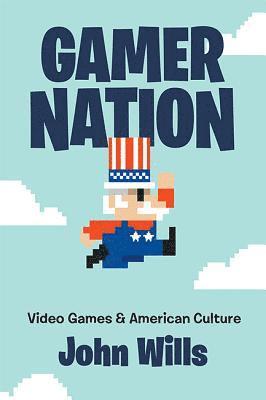
Explores how games actively influence the ways people interpret and relate to American life.In 1975, design engineer Dave Nutting completed work on a new arcade machine. A version of Taito's Western Gun, a recent Japanese arcade machine, Nutting's Gun Fight depicted a classic showdown between gunfighters. Rich in Western folklore, the game seemed perfect for the American market; players easily adapted to the new technology, becoming pistol-wielding pixel cowboys. One of the first successful early arcade titles, Gun Fight helped introduce an entire nation to video-gaming and sold more than 8,000 units.In Gamer Nation, John Wills examines how video games co-opt national landscapes, livelihoods, and legends. Arguing that video games toy with Americans' mass cultural and historical understanding, Wills show how games reprogram the American experience as a simulated reality. Blockbuster games such as Civilization, Call of Duty, and Red Dead Redemption repackage the past, refashioning history into novel and immersive digital states of America. Controversial titles such as Custer's Revenge and 08.46 recode past tragedies. Meanwhile, online worlds such as Second Life cater to a desire to inhabit alternate versions of America, while Paperboy and The Sims transform the mundane tasks of everyday suburbia into fun and addictive challenges.Working with a range of popular and influential games, from Pong, Civilization, and The Oregon Trail to Grand Theft Auto, Silent Hill, and Fortnite, Wills critically explores these gamic depictions of America. Touching on organized crime, nuclear fallout, environmental degradation, and the War on Terror, Wills uncovers a world where players casually massacre Native Americans and Cold War soldiers alike, a world where neo-colonialism, naive patriotism, disassociated violence, and racial conflict abound, and a world where the boundaries of fantasy and reality are increasingly blurred. Ultimately, Gamer Nation reveals not only how video games are a key aspect of contemporary American culture, but also how games affect how people relate to America itself.