Jonathan M. Yeager – Författare
Visar alla böcker från författaren Jonathan M. Yeager. Handla med fri frakt och snabb leverans.
4 produkter
4 produkter
1 269 kr
Skickas inom 5-8 vardagar
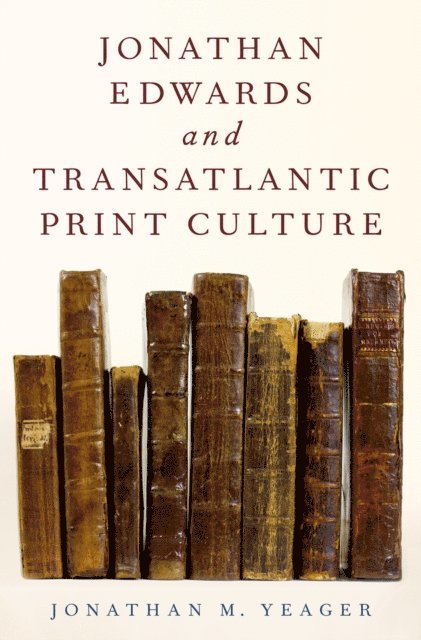
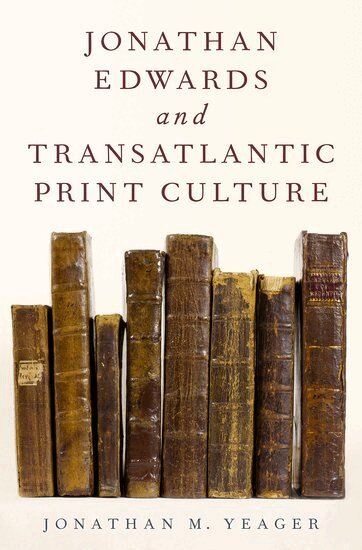
On March 20, 1760, a fire broke out in the Cornhill district of Boston, destroying nearly 350 buildings in its wake. One of the ruined shops belonged to the eminent Boston bookseller Daniel Henchman, who had published some of Jonathan Edwards's most important works, including The Life of Brainerd in 1749. Less than one year after the Great Fire of 1760, Henchman died. Edwards's chief printer Samuel Kneeland and literary agent and editor, Thomas Foxcroft, had also passed away by the end of the decade, marking the end of an era. Throughout Edwards's lifetime, and in the years after his death in 1758, most of the first editions of his books had been published in Boston. But with the deaths of Henchman, Kneeland, and Foxcroft, the publications of Edwards's writings shifted to Britain, where a new crop of booksellers, printers, and editors took on the task of issuing posthumous editions and reprints of his books. In Jonathan Edwards and Transatlantic Print Culture, religious historian Jonathan Yeager tells the story of how Edwards's works were published, including the people who were involved in their publication and their motivations. This book explores what the printing, publishing, and editing of Jonathan Edwards's publications can tell us about religious print culture in the eighteenth century, how the way that his books were put together shaped society's understanding of him as an author, and how details such as the formats, costs, quality of paper, length, bindings, and the number of reprints and abridgements of his works affected their reception.
1 801 kr
Skickas inom 5-8 vardagar
Evangelicalism has played a prominent role in western religion since the dawn of modernity. Coinciding with the emergence of the Enlightenment in America and Europe, evangelicalism flourished during the transatlantic revivals of the eighteenth century. In addition to adopting Protestantism's core beliefs of justification by faith, scripture alone, and the priesthood of believers, early evangelicals emphasized conversion and cross-cultural missions to a greater extent than Christians of previous generations. Most people today associate early evangelicalism with only a few of its leaders. Yet this was a religious movement that involved more people than simply Jonathan Edwards, John Wesley, and George Whitefield. Early evangelicals were Anglicans, Baptists, Congregationalists, Methodists, Moravians, and Presbyterians and could be found in America, Canada, Great Britain, and Western Europe. They published hymns, historical works, poems, political pamphlets, revival accounts, sermons, and theological treatises. They recorded their conversion experiences and kept diaries and journals that chronicled their spiritual development. Early Evangelicalism: A Reader is an anthology that introduces a host of important religious figures. After brief biographical sketches of each author, this book offers over sixty excerpts from a wide range of well-known and lesser-known Protestant Christians, representing a variety of denominations, geographical locations, and underrepresented groups in order to produce the most comprehensive sourcebook of its kind.
572 kr
Skickas inom 5-8 vardagar
Evangelicalism has played a prominent role in western religion since the dawn of modernity. Coinciding with the emergence of the Enlightenment in America and Europe, evangelicalism flourished during the transatlantic revivals of the eighteenth century. In addition to adopting Protestantism's core beliefs of justification by faith, scripture alone, and the priesthood of believers, early evangelicals emphasized conversion and cross-cultural missions to a greater extent than Christians of previous generations. Most people today associate early evangelicalism with only a few of its leaders. Yet this was a religious movement that involved more people than simply Jonathan Edwards, John Wesley, and George Whitefield. Early evangelicals were Anglicans, Baptists, Congregationalists, Methodists, Moravians, and Presbyterians and could be found in America, Canada, Great Britain, and Western Europe. They published hymns, historical works, poems, political pamphlets, revival accounts, sermons, and theological treatises. They recorded their conversion experiences and kept diaries and journals that chronicled their spiritual development. Early Evangelicalism: A Reader is an anthology that introduces a host of important religious figures. After brief biographical sketches of each author, this book offers over sixty excerpts from a wide range of well-known and lesser-known Protestant Christians, representing a variety of denominations, geographical locations, and underrepresented groups in order to produce the most comprehensive sourcebook of its kind.
381 kr
Skickas inom 10-15 vardagar
Religion is deeply embedded in American history, and one cannot understand American history’s broad dynamics without accounting for it. Without detailing the history of religions, teachers cannot properly explain key themes in US survey courses, such as politics, social dynamics, immigration and colonization, gender, race, or class. From early Native American beliefs and practices, to European explorations of the New World, to the most recent presidential elections, religion has been a significant feature of the American story. In Understanding and Teaching Religion in US History, a diverse group of eminent historians and history teachers provide a practical tool for teachers looking to improve history instruction at the upper-level secondary and undergraduate level. This book offers a breadth of voices and approaches to teaching this crucial part of US history. Religion can be a delicate topic, especially in public education, and many students and teachers bring strongly held views and identities to their understanding of the past. The editors and contributors aim to help the reader see religion in fresh ways, to present sources and perspectives that may be unfamiliar, and to suggest practical interventions in the classroom that teachers can use immediately.