Karen J. Johnson – författare
Visar alla böcker från författaren . Handla med fri frakt och snabb leverans.
6 produkter
6 produkter
Inbunden, Engelska, 2018
379 kr
Skickas inom 5-8 vardagar
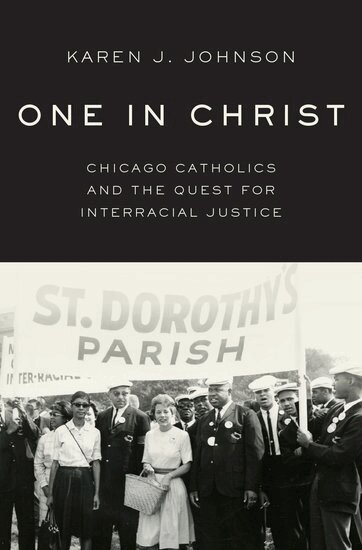
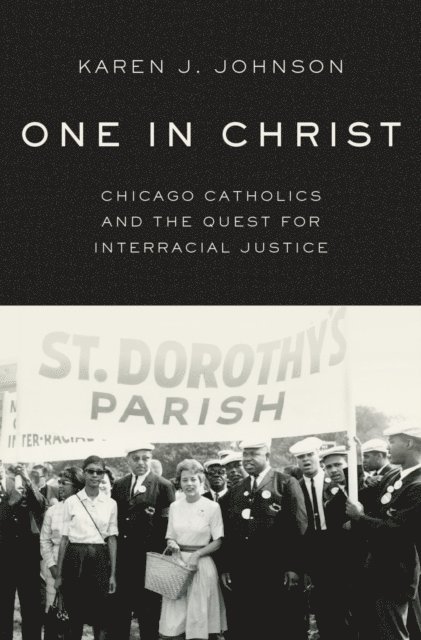
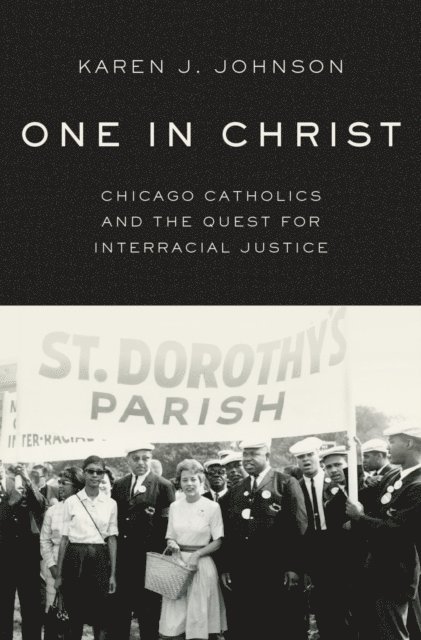
Today, the images of Catholic priests and nuns marching in 1960s civil rights protests are iconic. Their cassocks and habits clothed the movement in sacred garments. But by the time of those protests Catholic Civil Rights activism already had a long history, one in which the religious leadership of the Church played, at best, a supporting role. Instead, it was laypeople, first African Americans and then, as they found white partners, black and white Catholics working together, who shaped the movement regular people who, in self-consciously Catholic ways, devoted their time, energy, and prayers to what they called "interracial justice," a vision of economic, social, religious, and civil equality.Karen J. Johnson tells the story of Catholic interracial activism from the bottom up through the lives of a group of women and men in Chicago who struggled with one another, their Church, and their city to try to live their Catholic faith in a new, and what they thought was more complete and true, way. Black activists found a handful of white laypeople, some of whom later became priests, who believed in their vision of a universal church in the segregated city. Together, they began to fight for interracial justice, all while knitted together in sometimes-contentious friendship as members of the Mystical Body of Christ. In the end, not only had Catholic activists lived out their faith as active participants in the long civil rights movement and learned how to cooperate, and indeed love, across racial lines, but they had changed the practice of Catholicism. They broke down the hierarchy that placed priests above the laity and crossed the parish boundaries that defined urban Catholicism.Chicago was a vital laboratory in what became a national story. One in Christ traces the development of Catholic interracial activism, revealing the ways religion and race combined both to enforce racial hierarchies and to tear them down, and demonstrating that we cannot understand race and civil rights in the North without accounting for religion.
E-bok
PDF, Engelska, 2018375 kr
Läs direkt efter köp
Today, the images of Catholic priests and nuns marching in 1960s civil rights protests are iconic. Their cassocks and habits clothed the movement in sacred garments. But by the time of those protests Catholic Civil Rights activism already had a long history, one in which the religious leadership of the Church played, at best, a supporting role. Instead, it was laypeople, first African Americans and then, as they found white partners, black and white Catholics working together, who shaped the movement- regular people who, in self-consciously Catholic ways, devoted their time, energy, and prayers to what they called "interracial justice," a vision of economic, social, religious, and civil equality.Karen J. Johnson tells the story of Catholic interracial activism from the bottom up through the lives of a group of women and men in Chicago who struggled with one another, their Church, and their city to try to live their Catholic faith in a new, and what they thought was more complete and true, way. Black activists found a handful of white laypeople, some of whom later became priests, who believed in their vision of a universal church in the segregated city. Together, they began to fight for interracial justice, all while knitted together in sometimes-contentious friendship as members of the Mystical Body of Christ. In the end, not only had Catholic activists lived out their faith as active participants in the long civil rights movement and learned how to cooperate, and indeed love, across racial lines, but they had changed the practice of Catholicism. They broke down the hierarchy that placed priests above the laity and crossed the parish boundaries that defined urban Catholicism.Chicago was a vital laboratory in what became a national story. One in Christ traces the development of Catholic interracial activism, revealing the ways religion and race combined both to enforce racial hierarchies and to tear them down, and demonstrating that we cannot understand race and civil rights in the North without accounting for religion.
E-bok
Engelska, 2018375 kr
Läs direkt efter köp
Today, the images of Catholic priests and nuns marching in 1960s civil rights protests are iconic. Their cassocks and habits clothed the movement in sacred garments. But by the time of those protests Catholic Civil Rights activism already had a long history, one in which the religious leadership of the Church played, at best, a supporting role. Instead, it was laypeople, first African Americans and then, as they found white partners, black and white Catholics working together, who shaped the movement- regular people who, in self-consciously Catholic ways, devoted their time, energy, and prayers to what they called "interracial justice," a vision of economic, social, religious, and civil equality.Karen J. Johnson tells the story of Catholic interracial activism from the bottom up through the lives of a group of women and men in Chicago who struggled with one another, their Church, and their city to try to live their Catholic faith in a new, and what they thought was more complete and true, way. Black activists found a handful of white laypeople, some of whom later became priests, who believed in their vision of a universal church in the segregated city. Together, they began to fight for interracial justice, all while knitted together in sometimes-contentious friendship as members of the Mystical Body of Christ. In the end, not only had Catholic activists lived out their faith as active participants in the long civil rights movement and learned how to cooperate, and indeed love, across racial lines, but they had changed the practice of Catholicism. They broke down the hierarchy that placed priests above the laity and crossed the parish boundaries that defined urban Catholicism.Chicago was a vital laboratory in what became a national story. One in Christ traces the development of Catholic interracial activism, revealing the ways religion and race combined both to enforce racial hierarchies and to tear them down, and demonstrating that we cannot understand race and civil rights in the North without accounting for religion.
Inbunden, Engelska, 2024
398 kr
Skickas inom 10-15 vardagar
Religion is deeply embedded in American history, and one cannot understand American history’s broad dynamics without accounting for it. Without detailing the history of religions, teachers cannot properly explain key themes in US survey courses, such as politics, social dynamics, immigration and colonization, gender, race, or class. From early Native American beliefs and practices, to European explorations of the New World, to the most recent presidential elections, religion has been a significant feature of the American story. In Understanding and Teaching Religion in US History, a diverse group of eminent historians and history teachers provide a practical tool for teachers looking to improve history instruction at the upper-level secondary and undergraduate level. This book offers a breadth of voices and approaches to teaching this crucial part of US history. Religion can be a delicate topic, especially in public education, and many students and teachers bring strongly held views and identities to their understanding of the past. The editors and contributors aim to help the reader see religion in fresh ways, to present sources and perspectives that may be unfamiliar, and to suggest practical interventions in the classroom that teachers can use immediately.
Inbunden, Engelska, 2025
319 kr
Skickas inom 5-8 vardagar
E-bok
Engelska, 2025286 kr
Läs direkt efter köp
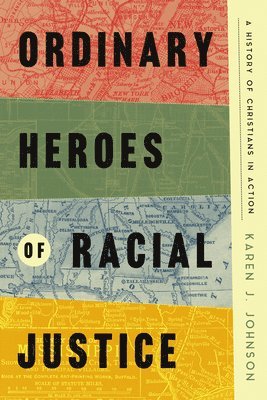
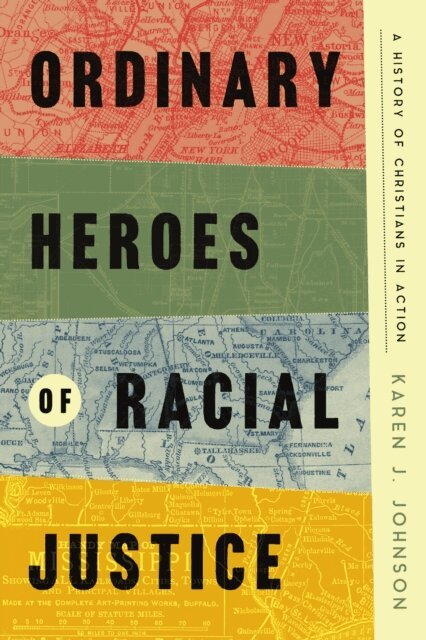
"Readers will be edified and inspired." – Publishers Weekly Review, June 2025"With its lively narrative and discussions of racial justice, readers interested in church history and civil-rights movements will find this volume appealing." – Booklist Review, July 2025"Ordinary Heroes of Racial Justice is a meticulous history of the roots of racial inequality that highlights little-known Christians who worked for change." – Foreword Reviews, July/August 2025Meet the Ordinary Heroes Who Changed HistoryOrdinary Heroes of Racial Justice is a beacon of hope for understanding America''s complex racial landscape. Through rigorous historical research and compelling narrative storytelling, this book illuminates the past''s intersections of Christianity, race, and place, offering profound insights for today''s world. Learn about the brave efforts of heroes like Catherine de Hueck in New York City or John Perkins in Mississippi, whose faith-driven missions transformed communities through justice and reconciliation. Beyond history, Ordinary Heroes of Racial Justice empowers readers with practical recommendations, encouraging them to rethink and reshape their own communities for justice.This book explores the important role faith plays in radical justice by:- Looking at the intertwining of faith and racial justice as a driving force throughout history.- Examining faith communities who served as catalysts for social change by championing equality and justice.- Exploring teachings that inspired advocates to confront systemic racism and propagate the message of love, acceptance, and unity.- Studying key figures that used faith as a foundation to fuel their activism for civil rights.Faith has often been at the heart of significant strides toward racial justice. From the Civil Rights Movement to present-day challenges, individuals and faith-based organizations have steadfastly committed to justice work, drawing strength and motivation from their spiritual beliefs. Whether you''re a scholar, teacher, activist, or avid reader of U.S. history, Ordinary Heroes of Racial Justice will enrich your understanding and inspire action as you uncover the stories of those who dared to be different for the greater good and joined the pursuit of justice.