Joni Adamson - Böcker
Visar alla böcker från författaren Joni Adamson. Handla med fri frakt och snabb leverans.
10 produkter
10 produkter
818 kr
Skickas inom 10-15 vardagar
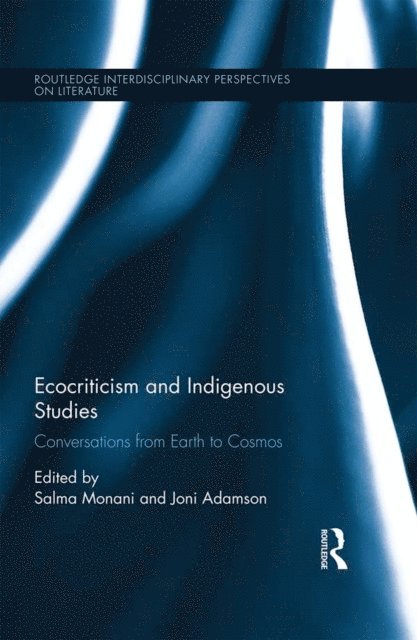
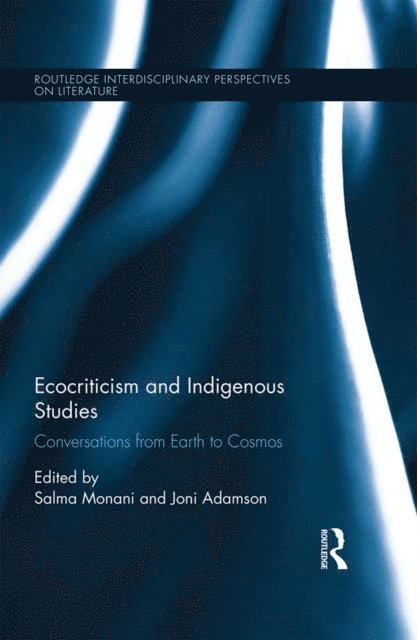
This book addresses the intersections between the interdisciplinary realms of Ecocriticism and Indigenous and Native American Studies, and between academic theory and pragmatic eco-activism conducted by multiethnic and indigenous communities. It illuminates the multi-layered, polyvocal ways in which artistic expressions render ecological connections, drawing on scholars working in collaboration with Indigenous artists from all walks of life, including film, literature, performance, and other forms of multimedia to expand existing conversations. Both local and global in its focus, the volume includes essays from multiethnic and Indigenous communities across the world, visiting topics such as Navajo opera, Sami film production history, south Indian tribal documentary, Maori art installations, Native American and First Nations science-fiction literature and film, Amazonian poetry, and many others. Highlighting trans-Indigenous sensibilities that speak to worldwide crises of environmental politics and action against marginalization, the collection alerts readers to movements of community resilience and resistance, cosmological thinking about inter- and intra-generational multi-species relations, and understandings of indigenous aesthetics and material ecologies. It engages with emerging environmental concepts such as multispecies ethnography, cosmopolitics, and trans-indigeneity, as well as with new areas of ecocritical research such as material ecocriticism, biosemiotics, and media studies. In its breadth and scope, this book promises new directions for ecocritical thought and environmental humanities practice, providing thought-provoking insight into what it means to be human in a locally situated, globally networked, and cosmologically complex world.
American Studies, Ecocriticism, and Citizenship
Thinking and Acting in the Local and Global Commons
Inbunden, Engelska, 2012
2 478 kr
Skickas inom 10-15 vardagar
This collection reclaims public intellectuals and scholars important to the foundational work in American Studies that contributed to emerging conceptions of an "ecological citizenship" advocating something other than nationalism or an "exclusionary ethics of place." Co-editors Adamson and Ruffin recover underrecognized field genealogies in American Studies (i.e. the work of early scholars whose scope was transnational and whose activism focused on race, class and gender) and ecocriticism (i.e. the work of movement leaders, activists and scholars concerned with environmental justice whose work predates the 1990s advent of the field). They stress the necessity of a confluence of intellectual traditions, or "interdisciplinarities," in meeting the challenges presented by the "anthropocene," a new era in which human beings have the power to radically endanger the planet or support new approaches to transnational, national and ecological citizenship. Contributors to the collection examine literary, historical, and cultural examples from the 19th century to the 21st. They explore notions of the common—namely, common humanity, common wealth, and common ground—and the relation of these notions to often conflicting definitions of who (or what) can have access to "citizenship" and "rights." The book engages in scholarly ecological analysis via the lens of various human groups—ethnic, racial, gendered, coalitional—that are shaping twenty-first century environmental experience and vision. Read together, the essays included in American Studies, Ecocriticism, and Citizenship create a "methodological commons" where environmental justice case studies and interviews with activists and artists living in places as diverse as the U.S., Canada, Haiti, Puerto Rico, Taiwan and the Navajo Nation, can be considered alongside literary and social science analysis that contributes significantly to current debates catalyzed by nuclear meltdowns, oil spills, hurricanes, and climate change, but also by hopes for a common future that will ensure the rights of all beings--human and nonhuman-- to exist, maintain, and regenerate life cycles and evolutionary processes
322 kr
Skickas inom 7-10 vardagar
Introduces key terms, quantitative and qualitative research, debates, and histories for Environmental and Nature StudiesUnderstandings of "nature" have expanded and changed, but the word has not lost importance at any level of discourse: it continues to hold a key place in conversations surrounding thought, ethics, and aesthetics. Nowhere is this more evident than in the interdisciplinary field of environmental studies. Keywords for Environmental Studies analyzes the central terms and debates currently structuring the most exciting research in and across environmental studies, including the environmental humanities, environmental social sciences, sustainability sciences, and the sciences of nature. Sixty essays from humanists, social scientists, and scientists, each written about a single term, reveal the broad range of quantitative and qualitative approaches critical to the state of the field today. From "ecotourism" to "ecoterrorism," from "genome" to "species," this accessible volume illustrates the ways in which scholars are collaborating across disciplinary boundaries to reach shared understandings of key issues—such as extreme weather events or increasing global environmental inequities—in order to facilitate the pursuit of broad collective goals and actions. This book underscores the crucial realization that every discipline has a stake in the central environmental questions of our time, and that interdisciplinary conversations not only enhance, but are requisite to environmental studies today.Visit keywords.nyupress.org for online essays, teaching resources, and more.
1 061 kr
Skickas inom 10-15 vardagar
Introduces key terms, quantitative and qualitative research, debates, and histories for Environmental and Nature StudiesUnderstandings of "nature" have expanded and changed, but the word has not lost importance at any level of discourse: it continues to hold a key place in conversations surrounding thought, ethics, and aesthetics. Nowhere is this more evident than in the interdisciplinary field of environmental studies. Keywords for Environmental Studies analyzes the central terms and debates currently structuring the most exciting research in and across environmental studies, including the environmental humanities, environmental social sciences, sustainability sciences, and the sciences of nature. Sixty essays from humanists, social scientists, and scientists, each written about a single term, reveal the broad range of quantitative and qualitative approaches critical to the state of the field today. From "ecotourism" to "ecoterrorism," from "genome" to "species," this accessible volume illustrates the ways in which scholars are collaborating across disciplinary boundaries to reach shared understandings of key issues—such as extreme weather events or increasing global environmental inequities—in order to facilitate the pursuit of broad collective goals and actions. This book underscores the crucial realization that every discipline has a stake in the central environmental questions of our time, and that interdisciplinary conversations not only enhance, but are requisite to environmental studies today.Visit keywords.nyupress.org for online essays, teaching resources, and more.
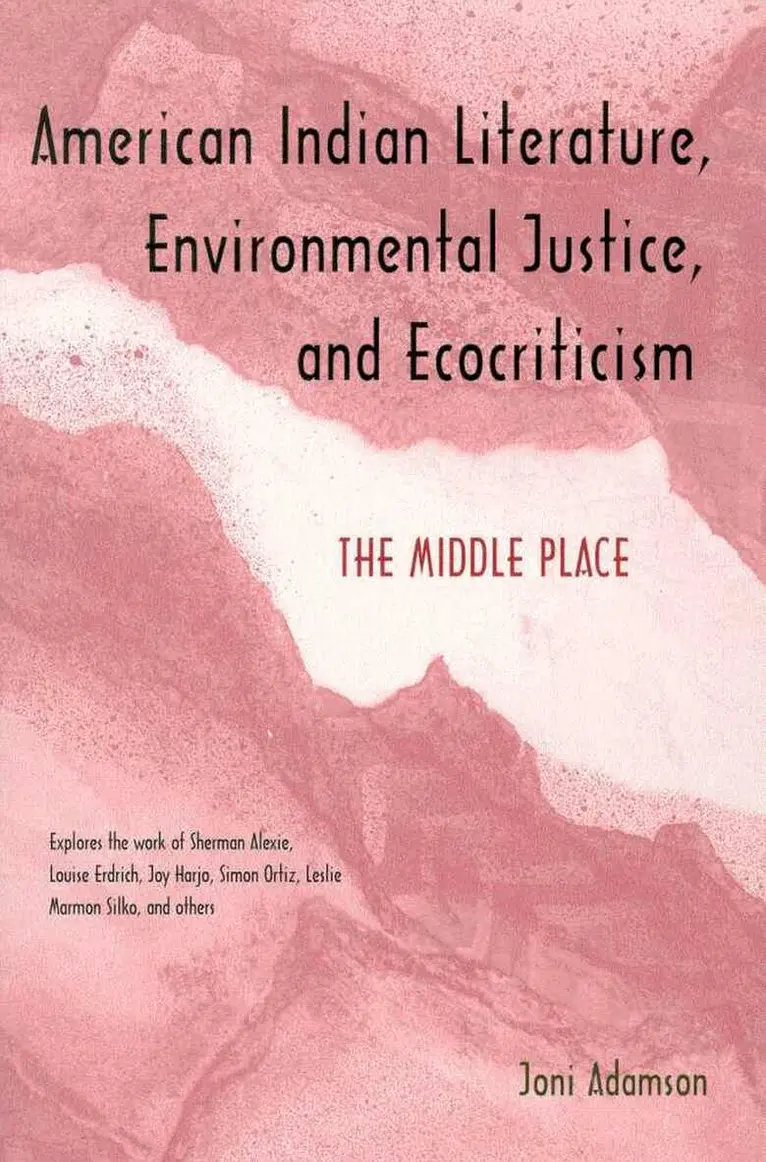
American Indian Literature, Environmental Justice, and Ecocriticism
The Middle Place
Häftad, Engelska, 2001
269 kr
Skickas inom 11-20 vardagar
Although much contemporary American Indian literature examines the relationship between humans and the land, most Native authors do not set their work in the "pristine wilderness" celebrated by mainstream nature writers. Instead, they focus on settings such as reservations, open-pit mines, and contested borderlands. Drawing on her own teaching experience among Native Americans and on lessons learned from such recent scenes of confrontation as Chiapas and Black Mesa, Joni Adamson explores why what counts as "nature" is often very different for multicultural writers and activist groups than it is for mainstream environmentalists.This powerful book is one of the first to examine the intersections between literature and the environment from the perspective of the oppressions of race, class, gender, and nature, and the first to review American Indian literature from the standpoint of environmental justice and ecocriticism. By examining such texts as Sherman Alexie's short stories and Leslie Marmon Silko's novel Almanac of the Dead, Adamson contends that these works, in addition to being literary, are examples of ecological criticism that expand Euro-American concepts of nature and place.Adamson shows that when we begin exploring the differences that shape diverse cultural and literary representations of nature, we discover the challenge they present to mainstream American culture, environmentalism, and literature. By comparing the work of Native authors such as Simon Ortiz with that of environmental writers such as Edward Abbey, she reveals opportunities for more multicultural conceptions of nature and the environment.More than a work of literary criticism, this is a book about the search to find ways to understand our cultural and historical differences and similarities in order to arrive at a better agreement of what the human role in nature is and should be. It exposes the blind spots in early ecocriticism and shows the possibilities for building common ground— a middle place— where writers, scholars, teachers, and environmentalists might come together to work for social and environmental change.
548 kr
Skickas inom 3-6 vardagar
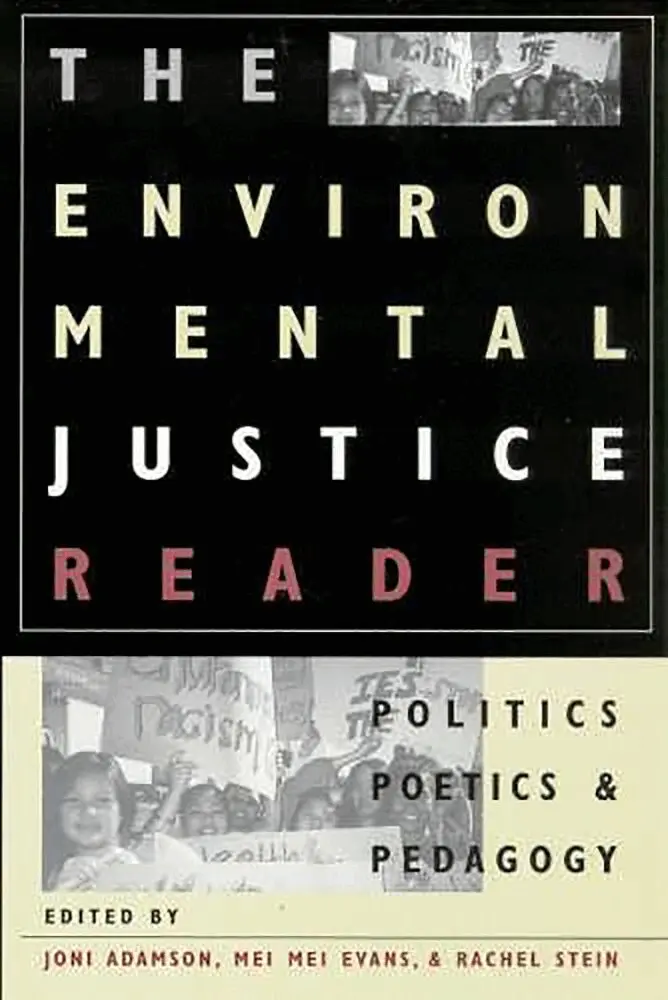
From the First National People of Color Congress on Environmental Leadership to WTO street protests of the new millennium, environmental justice activists have challenged the mainstream movement by linking social inequalities to the uneven distribution of environmental dangers. Grassroots movements in poor communities and communities of color strive to protect neighborhoods and worksites from environmental degradation and struggle to gain equal access to the natural resources that sustain their cultures.This book examines environmental justice in its social, economic, political, and cultural dimensions in both local and global contexts, with special attention paid to intersections of race, gender, and class inequality. The first book to link political studies, literary analysis, and teaching strategies, it offers a multivocal approach that combines perspectives from organizations such as the Southwest Network for Environmental and Economic Justice and the International Indigenous Treaty Council with the insights of such notable scholars as Devon Peña, Giovanna Di Chiro, and Valerie Kuletz, and also includes a range of newer voices in the field.This collection approaches environmental justice concerns from diverse geographical, ethnic, and disciplinary perspectives, always viewing environmental issues as integral to problems of social inequality and oppression. It offers new case studies of native Alaskans' protests over radiation poisoning; Hispanos' struggles to protect their land and water rights; Pacific Islanders' resistance to nuclear weapons testing and nuclear waste storage; and the efforts of women employees of maquiladoras to obtain safer living and working environments along the U.S.-Mexican border.The selections also include cultural analyses of environmental justice arts, such as community art and greening projects in inner-city Baltimore, and literary analyses of writers such as Jimmy Santiago Baca, Linda Hogan, Barbara Neely, Nez Perce orators, Ken Saro-Wiwa, and Karen Yamashita—artists who address issues such as toxicity and cancer, lead poisoning of urban African American communities, and Native American struggles to remove dams and save salmon. The book closes with a section of essays that offer models to teachers hoping to incorporate these issues and texts into their classrooms. By combining this array of perspectives, this book makes the field of environmental justice more accessible to scholars, students, and concerned readers.
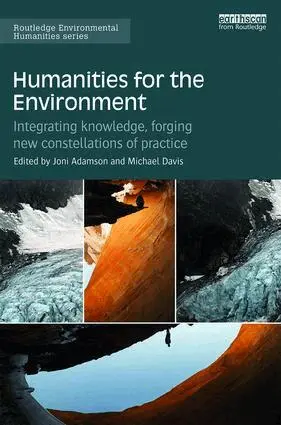
Humanities for the Environment
Integrating knowledge, forging new constellations of practice
Inbunden, Engelska, 2016
2 289 kr
Skickas inom 10-15 vardagar
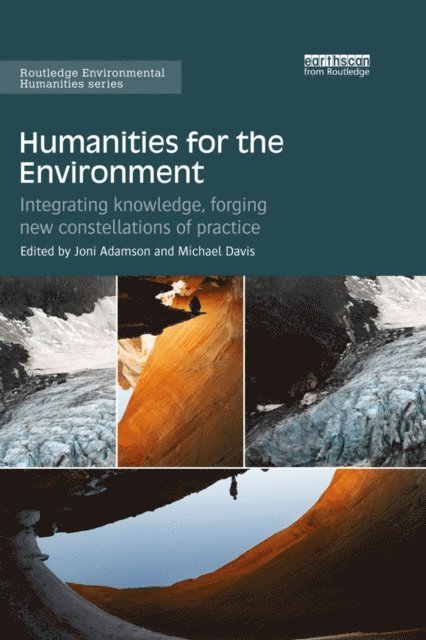
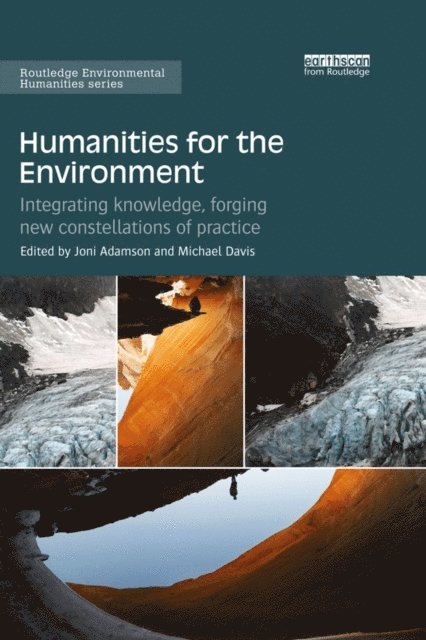
Humanities for the Environment, or HfE, is an ambitious project that from 2013-2015 was funded by a generous grant from the Andrew W. Mellon Foundation. The project networked universities and researchers internationally through a system of 'observatories'. This book collects the work of contributors networked through the North American, Asia-Pacific, and Australia-Pacific observatories. Humanities for the Environment showcases how humanists are working to 'integrate knowledges' from diverse cultures and ontologies and pilot new 'constellations of practice' that are moving beyond traditional contemplative or reflective outcomes (the book, the essay) towards solutions to the greatest social and environmental challenges of our time. With the still controversial concept of the 'Anthropocene' as a starting point for a widening conversation, contributors range across geographies, ecosystems, climates and weather regimes; moving from icy, melting Arctic landscapes to the bleaching Australian Great Barrier Reef, and from an urban pedagogical 'laboratory' in Phoenix, Arizona to Vatican City in Rome. Chapters explore the ways in which humanists, in collaboration with communities and disciplines across academia, are responding to warming oceans, disappearing islands, collapsing fisheries, evaporating reservoirs of water, exploding bushfires, and spreading radioactive contamination.This interdisciplinary work will be of great interest to scholars in the humanities, social sciences, and sciences interested in interdisciplinary questions of environment and culture.
Humanities for the Environment
Integrating knowledge, forging new constellations of practice
Häftad, Engelska, 2018
671 kr
Skickas inom 10-15 vardagar
Humanities for the Environment, or HfE, is an ambitious project that from 2013-2015 was funded by a generous grant from the Andrew W. Mellon Foundation. The project networked universities and researchers internationally through a system of 'observatories'. This book collects the work of contributors networked through the North American, Asia-Pacific, and Australia-Pacific observatories. Humanities for the Environment showcases how humanists are working to 'integrate knowledges' from diverse cultures and ontologies and pilot new 'constellations of practice' that are moving beyond traditional contemplative or reflective outcomes (the book, the essay) towards solutions to the greatest social and environmental challenges of our time. With the still controversial concept of the 'Anthropocene' as a starting point for a widening conversation, contributors range across geographies, ecosystems, climates and weather regimes; moving from icy, melting Arctic landscapes to the bleaching Australian Great Barrier Reef, and from an urban pedagogical 'laboratory' in Phoenix, Arizona to Vatican City in Rome. Chapters explore the ways in which humanists, in collaboration with communities and disciplines across academia, are responding to warming oceans, disappearing islands, collapsing fisheries, evaporating reservoirs of water, exploding bushfires, and spreading radioactive contamination.This interdisciplinary work will be of great interest to scholars in the humanities, social sciences, and sciences interested in interdisciplinary questions of environment and culture.
American Studies, Ecocriticism, and Citizenship
Thinking and Acting in the Local and Global Commons
Häftad, Engelska, 2015
787 kr
Skickas inom 10-15 vardagar
This collection reclaims public intellectuals and scholars important to the foundational work in American Studies that contributed to emerging conceptions of an "ecological citizenship" advocating something other than nationalism or an "exclusionary ethics of place." Co-editors Adamson and Ruffin recover underrecognized field genealogies in American Studies (i.e. the work of early scholars whose scope was transnational and whose activism focused on race, class and gender) and ecocriticism (i.e. the work of movement leaders, activists and scholars concerned with environmental justice whose work predates the 1990s advent of the field). They stress the necessity of a confluence of intellectual traditions, or "interdisciplinarities," in meeting the challenges presented by the "anthropocene," a new era in which human beings have the power to radically endanger the planet or support new approaches to transnational, national and ecological citizenship. Contributors to the collection examine literary, historical, and cultural examples from the 19th century to the 21st. They explore notions of the common—namely, common humanity, common wealth, and common ground—and the relation of these notions to often conflicting definitions of who (or what) can have access to "citizenship" and "rights." The book engages in scholarly ecological analysis via the lens of various human groups—ethnic, racial, gendered, coalitional—that are shaping twenty-first century environmental experience and vision. Read together, the essays included in American Studies, Ecocriticism, and Citizenship create a "methodological commons" where environmental justice case studies and interviews with activists and artists living in places as diverse as the U.S., Canada, Haiti, Puerto Rico, Taiwan and the Navajo Nation, can be considered alongside literary and social science analysis that contributes significantly to current debates catalyzed by nuclear meltdowns, oil spills, hurricanes, and climate change, but also by hopes for a common future that will ensure the rights of all beings--human and nonhuman-- to exist, maintain, and regenerate life cycles and evolutionary processes
2 709 kr
Skickas inom 10-15 vardagar
This book addresses the intersections between the interdisciplinary realms of Ecocriticism and Indigenous and Native American Studies, and between academic theory and pragmatic eco-activism conducted by multiethnic and indigenous communities. It illuminates the multi-layered, polyvocal ways in which artistic expressions render ecological connections, drawing on scholars working in collaboration with Indigenous artists from all walks of life, including film, literature, performance, and other forms of multimedia to expand existing conversations. Both local and global in its focus, the volume includes essays from multiethnic and Indigenous communities across the world, visiting topics such as Navajo opera, Sami film production history, south Indian tribal documentary, Maori art installations, Native American and First Nations science-fiction literature and film, Amazonian poetry, and many others. Highlighting trans-Indigenous sensibilities that speak to worldwide crises of environmental politics and action against marginalization, the collection alerts readers to movements of community resilience and resistance, cosmological thinking about inter- and intra-generational multi-species relations, and understandings of indigenous aesthetics and material ecologies. It engages with emerging environmental concepts such as multispecies ethnography, cosmopolitics, and trans-indigeneity, as well as with new areas of ecocritical research such as material ecocriticism, biosemiotics, and media studies. In its breadth and scope, this book promises new directions for ecocritical thought and environmental humanities practice, providing thought-provoking insight into what it means to be human in a locally situated, globally networked, and cosmologically complex world.