Joseph Leo Koerner - Böcker
Visar alla böcker från författaren Joseph Leo Koerner. Handla med fri frakt och snabb leverans.
8 produkter
8 produkter
614 kr
Skickas inom 7-10 vardagar
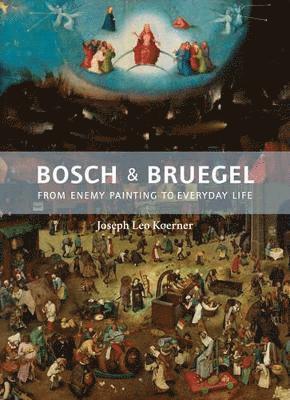
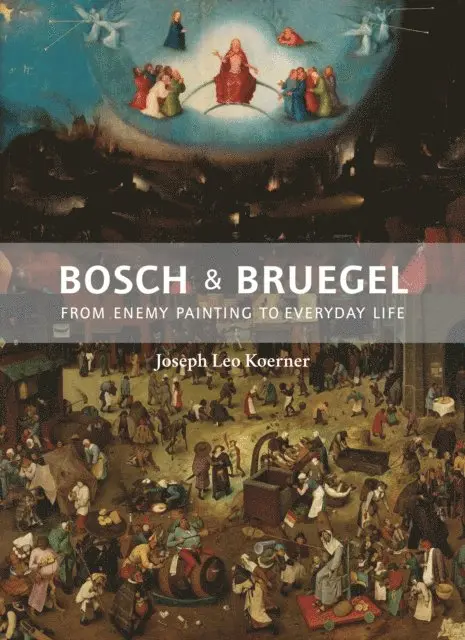
In this visually stunning and much anticipated book, acclaimed art historian Joseph Koerner casts the paintings of Hieronymus Bosch and Pieter Bruegel in a completely new light, revealing how the painting of everyday life was born from what seems its polar opposite: the depiction of an enemy hell-bent on destroying us. Supreme virtuoso of the bizarre, diabolic, and outlandish, Bosch embodies the phantasmagorical force of painting, while Bruegel, through his true-to-life landscapes and frank depictions of peasants, is the artistic avatar of the familiar and ordinary. But despite their differences, the works of these two artists are closely intertwined. Bruegel began his career imitating Bosch's fantasies, and it was Bosch who launched almost the whole repertoire of later genre painting. But Bosch depicts everyday life in order to reveal it as an alluring trap set by a metaphysical enemy at war with God, whereas Bruegel shows this enemy to be nothing but a humanly fabricated mask. Attending closely to the visual cunning of these two towering masters, Koerner uncovers art history's unexplored underside: the image itself as an enemy.An absorbing study of the dark paradoxes of human creativity, Bosch and Bruegel is also a timely account of how hatred can be converted into tolerance through the agency of art. It takes readers through all the major paintings, drawings, and prints of these two unforgettable artists--including Bosch's notoriously elusive Garden of Earthly Delights, which forms the core of this historical tour de force. Elegantly written and abundantly illustrated, the book is based on Koerner's A. W. Mellon Lectures in the Fine Arts, a series given annually at the National Gallery of Art, Washington.
288 kr
Skickas inom 7-10 vardagar
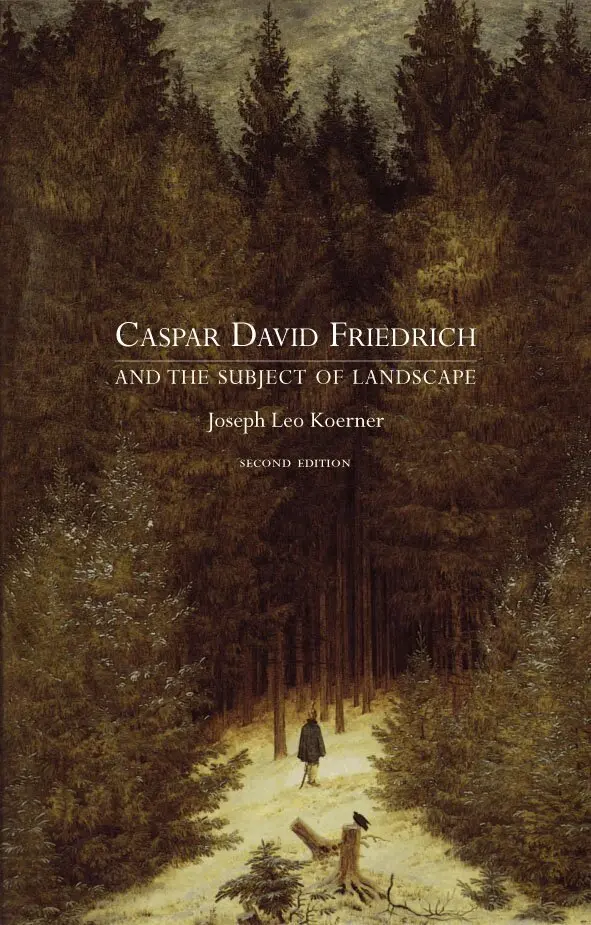
Caspar David Friedrich (1774-1840), the greatest painter of the Romantic movement in Germany, was perhaps Europe’s first truly modern artist. His melancholy landscapes, often peopled by lonely wanderers, represent experiments towards a radically subjective art, one in which, as Friedrich wrote, the painter depicts not ‘what he sees before him, but what he sees within him.’ Yet in their awesome power to capture the individuality of visible forms Friedrich’s pictures also accept and express the irredeemable otherness of Nature.Winner of the 1992 Mitchell Prize for the History of Art, this compelling and highly original book is now made available in a compact pocket format. Beautifully illustrated, Caspar David Friedrich and the Subject of Landscape is the most comprehensive account ever published in English on this most fascinating of nineteenth-century masters.
525 kr
Skickas inom 7-10 vardagar
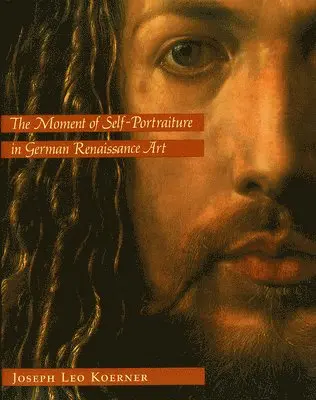
In this groundbreaking and elegantly written study, Joseph Koerner establishes the character of Renaissance art in Germany. Opening up new modes of inquiry for historians of art and early modern Europe, Koerner examines how artists such as Albrecht Durer and Hans Baldung Grien reflected in their masterworks the changing status of the self in sixteenth-century Germany. "[A] dazzling book...He has turned out one of the most powerful, as well as one of the most ambitious, art-historical works of the last decade." --Anthony Grafton, New Republic "Rich and splendid...Joseph Koerner's book is a dazzling display of scholarship, enfolding Durer's artistic achievement within the broader issues of self and salvation, and like [Durer's] great Self- Portrait it holds up a mirror to the modern fable of identity." -- Bruce Boucher, The Times "Remarkable and densely argued." --Marcia Pointon, British Journal of Aesthetics "Herculean and brilliant...Will echo in fields beyond the Sixteenth-Century and Art History." --Larry Silver, Sixteenth Century Journal "May be the most ambitious of recent American reflections on the mysteries of German art.His elegantly written book deals with the fateful period in the history of German art when it reached its highest point...Offers deeper and more disturbing insights into German Renaissance art than most earlier scholarship." --Willibald Sauerlander, New York Review of Books
Del 13 - Harvard University Press Reference Library
New History of German Literature
Inbunden, Engelska, 2005
514 kr
Skickas inom 7-10 vardagar
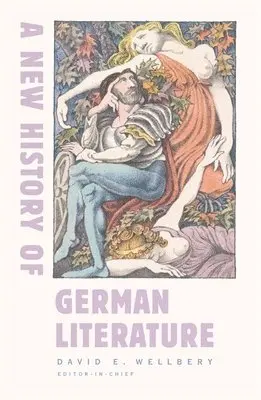
The revolutionary spirit that animates the culture of the Germans has been alive for at least twelve centuries, far longer than the dramatically fragmented and reshaped political entity known as Germany. German culture has been central to Europe, and it has contributed the transforming spirit of Lutheran religion, the technology of printing as a medium of democracy, the soulfulness of Romantic philosophy, the structure of higher education, and the tradition of liberal socialism to the essential character of modern American life.In this book leading scholars and critics capture the spirit of this culture in some 200 original essays on events in German literary history. Rather than offering a single continuous narrative, the entries focus on a particular literary work, an event in the life of an author, a historical moment, a piece of music, a technological invention, even a theatrical or cinematic premiere. Together they give the reader a surprisingly unified sense of what it is that has allowed Meister Eckhart, Hildegard of Bingen, Luther, Kant, Goethe, Beethoven, Benjamin, Wittgenstein, Jelinek, and Sebald to provoke and enchant their readers. From the earliest magical charms and mythical sagas to the brilliance and desolation of 20th-century fiction, poetry, and film, this illuminating reference book invites readers to experience the full range of German literary culture and to investigate for themselves its disparate and unifying themes.Contributors include: Amy M. Hollywood on medieval women mystics, Jan-Dirk Müller on Gutenberg, Marion Aptroot on the Yiddish Renaissance, Emery Snyder on the Baroque novel, J. B. Schneewind on Natural Law, Maria Tatar on the Grimm brothers, Arthur Danto on Hegel, Reinhold Brinkmann on Schubert, Anthony Grafton on Burckhardt, Stanley Corngold on Freud, Andreas Huyssen on Rilke, Greil Marcus on Dada, Eric Rentschler on Nazi cinema, Elisabeth Young-Bruehl on Hannah Arendt, Gordon A. Craig on Günter Grass, Edward Dimendberg on Holocaust memorials.
307 kr
Skickas inom 7-10 vardagar
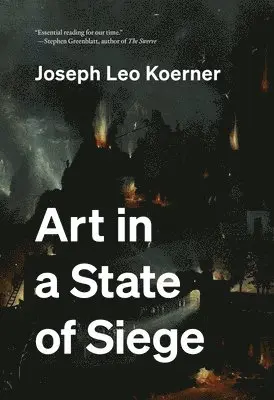
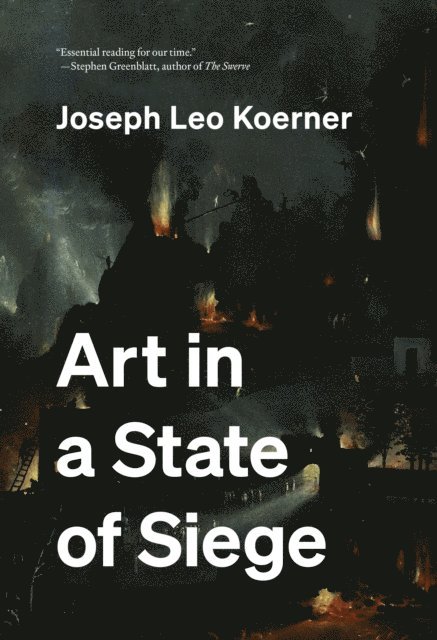
An art historical epic for dangerous timesWhat do artworks look like in extreme cases of collective experience? What signals do artists send when enemies are at the city walls and the rule of law breaks down, or when a tyrant suspends the law to attack from inside? Art in a State of Siege tells the story of three compelling images created in dangerous moments and the people who experienced them—from Philip II of Spain to Carl Schmitt—whose panicked gaze turned artworks into omens.Acclaimed art historian Joseph Koerner reaches back to the eve of iconoclasm and religious warfare to explore the most elusive painting ever painted. In Hieronymus Bosch’s Garden of Delights, enemies are everywhere: Jews and Ottomans at the gates, witches and heretics at home, sins overtaking the mind. Following a paper trail leading from Bosch’s time to World War II, Koerner considers a monumental self-portrait painted by Max Beckmann in 1927. Created when Germany was often governed by emergency decree, this image brazenly claimed to decide Europe’s future—until the Nazis deemed it to be a threat to the German people. For South African artist William Kentridge, Beckmann exemplified “art in a state of siege.” Koerner shows how his work served as beacon during South Africa’s racialist apartheid rule and inspired Kentridge’s breakthrough animations of drawings being made, erased, and remade.Spanning half a millennium but urgent today, Art in a State of Siege reveals how, in dire straits, art becomes the currency of last resort.
323 kr
Skickas inom 7-10 vardagar
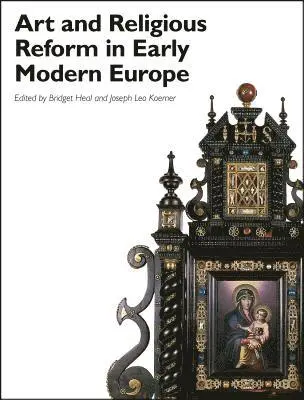
The religious turmoil of the sixteenth century constituted a turning point in the history of Western Christian art. The essays presented in this volume investigate the ways in which both Protestant and Catholic reform stimulated the production of religious images, drawing on examples from across Europe and beyond. Eight essays by leading scholars in the fieldBrings art historians and historians into productive dialogueBroad chronology, from the sixteenth to the eighteenth centuryBroad geographical coverageRichly illustrated
426 kr
Skickas inom 7-10 vardagar
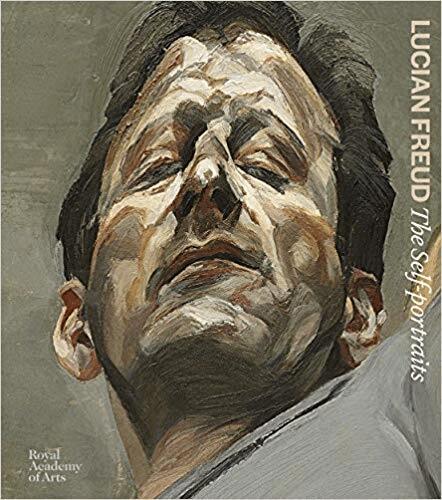
In 1964 Lucian Freud set his students at the Norwich College of Art an assignment: to paint naked self-portraits and to make them 'revealing, telling, believable... really shameless'. It was advice that the artist was often to follow himself. Visceral, unflinching and often nude, Freud's self-portraits give us an insight into the development of his style as a painter. The works provide the viewer with a constant reminder of the artist's overwhelming presence, whether he is confronting the viewer directly or only present as a shadow or in a reflection.Essays by leading authorities - including those who knew him well - explore Freud's life and work, and analyse the importance of self-portraiture in his practice and the intensity that he maintained when studying his own.
463 kr
Kommande
Gustav Klimt’s Beethoven Frieze (1902) is the supreme monument of Viennese Modernism—a work as significant and revolutionary as Picasso’s Demoiselles, Matisse’s Dance, and Duchamps’s Readymades. Is it is among the most visited tourist destinations in Vienna. In his largest and most ambitious work, Klimt launched his famous motif of the Kiss and his signature color: gold. Four interdisciplinary essays by renowned scholars explore the enduring relevance and cultural-historical context of Klimt’s large-scale wall cycle, as well as its conservation and history. This new publication will be the definitive book on Klimt’s Beethoven Frieze.