Joseph M. Pierce - Böcker
Visar alla böcker från författaren Joseph M. Pierce. Handla med fri frakt och snabb leverans.
6 produkter
6 produkter
1 563 kr
Tillfälligt slut
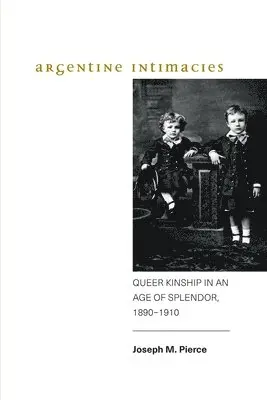
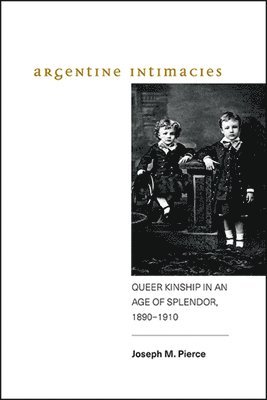
Revisits a foundational moment in Argentine history to demonstrate how the crisis of modernity opened up new possibilities for imagining kinship otherwise.Winner of the 2020 Best Book in the Nineteenth Century Award presented by the Nineteenth Century Section of the Latin American Studies Association As Argentina rose to political and economic prominence at the turn of the twentieth century, debates about the family, as an ideological structure and set of lived relationships, took center stage in efforts to shape the modern nation. In Argentine Intimacies, Joseph M. Pierce draws on queer studies, Latin American studies, and literary and cultural studies to consider the significance of one family in particular during this period of intense social change: Carlos, Julia, Delfina, and Alejandro Bunge. One of Argentina's foremost intellectual and elite families, the Bunges have had a profound impact on Argentina's national culture and on Latin American understandings of education, race, gender, and sexual norms. They also left behind a vast archive of fiction, essays, scientific treatises, economic programs, and pedagogical texts, as well as diaries, memoirs, and photography. Argentine Intimacies explores the breadth of their writing to reflect on the intersections of intimacy, desire, and nationalism, and to expand our conception of queer kinship. Approaching kinship as an interface of relational dispositions, Pierce reveals the queerness at the heart of the modern family. Queerness emerges not as an alternative to traditional values so much as a defining feature of the state project of modernization.

683 kr
Skickas inom 3-6 vardagar
Revisits a foundational moment in Argentine history to demonstrate how the crisis of modernity opened up new possibilities for imagining kinship otherwise.Winner of the 2020 Best Book in the Nineteenth Century Award presented by the Nineteenth Century Section of the Latin American Studies Association As Argentina rose to political and economic prominence at the turn of the twentieth century, debates about the family, as an ideological structure and set of lived relationships, took center stage in efforts to shape the modern nation. In Argentine Intimacies, Joseph M. Pierce draws on queer studies, Latin American studies, and literary and cultural studies to consider the significance of one family in particular during this period of intense social change: Carlos, Julia, Delfina, and Alejandro Bunge. One of Argentina's foremost intellectual and elite families, the Bunges have had a profound impact on Argentina's national culture and on Latin American understandings of education, race, gender, and sexual norms. They also left behind a vast archive of fiction, essays, scientific treatises, economic programs, and pedagogical texts, as well as diaries, memoirs, and photography. Argentine Intimacies explores the breadth of their writing to reflect on the intersections of intimacy, desire, and nationalism, and to expand our conception of queer kinship. Approaching kinship as an interface of relational dispositions, Pierce reveals the queerness at the heart of the modern family. Queerness emerges not as an alternative to traditional values so much as a defining feature of the state project of modernization.
1 325 kr
Skickas inom 7-10 vardagar
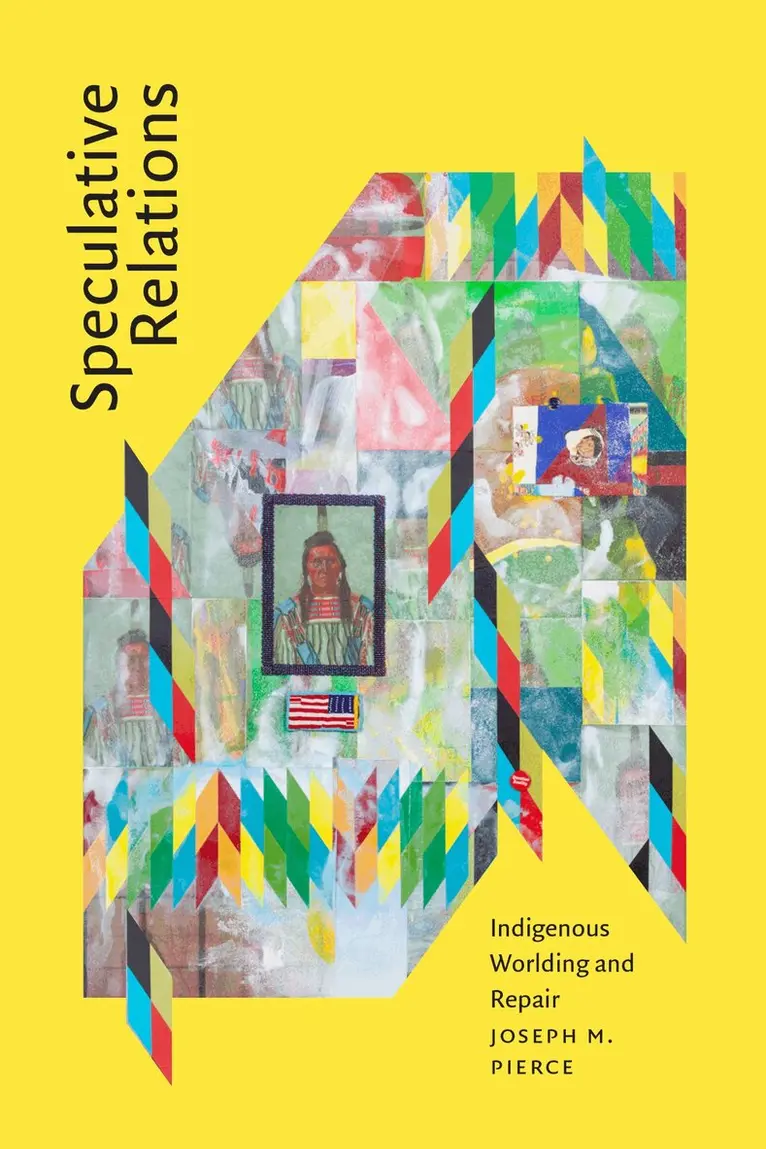
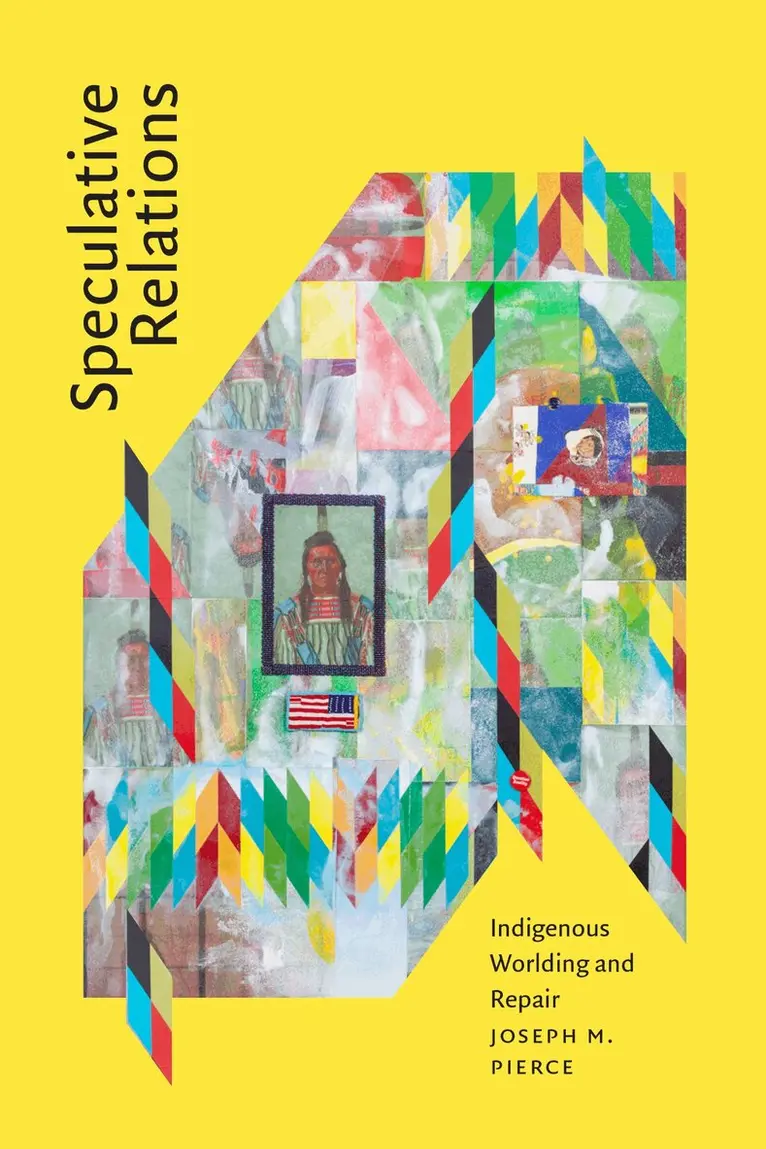
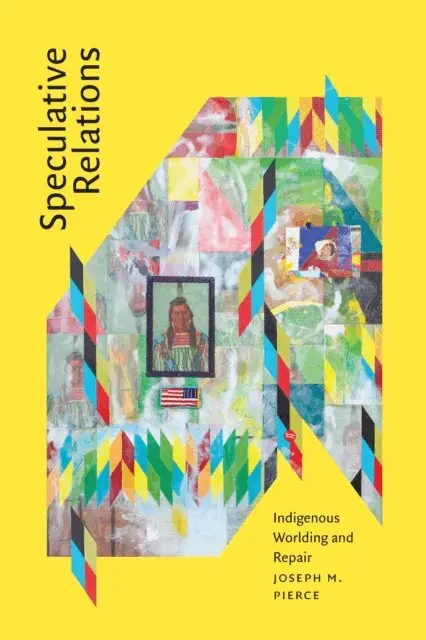
Indigenous relations are often described in anthropological terms, or as expressions of timeless, unchanging kinship ties. In Speculative Relations, Joseph M. Pierce challenges this view, considering the potential of these relations as a means of repairing the damages of history. Pierce approaches Indigenous art and culture not as objects of study, but through relations committed to reciprocity and care for human and more-than-human beings. Drawing on Cherokee thinking, Indigenous queer theory, literary and cultural studies, and art criticism, he illuminates pathways for understanding and resisting the ongoing damages of colonialism while pointing to future worlds and imaginaries that breathe life into Indigenous thought and practice. Analyzing a range of materials—from photography, literature, and sculpture to film and ethnography - Pierce reveals how speculation, as a form of situated knowledge production, can repair and reimagine the worlds that colonialism sought to destroy. In doing so, Pierce highlights how gestures, poetics, and embodiment can uphold tradition and harness the imaginative power of speculation to create pathways for living in good relations.
1 330 kr
Skickas inom 3-6 vardagar
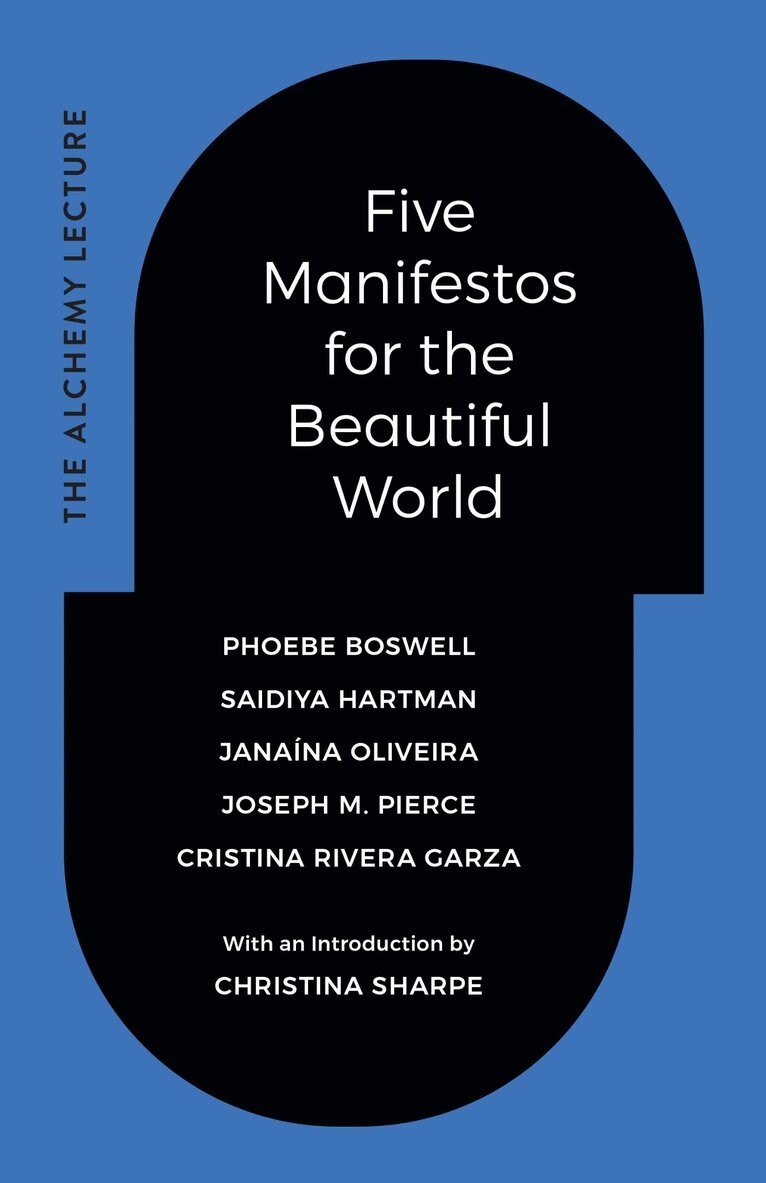
The second annual Alchemy Lecture brought together five artists, thinkers, and writers who proposed new ways of being and discussed radical visions for the future. Five Manifestos for the Beautiful World captures and expands these lectures to illuminate our path toward this possible beautiful world. Joseph M. Pierce (Cherokee Nation) asserts that “for this decolonial future to become possible, the guiding force must no longer be capital but relations.” Film curator JanaÍna Oliveira (Brazil) evokes music and movement as a means toward this relationality. Visual artist Phoebe Boswell (UK/Kenya) asks, “If we burn down the institution, what happens next?” Saidiya Hartman (US) prompts us to consider our capacity to burn, examining whether “the gift of pragmatism yields a profound tolerance of the unlivable.” Cristina Rivera Garza (US/Mexico) gives us the language of the future in the subjunctive, “the smuggler who crosses the border of the future bearing unknown cargo.” Each alchemist is intimately concerned with this cargo, our ability to bear its weight, and how we might find the beautiful world together.
334 kr
Skickas
Indigenous relations are often described in anthropological terms, or as expressions of timeless, unchanging kinship ties. In Speculative Relations, Joseph M. Pierce challenges this view, considering the potential of these relations as a means of repairing the damages of history. Pierce approaches Indigenous art and culture not as objects of study, but through relations committed to reciprocity and care for human and more-than-human beings. Drawing on Cherokee thinking, Indigenous queer theory, literary and cultural studies, and art criticism, he illuminates pathways for understanding and resisting the ongoing damages of colonialism while pointing to future worlds and imaginaries that breathe life into Indigenous thought and practice. Analyzing a range of materials - from photography, literature, and sculpture to film and ethnography - Pierce reveals how speculation, as a form of situated knowledge production, can repair and reimagine the worlds that colonialism sought to destroy. In doing so, Pierce highlights how gestures, poetics, and embodiment can uphold tradition and harness the imaginative power of speculation to create pathways for living in good relations.
409 kr
Skickas inom 3-6 vardagar
The second annual Alchemy Lecture brought together five artists, thinkers, and writers who proposed new ways of being and discussed radical visions for the future. Five Manifestos for the Beautiful World captures and expands these lectures to illuminate our path toward this possible beautiful world. Joseph M. Pierce (Cherokee Nation) asserts that “for this decolonial future to become possible, the guiding force must no longer be capital but relations.” Film curator JanaÍna Oliveira (Brazil) evokes music and movement as a means toward this relationality. Visual artist Phoebe Boswell (UK/Kenya) asks, “If we burn down the institution, what happens next?” Saidiya Hartman (US) prompts us to consider our capacity to burn, examining whether “the gift of pragmatism yields a profound tolerance of the unlivable.” Cristina Rivera Garza (US/Mexico) gives us the language of the future in the subjunctive, “the smuggler who crosses the border of the future bearing unknown cargo.” Each alchemist is intimately concerned with this cargo, our ability to bear its weight, and how we might find the beautiful world together.