Joydeep Bagchee - Böcker
Visar alla böcker från författaren Joydeep Bagchee. Handla med fri frakt och snabb leverans.
4 produkter
4 produkter
1 801 kr
Skickas inom 5-8 vardagar
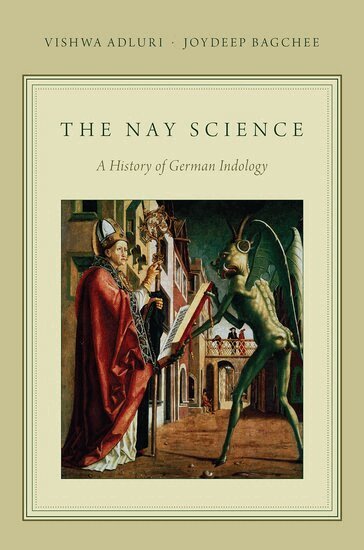
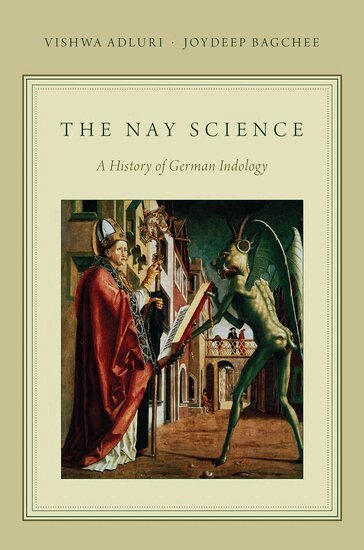
Vishwa Adluri and Joydeep Bagchee undertake a careful and rigorous hermeneutical approach to nearly two centuries of German philological scholarship on the Mahabharata and the Bhagavad Gita. Analyzing the intellectual contexts of this scholarship, beginning with theological debates that centered on Martin Luther's solefidian doctrine and proceeding to scientific positivism via analyses of disenchantment (Entzauberung), German Romanticism, pantheism (Pantheismusstreit), and historicism, they show how each of these movements progressively shaped German philology's encounter with the Indian epic. They demonstrate that, from the mid-nineteenth century on, this scholarship contributed to the construction of a supposed "Indo-Germanic" past, which Germans shared racially with the Mahabharata's warriors. Building on nationalist yearnings and ongoing Counter-Reformation anxieties, scholars developed the premise of Aryan continuity and supported it by a "Brahmanical hypothesis," according to which supposedly later strata of the text represented the corrupting work of scheming Brahmin priests. Adluri and Bagchee focus on the work of four Mahabharata scholars and eight scholars of the Bhagavad Gita, all of whom were invested in the idea that the text-critical task of philology as a scientific method was to identify a text's strata and interpolations so that, by displaying what had accumulated over time, one could recover what remained of an original or authentic core. The authors show that the construction of pseudo-histories for the stages through which the Mahabharata had supposedly passed provided German scholars with models for two things: 1) a convenient pseudo-history of Hinduism and Indian religions more generally; and 2) a platform from which to say whatever they wanted to about the origins, development, and corruption of the Mahabharata text. The book thus challenges contemporary scholars to recognize that the ''Brahmanic hypothesis'' (the thesis that Brahmanic religion corrupted an original, pure and heroic Aryan ethical and epical worldview), an unacknowledged tenet of much Western scholarship to this day, was not and probably no longer can be an innocuous thesis. The ''corrupting'' impact of Brahmanical ''priestcraft,'' the authors show, served German Indology as a cover under which to disparage Catholics, Jews, and other ''Semites.''
572 kr
Skickas inom 5-8 vardagar
The Nay Science offers a new perspective on the problem of scientific method in the human sciences. Taking German Indological scholarship on the Mahabharata and the Bhagavadgita as their example, Adluri and Bagchee develop a critique of the modern valorization of method over truth in the humanities. The authors show how, from its origins in eighteenth-century Neo-Protestantism onwards, the critical method was used as a way of making theological claims against rival philosophical and/or religious traditions. Via discussions of German Romanticism, the pantheism controversy, scientific positivism, and empiricism, they show how theological concerns dominated German scholarship on the Indian texts. Indology functions as a test case for wider concerns: the rise of historicism, the displacement of philosophical concerns from thinking, and the belief in the ability of a technical method to produce truth. Based on the historical evidence of the first part of the book, Adluri and Bagchee make a case in the second part for going beyond both the critical pretensions of modern academic scholarship and and the objections of its post-structuralist or post-Orientalist critics. By contrasting German Indology with Plato's concern for virtue and Gandhi's focus on praxis, the authors argue for a conception of the humanities as a dialogue between the ancients and moderns and between eastern and western cultures.
1 700 kr
Kommande
Del 1184 - Cultural, Historical and Textual Studies of South Asian Religions
Philology and Criticism
A Guide to Mahābhārata Textual Criticism
Inbunden, Engelska, 2018
1 873 kr
Skickas inom 5-8 vardagar
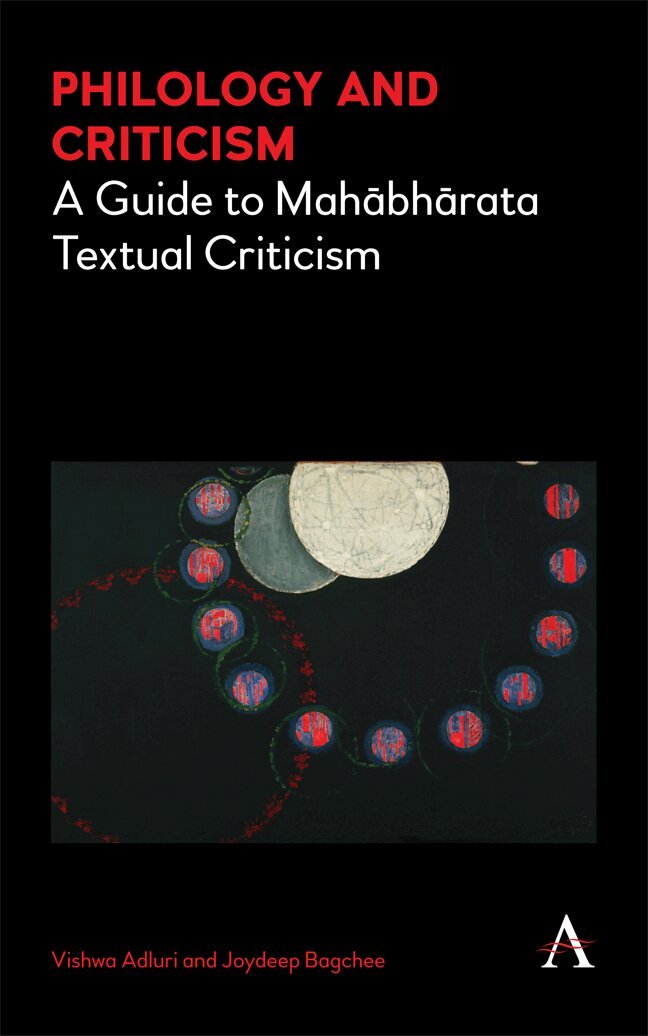
Philology and Criticism contrasts the Mahābhārata’s preservation and transmission within the Indian scribal and commentarial traditions with Sanskrit philology after 1900, as German Indologists proposed a critical edition of the Mahābhārata to validate their racial and nationalist views. Vishwa Adluri and Joydeep Bagchee show how, in contrast to the Indologists’ unscientific theories, V. S. Sukthankar assimilated the principles of neo-Lachmannian textual criticism to defend the transmitted text and its traditional reception as a work of law, philosophy and salvation. The authors demonstrate why, after the edition’s completion, no justification exists for claiming that an earlier heroic epic existed, that the Brahmans redacted the heroic epic to produce the Mahābhārata or that they interpolated “sectarian” gods such as Vis.n.u and Śiva into the work. By demonstrating how the Indologists committed technical errors, cited flawed and biased scholarship and used circular argumentation to validate their racist and anti-Semitic theories, Philology and Criticism frees readers to approach the Mahābhārata as “the principal monument of bhakti” (Madeleine Biardeau). The authoritative guide to the critical edition’s correct use and interpretation, Philology and Criticism urges South Asianists to view Hinduism as a complex debate about ontology and ethics rather than through the lenses of “Brahmanism” and “sectarianism.” It launches a new world philology—one that is plural and self-reflexive rather than Eurocentric and ahistorical.