Juan J. Linz - Böcker
Visar alla böcker från författaren Juan J. Linz. Handla med fri frakt och snabb leverans.
11 produkter
11 produkter
725 kr
Skickas inom 7-10 vardagar
This book, with contributions from leading scholars in the field, presents a critical overview of much of the recent literature on political parties. It systematically assesses the capacity of existing concepts, typologies, and methodological approaches to deal with contemporary parties. It critically analyses the 'decline of parties' literature both from a conceptual perspective and - with regard to antiparty attitudes among citizens - on the basis of empirical analyses of survey data. It systematically re-examines the underpinnings of rational-choice analyses of electoral competition, as well as the misapplication of standard party models as the 'catch-all party.' Several chapters reexamine existing models of parties and party typologies, particularly with regard to the capacity of commonly used concepts to capture the wide variation among parties that exist in old and new democracies today, and with regard to their ability to deal adequately with the new challenges that parties are facing in rapidly changing political, social and technological environments. In particular, two detailed case studies demonstrate how party models are significant not only as frameworks for scholarly research, but also insofar as they can affect party performance. Other chapters also examine in detail how corruption and party patronage have contributed to party decline, as well as the public attitudes towards parties in several countries. In the aggregate, the various contributions to this volume reject the notion that a 'decline of party' has progressed to such an extent as to threaten the survival of parties as the crucial intermediary actors in modern democracies. The contributing authors argue, however, that parties are facing a new set of sometimes demanding challenges. Not only have parties differed significantly in their ability to successfully meet these challenges, but the core concepts, typologies, party models and methodological approaches that have guided research in this area over the past 40 years have met with only mixed success in adequately capturing these recent developments and serving as fruitful frameworks for analysis. This book is intended to remedy some of these shortcomings.
441 kr
Skickas inom 7-10 vardagar
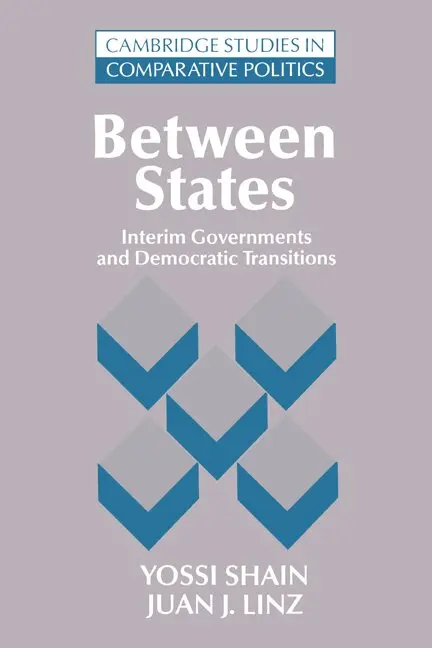
Between States is the first book that assesses systematically the broad implications of interim governments in the establishment of democratic regimes and on the existence of states. Based on historical and contemporary democratisation experiences, the book presents four ideal types of interim government: opposition-led provisional governments, power-sharing interim governments, incumbent-led caretaker governments, and international interim government by the United Nations. The first part explores the theoretical problems of each of these models from a broad comparative perspective. It uses as illustrations historical and contemporary cases that present a wide spectrum of contexts for comparison. The second part provides extensive case studies that are intended to illustrate, appraise, amplify and criticise the analysis in volume one. These include Iran, East Germany, Portugal, Afghanistan, and Yugoslavia.
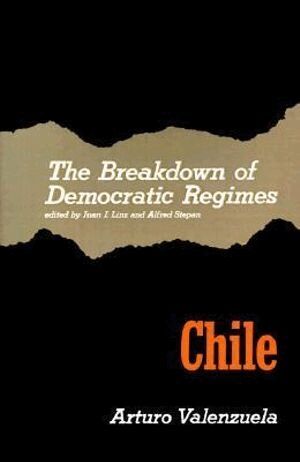
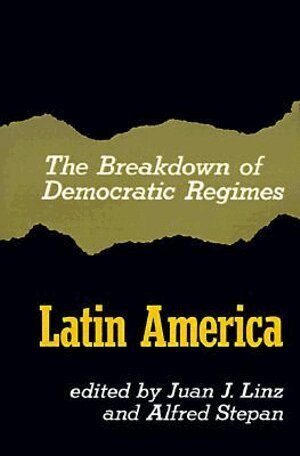
Breakdown of Democratic Regimes
Crisis, Breakdown and Reequilibration. An Introduction
Häftad, Engelska, 1978
334 kr
Skickas inom 7-10 vardagar
'
363 kr
Skickas inom 7-10 vardagar
The fate of democratic governments throughout the world is a topic of growing concern. The crises of modern history, from the Machtergreifung by Hitler through the downfall of democracies. In a systematic review of the political experiences of Latin American and European democratic nations, these original, thought-provoking books propose a significant new comparative framework for understanding the dynamics of political change and the conditions necessary for democratic stability.
352 kr
Skickas inom 7-10 vardagar
The fate of democratic governments throughout the world is a topic of growing concern. The crises of modern history, from the Machtegreifung by Hitler through the downfall of the Allende government in Chile, have caused many to suspect an inevitable downfall of democracies. In a systematic review of the political experiences of Latin American and European democratic nations, these original, thought-provoking books propose a significant new comparative framework for understanding the dynamics of political change and the conditions necessary for democratic stability.
363 kr
Skickas inom 5-8 vardagar
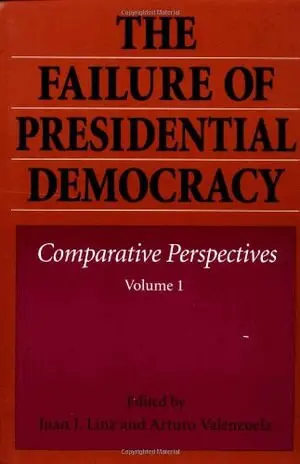
Citizens of the United States, heirs to two centuries of democratic government, tend to believe that presidentialism - rather than parliamentarism - is the political system that best ensures a stable democracy. In Latin America, however, where many governments have been modelled on that of the United States, presidentialism has had mixed success. In "The Failure of Presidential Democracy", Juan Linz and Arturo Valenzuela bring together leading scholars to examine the question of whether presidentialism or parliamentarism offers the best hope for stable government and democratic continuity.
Problems of Democratic Transition and Consolidation
Southern Europe, South America, and Post-Communist Europe
Häftad, Engelska, 1996
363 kr
Skickas inom 7-10 vardagar
Since their classic volume The Breakdown of Democratic Regimes was published in 1978, Juan J. Linz and Alfred Stepan have increasingly focused on the questions of how, in the modern world, nondemocratic regimes can be eroded and democratic regimes crafted. In Problems of Democratic Transition and Consolidation, they break new ground in numerous areas. They reconceptualize the major types of modern nondemocratic regimes and point out for each type the available paths to democratic transition and the tasks of democratic consolidation. They argue that, although "nation-state" and "democracy" often have conflicting logics, multiple and complementary political identities are feasible under a common roof of state-guaranteed rights. They also illustrate how, without an effective state, there can be neither effective citizenship nor successful privatization. Further, they provide criteria and evidence for politicians and scholars alike to distinguish between democratic consolidation and pseudo-democratization, and they present conceptually driven survey data for the fourteen countries studied.Problems of Democratic Transition and Consolidation contains the first systematic comparative analysis of the process of democratic consolidation in southern Europe and the southern cone of South America, and it is the first book to ground post-Communist Europe within the literature of comparative politics and democratic theory.
363 kr
Skickas inom 7-10 vardagar
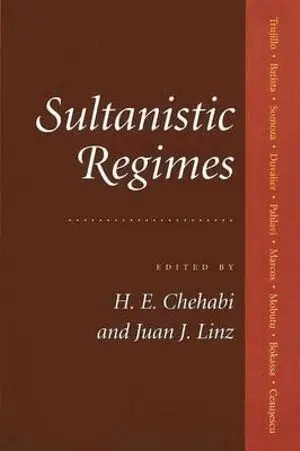
Sultanistic regimes, as Juan Linz describes them, are authoritarian regimes based on personal ideology and personal favor to maintain the autocrat in power; there is little ideological basis for the rule except personal power. This volume of essays studies important sultantistic regimes in the Domanican Republic, Cuba, Haiti, Iran, and the Philippines. Part one contains two comparative essays, which discuss common characteristics of sultanistic regimes, compare them to totalitarian and authoritarian regimes, and trace common patterns for these regimes' rise and fall. Chehabi and Linz argue that sultanistic regimes do not offer favorable transitions to democracy, no matter what the person in power says. Part two applies Linz's model to country studies.
613 kr
Tillfälligt slut
Political wisdom holds that the political boundaries of a state necessarily coincide with a nation's perceived cultural boundaries. Today, the sociocultural diversity of many polities renders this understanding obsolete. This volume provides the framework for the state-nation, a new paradigm that addresses the need within democratic nations to accommodate distinct ethnic and cultural groups within a country while maintaining national political coherence. First introduced briefly in 1996 by Alfred Stepan and Juan J. Linz, the state-nation is a country with significant multicultural-even multinational-components that engenders strong identification and loyalty from its citizens. Here, Indian political scholar Yogendra Yadav joins Stepan and Linz to outline and develop the concept further. The core of the book documents how state-nation policies have helped craft multiple but complementary identities in India in contrast to nation-state policies in Sri Lanka, which contributed to polarized and warring identities. The authors support their argument with the results of some of the largest and most original surveys ever designed and employed for comparative political research.They include a chapter discussing why the U.S. constitutional model, often seen as the preferred template for all the world's federations, would have been particularly inappropriate for crafting democracy in politically robust multinational countries such as India or Spain. To expand the repertoire of how even unitary states can respond to territorially concentrated minorities with some secessionist desires, the authors develop a revised theory of federacy and show how such a formula helped craft the recent peace agreement in Aceh, Indonesia. Empirically thorough and conceptually clear, Crafting State-Nations will have a substantial impact on the study of comparative political institutions and the conception and understanding of nationalism and democracy.
326 kr
Tillfälligt slut
Political wisdom holds that the political boundaries of a state necessarily coincide with a nation's perceived cultural boundaries. Today, the sociocultural diversity of many polities renders this understanding obsolete. This volume provides the framework for the state-nation, a new paradigm that addresses the need within democratic nations to accommodate distinct ethnic and cultural groups within a country while maintaining national political coherence. First introduced briefly in 1996 by Alfred Stepan and Juan J. Linz, the state-nation is a country with significant multicultural-even multinational-components that engenders strong identification and loyalty from its citizens. Here, Indian political scholar Yogendra Yadav joins Stepan and Linz to outline and develop the concept further. The core of the book documents how state-nation policies have helped craft multiple but complementary identities in India in contrast to nation-state policies in Sri Lanka, which contributed to polarized and warring identities. The authors support their argument with the results of some of the largest and most original surveys ever designed and employed for comparative political research.They include a chapter discussing why the U.S. constitutional model, often seen as the preferred template for all the world's federations, would have been particularly inappropriate for crafting democracy in politically robust multinational countries such as India or Spain. To expand the repertoire of how even unitary states can respond to territorially concentrated minorities with some secessionist desires, the authors develop a revised theory of federacy and show how such a formula helped craft the recent peace agreement in Aceh, Indonesia. Empirically thorough and conceptually clear, Crafting State-Nations will have a substantial impact on the study of comparative political institutions and the conception and understanding of nationalism and democracy.